23 Clever Attic Bedroom Ideas for Every Style
- Lean Into the Slope With a Low-Profile Bed
- Add a Skylight for Natural Light
- Go Bold With a Wallpapered Ceiling
- Build In Custom Storage Under the Eaves
- Create a Reading Nook in the Dormer
- Use a Neutral Palette to Open Up the Space
- Install a Freestanding Wardrobe Instead of a Closet
- Hang String Lights Along the Roofline
- Add a Statement Rug to Ground the Room
- Turn a Knee Wall Into a Headboard
- Choose Furniture on Legs, Not Bulky Bases
- Install Recessed Lighting Along the Slopes
- Add a Ceiling Fan Rated for Sloped Ceilings
- Create a Gallery Wall on the One Flat Wall
- Use Vertical Striping to Add Height
- Add Built-In Shelving Along the Kneewall
- Install a Barn Door for the Entry
- Paint the Ceiling a Deeper Color Than the Walls
- Add a Compact Desk in the Peak
- Use Woven Baskets for Soft Storage
- Choose a Low Dresser to Match the Ceiling Line
- Add Curtains Instead of Blinds on Dormer Windows
- Create a Mini Lounge Area With a Daybed
23 Clever Attic Bedroom Ideas for Every Style
Attic bedrooms have a funny way of intimidating people before they even start planning. All those sloped ceilings and odd angles can feel like a design puzzle with no clean solution. But honestly? Those quirks are exactly what give attic rooms so much character once you know how to work with them instead of against them. Here are 23 ideas to help you turn that underused upper floor into a bedroom people actually fight over.
Lean Into the Slope With a Low-Profile Bed
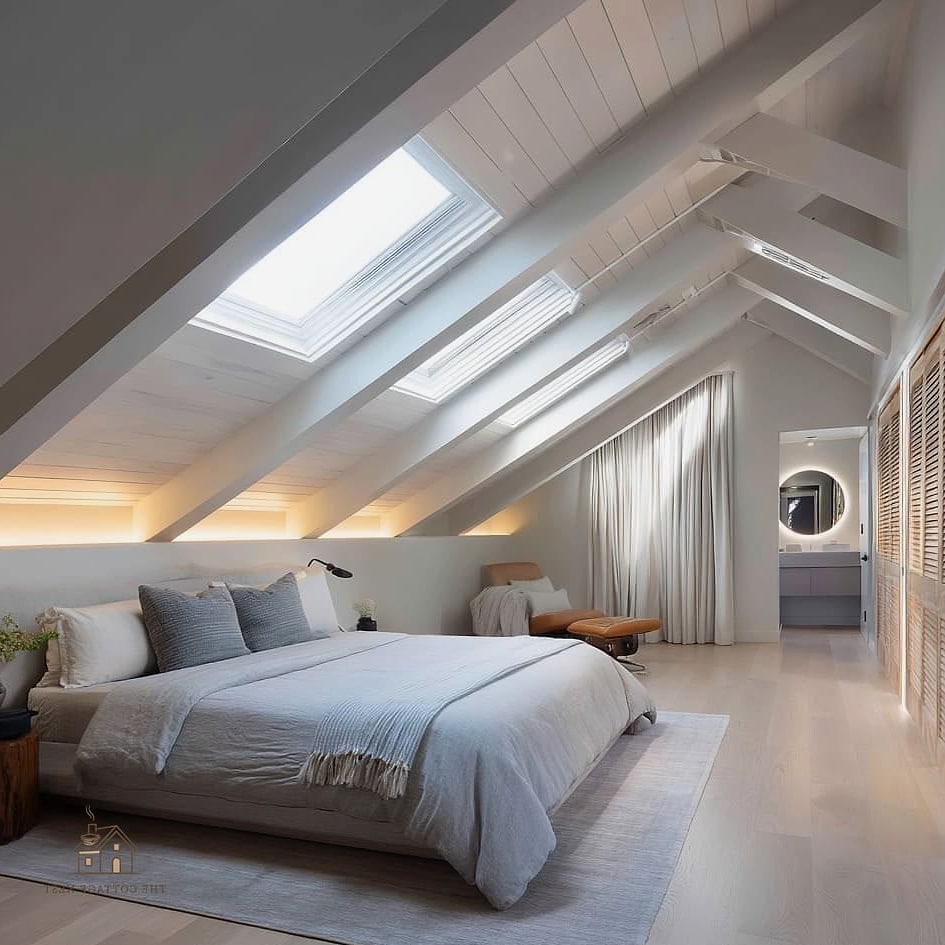
Instead of fighting the ceiling pitch, put your bed right up against it. A low platform bed or a simple mattress-and-frame setup tucked under the slope makes the room feel intentional rather than cramped. This works especially well in older homes where the roofline is steep enough to create a natural little alcove. Pair it with a low nightstand so nothing competes with the angled ceiling above.
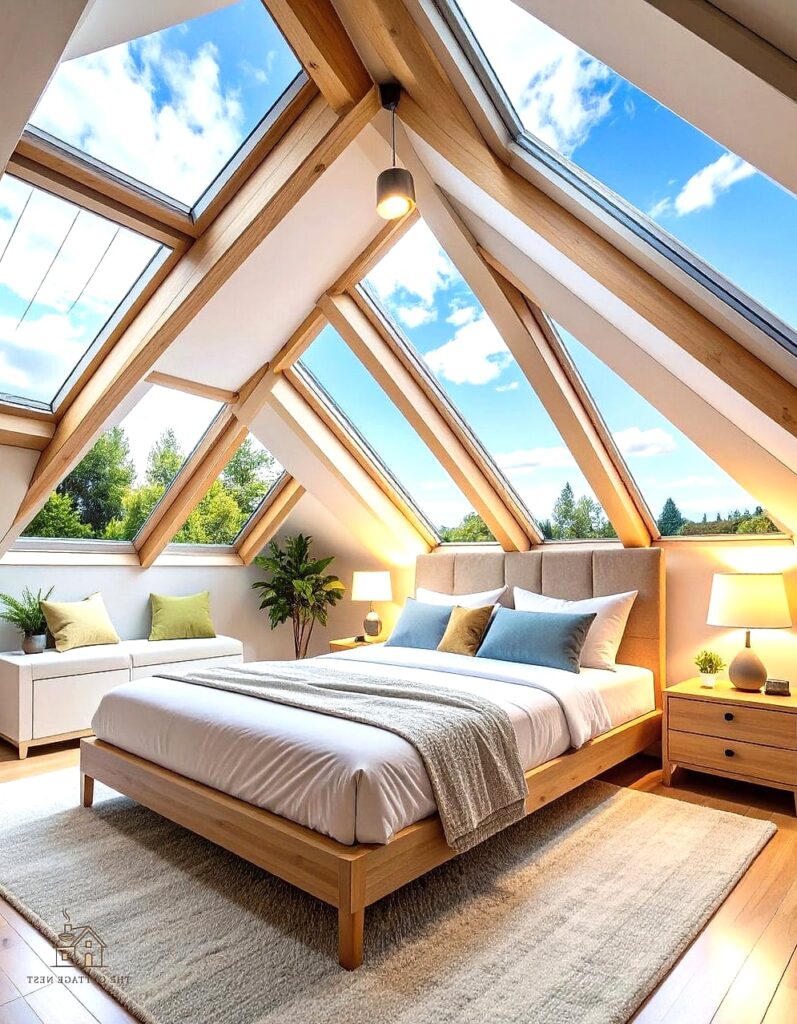
Add a Skylight for Natural Light
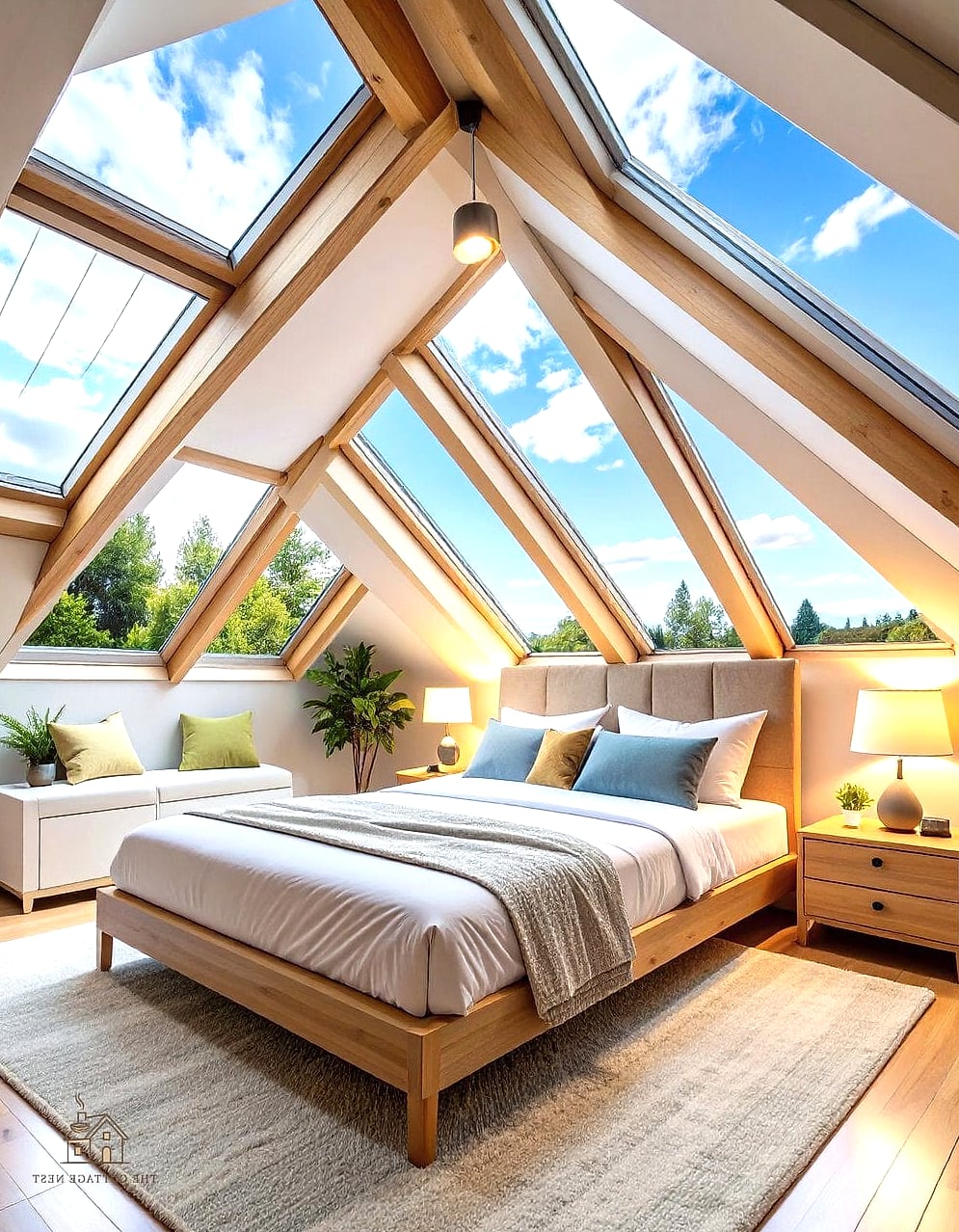
Attic rooms often lose out on wall space for windows, which is where a skylight earns its keep. It floods the room with daylight and gives you a view straight up at the sky or treetops. Installation isn’t a weekend DIY project, but the payoff in mood and brightness is huge. Add a blackout shade if you want the option to sleep in.
Go Bold With a Wallpapered Ceiling
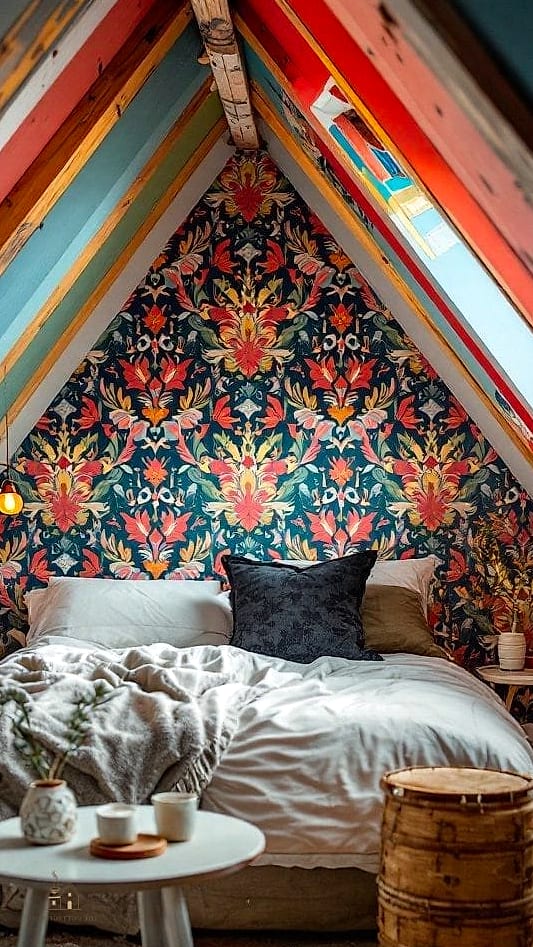
Sloped ceilings are basically asking for wallpaper. A patterned or textured paper on the angled portions adds a cozy, enveloping feel that a flat white ceiling just can’t match. Botanical prints, subtle stripes, or even a soft plaid all work beautifully here. It’s a renter-friendly move too if you go with a peel-and-stick option.
Build In Custom Storage Under the Eaves
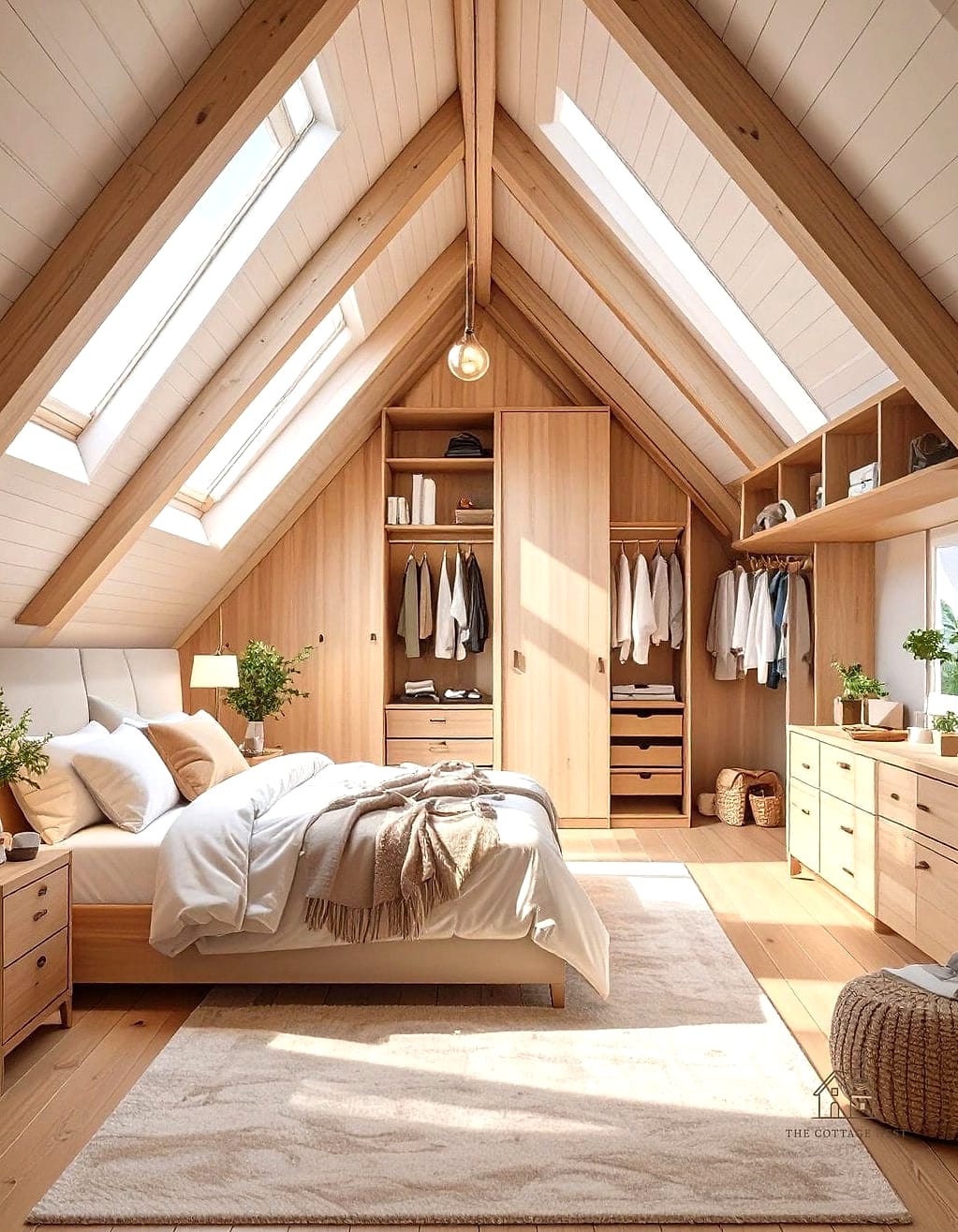
Those low, awkward corners where the ceiling meets the floor are prime real estate for built-in drawers or cubbies. Custom carpentry gets you flush, seamless storage that swallows up off-season clothes, linens, or shoes. It’s not the cheapest upgrade, but it solves the attic’s biggest challenge — storage — better than almost anything else on this list.
Create a Reading Nook in the Dormer
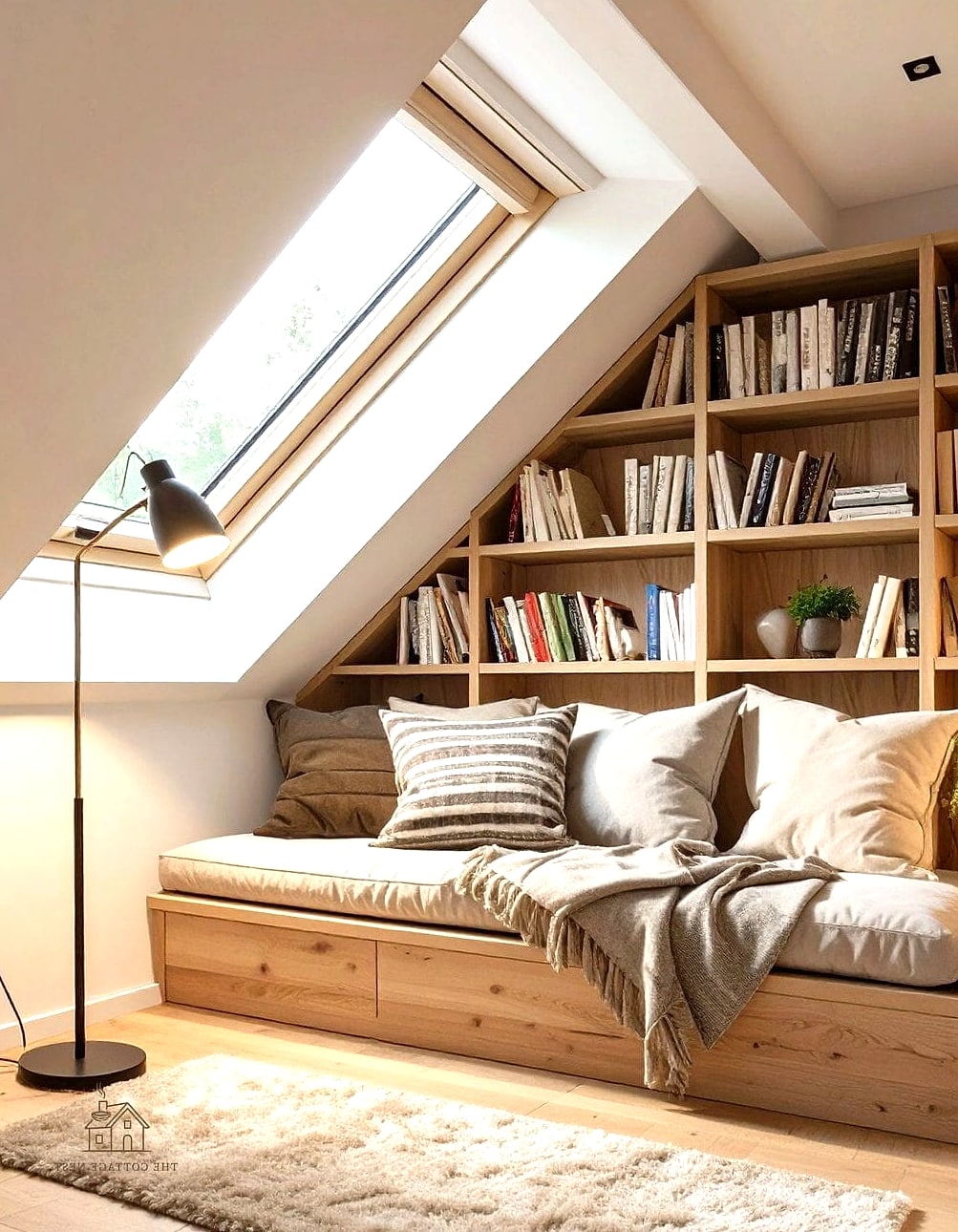
If your attic has a dormer window, you’ve basically been handed a built-in reading nook. A window seat with a cushion and a couple of throw pillows turns that little pocket into the coziest corner of the house. Add a small shelf on the side wall for books and a mug of tea, and you’ve got a spot nobody wants to leave.
Use a Neutral Palette to Open Up the Space
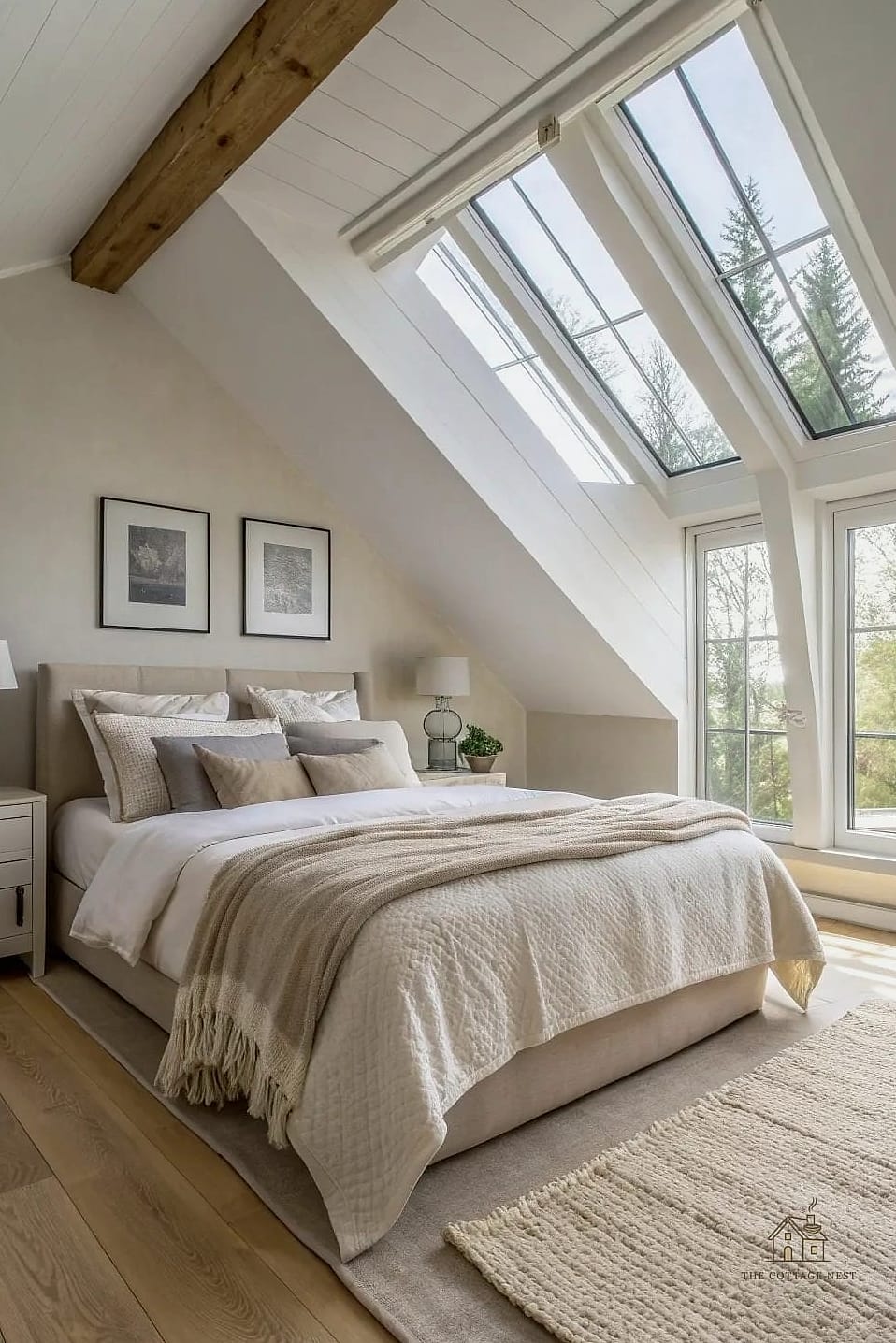
Attic bedrooms tend to be smaller and more enclosed than standard rooms, so a warm neutral palette — soft whites, greiges, warm taupes — helps everything feel airier. Save bold color for accents like bedding or a rug. This isn’t a rule set in stone, but it’s a reliable trick when square footage is tight.
Install a Freestanding Wardrobe Instead of a Closet
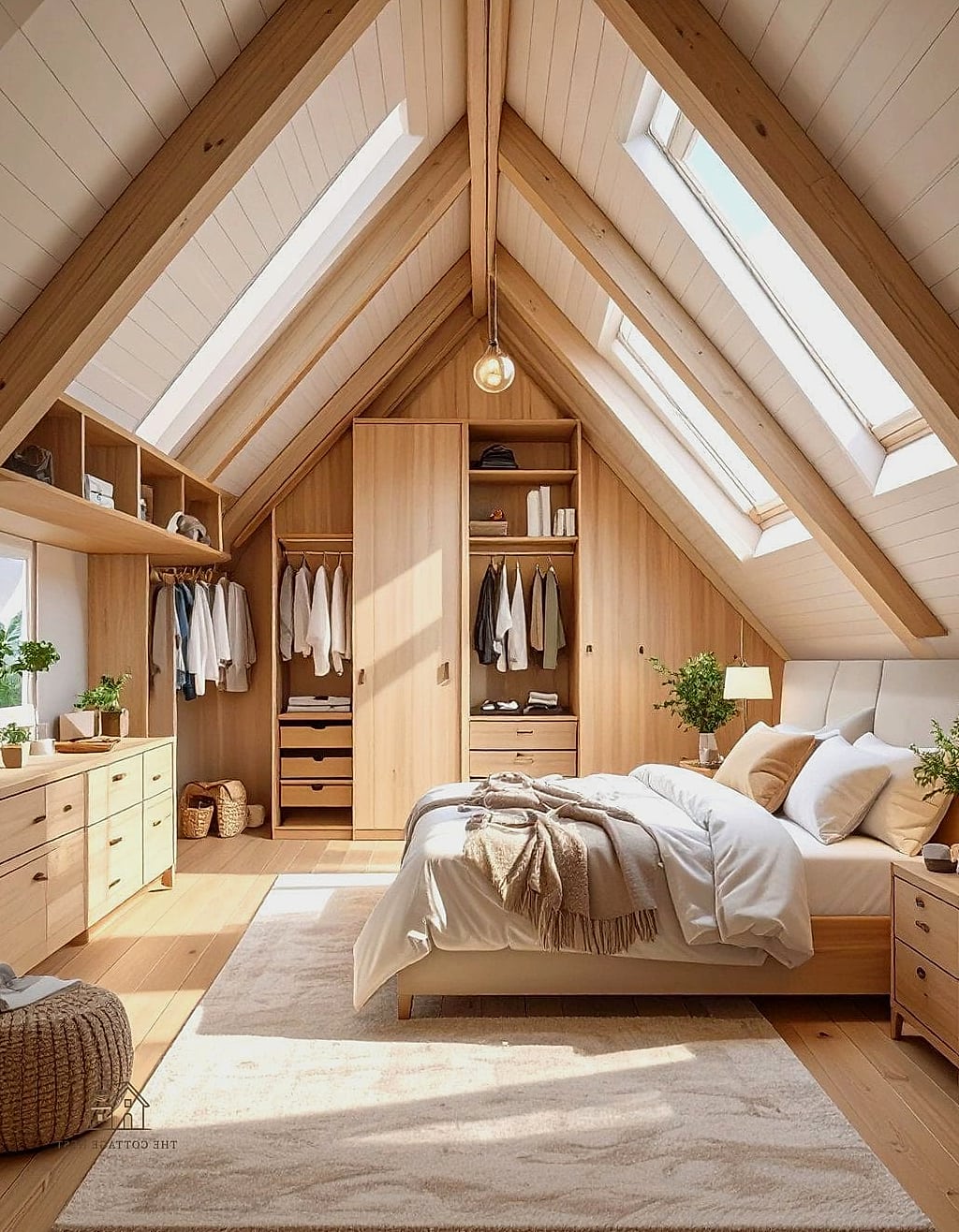
Attics rarely come with generous closet space, and sometimes they have none at all. A freestanding wardrobe solves that without requiring construction. Choose one with a slim profile so it fits against a low wall, and look for pieces with drawers built in underneath to maximize every inch.
Hang String Lights Along the Roofline
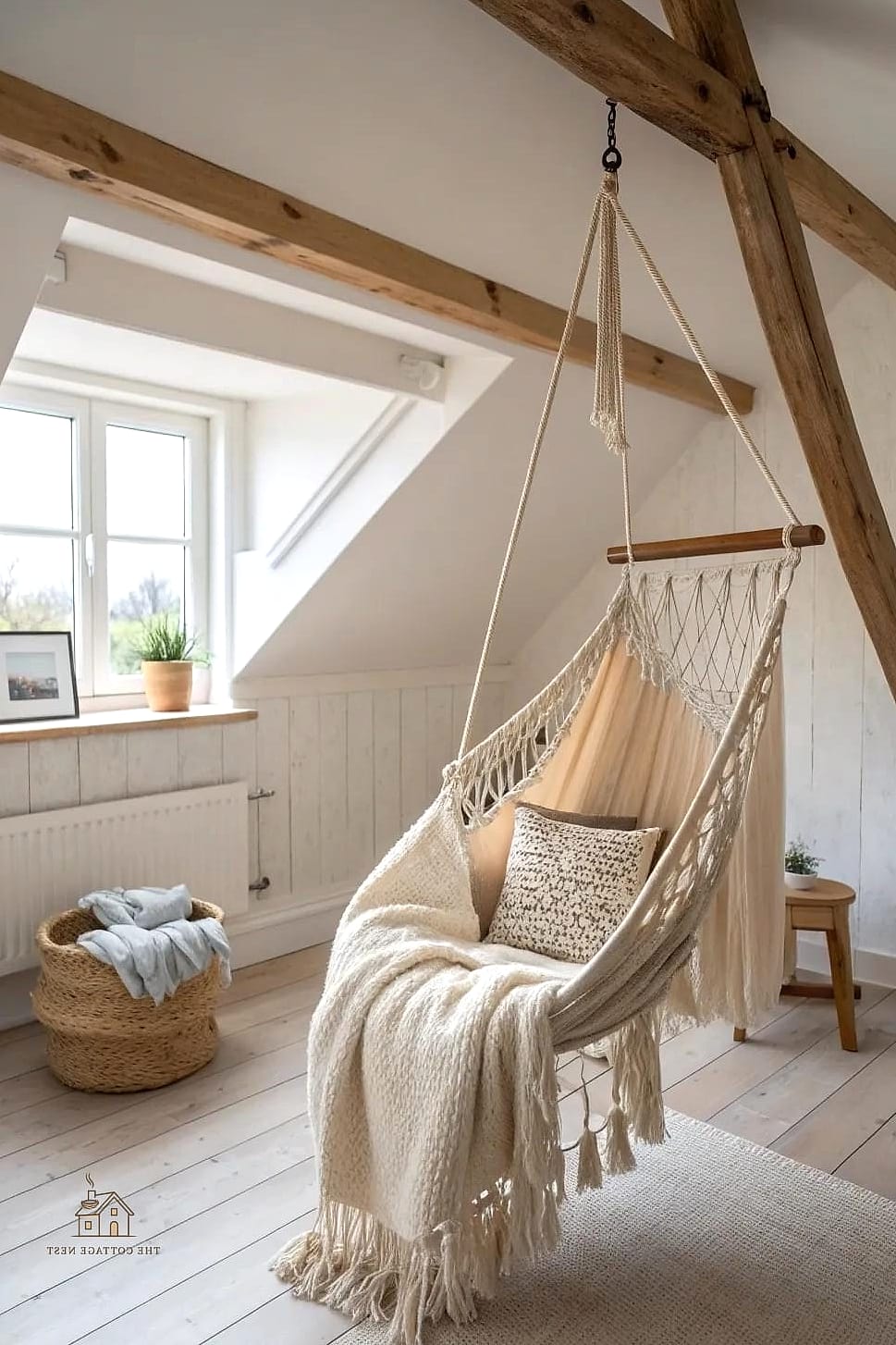
Following the angle of the ceiling with string lights or a plug-in LED strip adds a soft, ambient glow that highlights the architecture instead of hiding it. It’s an easy, budget-friendly upgrade that works in a farmhouse-style attic just as well as a modern minimalist one. Warm white bulbs tend to feel more inviting than cool white here.
Add a Statement Rug to Ground the Room
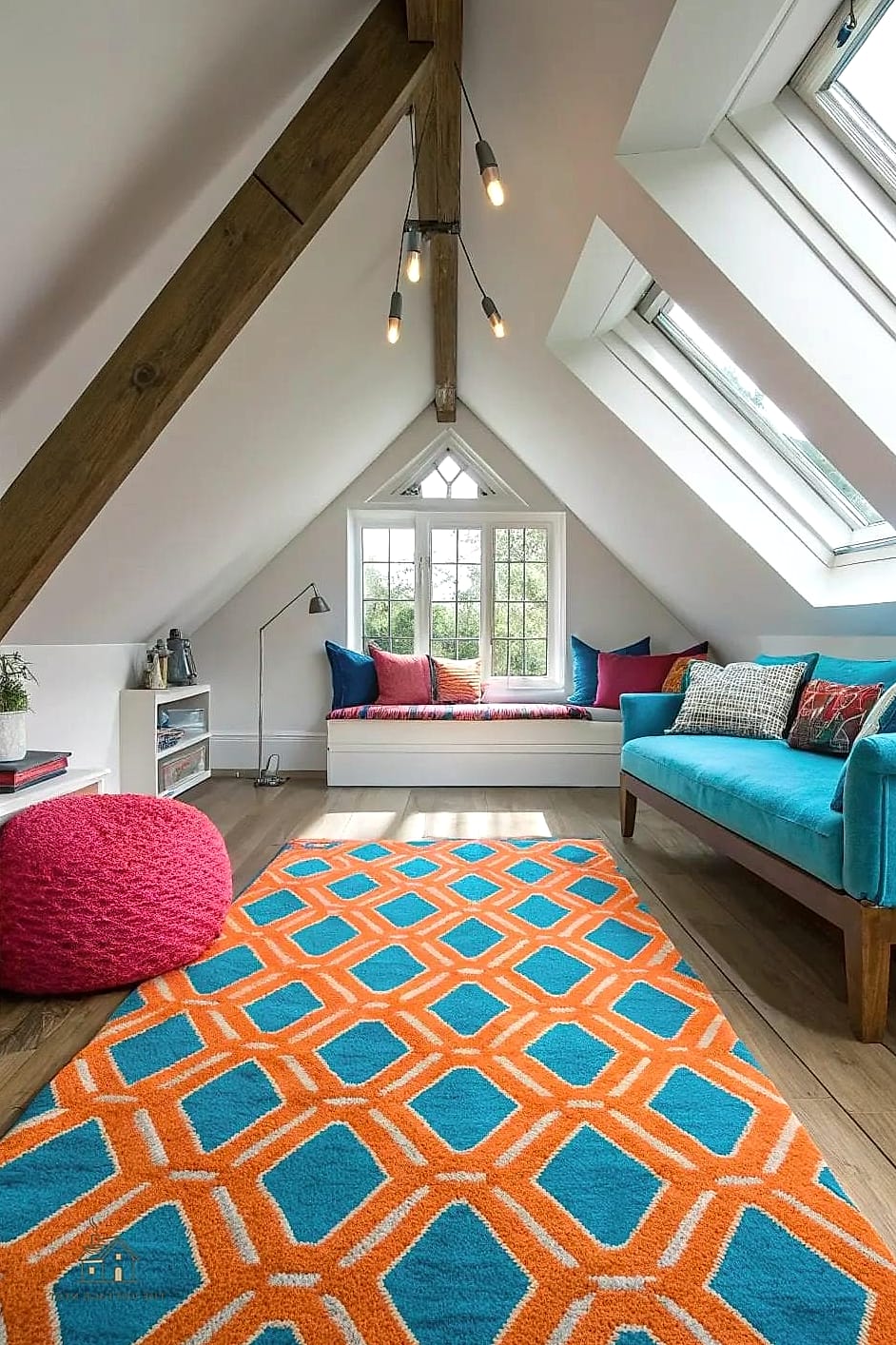
With so much visual interest happening at ceiling level, the floor needs something to hold its own. A patterned or richly colored rug anchors the room and adds warmth underfoot, which matters more in attics since they’re often chillier or warmer than the rest of the house depending on the season.
Turn a Knee Wall Into a Headboard
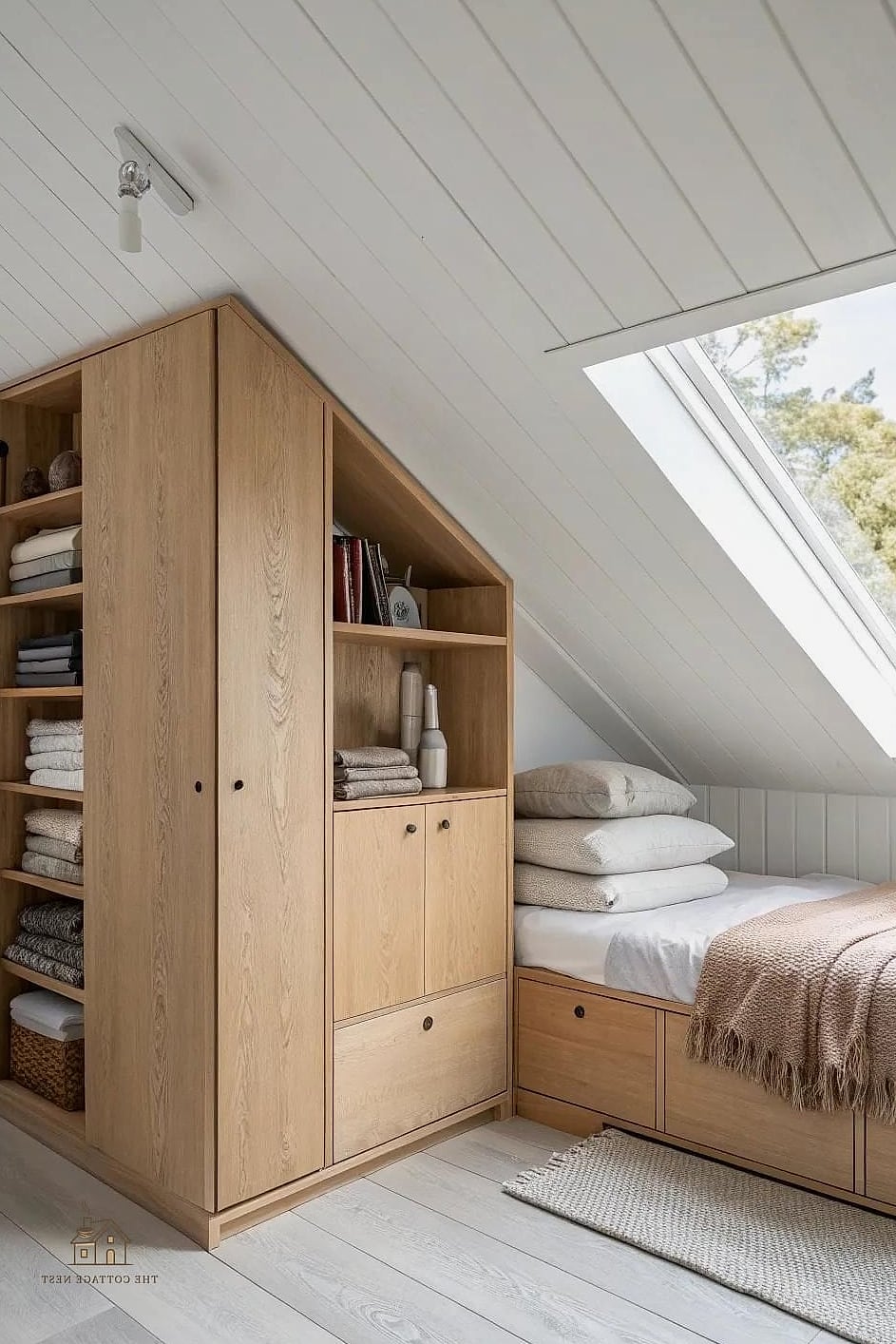
That short wall where the ceiling starts to slope — known as a knee wall — makes a surprisingly great spot for a bed with a built-in or upholstered headboard. It uses space that would otherwise go to waste and gives the room a custom, tailored look without a full renovation.
Choose Furniture on Legs, Not Bulky Bases
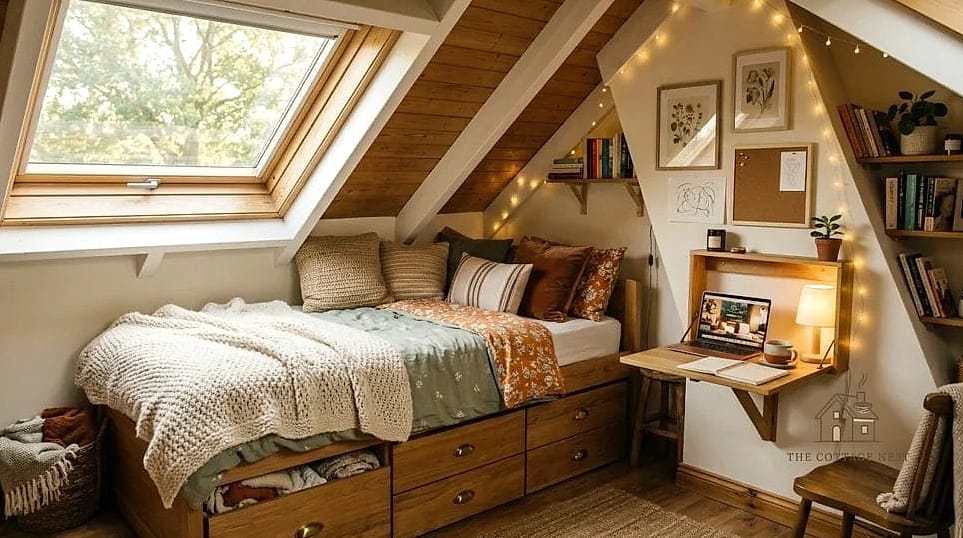
Furniture with visible legs — a bed frame, a small dresser, an accent chair — keeps sightlines open in a room that’s already working with less vertical space. It’s a small styling choice, but it makes a noticeable difference in how open the room feels once everything’s in place.
Install Recessed Lighting Along the Slopes
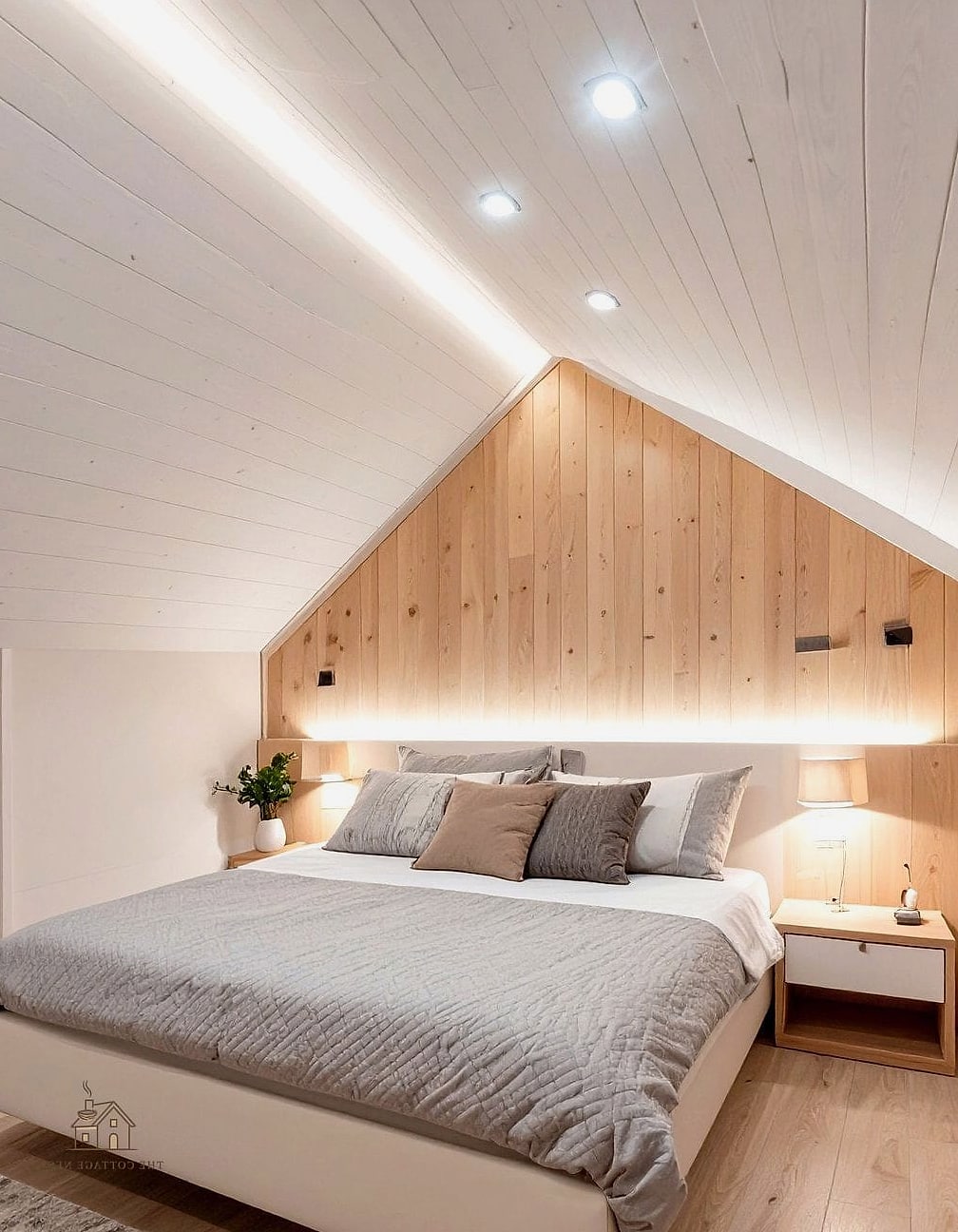
Traditional overhead fixtures don’t always work with angled ceilings. Recessed lighting solves that by sitting flush against the slope, giving you even light without anything hanging down into your head space. Layer it with a floor lamp or bedside sconces for a softer evening glow.
Add a Ceiling Fan Rated for Sloped Ceilings

Attics can run warmer than the rest of the house, especially in summer, so airflow matters. Look for a ceiling fan specifically rated for angled installation — most standard fans aren’t built for a pitched ceiling. It’s a practical addition that keeps the room comfortable without needing a window AC unit.
Create a Gallery Wall on the One Flat Wall
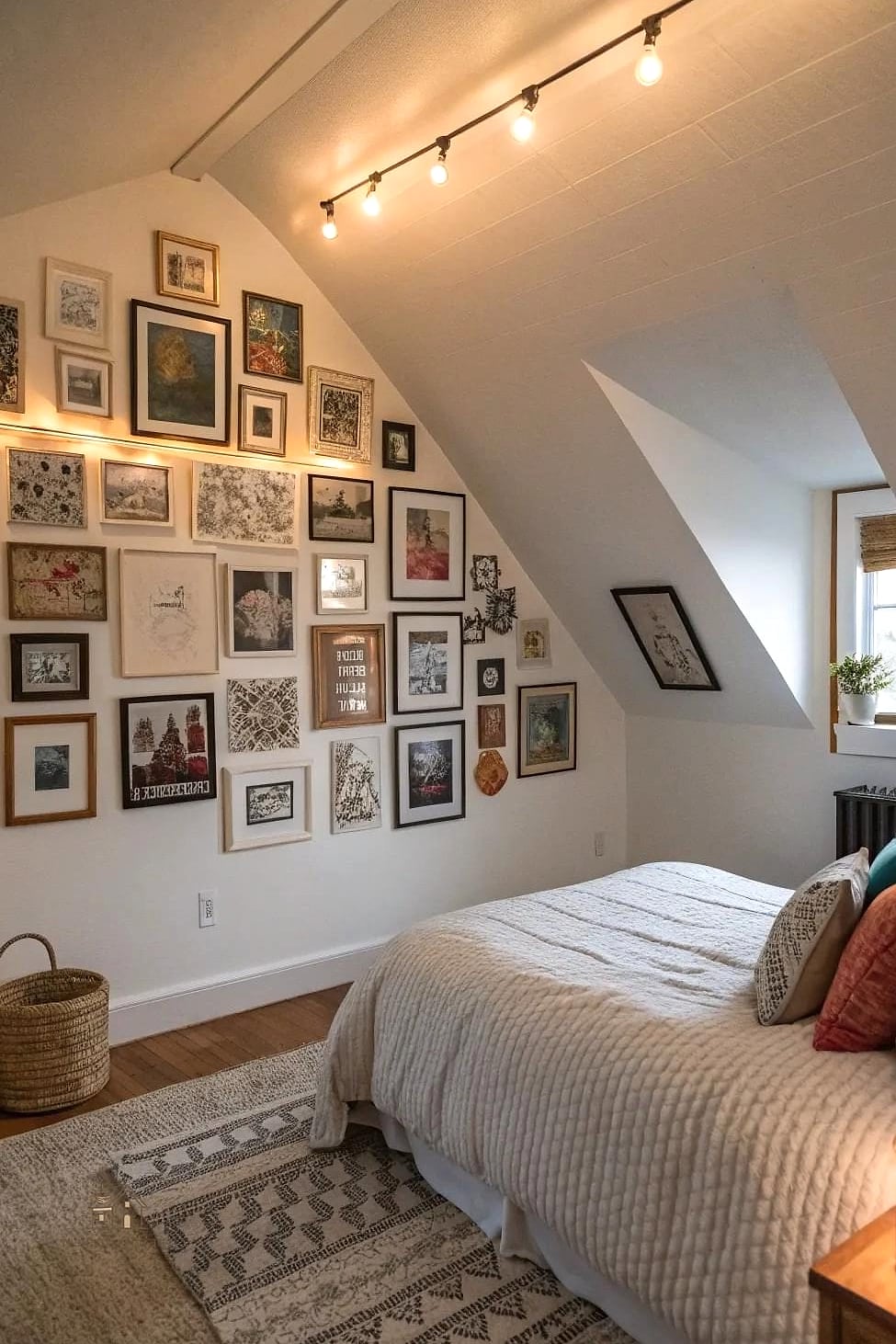
Most attic bedrooms have at least one full vertical wall, and it’s usually the best spot for a gallery of art, photos, or mirrors. Because the rest of the room has so much going on architecturally, this wall becomes a natural focal point. Mix frame sizes for a collected-over-time look.
Use Vertical Striping to Add Height
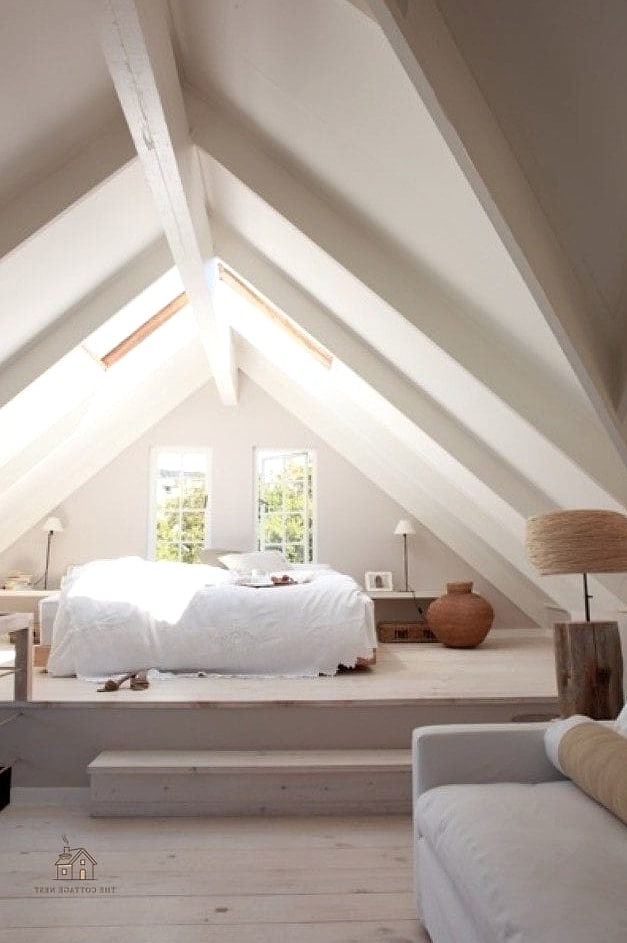
If your attic bedroom feels squat because of the low ceiling, vertical stripes — on wallpaper, paint, or even a striped accent wall — trick the eye into perceiving more height. It’s a classic decorator move that works particularly well on the shorter walls flanking a dormer.
Add Built-In Shelving Along the Kneewall
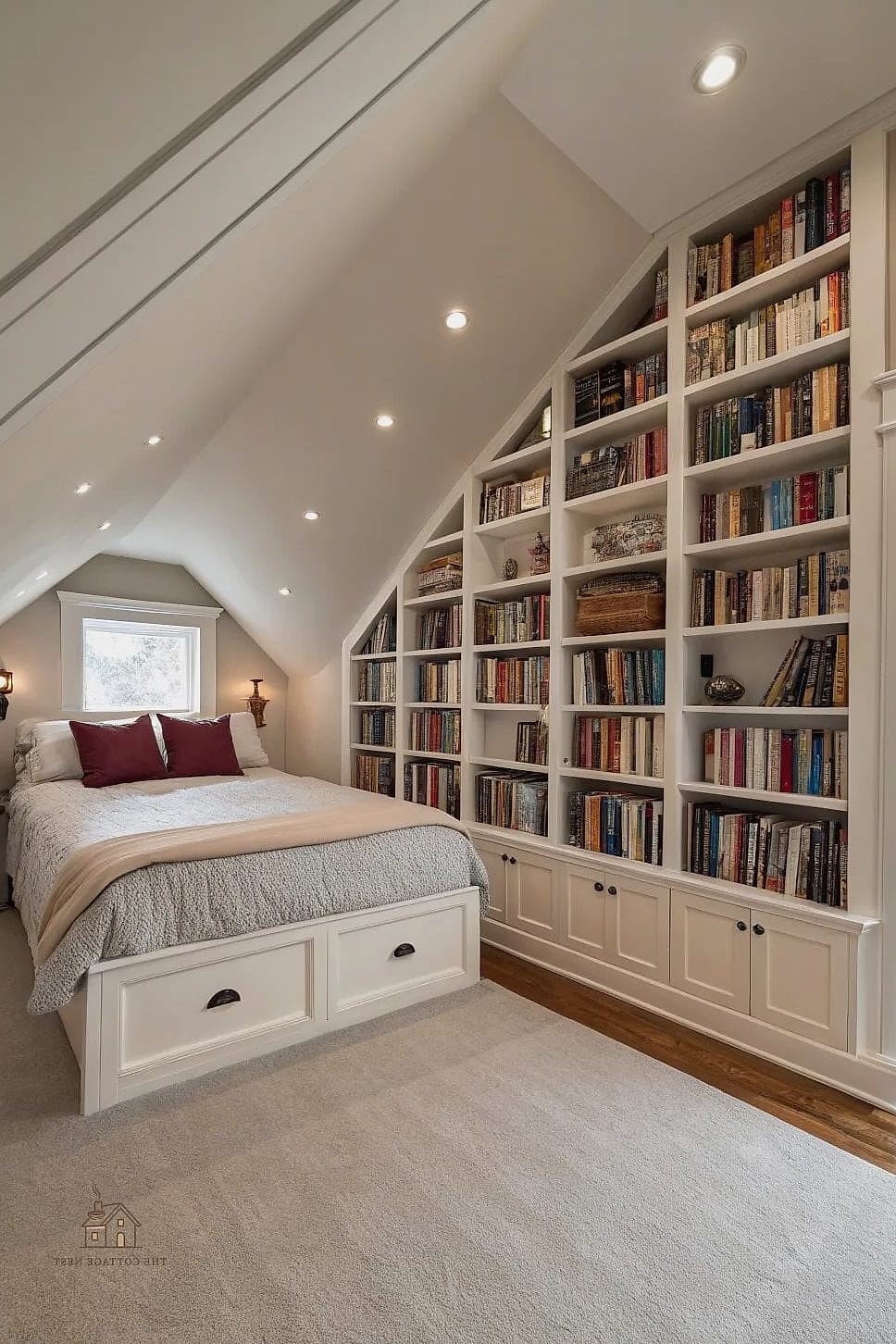
Similar to the under-eave storage idea but shallower and simpler, built-in shelving along the kneewall gives you display space for books, framed photos, or plants without eating into floor space. Open shelving here also keeps the room feeling less closed-in than a solid cabinet would.
Install a Barn Door for the Entry
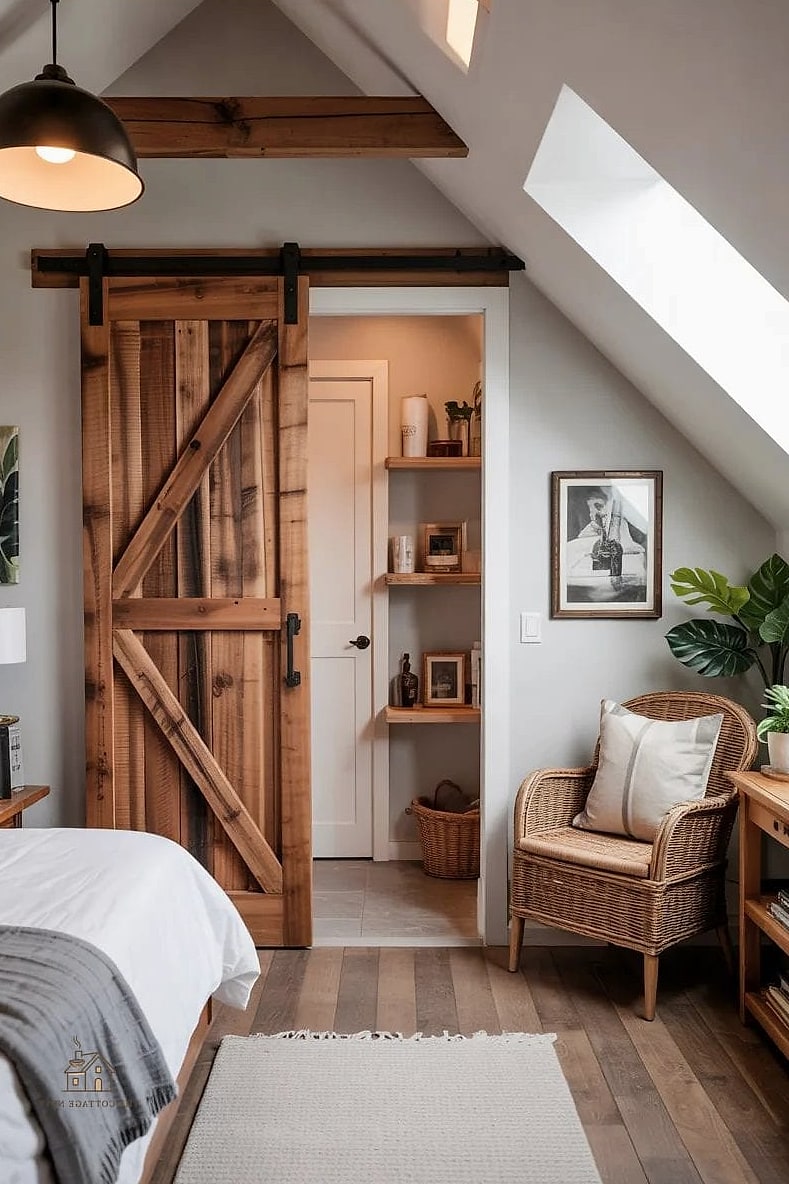
Attic staircases often don’t leave much clearance for a swinging door. A sliding barn door solves that instantly and adds a rustic or modern-farmhouse touch depending on the hardware you choose. Brushed brass or matte black hardware both look great against a painted or wood-paneled door.
Paint the Ceiling a Deeper Color Than the Walls
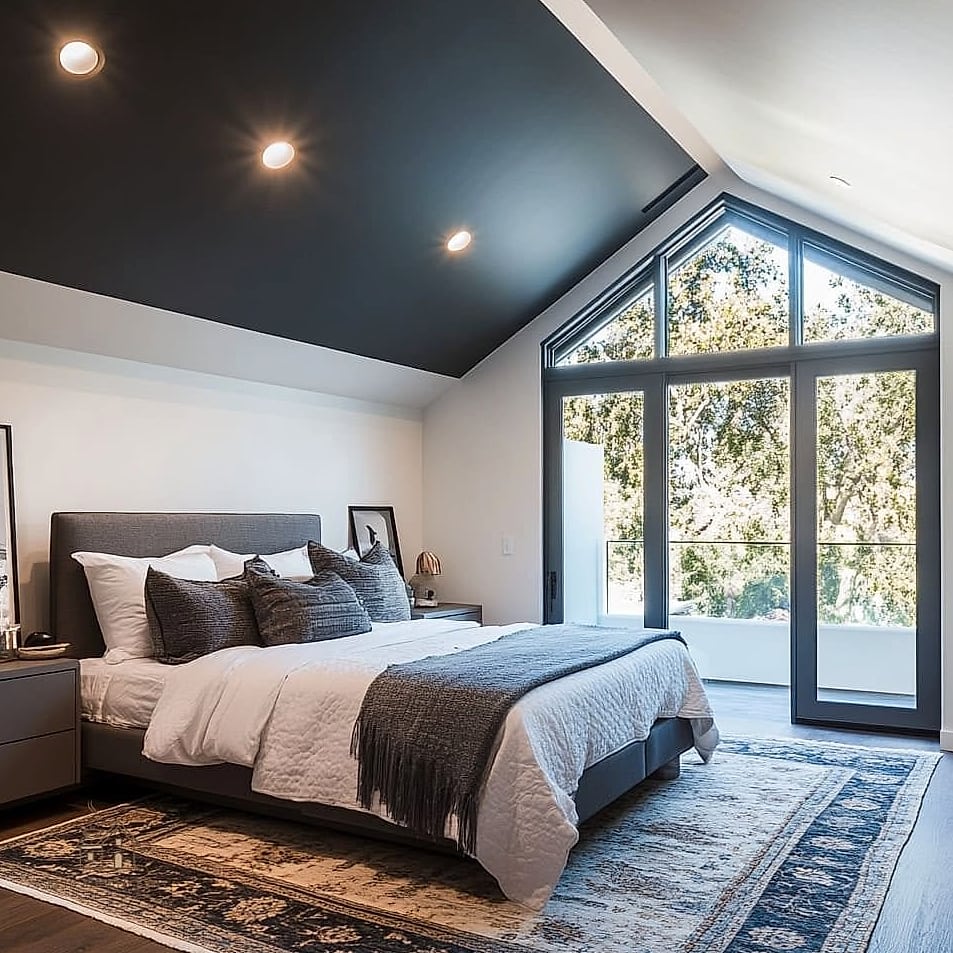
Instead of white ceilings everywhere, try a soft, deeper tone on the sloped portions — a muted sage, a warm terracotta, a dusty blue. It draws attention to the architecture in a flattering way and makes the room feel more like a cozy retreat than an afterthought space.
Add a Compact Desk in the Peak
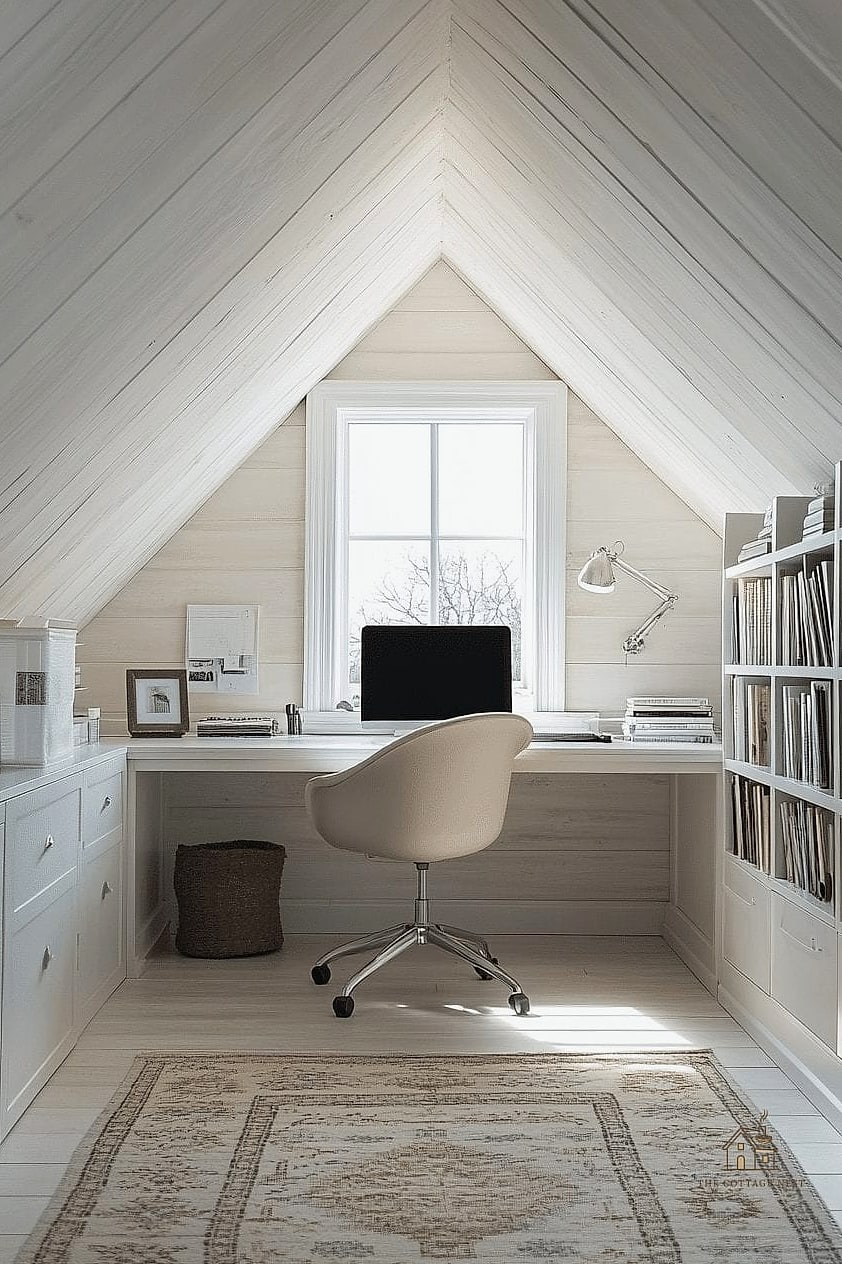
The tallest point of the room, usually right at the roof’s peak, is often the most overlooked spot in an attic bedroom. A small desk tucked there makes use of otherwise wasted height and gives you a quiet workspace tucked away from the rest of the house.
Use Woven Baskets for Soft Storage
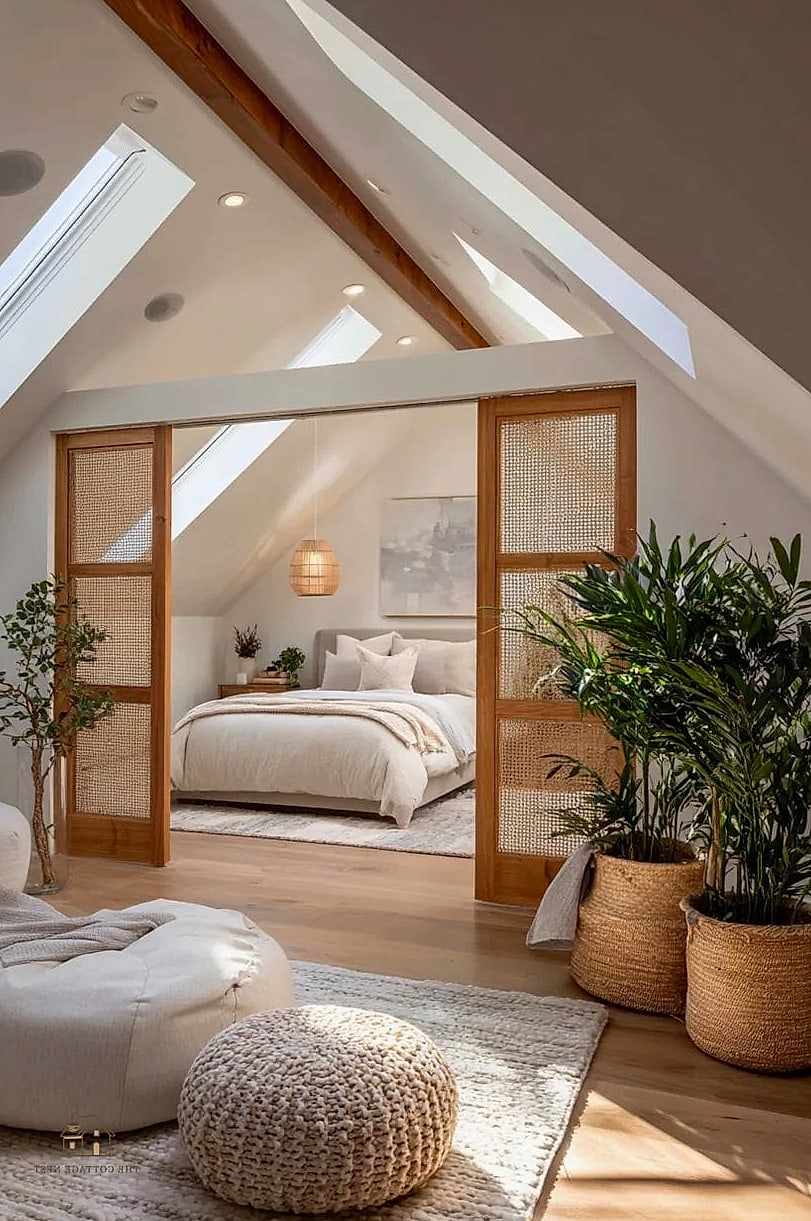
Not every storage solution needs to be built-in. Woven baskets tucked under the eaves or beside the bed handle blankets, laundry, or miscellaneous items without looking like storage at all. They add texture too, which softens all those hard angles in the room.
Choose a Low Dresser to Match the Ceiling Line
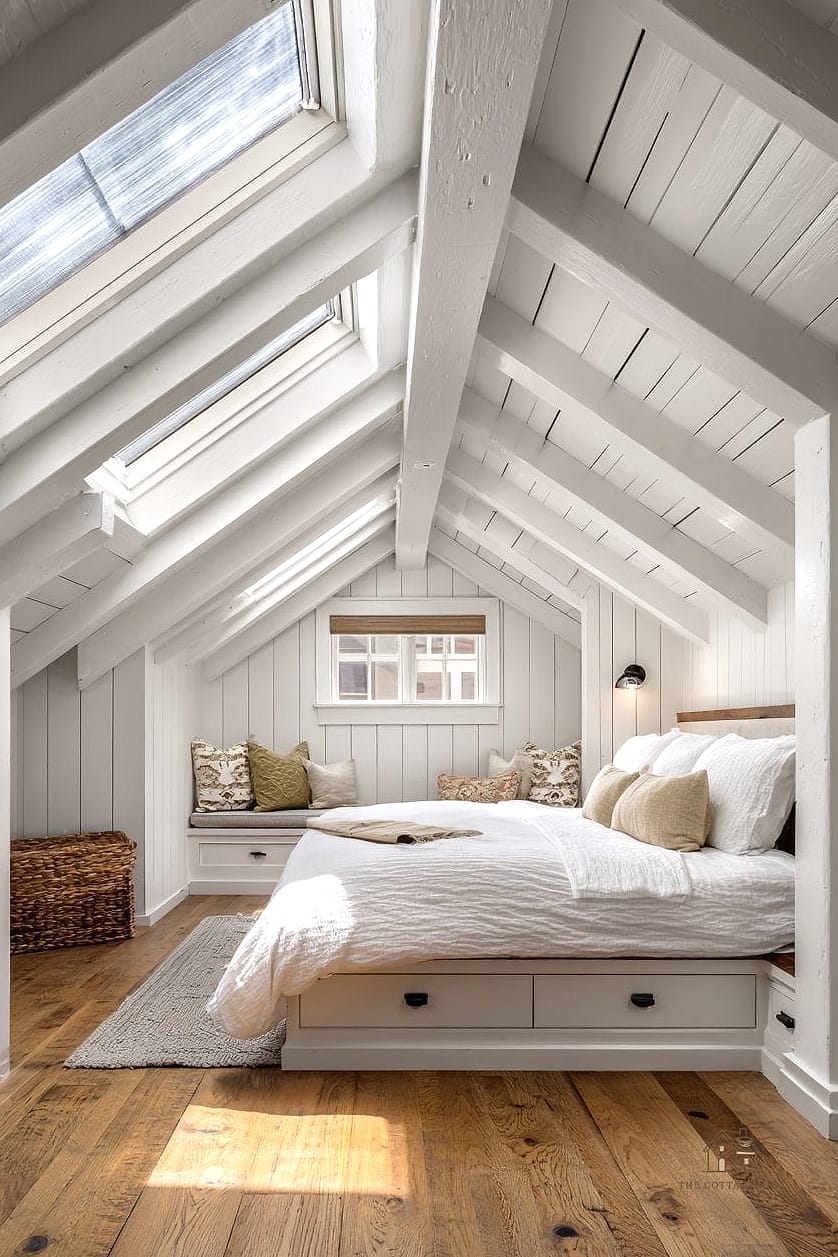
A tall dresser can bump right into a sloped ceiling, which is both impractical and visually awkward. Opt for a wide, low dresser instead — it gives you the same storage capacity while sitting comfortably under the slope. Six drawers spread horizontally works better here than four stacked vertically.
Add Curtains Instead of Blinds on Dormer Windows
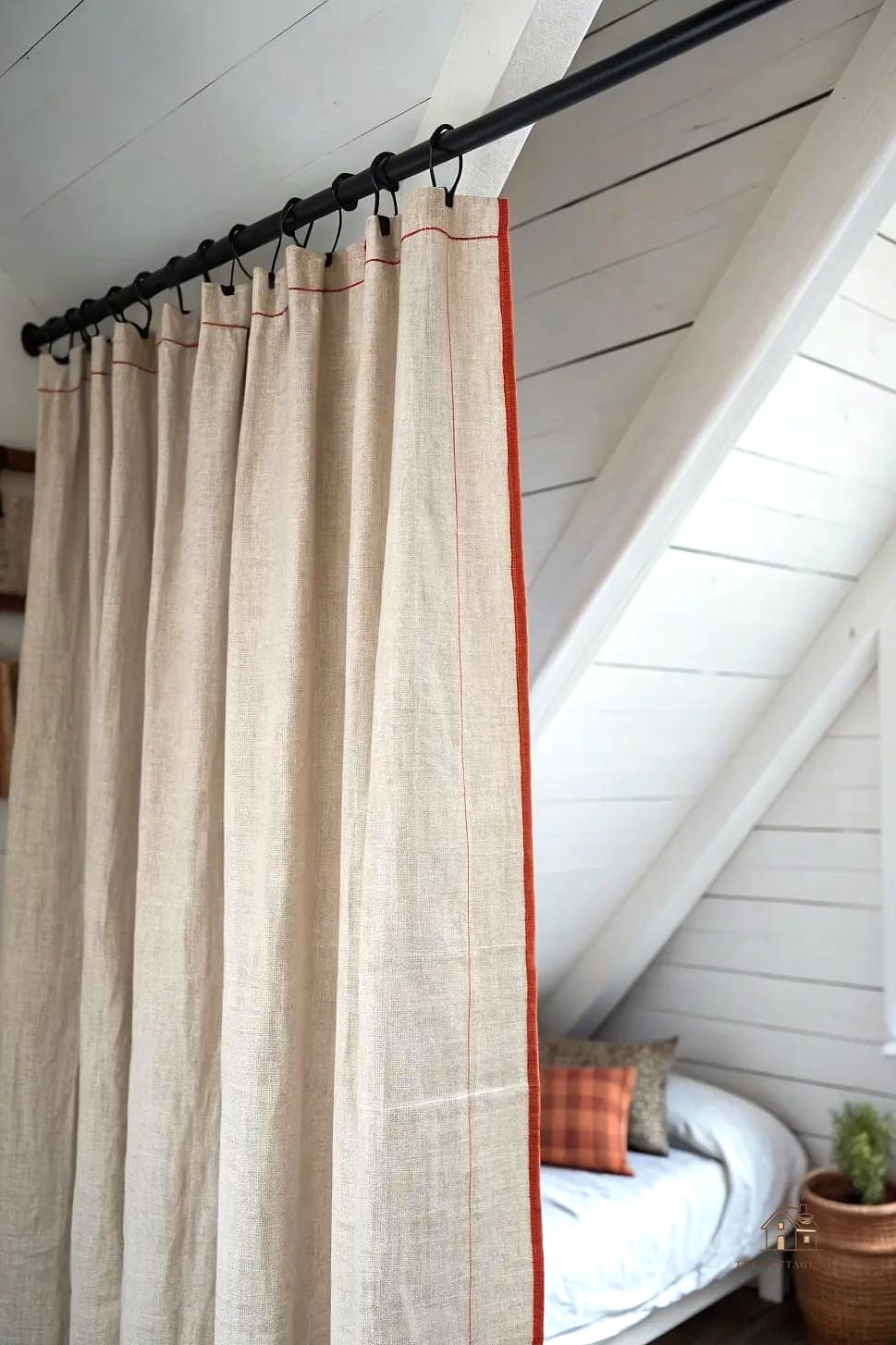
Soft curtains around a dormer window add a layer of coziness that blinds alone can’t match. Choose a lightweight linen or cotton in a color that complements your walls, and mount the rod as close to the ceiling as the slope allows to maximize the sense of height.
Create a Mini Lounge Area With a Daybed
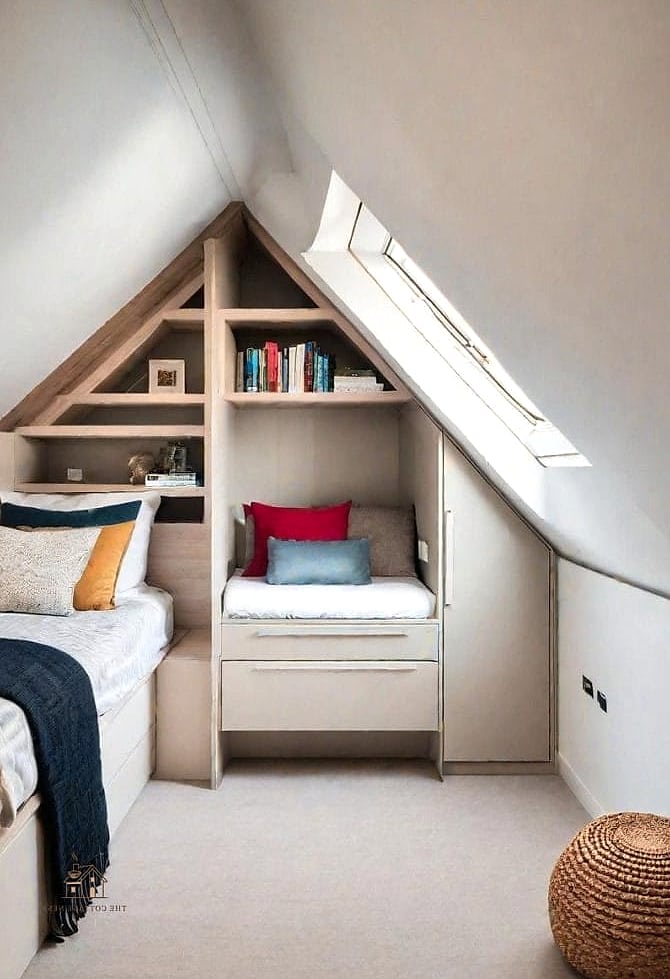
If your attic bedroom has enough square footage, consider swapping a full bed for a daybed instead. It works double duty as seating during the day and sleeping space at night, which is especially handy in a multi-purpose attic room that might also serve as a guest space or home office.
Attic bedrooms reward a little creativity more than almost any other room in the house. Once you stop seeing the slanted ceilings and odd corners as obstacles and start treating them as the room’s built-in personality, the design decisions get a lot easier. Pick a few ideas from this list that match your space and your style, and you’ll end up with a room that feels less like leftover square footage and more like the best-kept secret in the house.