25 Simple Cheap Walkway Ideas Diy That Are Totally Doable
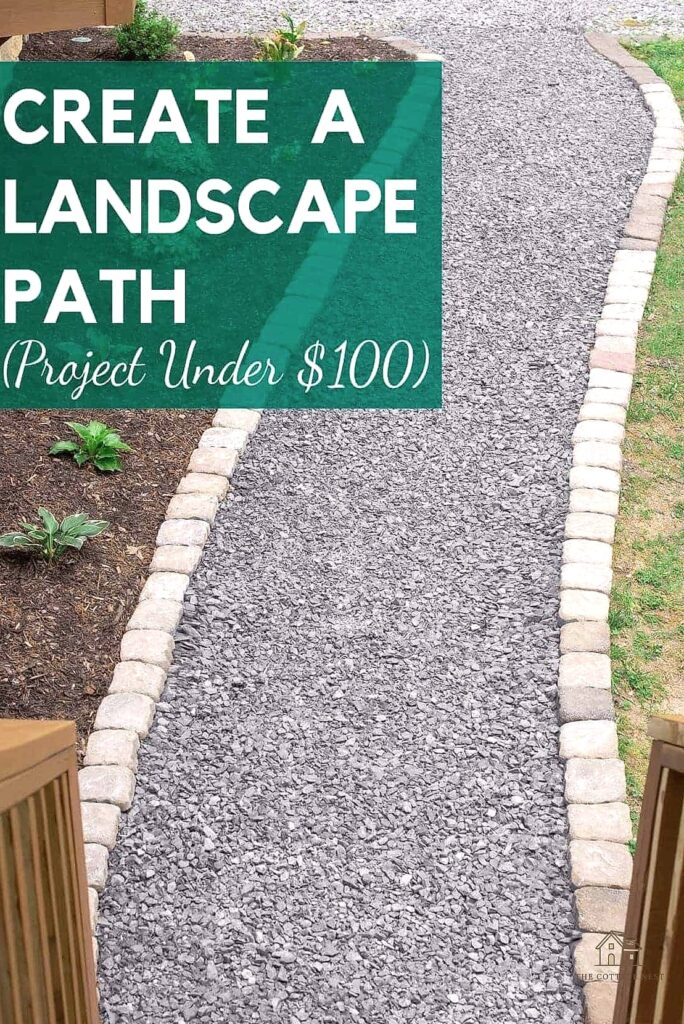
- Gravel Path with Steel Edging
- Stepping Stones Set in Grass
- Mulch Walkway Through a Garden
- Broken Concrete "Urbanite" Path
- Brick Herringbone Walkway
- Wood Round Stepping Path
- Pea Gravel and Paver Combo
- Painted Concrete Slab Path
- Brick Edged Gravel Path
- Flagstone with Moss or Creeping Thyme
- Pallet Wood Walkway
- River Rock Border Path
- Concrete Paver Grid Path
- Crushed Shell Pathway
- DIY Stamped Concrete Look with Rubber Mats
- Recycled Tire Pavers
- Sand-Set Paver Path with Curved Edges
- Cinder Block Planter Path
- Wood Chip and Log Border Trail
- Brick Basket Weave Path
- Gravel Path with Solar Lights
- Stamped Paver Stepping Stones You Pour Yourself
- Decomposed Granite Path
- Reclaimed Brick and Gravel Checkerboard
- Simple Sand Path Bordered by Plants
25 Simple Cheap Walkway Ideas Diy That Are Totally Doable
If your front path is cracked, boring, or just plain missing, you don’t need a big budget to fix it. A good walkway makes your whole yard feel finished, and most of these projects can be done in a weekend with basic tools. Here are 25 simple, cheap, totally doable walkway ideas to steal for your own yard.
Gravel Path with Steel Edging
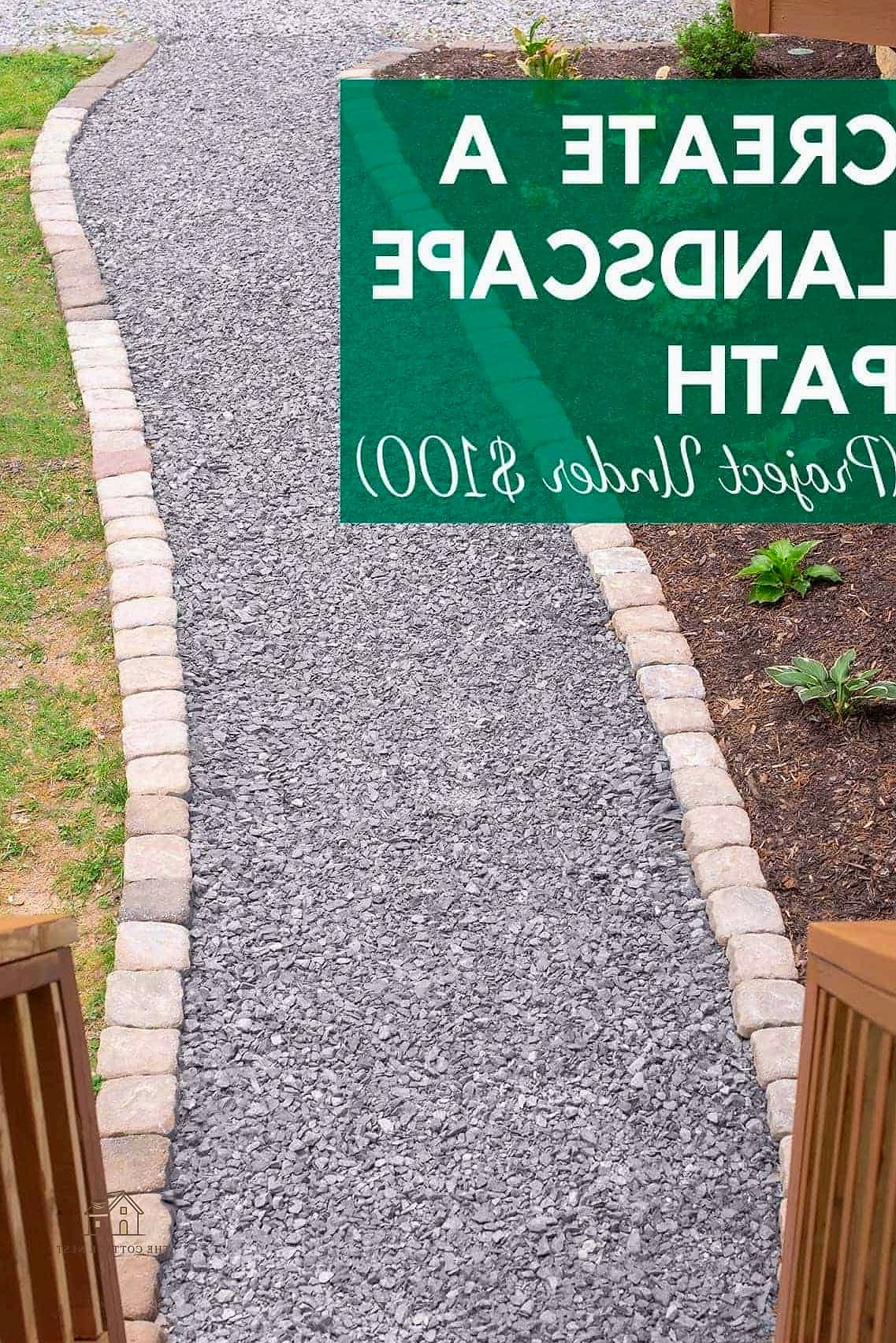
Gravel is one of the cheapest ground materials you can buy, and it drains beautifully after rain. Lay down landscape fabric first to keep weeds from popping through, then pour in pea gravel or crushed granite. Steel or aluminum edging keeps everything contained so the gravel doesn’t wander into your lawn. This works especially well for side yards or garden paths where you want something casual rather than formal.
Stepping Stones Set in Grass
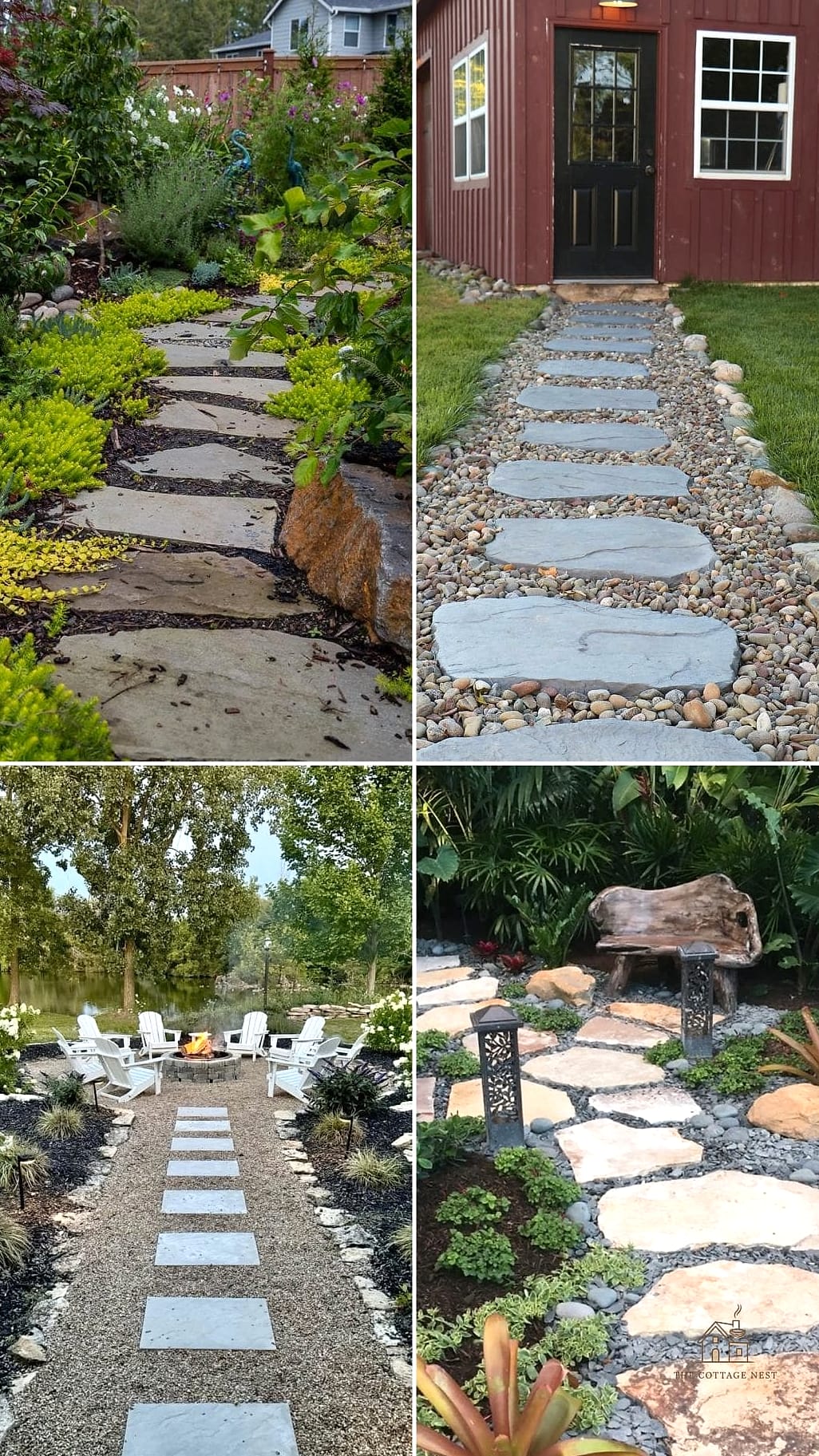
This is the classic “I want a path but not a full patio” solution. Space concrete or natural stone pavers about a stride apart and sink them flush with the lawn so your mower can glide right over. It looks relaxed and intentional at the same time. Budget-wise, you can buy stepping stones individually, so you can spread the cost out over a few paychecks if needed.
Mulch Walkway Through a Garden
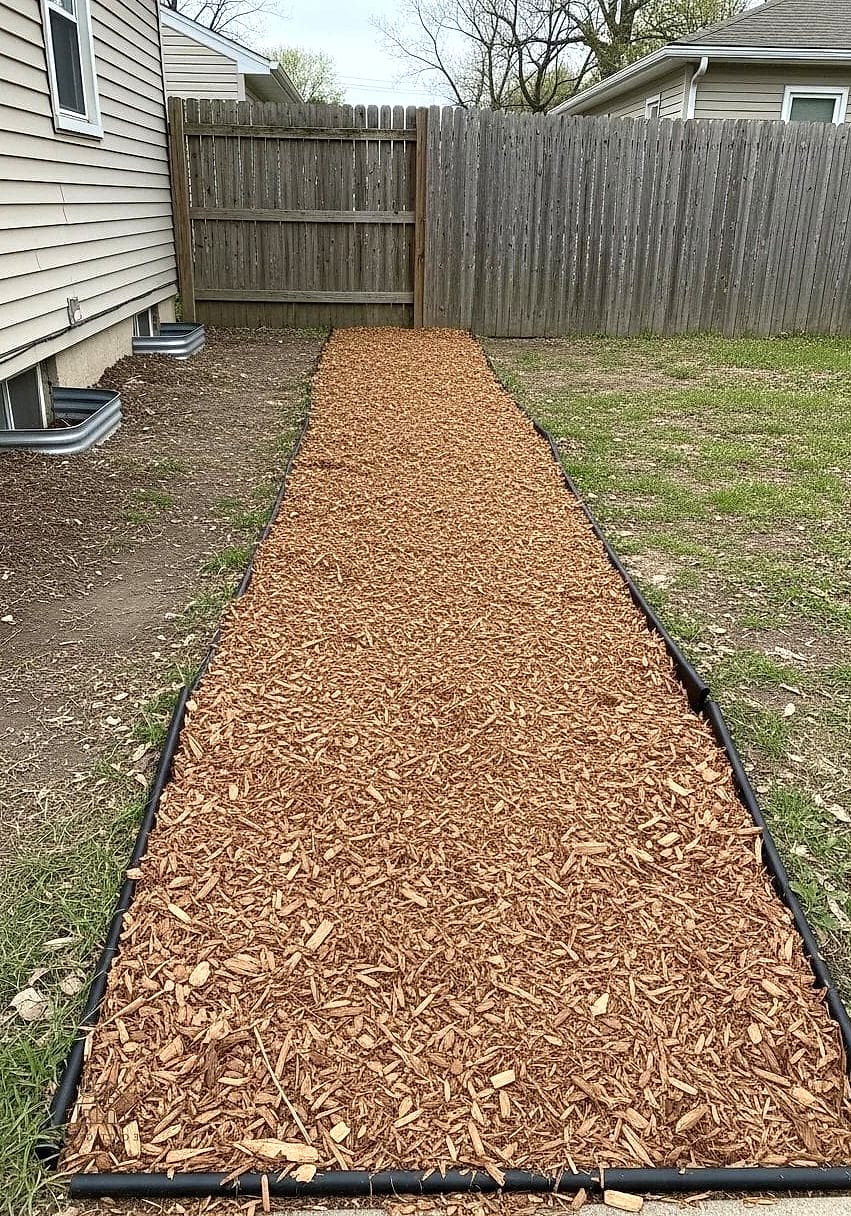
For a woodland or cottage-garden vibe, mulch is hard to beat. It’s soft underfoot, cheap by the bag or bulk yard, and it breaks down over time to feed the soil around it. Edge it with logs, bricks, or even large stones to keep it from spreading into your beds. Just plan to top it off once a year since mulch compacts and decomposes.
Broken Concrete “Urbanite” Path
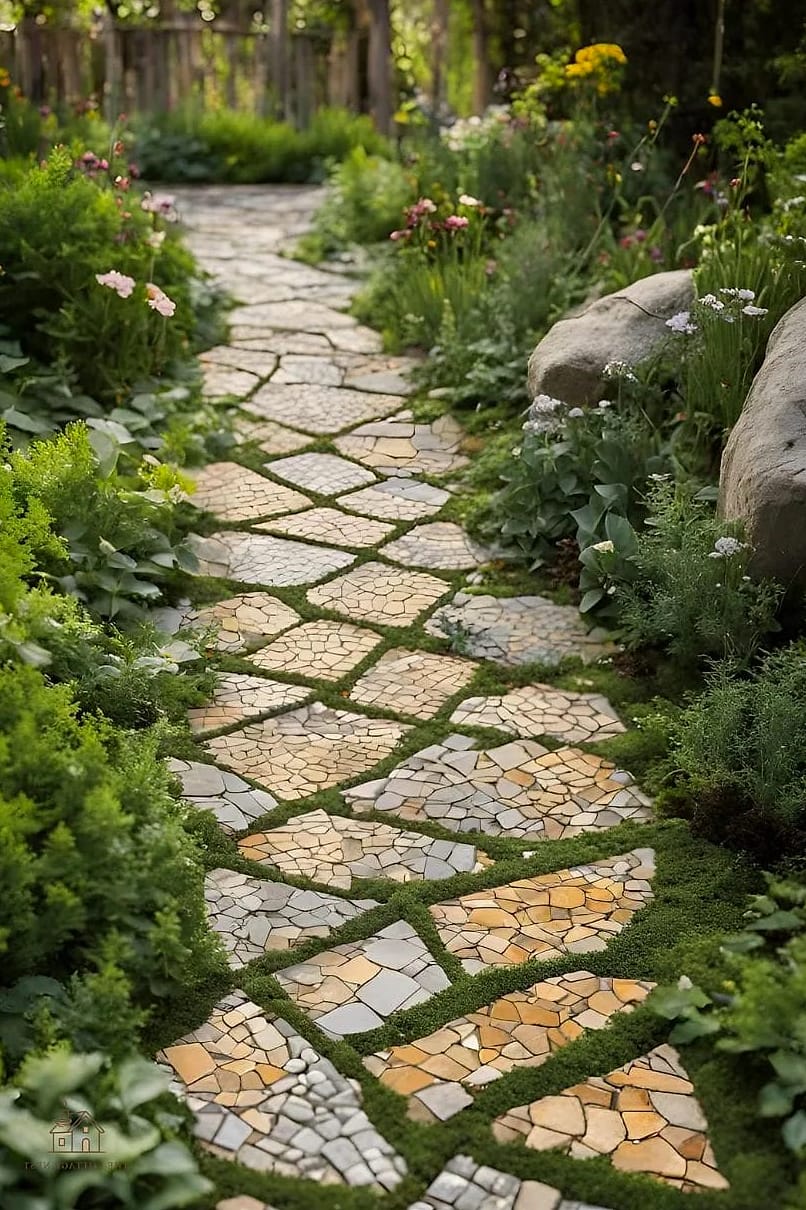
If you’re demoing an old patio or driveway, don’t haul that concrete to the dump. Break it into irregular pieces and reuse it as stepping pavers. This is sometimes called urbanite, and it’s basically free flagstone. Fit the pieces together like a puzzle with small gaps for grass or gravel in between for a surprisingly polished, rustic-modern look.
Brick Herringbone Walkway
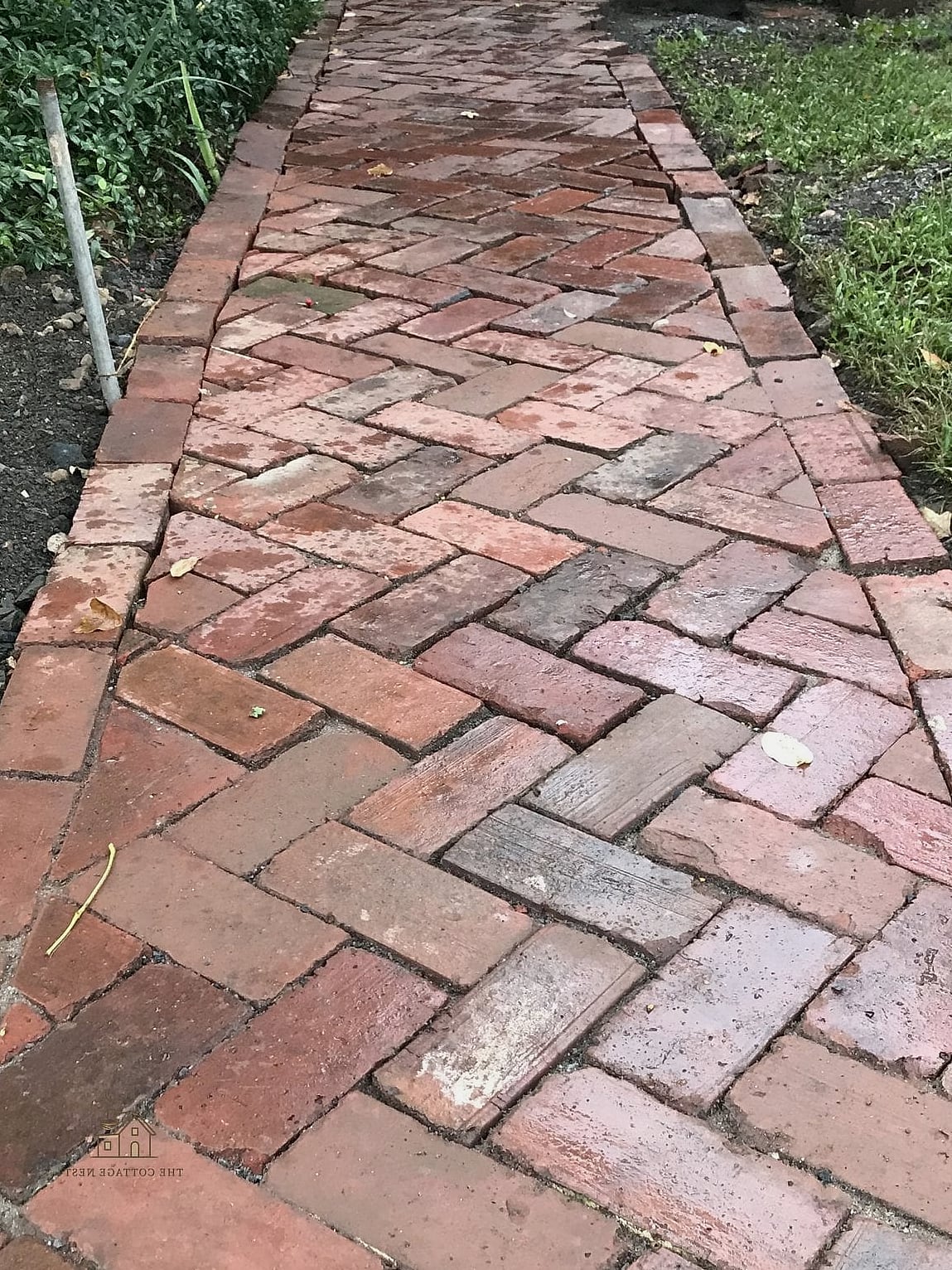
Reclaimed or new bricks laid in a herringbone pattern instantly read as classic and expensive, even though the material itself is affordable. Set them in a sand base rather than mortar to keep the project DIY-friendly, and tamp everything down firmly before use. This pattern works especially well leading up to a traditional or farmhouse-style front door.
Wood Round Stepping Path
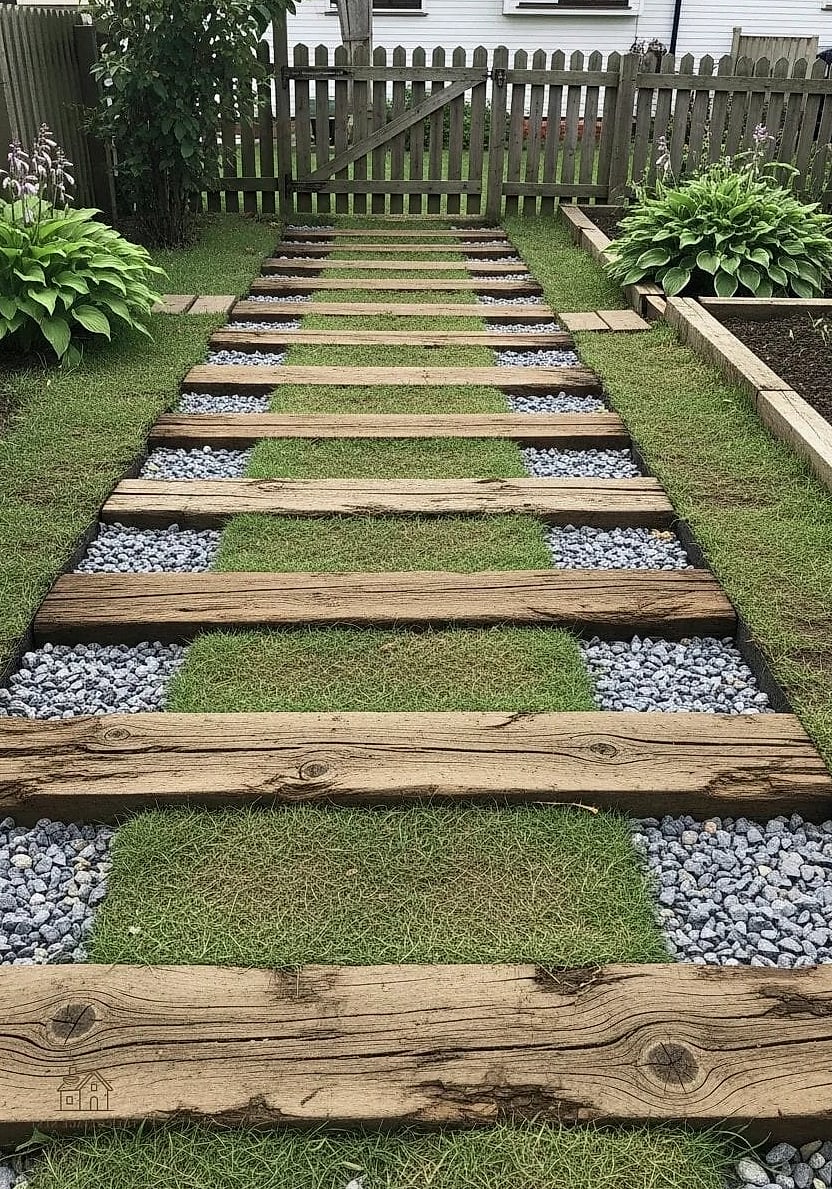
Cut rounds from a fallen tree or leftover log and set them into the ground as natural stepping stones. This one costs next to nothing if you already have access to wood, and it fits perfectly into a woodsy or naturalistic landscape. Keep in mind wood rounds will eventually rot, so this is more of a fun, low-commitment project than a permanent fixture.
Pea Gravel and Paver Combo
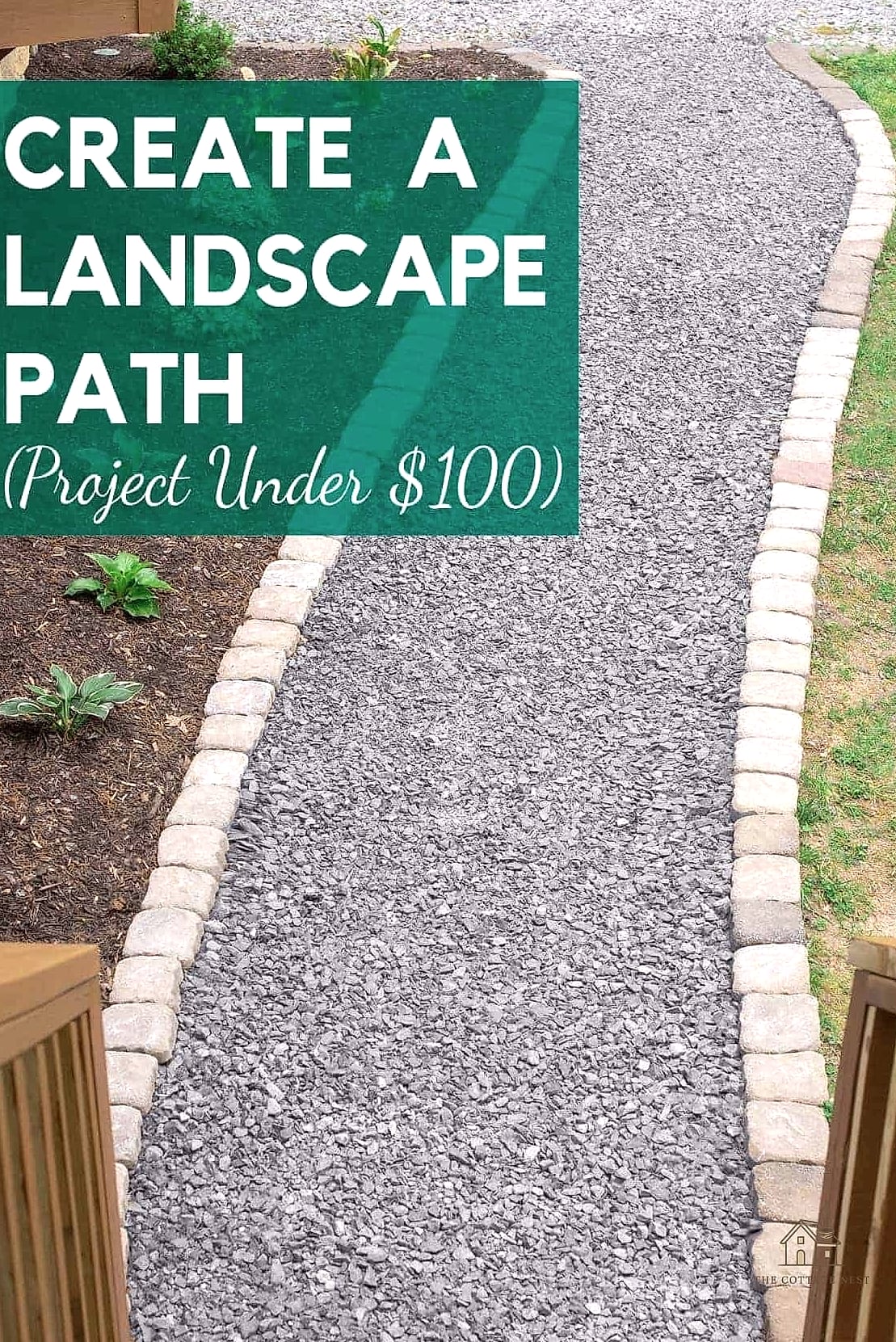
Mixing large square pavers with pea gravel filling the gaps gives you a path that feels more designed than gravel alone, without the cost of solid paving. Space the pavers evenly and let the gravel do the visual work between them. It’s a great pet-friendly option too, since gravel drains fast and doesn’t hold onto mud.
Painted Concrete Slab Path
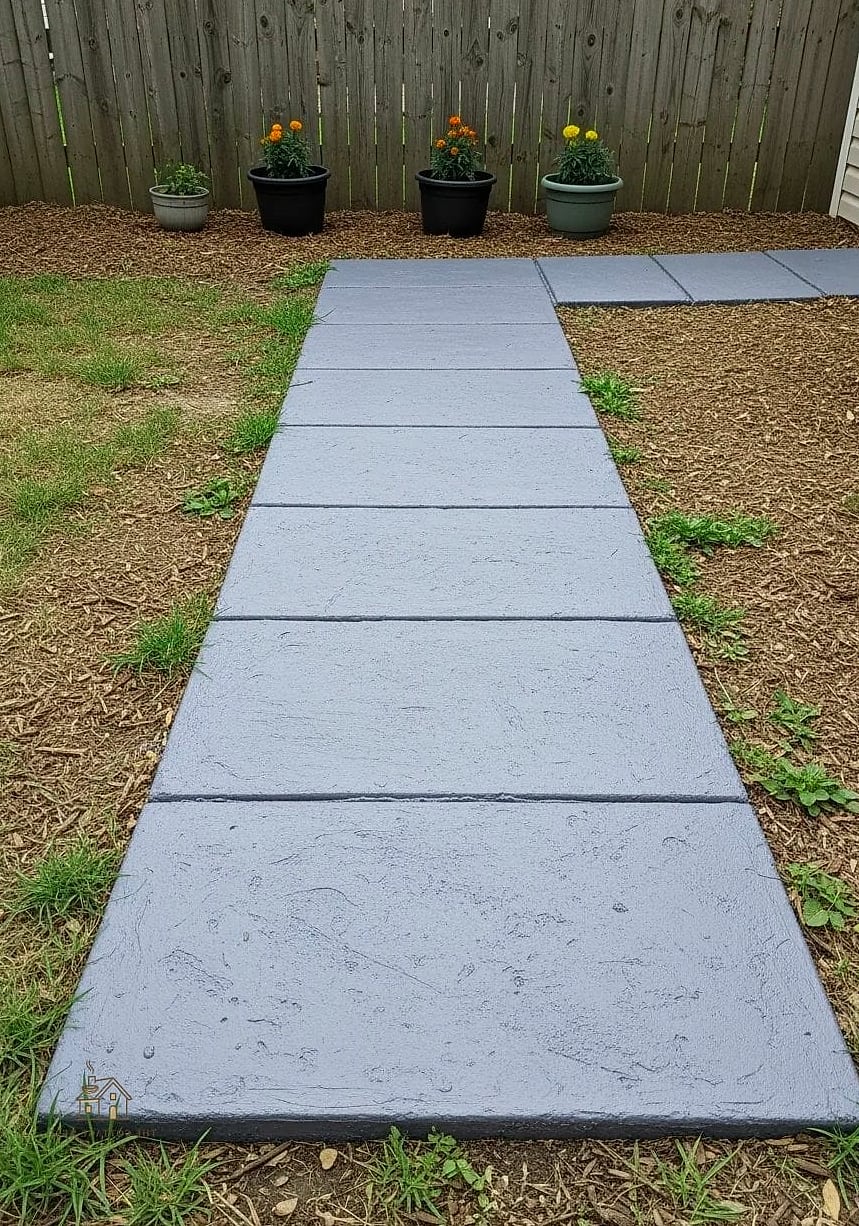
If you already have a plain concrete walkway that just looks tired, paint or stain it instead of tearing it out. Concrete stain in a warm terracotta or soft gray can completely change how a path feels. You can even add a stenciled pattern for a tile-look finish at a fraction of real tile cost. This is one of the fastest facelifts on this list.
Brick Edged Gravel Path
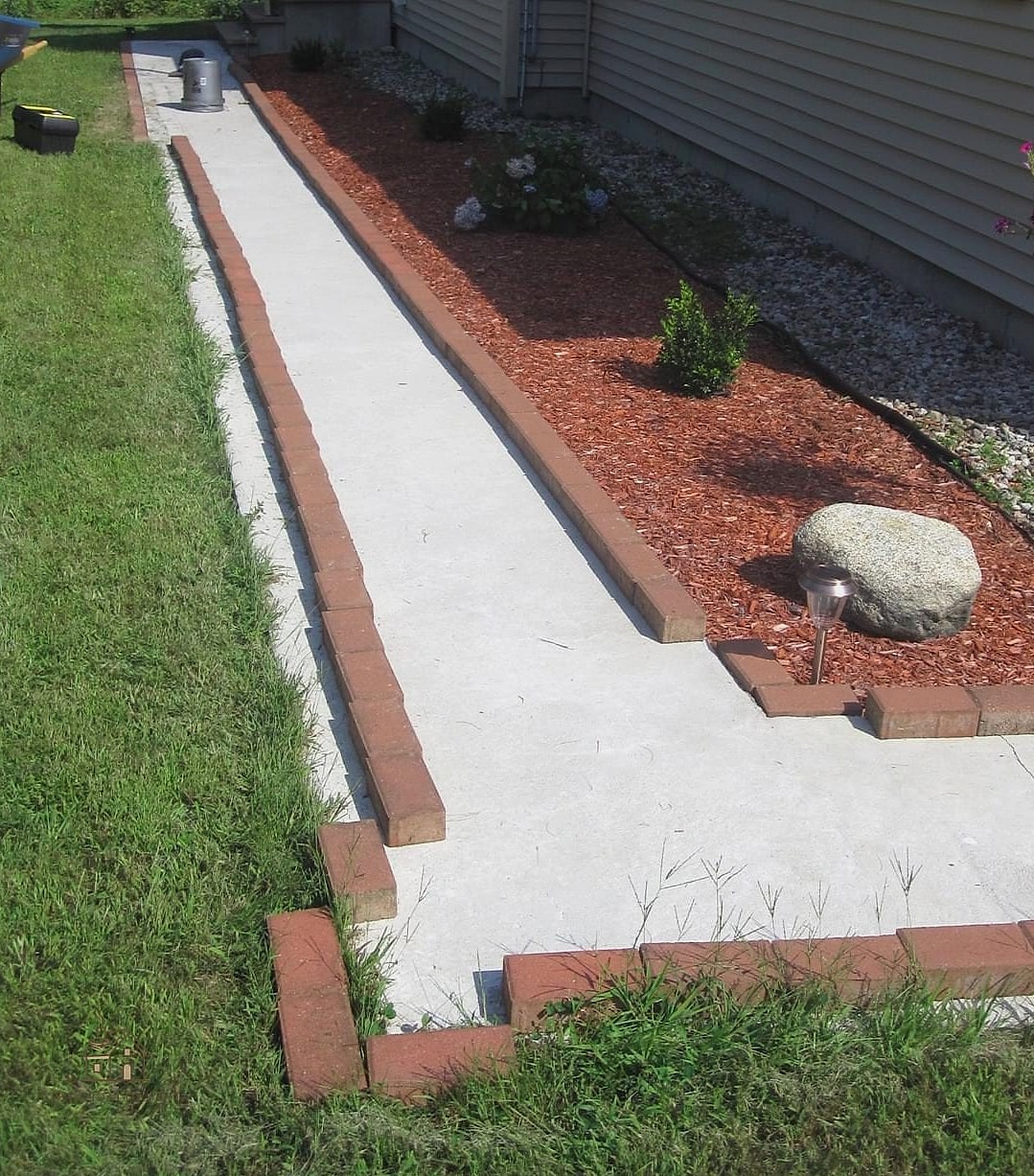
Instead of steel edging, line your gravel path with a single row of bricks set on their sides. It gives a more traditional, garden-cottage feel and costs very little if you’re using reclaimed brick. The contrast between the rough gravel texture and the clean brick line makes the whole path look more finished than the materials alone would suggest.
Flagstone with Moss or Creeping Thyme
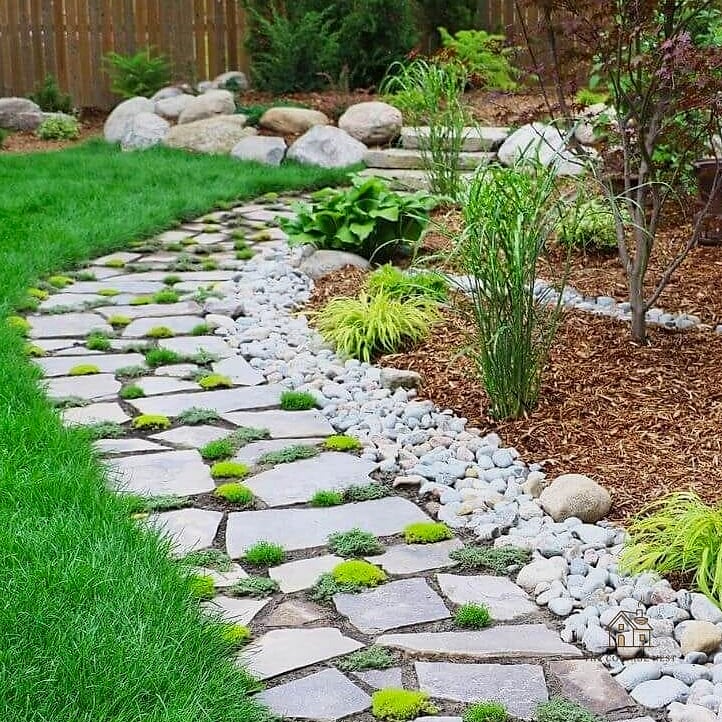
Lay irregular flagstone pieces with gaps between them, then fill those gaps with creeping thyme or moss instead of grout. Over a season or two, the plants fill in and soften the whole path. Thyme even releases a light scent when you step on it, which is a nice little bonus. This works best in yards with some shade and consistent moisture.
Pallet Wood Walkway
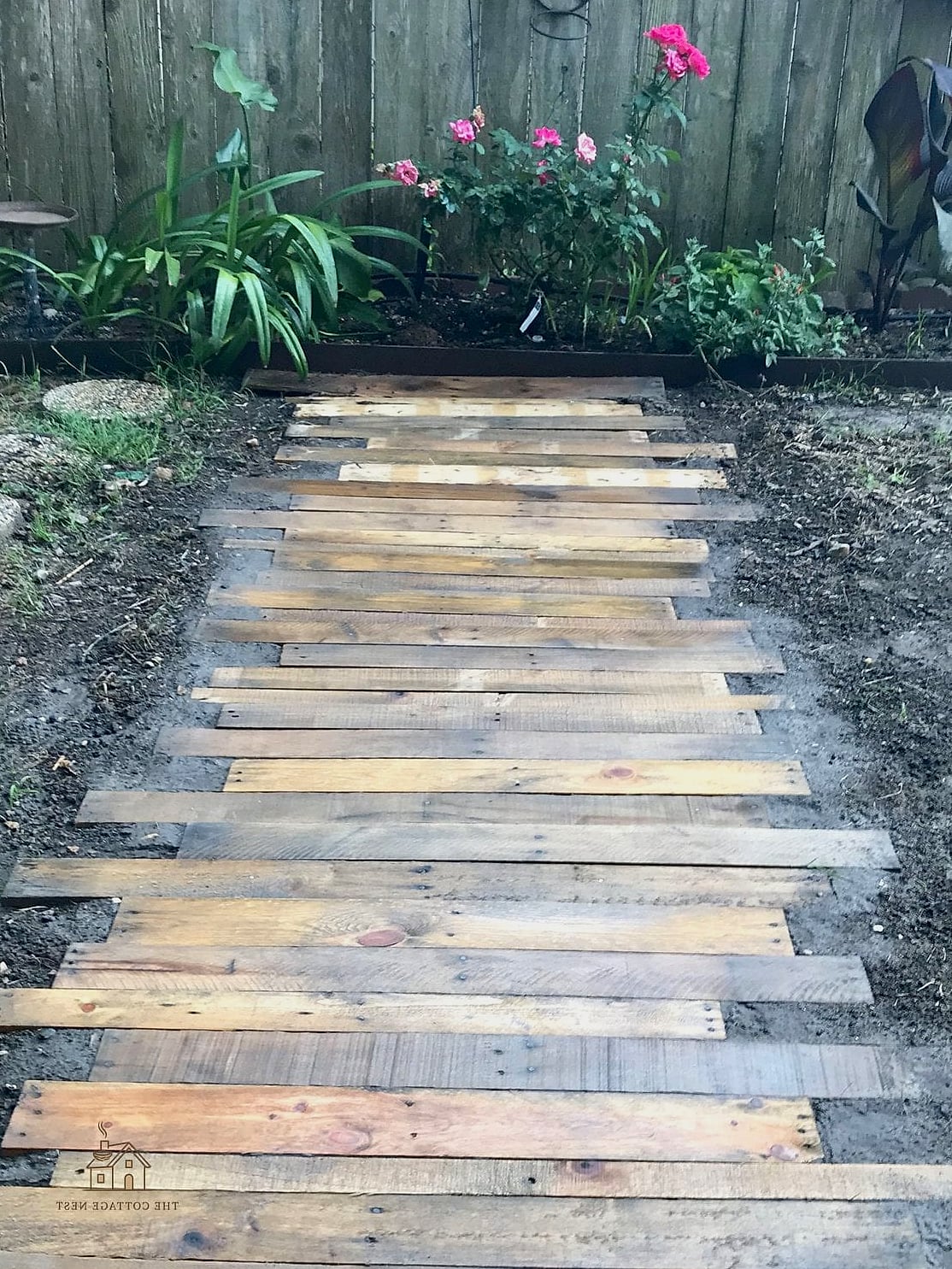
Disassembled pallets, often free from local stores, can be cut into planks and laid down as a rustic boardwalk-style path. Seal the wood to help it hold up against weather, and set it on a bed of gravel for drainage underneath. This is a great short-term or budget backyard project, especially for a garden or side-yard path that doesn’t get heavy foot traffic.
River Rock Border Path
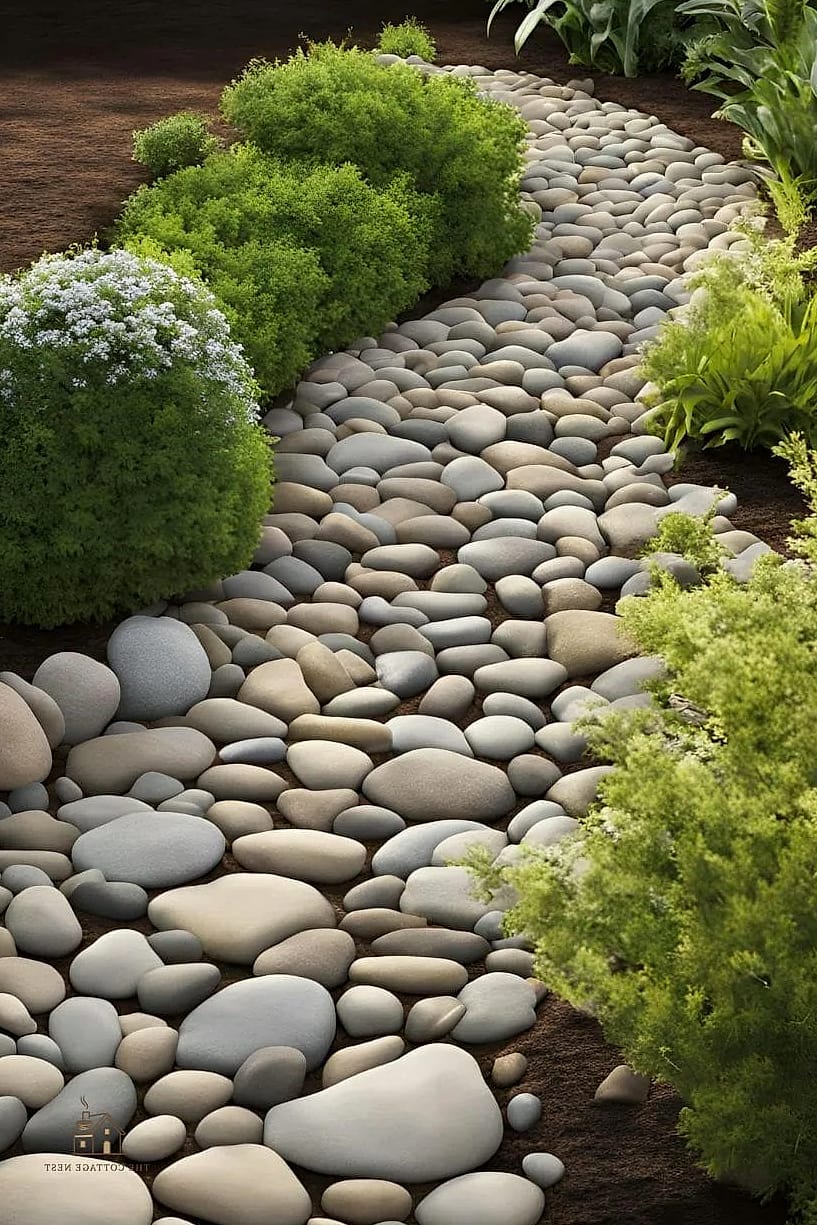
Use larger river rocks along the edges of a gravel or mulch path to create a defined border without spending money on manufactured edging. The rounded shapes look natural next to plantings and add a bit of texture variation. This pairs nicely with a xeriscape or drought-tolerant yard since river rock fits right into that low-water aesthetic.
Concrete Paver Grid Path
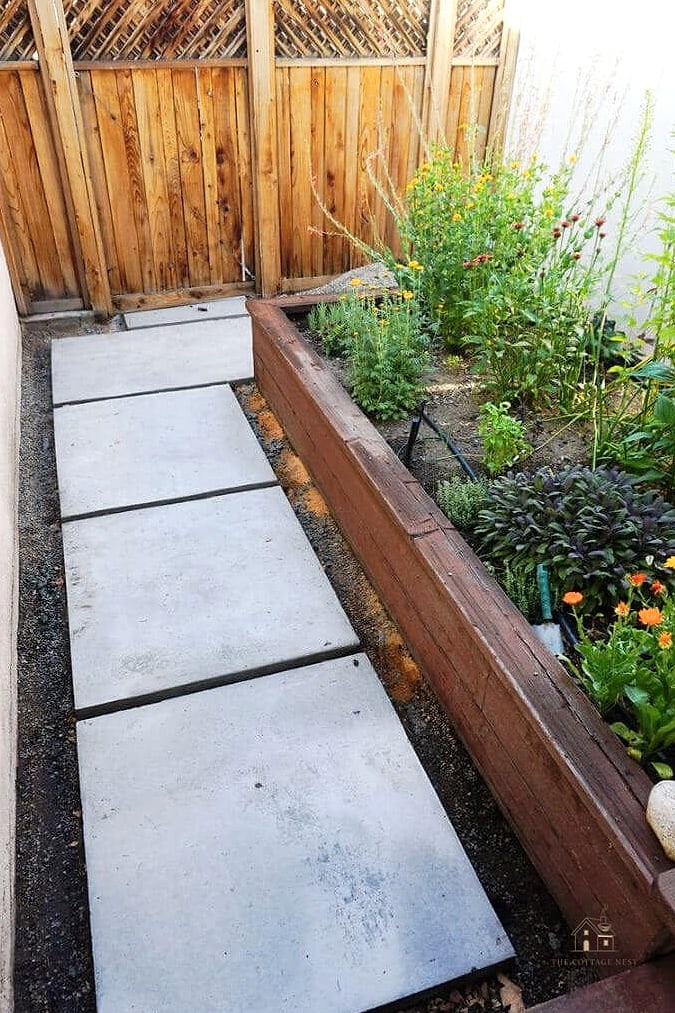
Space square concrete pavers in a simple grid pattern with grass growing in between each one. It’s an easy weekend DIY since you’re just cutting sod and setting pavers into place. The green-and-gray checkerboard effect looks tidy and modern, and it’s much cheaper than pouring a solid slab since you’re using far less concrete overall.
Crushed Shell Pathway
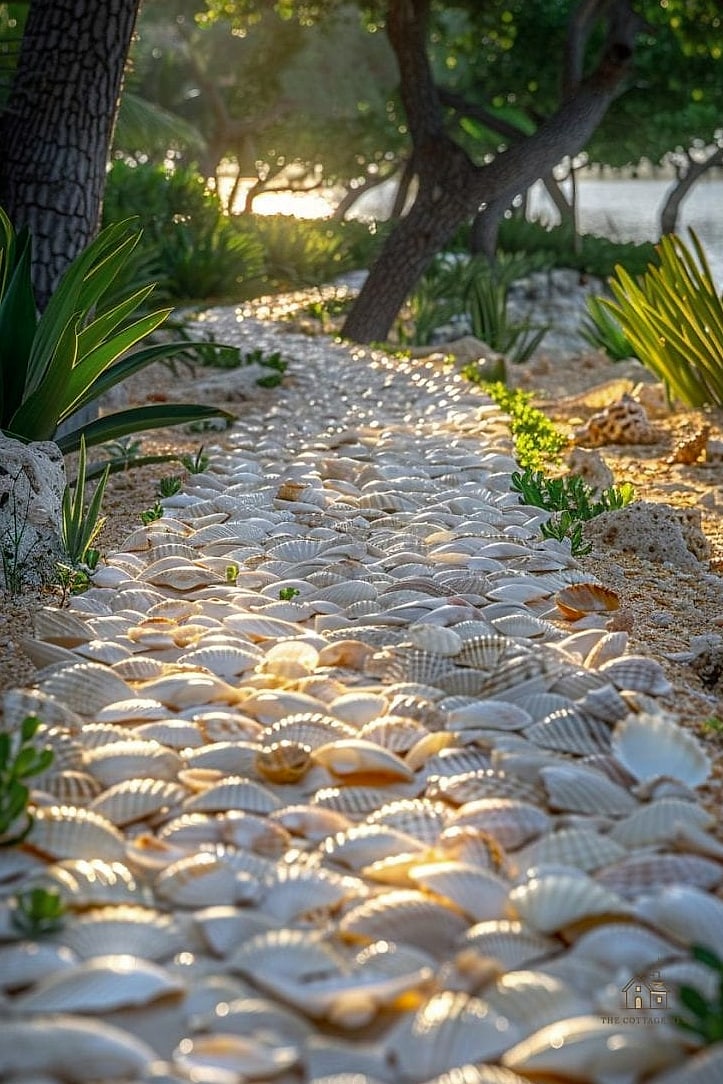
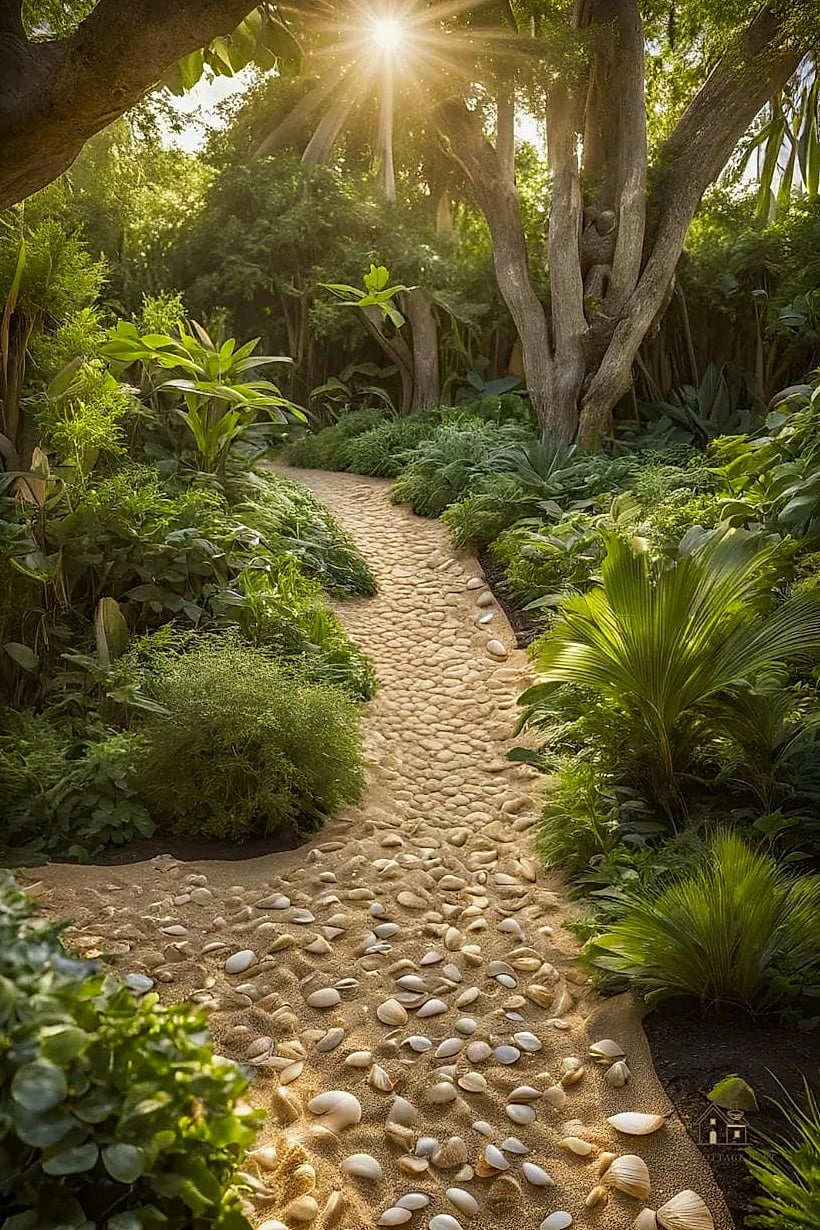
If you live near the coast or just love that beachy look, crushed shell makes a bright, textured walking surface. It compacts nicely underfoot and has good drainage. Edge it with driftwood or simple wood boards to keep it contained. This is a fun regional twist that also happens to be budget-friendly if shell is sourced locally.
DIY Stamped Concrete Look with Rubber Mats
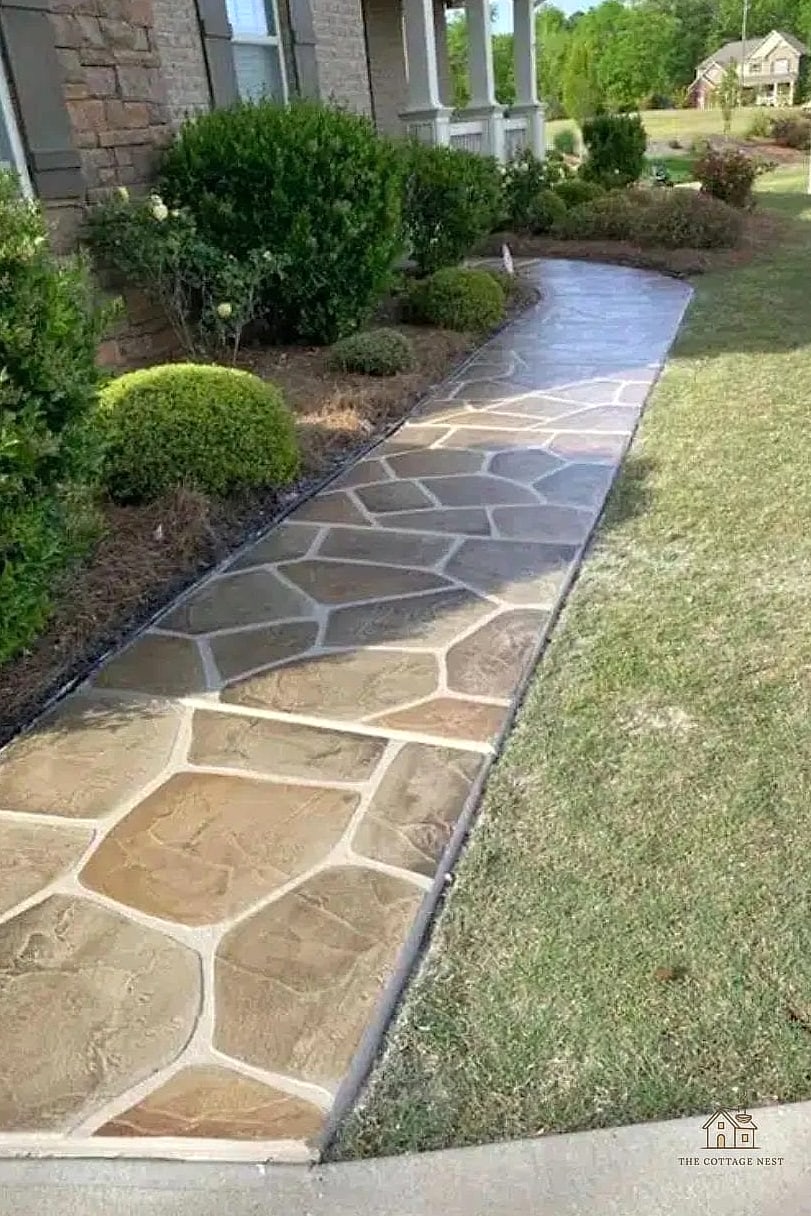
You can rent or buy inexpensive concrete stamping mats to press a stone or brick pattern into wet concrete yourself. This gives you the high-end look of stamped concrete without hiring a contractor. It takes some patience and timing since concrete only stays workable for so long, but the payoff is a walkway that looks custom for a fraction of the professional price.
Recycled Tire Pavers
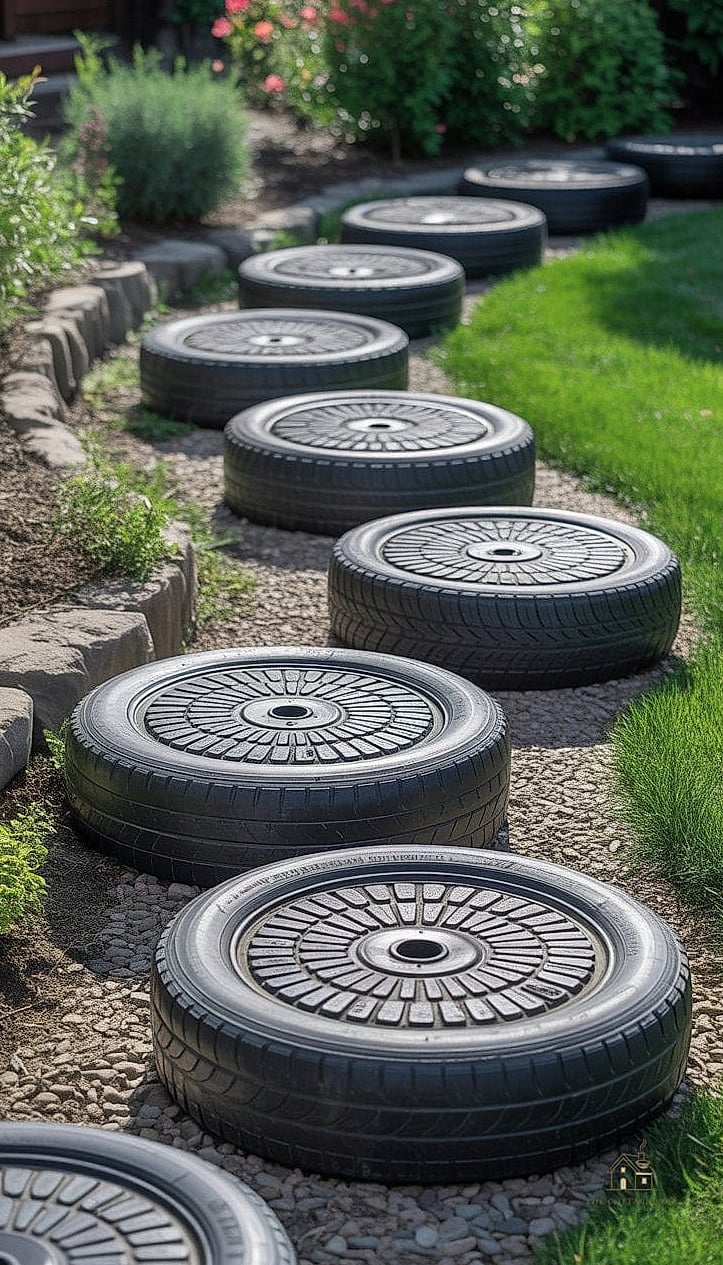
Rubber pavers made from recycled tires are surprisingly affordable and incredibly durable. They’re soft underfoot, slip-resistant, and hold up well in freeze-thaw climates. This option is especially practical for families with kids or anyone wanting a safer surface near a play area. They come in interlocking styles that make DIY installation pretty straightforward.
Sand-Set Paver Path with Curved Edges
Rather than a straight line from point A to point B, curve your paver path slightly. It instantly feels more designed and garden-like, even using the same basic pavers as a straight path. Sand-setting keeps costs low since you skip the mortar and equipment a mortared path would require. Curves also naturally slow foot traffic, which is nice near flower beds you don’t want trampled.
Cinder Block Planter Path
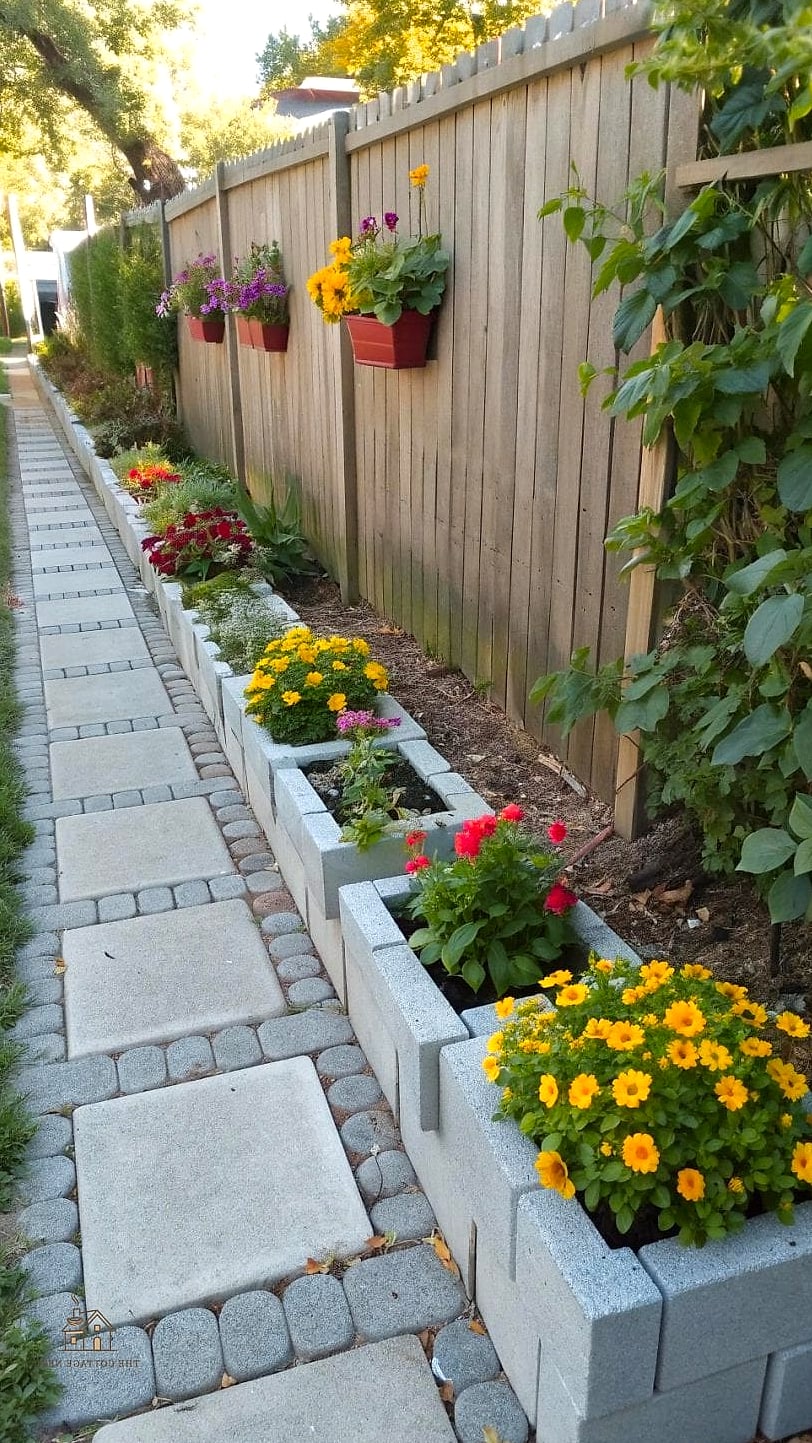
Lay cinder blocks flat as stepping pads and plant flowers or succulents directly in the block cavities. This is a quirky, low-cost idea that doubles as landscaping. It works particularly well for a side yard or a casual garden path where you want a bit of whimsy. Just make sure the blocks sit level so they don’t wobble underfoot.
Wood Chip and Log Border Trail
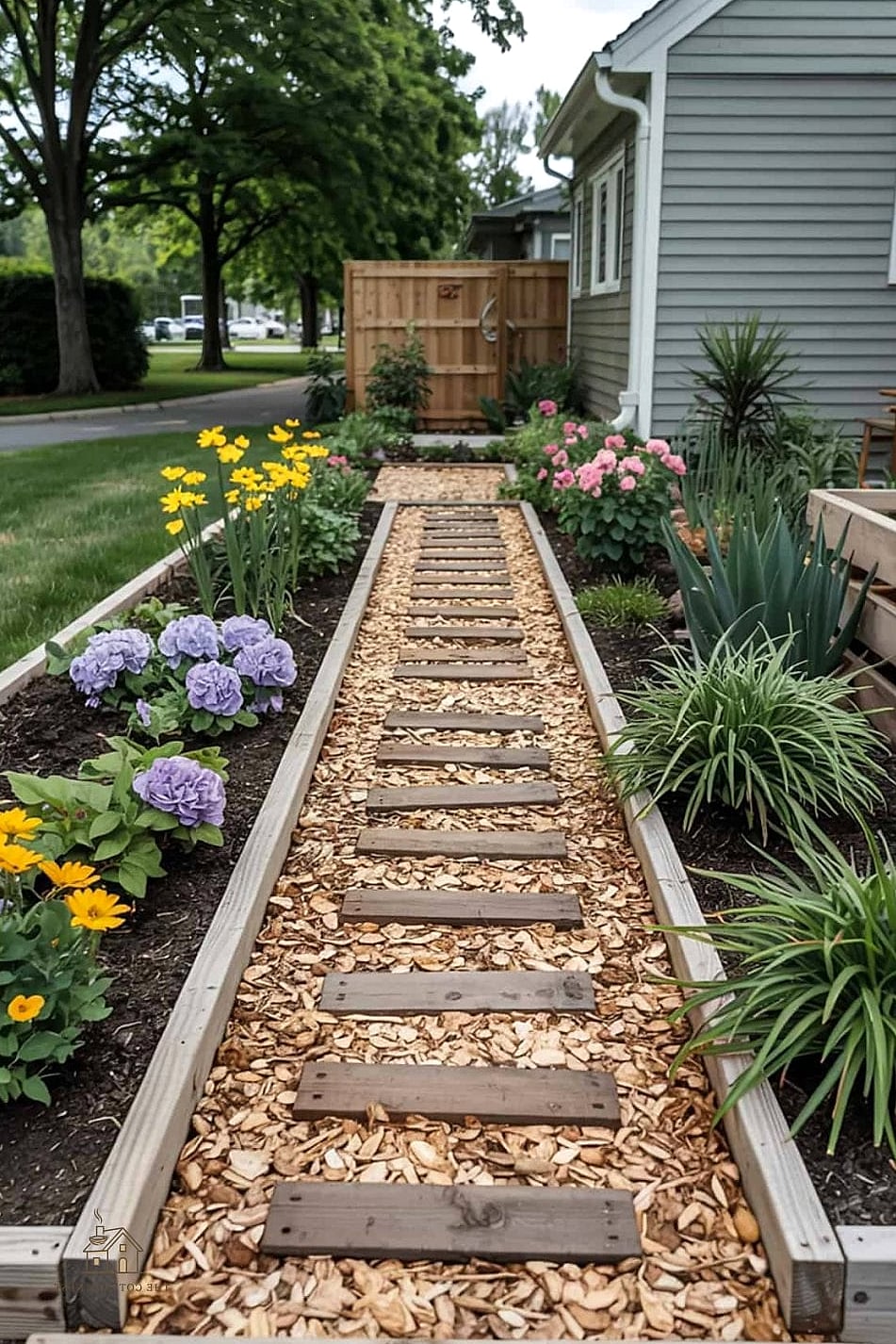
Similar to a mulch path but with a more defined trail feeling, this uses wood chips as the walking surface and small logs staked along the sides as a border. It’s an easy option for wooded backyards or a path leading to a fire pit or garden shed. Wood chips are often available cheaply or even free from local tree services.
Brick Basket Weave Path
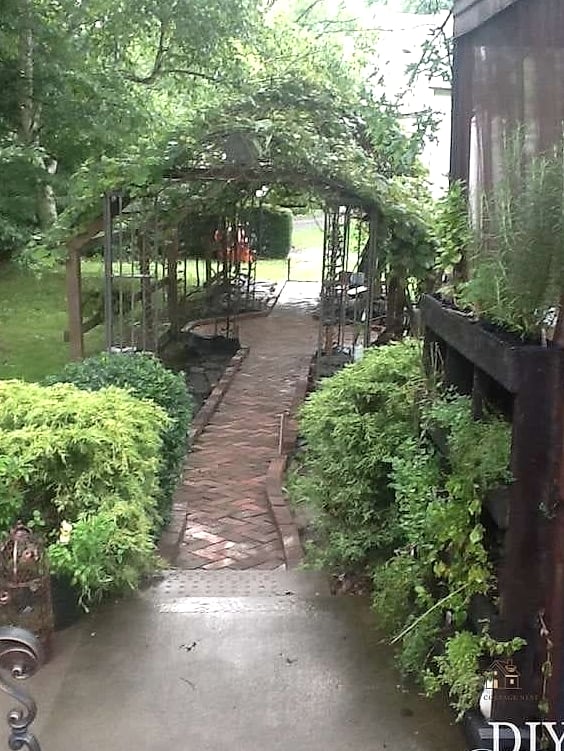
Another classic brick pattern, basket weave uses pairs of bricks laid in alternating directions to create a woven look. It’s a step up visually from a simple running bond pattern but still achievable with a sand-set DIY approach. This pattern suits colonial, cottage, or traditional home styles particularly well and holds up nicely to regular foot traffic.
Gravel Path with Solar Lights
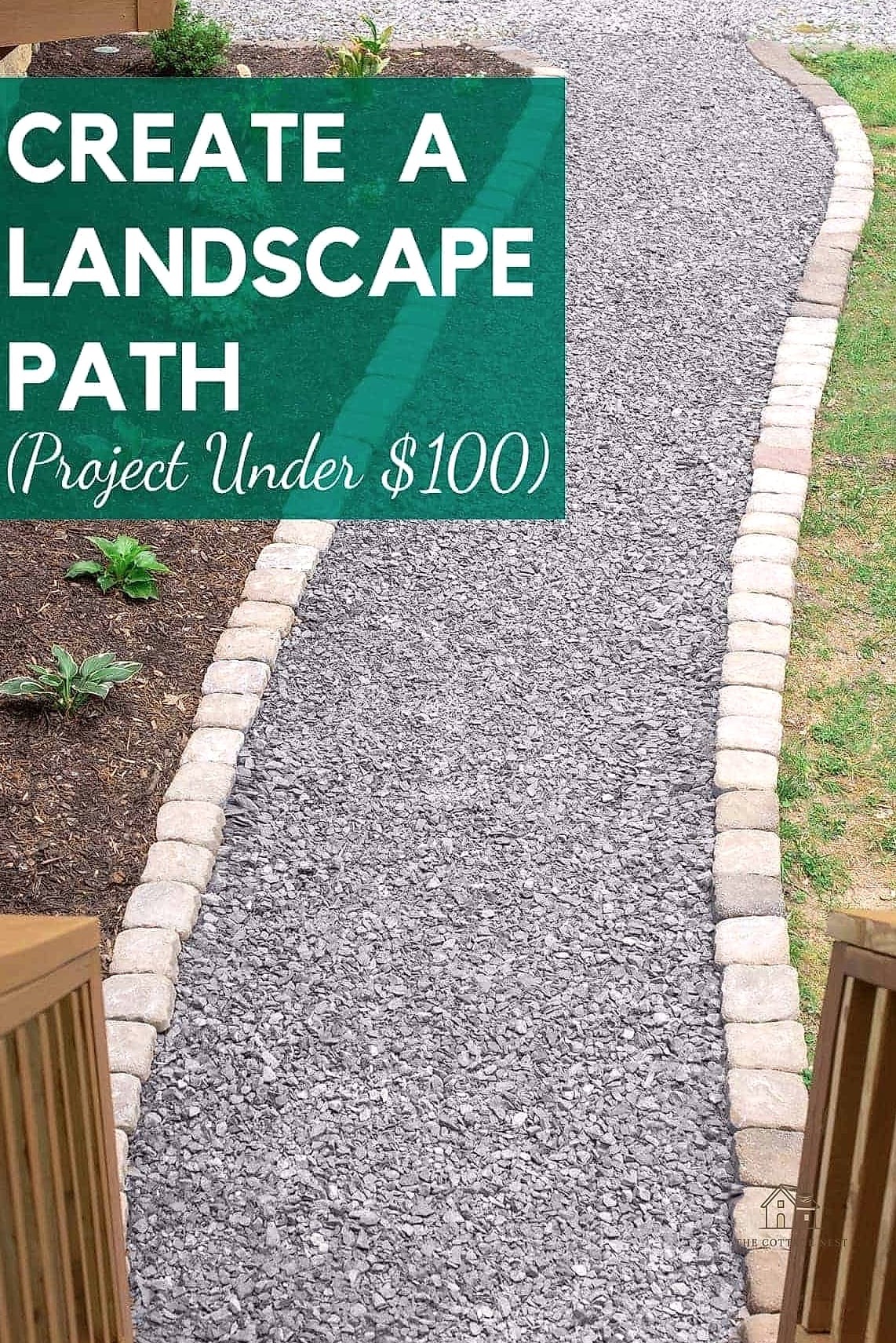
Take a basic gravel walkway and add a row of inexpensive solar stake lights along the edges. It’s a small addition that makes a huge difference at night, both for safety and curb appeal. Solar lights need zero wiring, so this is about as beginner-friendly as outdoor lighting gets. Look for warm-toned LEDs rather than stark white for a cozier glow.
Stamped Paver Stepping Stones You Pour Yourself
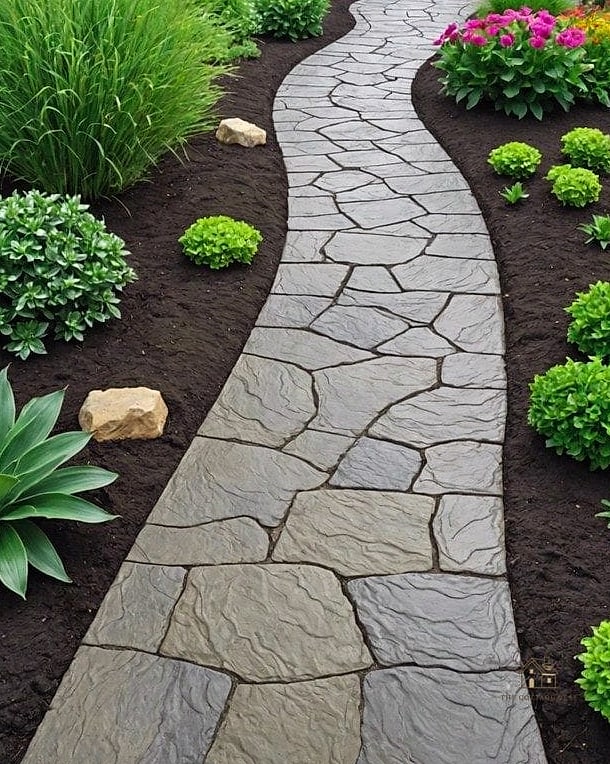
You can buy inexpensive concrete stepping stone molds and pour your own pavers at home, one at a time, over a weekend. This lets you customize the shape, color, and even embed decorative elements like glass beads or mosaic tile. It’s a slower project than buying pavers outright, but it’s satisfying and cuts material costs significantly.
Decomposed Granite Path
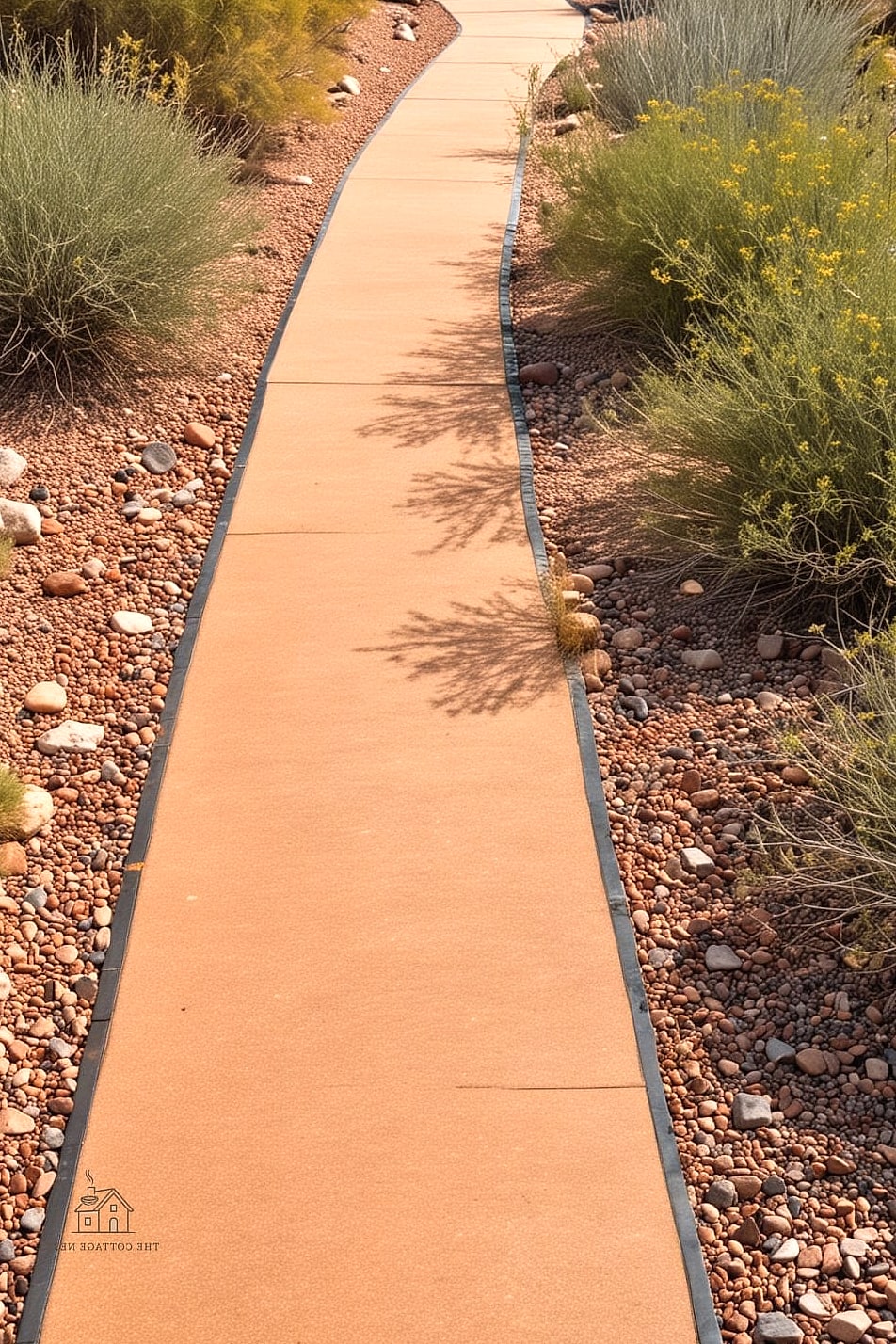
Decomposed granite, often called DG, compacts into a firm, natural-looking surface that’s popular in drought-tolerant landscaping. It has a soft, sandy color that pairs well with desert or Mediterranean-style yards. Installation is straightforward: level the area, add a stabilizer if desired, then compact the DG down. It’s noticeably cheaper than most paved options while still looking intentional.
Reclaimed Brick and Gravel Checkerboard
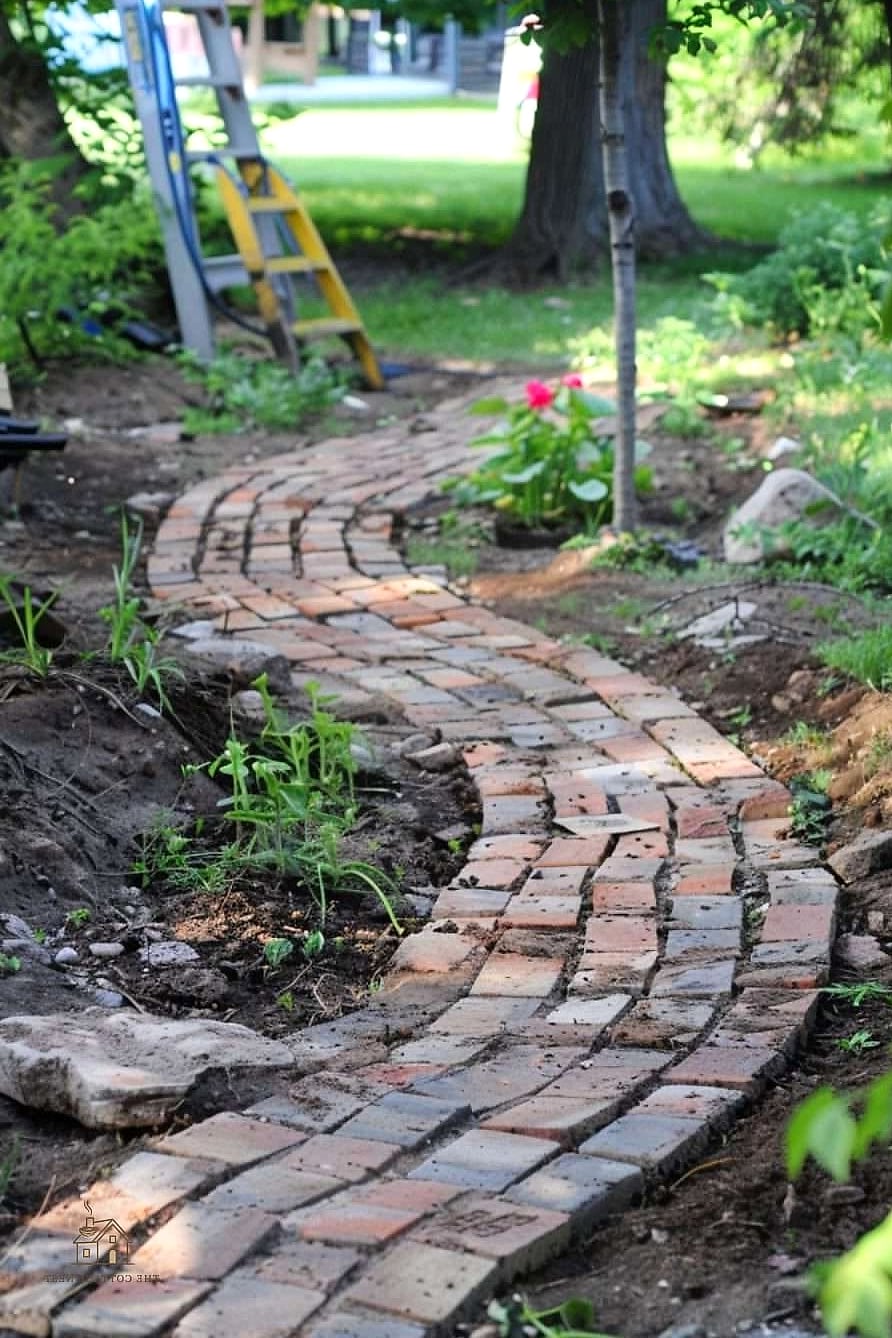
Alternate squares of reclaimed brick and gravel in a checkerboard layout for a path with real visual interest. This uses less brick than a solid brick path, which helps keep costs down while still getting that warm, textured brick look. It’s a fun project if you already have some leftover brick sitting around from another project.
Simple Sand Path Bordered by Plants
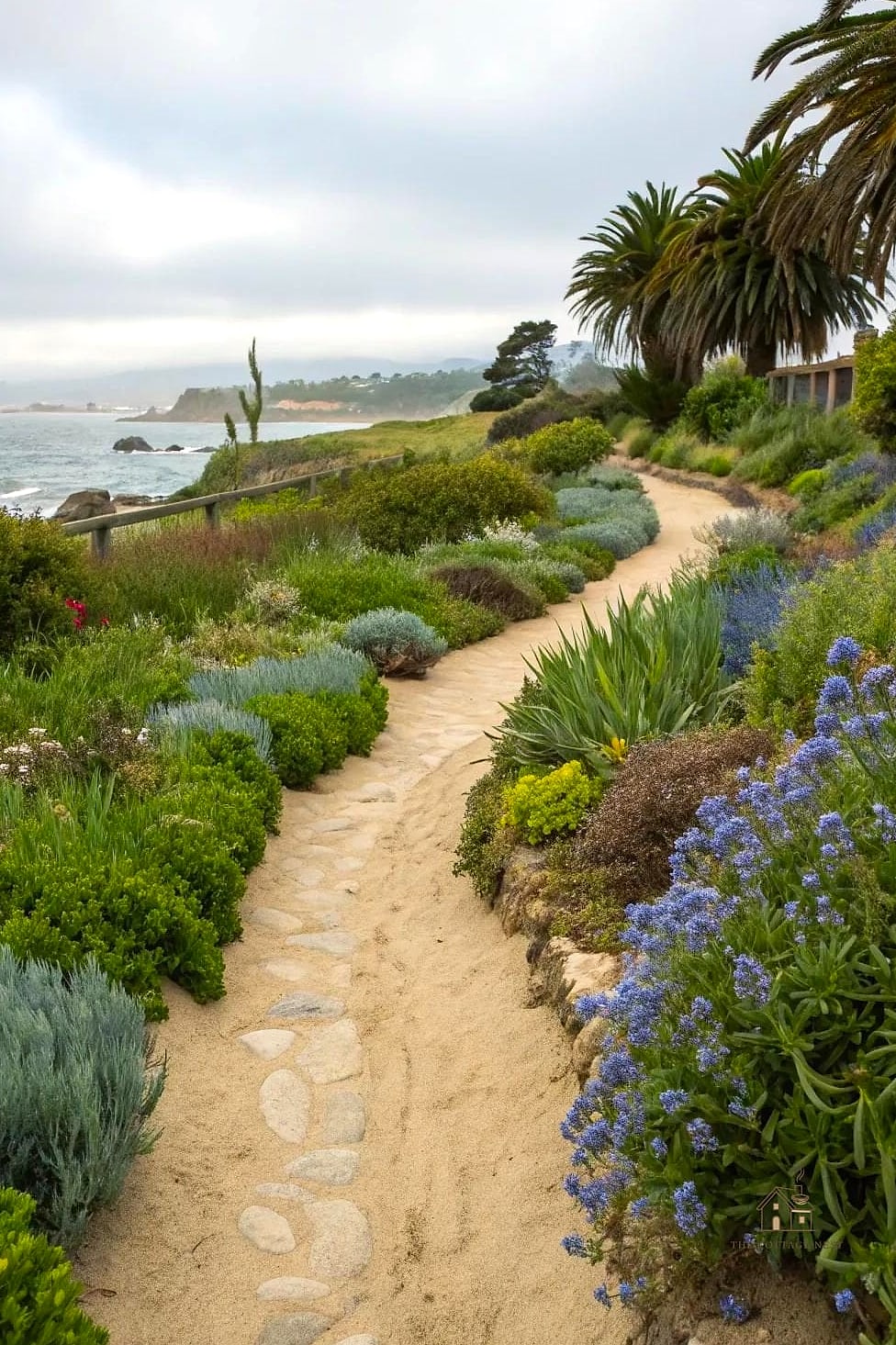
Sometimes the cheapest option is also the simplest: a compacted sand path with no hard border at all, just dense plantings on either side to define the edges. This works beautifully in a cottage garden setting where you want the plants to be the star. It costs almost nothing beyond the sand itself and a weekend of leveling and tamping.
Whichever of these you choose, the beauty of a DIY walkway is that you can start small and expand later if you want something more permanent down the road. Even a basic gravel or stepping stone path makes a noticeable difference in how your yard feels to walk through. Pick the one that matches your soil, your climate, and how much weekend time you actually want to spend on it, and go from there.