30 Amazing Japandi Bedroom Ideas on a Budget

- Start With a Neutral Color Palette
- Bring in Warm Wood Tones
- Choose a Low Platform Bed
- Layer in Natural Textures
- Declutter Before You Decorate
- Add a Woven Area Rug
- Use Paper or Rattan Pendant Lighting
- Keep Nightstands Simple and Low
- Add a Statement Piece of Pottery
- Bring In a Live Plant or Two
- Use Sheer or Linen Curtains
- Try a DIY Wood Slat Headboard
- Hide Storage Instead of Displaying It
- Choose Matte Over Glossy Finishes
- Add a Floor Cushion or Meditation Corner
- Use Brass or Black Matte Hardware
- Keep Artwork Minimal and Nature-Inspired
- Try a Tatami-Inspired Mat Under the Bed
- Layer Different Types of Lighting
- Choose a Low, Wide Dresser
- Add a Woven Blanket at the Foot of the Bed
- Use Room Dividers for Studio Spaces
- Paint an Accent Wall in a Muted Tone
- Swap in Ceramic or Wood Lamp Bases
- Keep the Bedding Layered but Simple
- Add a Small Wood Bench at the Foot of the Bed
- Use Woven Baskets for Discreet Storage
- Choose Organic Shapes Over Sharp Edges
- Add a Simple Wood or Rattan Mirror
- Keep Window Treatments Simple
- Let Negative Space Do the Work
30 Amazing Japandi Bedroom Ideas on a Budget
Japandi is that sweet spot between Japanese minimalism and Scandinavian coziness, and honestly, it’s one of the easiest styles to pull off without spending a fortune. It’s less about buying a bunch of new stuff and more about editing what you have, choosing calm colors, and letting natural materials do the talking. Here are 30 ways to bring that warm, quiet, clutter-free bedroom vibe into your space without draining your savings account.
Start With a Neutral Color Palette
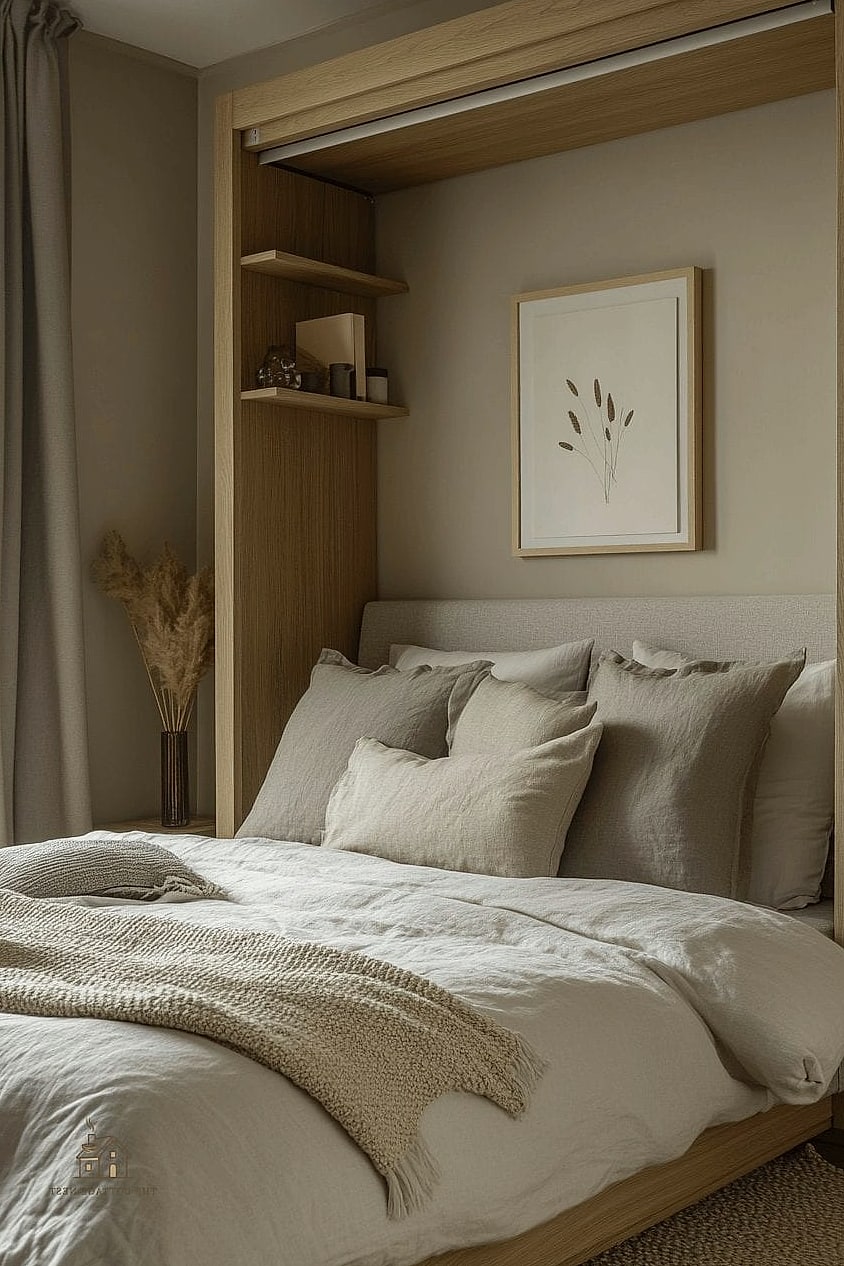
Japandi bedrooms lean on soft, earthy neutrals like warm beige, oatmeal, soft taupe, and muted greige. A gallon of paint is one of the cheapest ways to completely shift the mood of a room. Skip stark white in favor of something with a little warmth to it, since that’s what gives Japandi its cozy edge instead of feeling clinical.
Bring in Warm Wood Tones
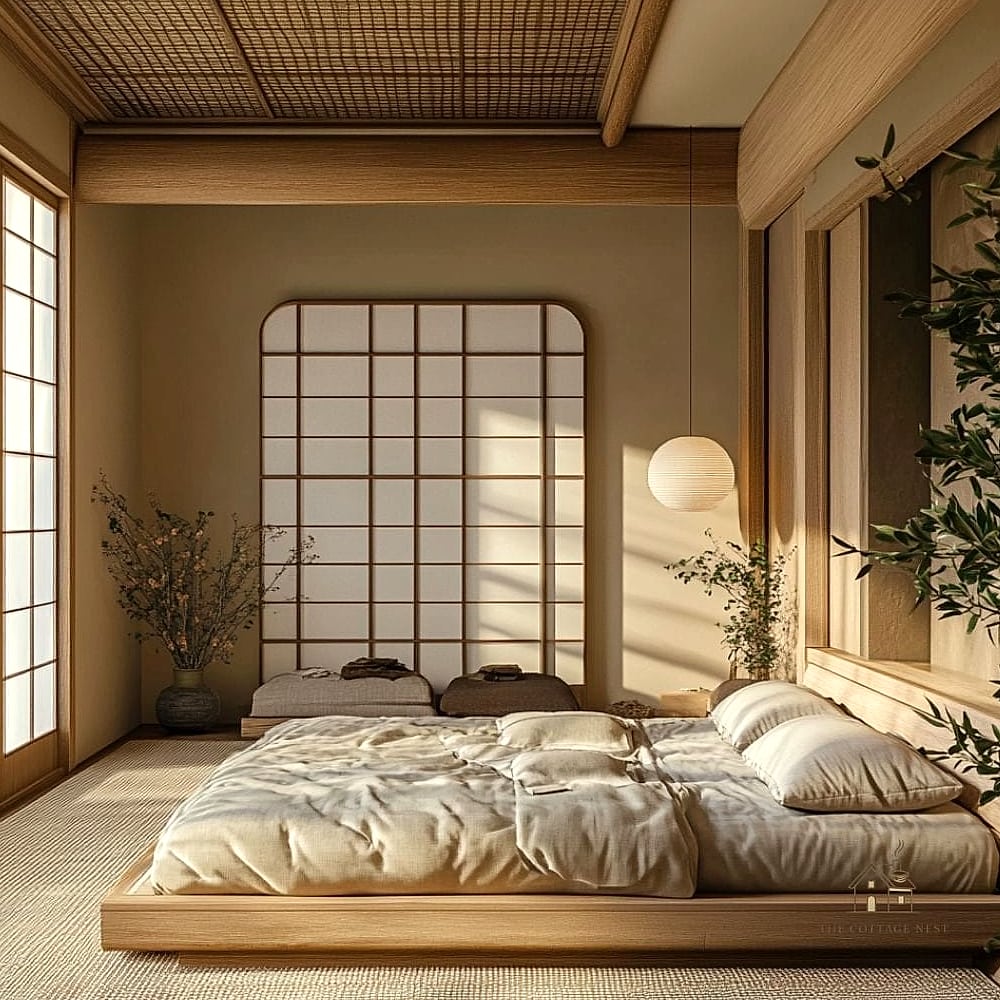
Even one wood piece, like a nightstand or headboard, can anchor the whole room. Look for warm oak, walnut, or bamboo tones at thrift stores or facebook marketplace instead of buying new. Mixing a few different wood shades is fine in Japandi design, it actually adds depth instead of looking mismatched.
Choose a Low Platform Bed

Low-profile beds are a signature of the Japandi look and they tend to be cheaper than tall upholstered frames anyway. If a new frame isn’t in the budget, simply removing your box spring and setting your mattress on a low frame or even a sturdy pallet can get you most of the way there.
Layer in Natural Textures
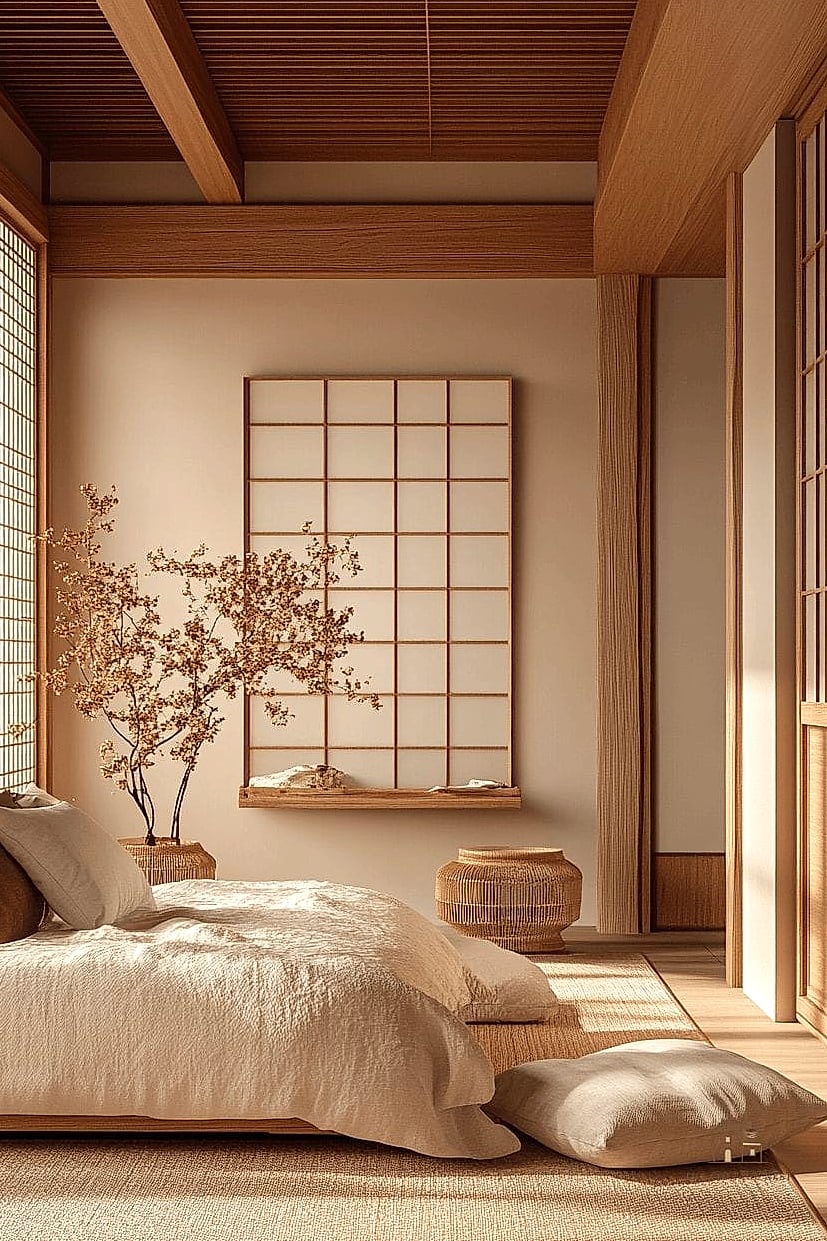
Linen, cotton, jute, and rattan all bring texture without adding visual noise. A linen duvet cover is one of the best budget investments you can make for this style since it does so much visual work on its own. Thrifted textiles work great here too as long as the color palette stays consistent.
Declutter Before You Decorate
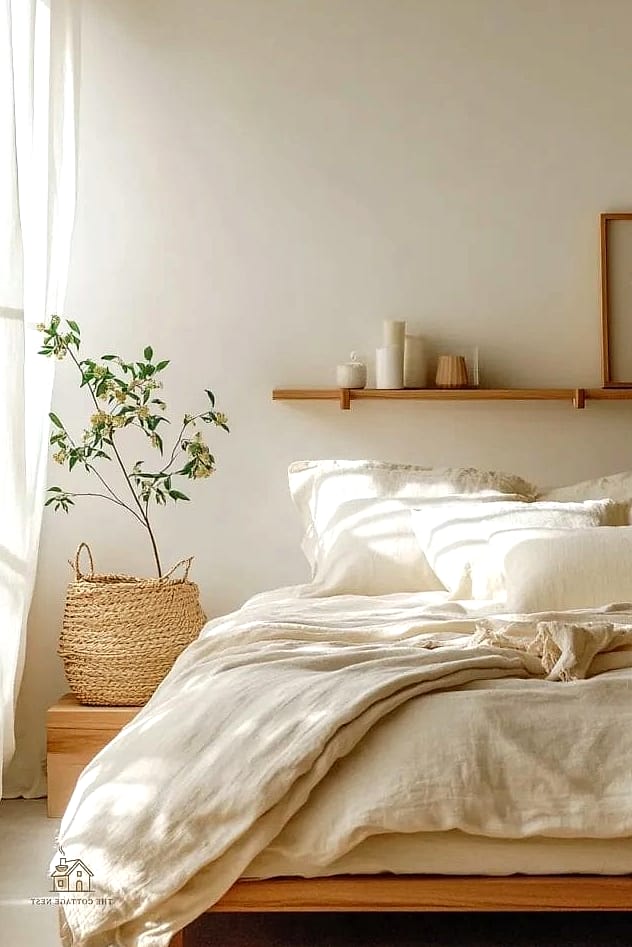
This one costs nothing and honestly might be the most important tip on this list. Japandi bedrooms feel calm because there’s breathing room, not because everything is expensive. Clear nightstands, put laundry away, and only keep decor items that actually mean something to you.
Add a Woven Area Rug
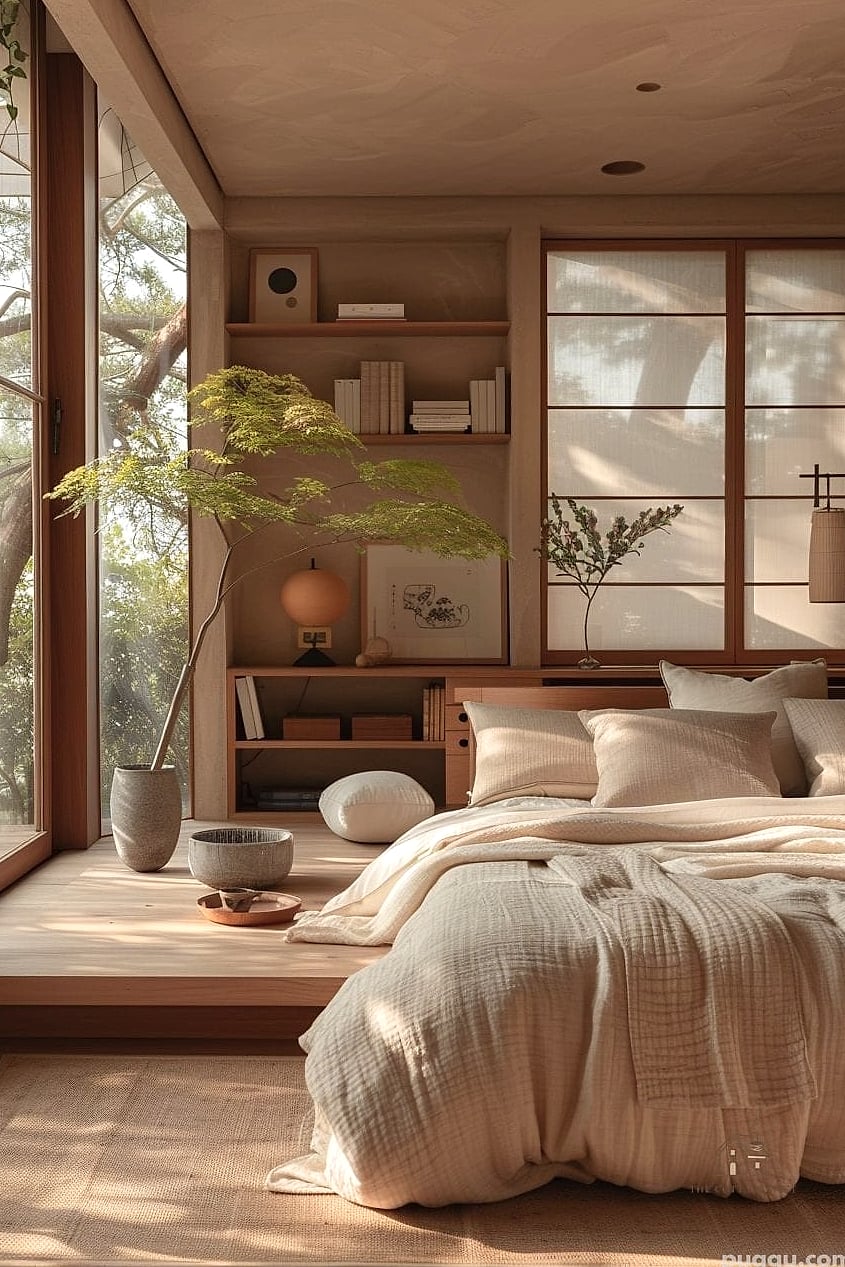
A jute or sisal rug brings in texture underfoot and softens a wood or laminate floor without costing what a wool rug would. Look for natural fiber rugs at budget retailers or even outdoor stores since they carry a similar look for less. Keep the tone light and organic rather than busy or patterned.
Use Paper or Rattan Pendant Lighting
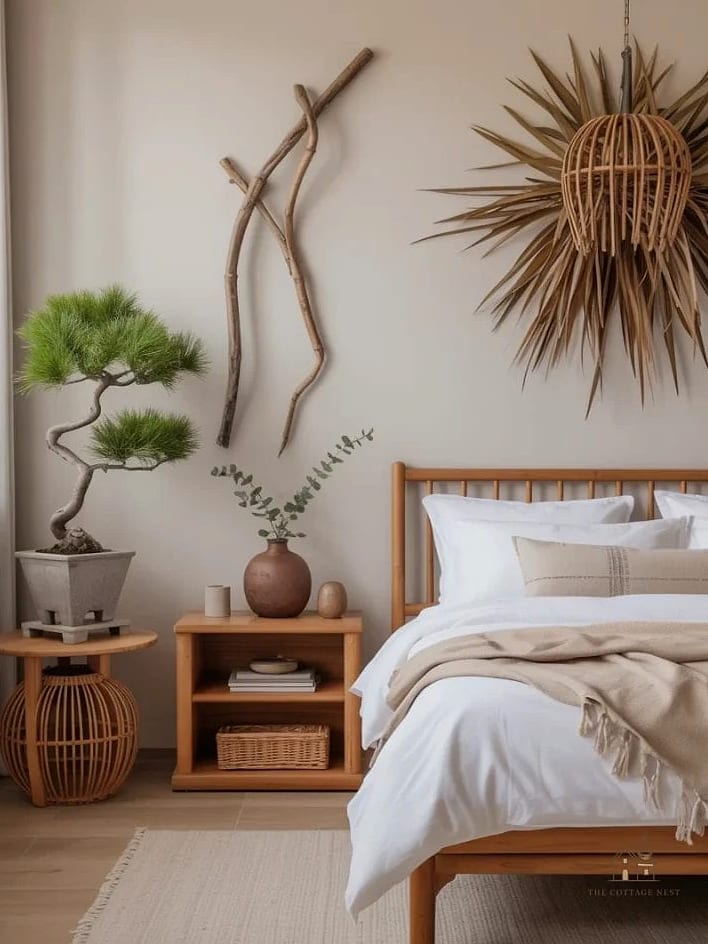
Swapping a basic overhead fixture for a paper lantern or woven rattan pendant instantly adds that Japandi warmth. These fixtures are surprisingly affordable and easy to install if you’re comfortable with basic wiring, or just clip-mount one over an existing fixture for a renter-friendly fix.
Keep Nightstands Simple and Low
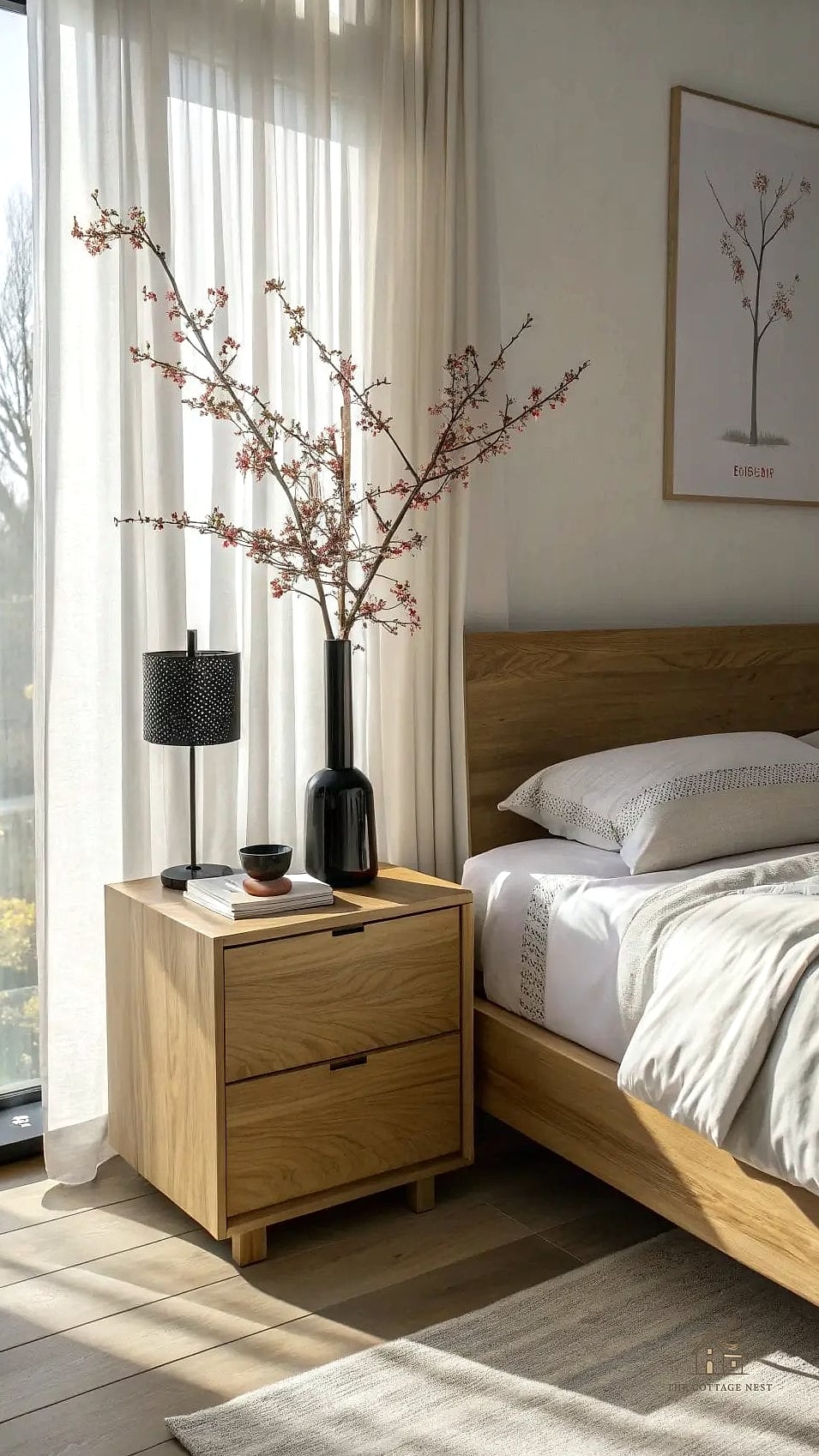
Skip the bulky nightstand with drawers and go for something low and open, like a simple wood stool or a small floating shelf. This keeps sightlines low and airy, which is a big part of why Japandi rooms feel so peaceful. A secondhand stool works just as well as a designer piece here.
Add a Statement Piece of Pottery

A single ceramic vase or ceramic bowl on your dresser does more for the aesthetic than a shelf full of trinkets. Look for imperfect, handmade-looking pieces with matte finishes rather than glossy or perfectly symmetrical ones. Thrift stores and estate sales are goldmines for this kind of thing.
Bring In a Live Plant or Two
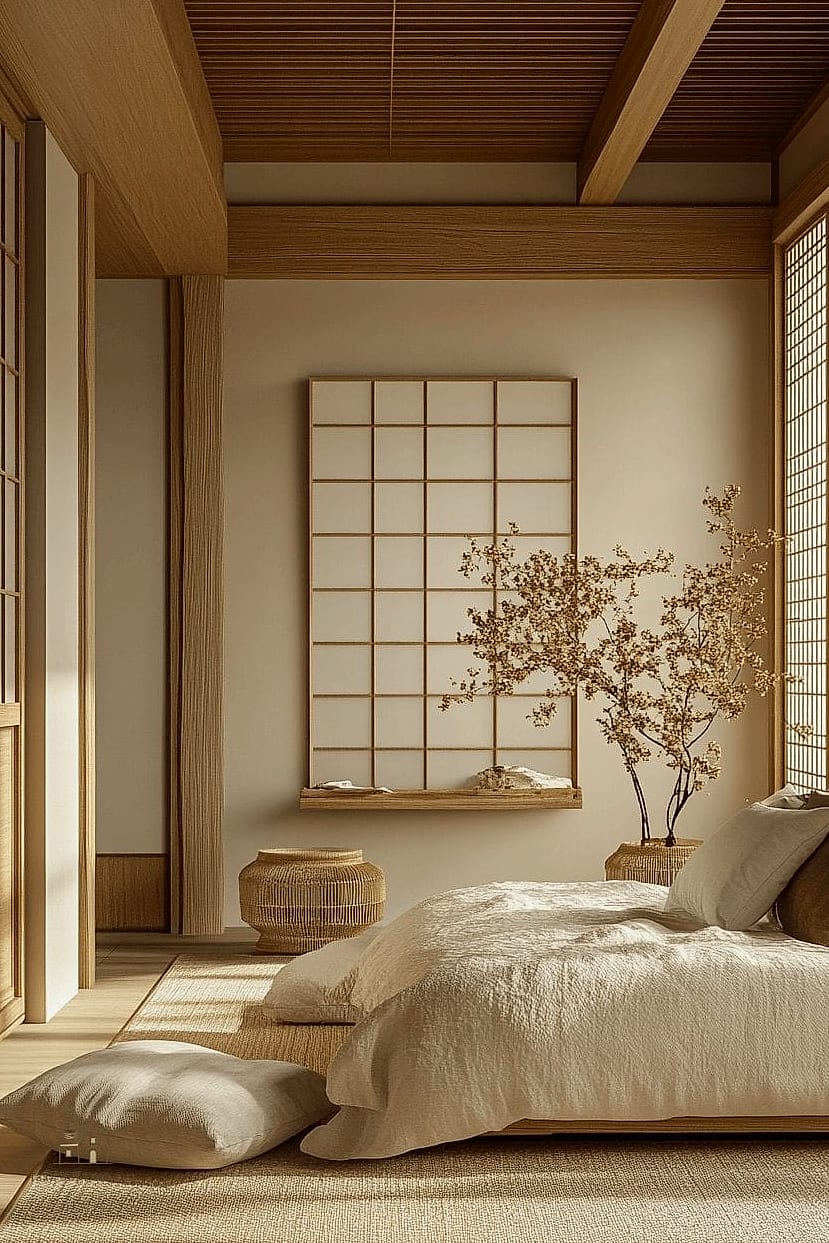
A snake plant, pothos, or small bonsai adds life and softness to the room without much cost or maintenance. Greenery is a core part of both Japanese and Scandinavian design, so even a $10 plant from a hardware store does a lot of visual heavy lifting.
Use Sheer or Linen Curtains
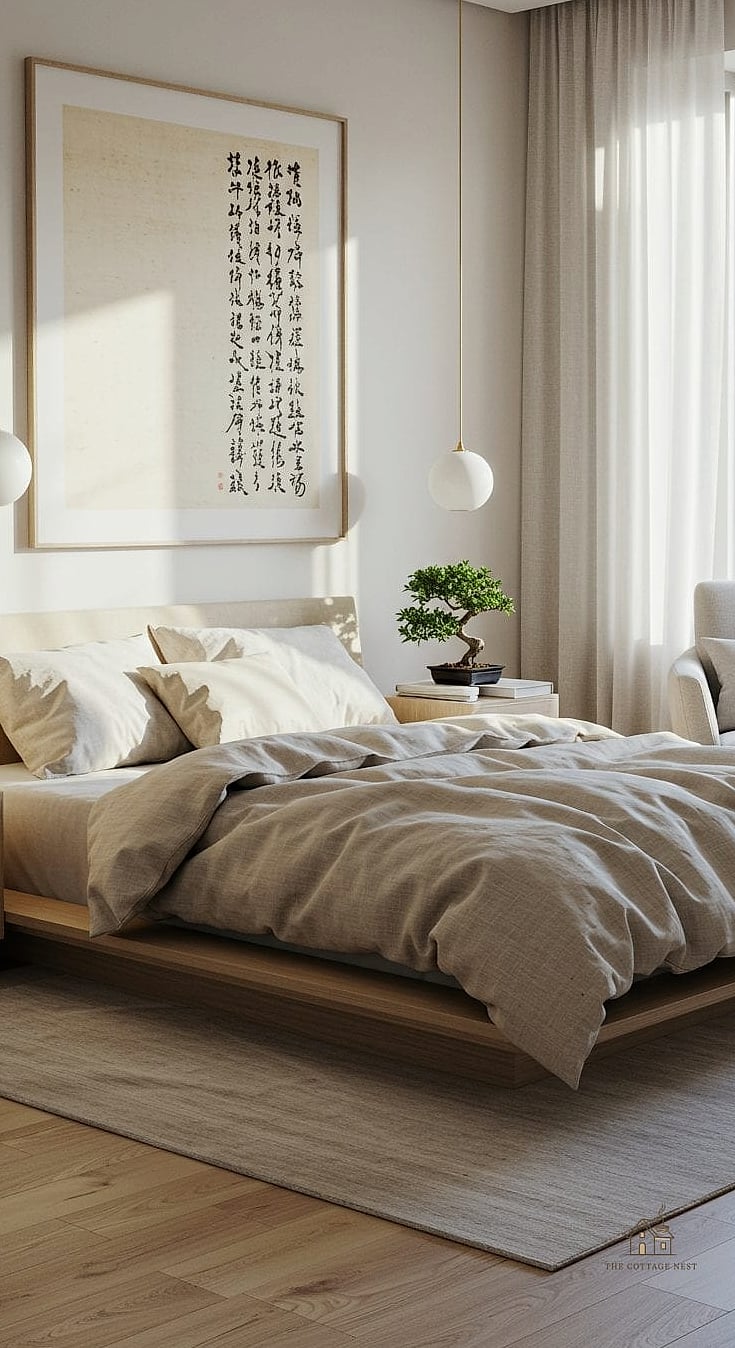
Swap heavy, patterned curtains for simple linen or linen-blend panels in a neutral tone. They let soft light filter in during the day, which fits the calm, nature-inspired feel Japandi is going for. Budget linen curtains from big box stores look nearly identical to pricier designer versions.
Try a DIY Wood Slat Headboard
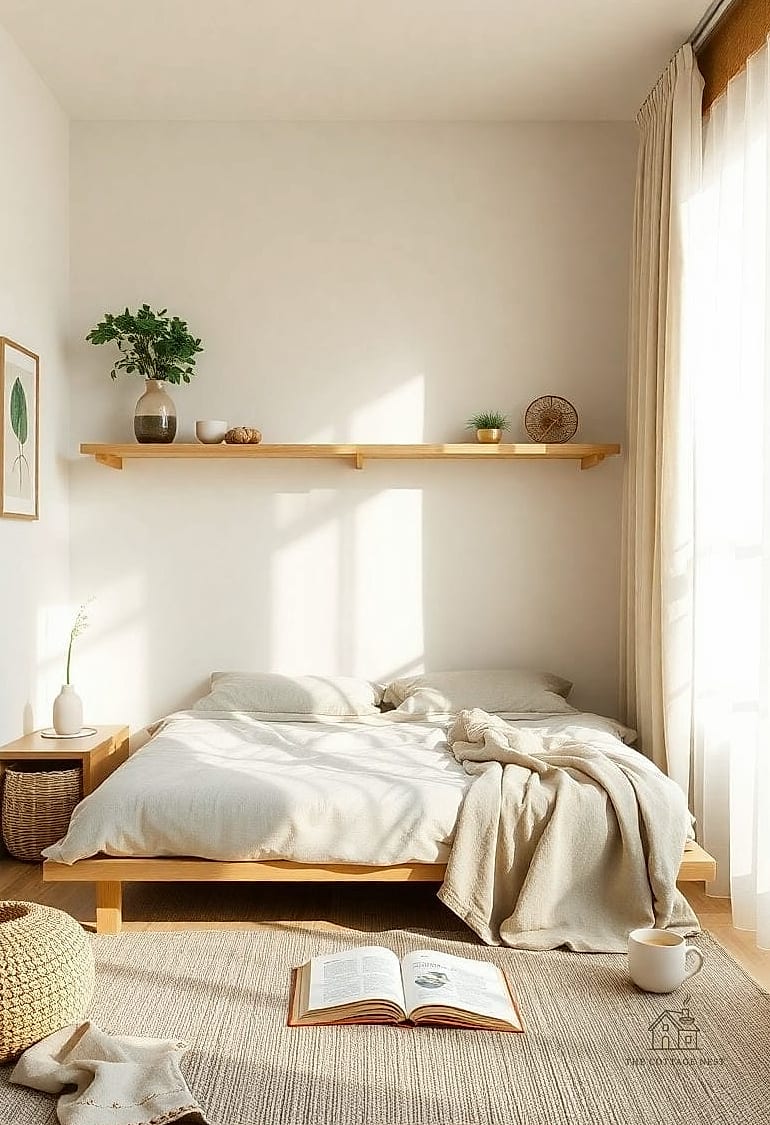
If you’re even a little bit handy, a slat headboard made from cheap furring strips is one of the most popular DIY Japandi projects out there. Stain them a warm tone and mount them directly to the wall behind your bed. It’s a weekend project that instantly upgrades the whole room.
Hide Storage Instead of Displaying It
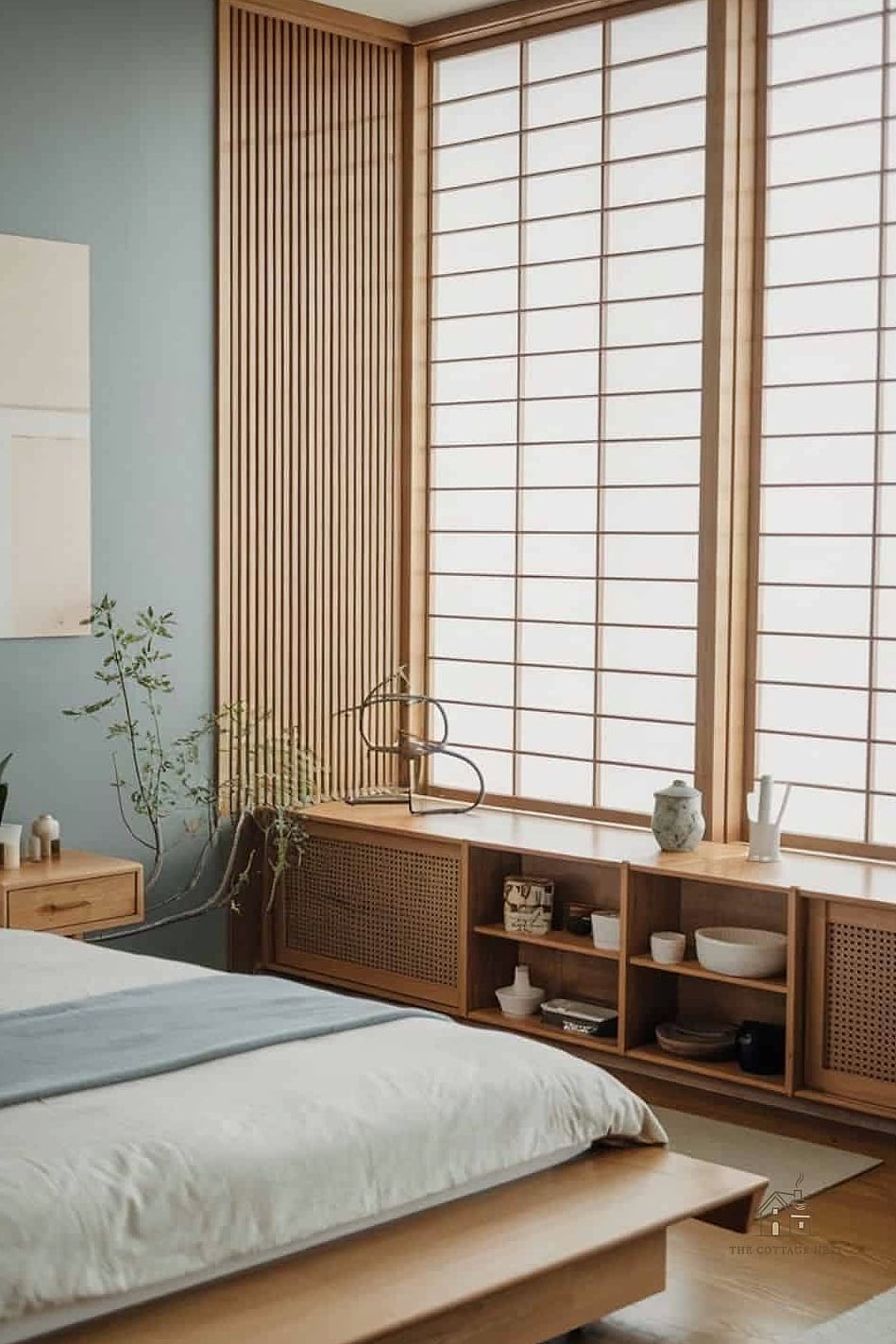
Japandi isn’t about open shelving stacked with baskets, it’s about tucking things away so the room feels clear. Use under-bed storage bins or a simple woven hamper with a lid to keep everyday items out of sight. Even budget plastic bins work fine as long as they’re hidden from view.
Choose Matte Over Glossy Finishes
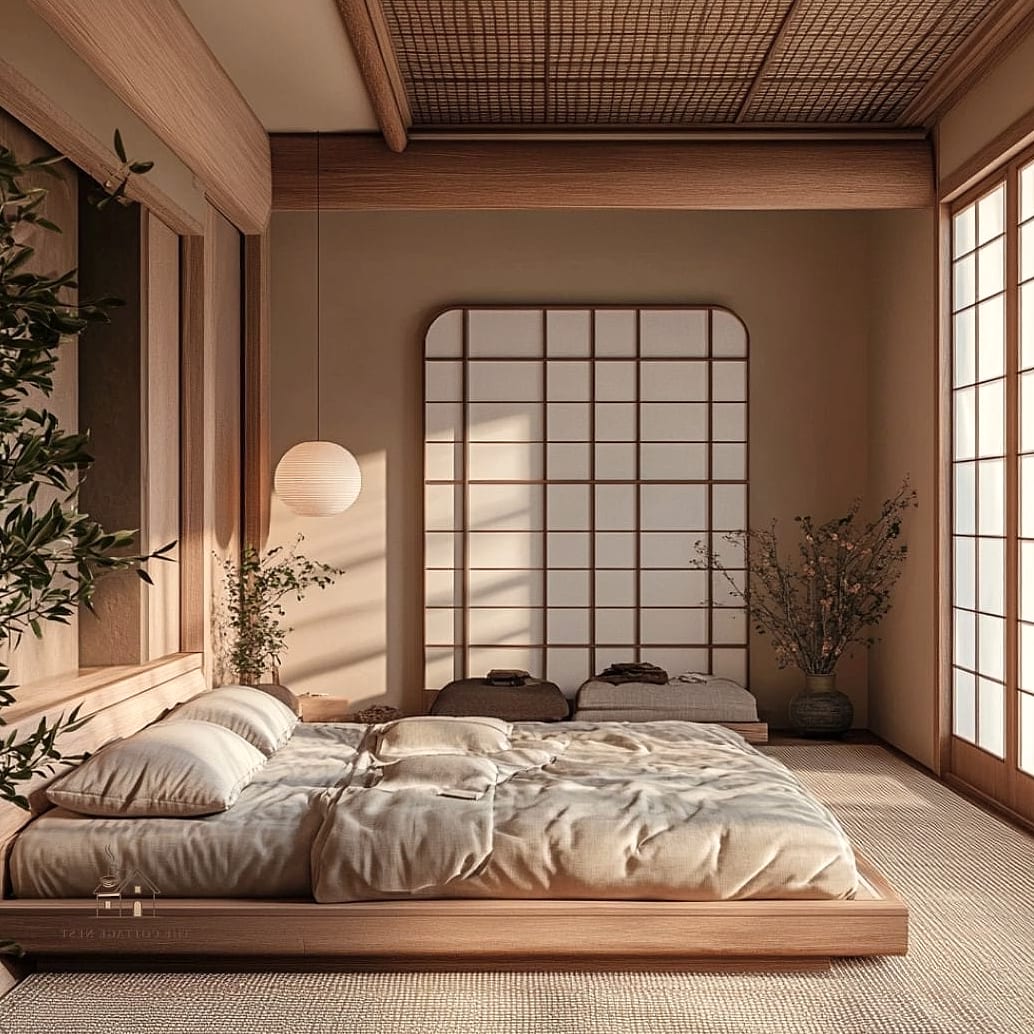
Whether it’s paint, furniture, or hardware, matte finishes read as more calm and natural than anything shiny. This is an easy swap when shopping secondhand since a lot of older furniture already has that worn, matte look. If a piece is glossy, a light sanding and a matte finish spray paint fixes it fast.
Add a Floor Cushion or Meditation Corner
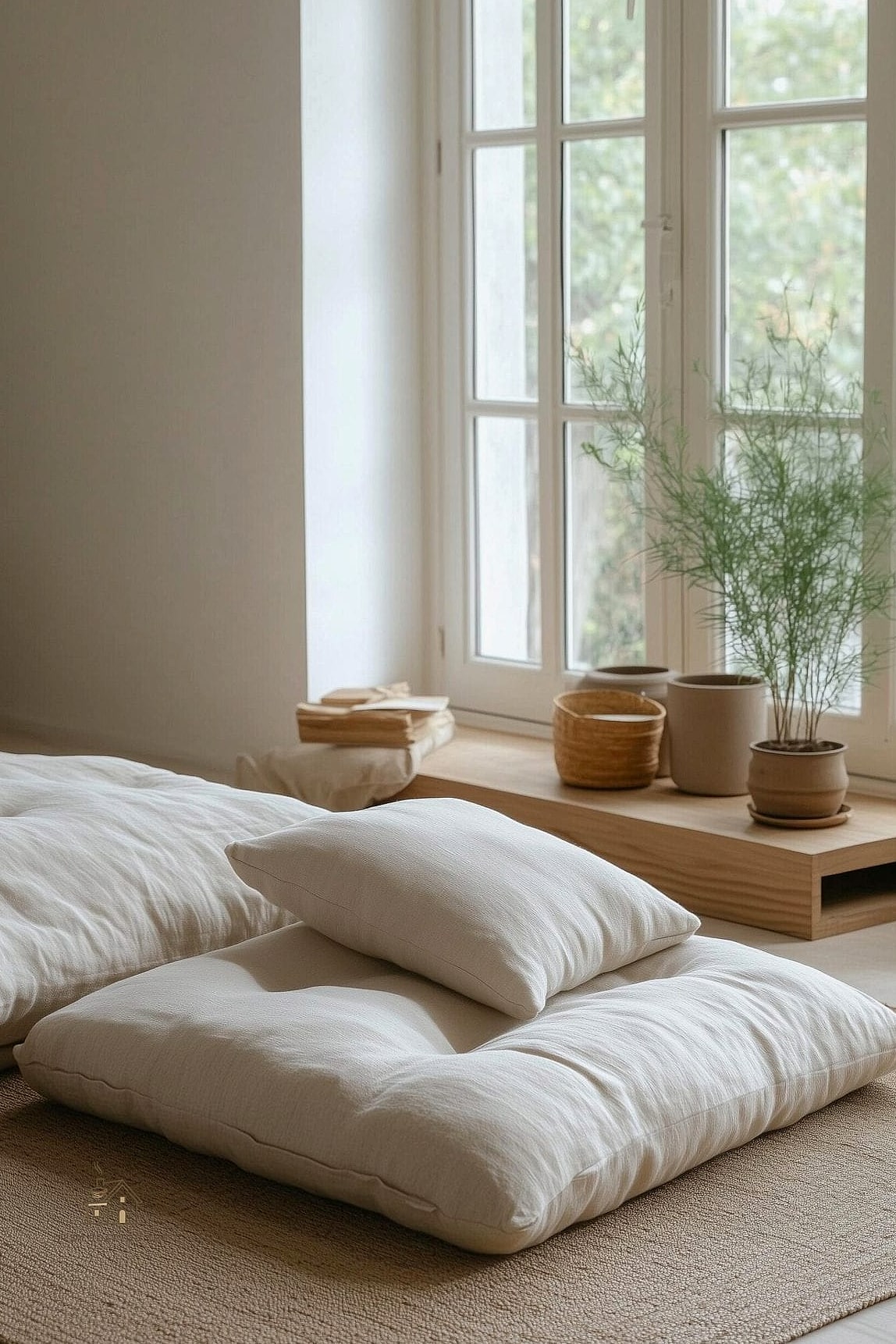
A small floor cushion in the corner of your room creates a cozy reading or meditation nook without needing extra furniture. Look for a simple linen or cotton cushion in a neutral tone. This is a great renter-friendly way to add a functional zone to a small bedroom.
Use Brass or Black Matte Hardware
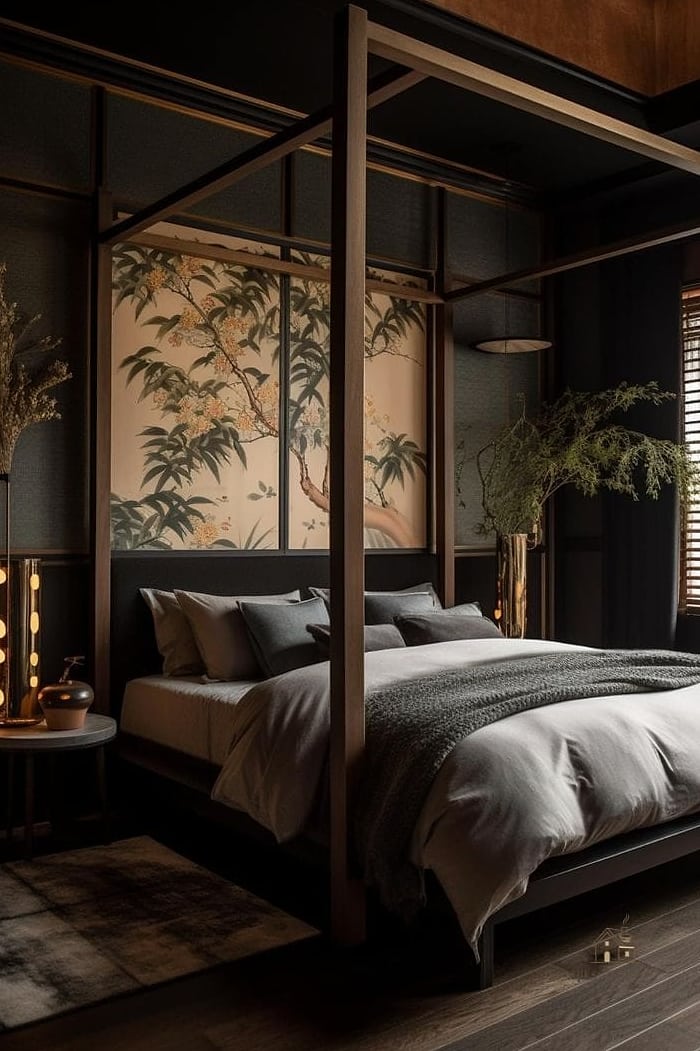
Swapping out dresser or nightstand hardware is one of the cheapest updates you can make, often under $20 total. Brushed brass and matte black both fit the Japandi palette nicely depending on your other finishes. It’s a small detail, but it makes older furniture feel intentional again.
Keep Artwork Minimal and Nature-Inspired
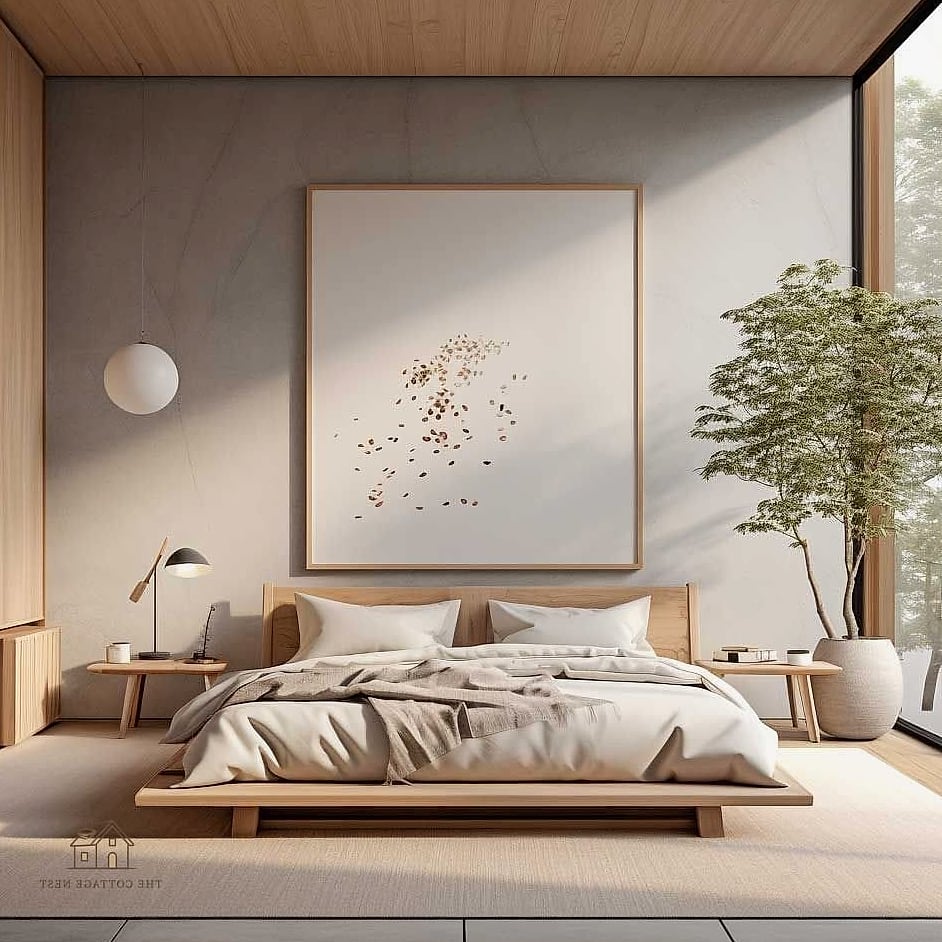
One or two pieces of simple line art, botanical prints, or abstract landscape art go a lot further than a full gallery wall. Thrifted frames with a coat of paint and a printed image work just as well as expensive prints. Leave plenty of blank wall space around the art, since negative space is part of the design.
Try a Tatami-Inspired Mat Under the Bed
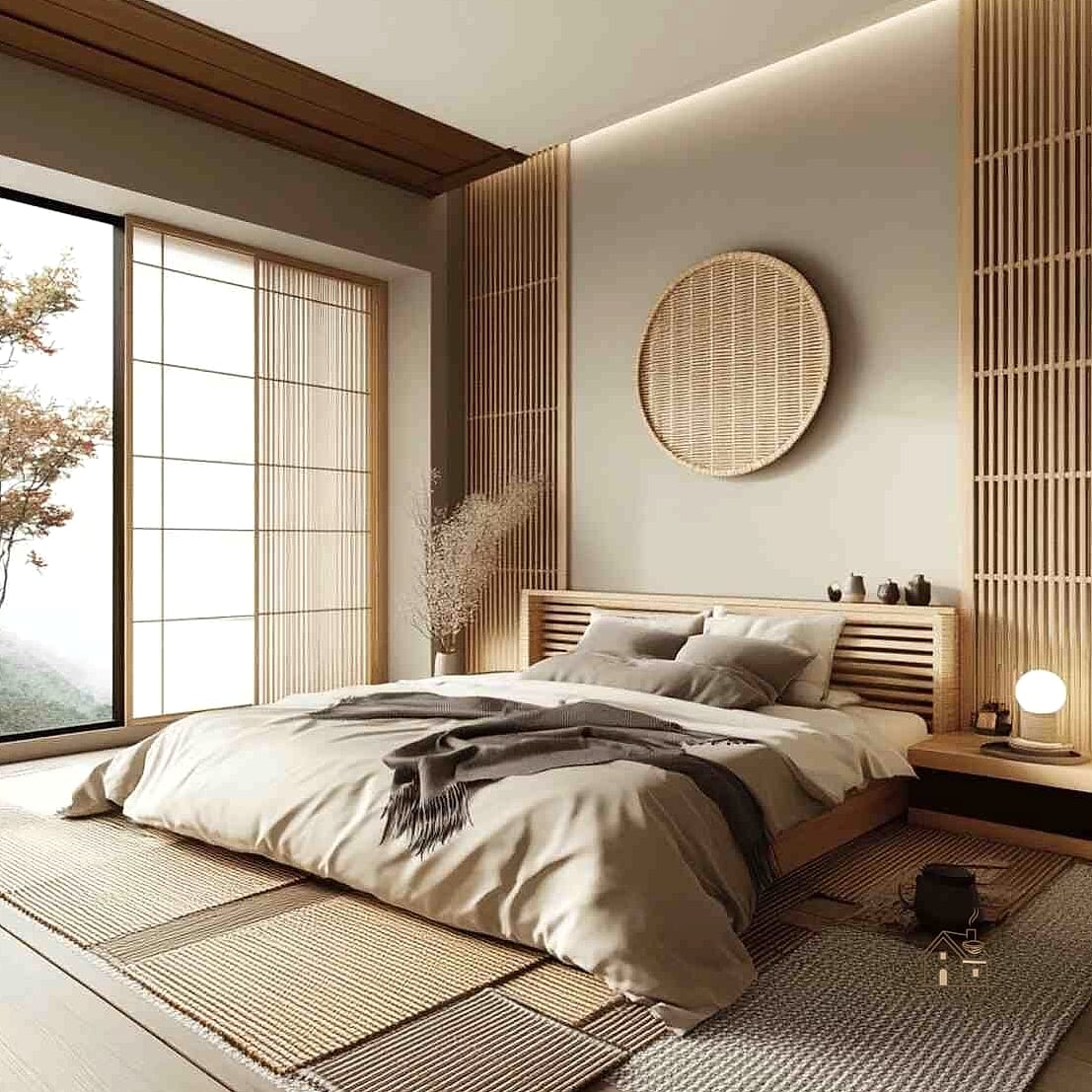
You don’t need a full tatami platform to get the look, a simple woven mat placed under or beside the bed adds that grounded, natural texture. These mats are inexpensive and widely available online. It’s a subtle detail that nods to traditional Japanese design without a big investment.
Layer Different Types of Lighting

Instead of relying on one overhead light, add a small table lamp with a paper or fabric shade and maybe a plug-in wall sconce. Layered lighting creates that soft, cozy evening glow that Japandi spaces are known for. Secondhand lamps can be updated with a new shade for just a few dollars.
Choose a Low, Wide Dresser

A long, low dresser fits the horizontal lines that Japandi design favors over tall, boxy furniture. If buying new isn’t in the cards, sand and refinish an old dresser in a warm wood stain or soft matte paint. Simple pull handles or none at all keep the look clean.
Add a Woven Blanket at the Foot of the Bed

A chunky knit or woven throw blanket in a neutral shade adds texture and warmth without taking up any floor space. This is one of the easiest and cheapest styling tricks for making a bed look intentionally put-together. Fold it loosely rather than perfectly for that relaxed, lived-in feel.
Use Room Dividers for Studio Spaces
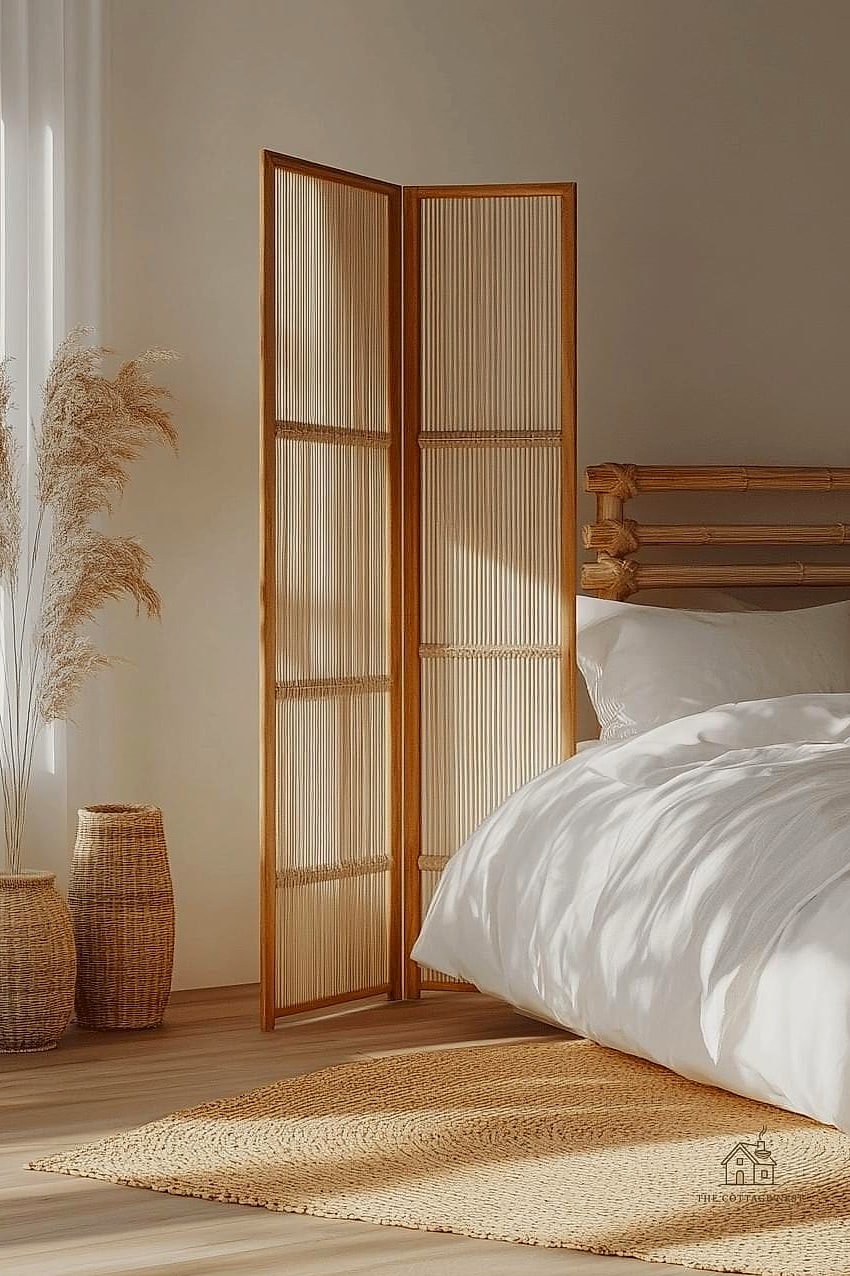
If you’re working with a studio apartment, a simple wood or bamboo folding screen can define your sleep space without a full room. These dividers are budget-friendly and double as a design feature since the natural material fits right into the Japandi aesthetic. They’re also easy to move if you rearrange later.
Paint an Accent Wall in a Muted Tone
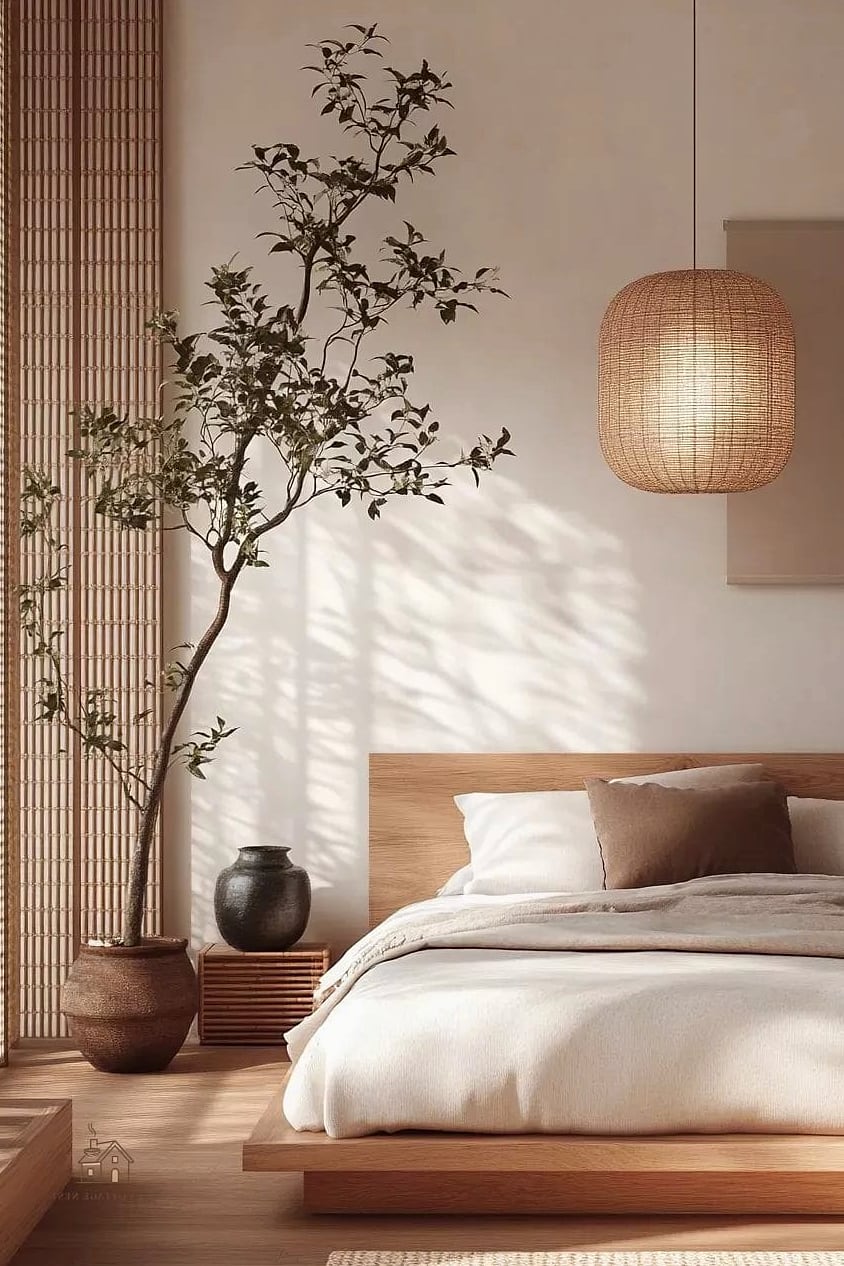
Instead of a bold accent color, try a soft clay, sage, or warm terracotta on just one wall behind the bed. This creates depth without disrupting the overall calm palette. A sample-sized paint can is often enough to cover a single accent wall in a smaller bedroom.
Swap in Ceramic or Wood Lamp Bases

A cheap plastic lamp can look completely different with a ceramic or faux-wood base swap, or even a coat of textured paint. Pair it with a linen or paper shade for the full effect. This is a great way to reuse a lamp you already own instead of buying a whole new one.
Keep the Bedding Layered but Simple

Instead of a busy comforter set, layer a plain linen duvet with one textured throw and two simple pillows. Stick to two or three tones max so the bed doesn’t feel overdone. This kind of restrained layering is what gives Japandi beds that effortless, hotel-like look.
Add a Small Wood Bench at the Foot of the Bed
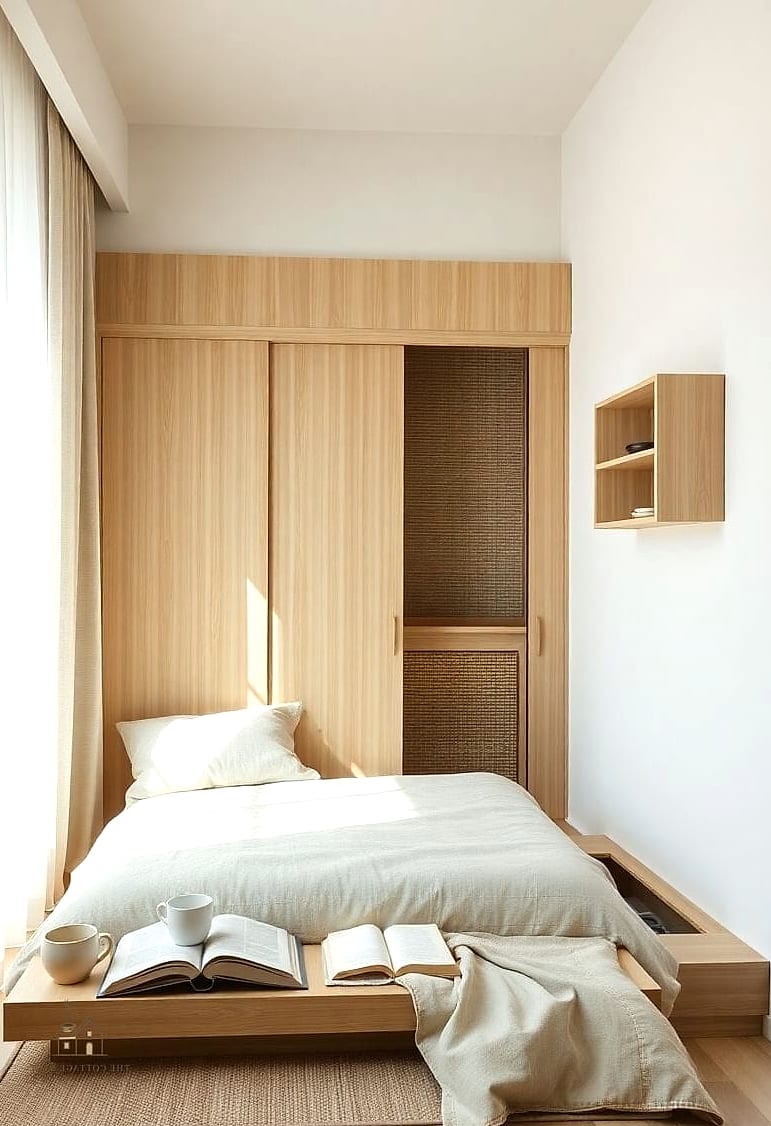
A simple wood bench adds function and that low, horizontal silhouette Japandi loves. It’s a great spot to toss a blanket or set out tomorrow’s outfit. Secondhand benches or even a repurposed coffee table work well here if you’re not buying new.
Use Woven Baskets for Discreet Storage
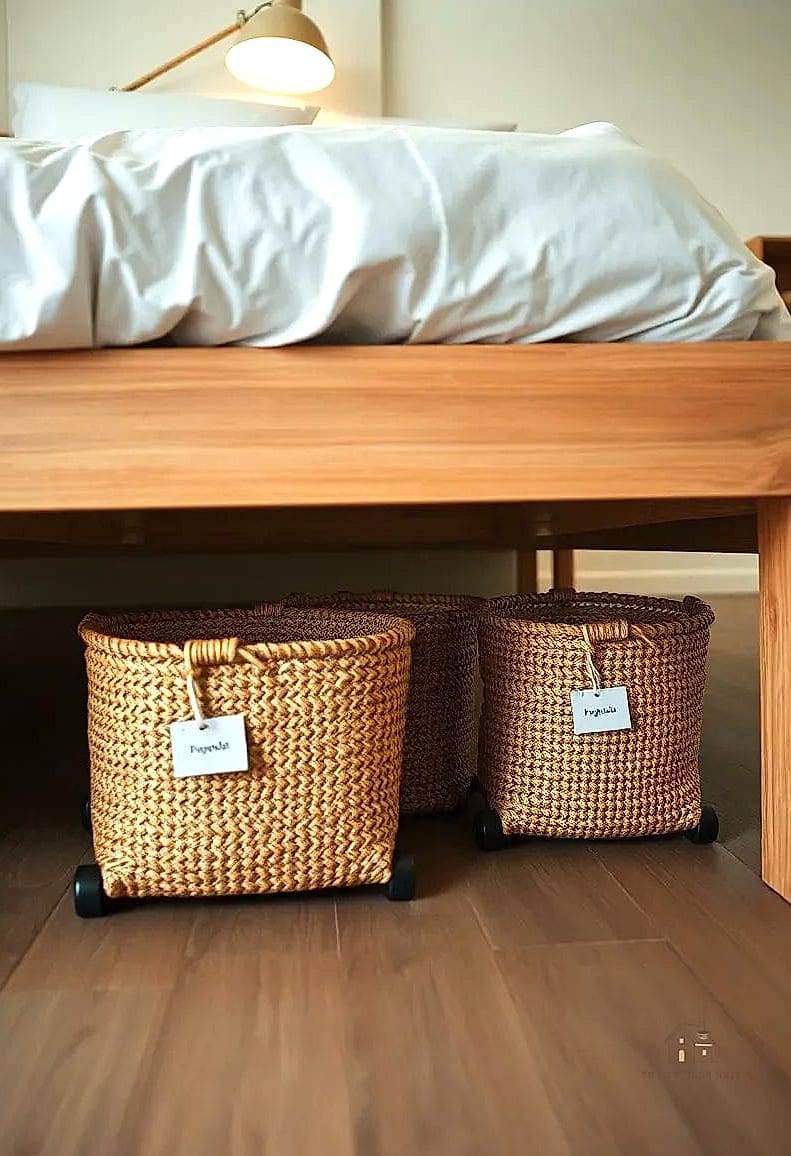
A couple of woven baskets tucked in a corner or under a shelf can hold blankets, laundry, or odds and ends while still looking intentional. They’re inexpensive, especially at budget home stores, and add texture at the same time. Just keep the number of baskets low so the room doesn’t feel cluttered again.
Choose Organic Shapes Over Sharp Edges
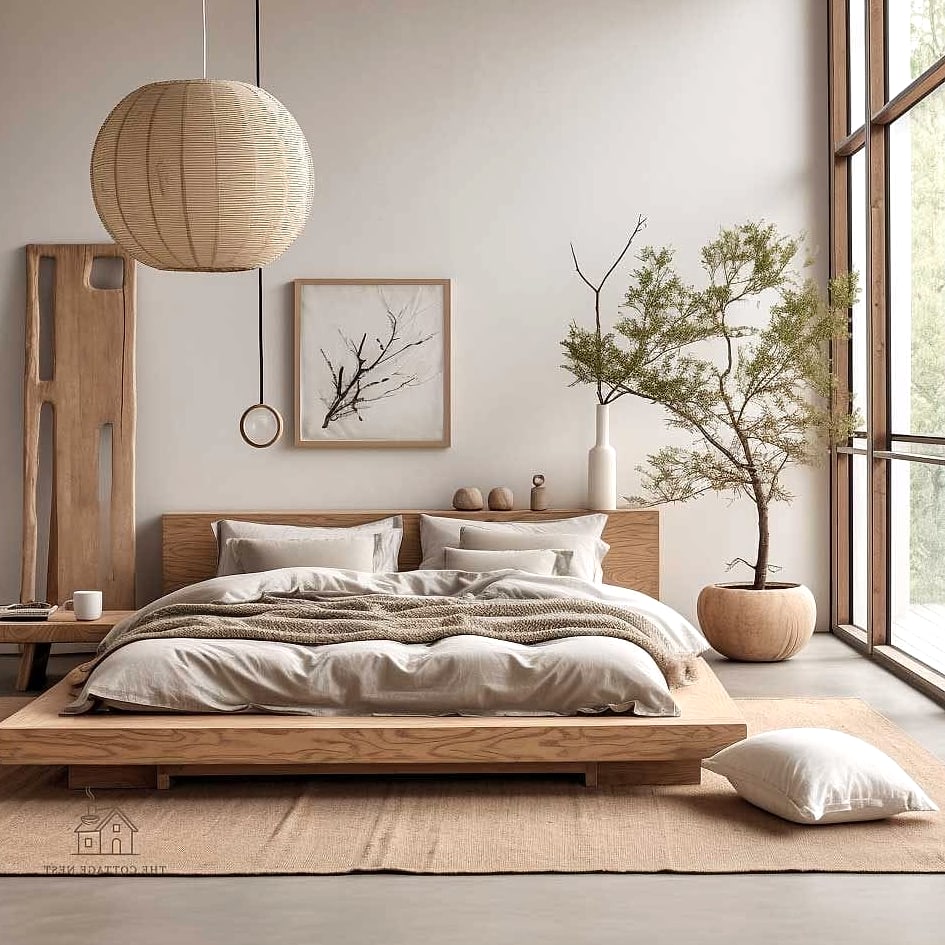
When picking new or secondhand furniture, look for rounded edges and soft, organic forms rather than sharp geometric lines. This is a subtle detail but it contributes a lot to that calm, natural feeling Japandi is known for. Even a round mirror instead of a rectangular one can make a difference.
Add a Simple Wood or Rattan Mirror
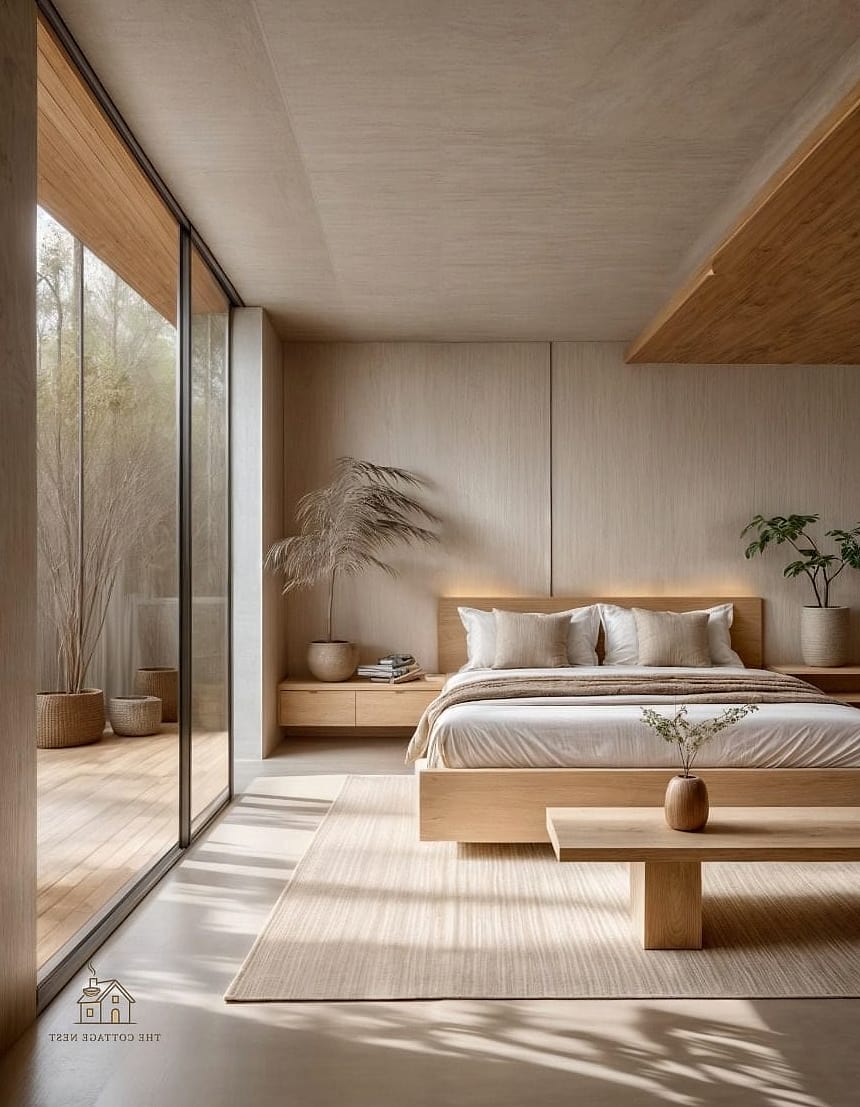
A round mirror with a wood or rattan frame is an affordable way to add both function and style to a Japandi bedroom. Hang it low, near eye level, rather than high on the wall for a more grounded look. Thrifted mirrors are easy to update with a coat of paint on the frame if needed.
Keep Window Treatments Simple
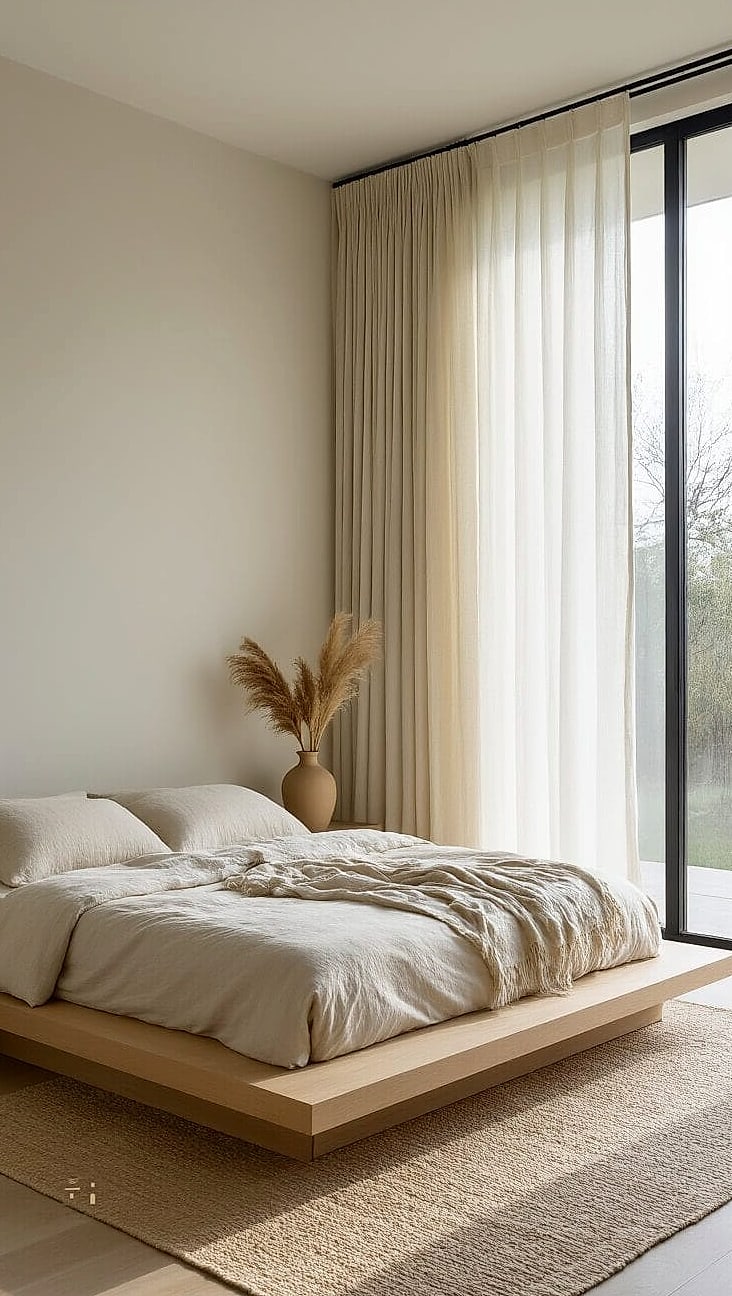
Skip heavy valances or layered curtain treatments in favor of one simple panel per side or a woven wood blind. This keeps the window area feeling light and uncluttered, which matters a lot in Japandi design. Budget wood blinds mimic the look of pricier bamboo shades for a fraction of the cost.
Let Negative Space Do the Work
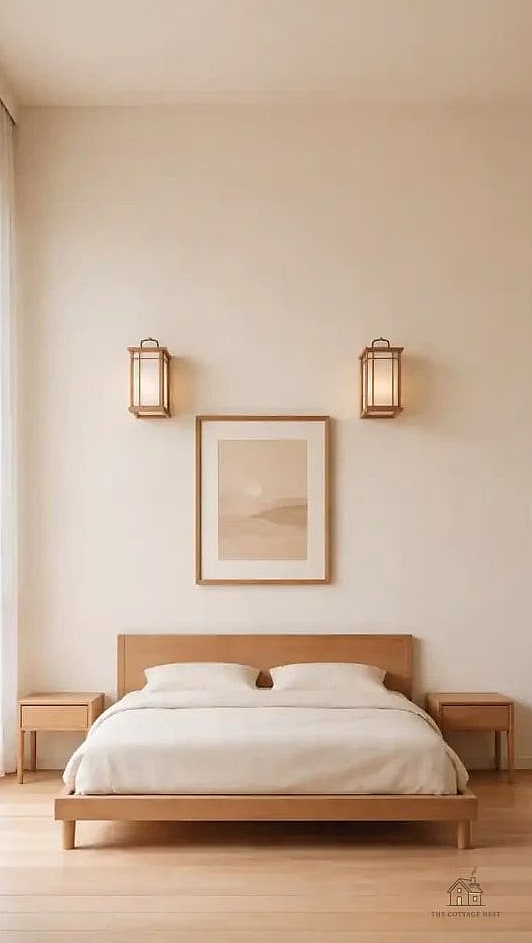
The biggest budget trick of all is simply not filling every corner of the room. Japandi bedrooms rely on empty space as much as they rely on furniture and decor. Before buying anything new, try living with less for a week and see how much calmer the room already feels.
Japandi is honestly one of the more forgiving styles to work with on a budget since it’s rooted in restraint rather than expensive statement pieces. A few thoughtful swaps, some decluttering, and a commitment to warm neutrals will get you most of the way there. Start with one or two ideas from this list, live with them for a bit, and build from there instead of trying to overhaul everything at once.