20 Cozy Basement Stairs Ideas Worth Pinning
- Painted Stair Risers in a Bold Color
- Stenciled Pattern on Each Step
- Runner Rug Down the Center
- Open Riser Design with Wood Treads
- Wallpapered Stairwell Walls
- Gallery Wall Along the Staircase
- Layered Lighting on the Way Down
- Built-In Shoe or Boot Storage at the Base
- Reclaimed Wood Accent Wall
- Under-Stair Storage Nook
- Black Metal Stair Railing
- Stair Nosing in a Contrasting Color
- Cozy Basement Landing with a Small Rug and Bench
- Skylight or Window Well Light Addition
- Painted Stripes on Riser Faces
- Vertical Shiplap on Stairwell Walls
- Floating Shelves Along the Stairwell Wall
- Carpet Tiles for a Soft, Budget-Friendly Update
- Stair Skirt Board Trim Detail
- Themed Basement Stair Decor for a Home Theater or Game Room
20 Cozy Basement Stairs Ideas Worth Pinning
Basement stairs get overlooked more than almost any other spot in the house. They’re usually dark, a little steep, and treated like a functional afterthought instead of a design opportunity. But that stairway sets the tone for whatever’s waiting below, and a few smart updates can make the whole descent feel intentional instead of like you’re heading into storage.
Whether you’re finishing a basement for the first time or just tired of walking down bare plywood steps, these ideas will help you turn that transition space into something you actually enjoy using.
Painted Stair Risers in a Bold Color
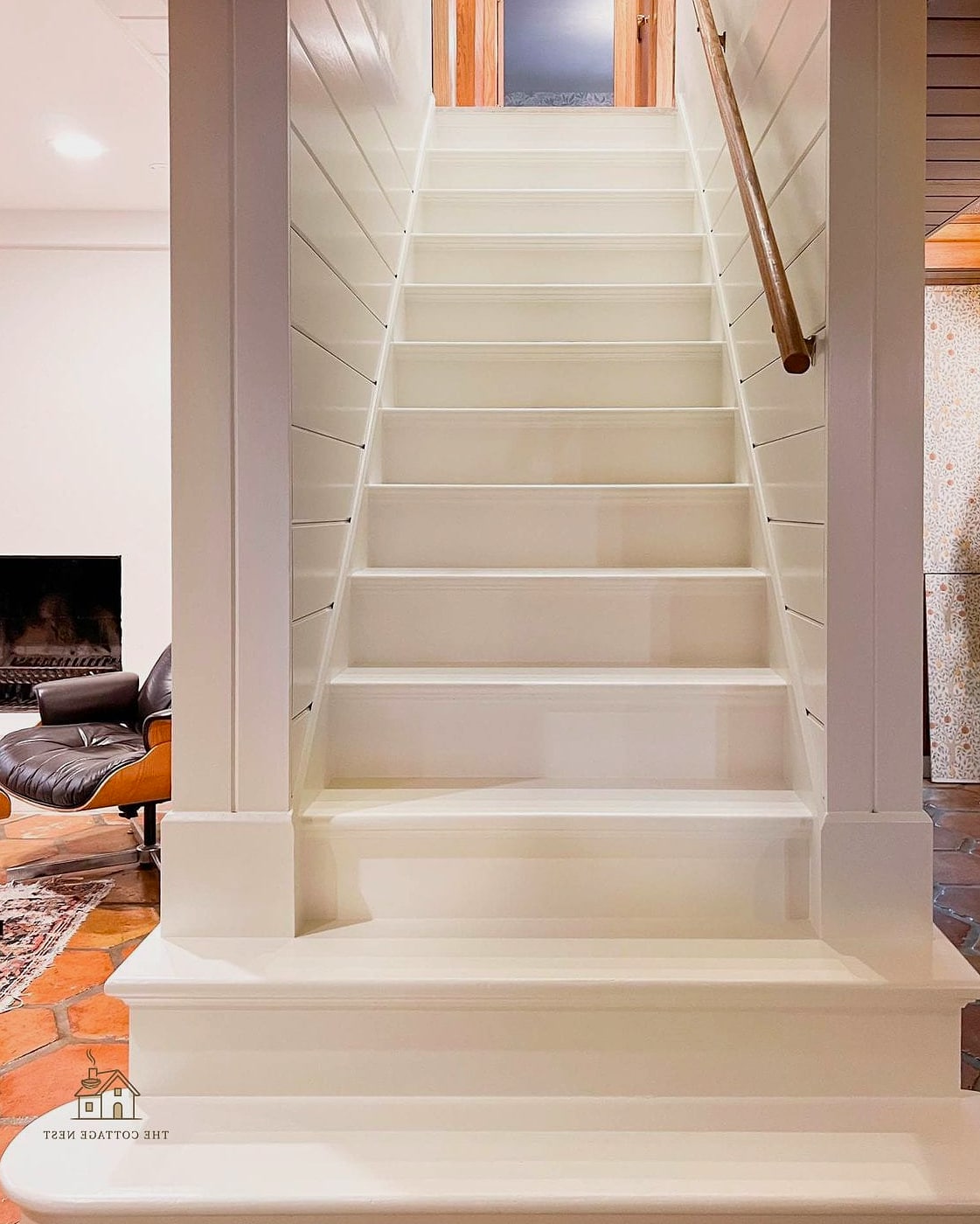
Swapping out plain white risers for a punchy color is one of the easiest ways to add personality to a basement staircase. Deep navy, forest green, or even a warm terracotta can make the stairs feel like a designed feature rather than an afterthought.
This works especially well in basements with lighter walls, since the contrast draws the eye down instead of making the stairwell feel like a dead zone. It’s also a weekend project that doesn’t require any carpentry skills, just painter’s tape and patience.
Stenciled Pattern on Each Step
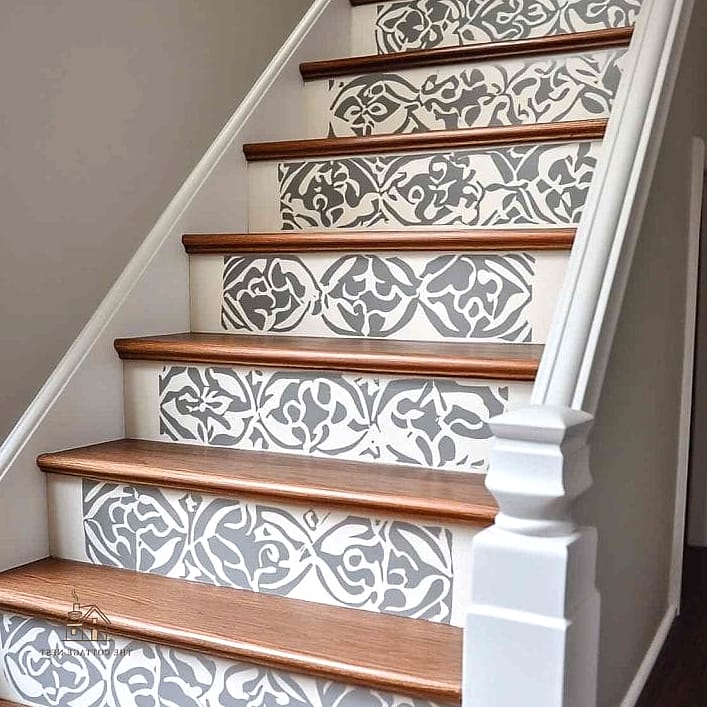
If solid color feels too plain, stenciled risers bring in pattern without the cost of wallpaper or tile. Moroccan-inspired designs, simple geometric shapes, or even a repeating quote work beautifully here.
Basement stairs are usually narrow and enclosed, which actually makes them a great low-commitment place to experiment with pattern. If you get tired of it in a few years, a coat of primer resets everything.
Runner Rug Down the Center
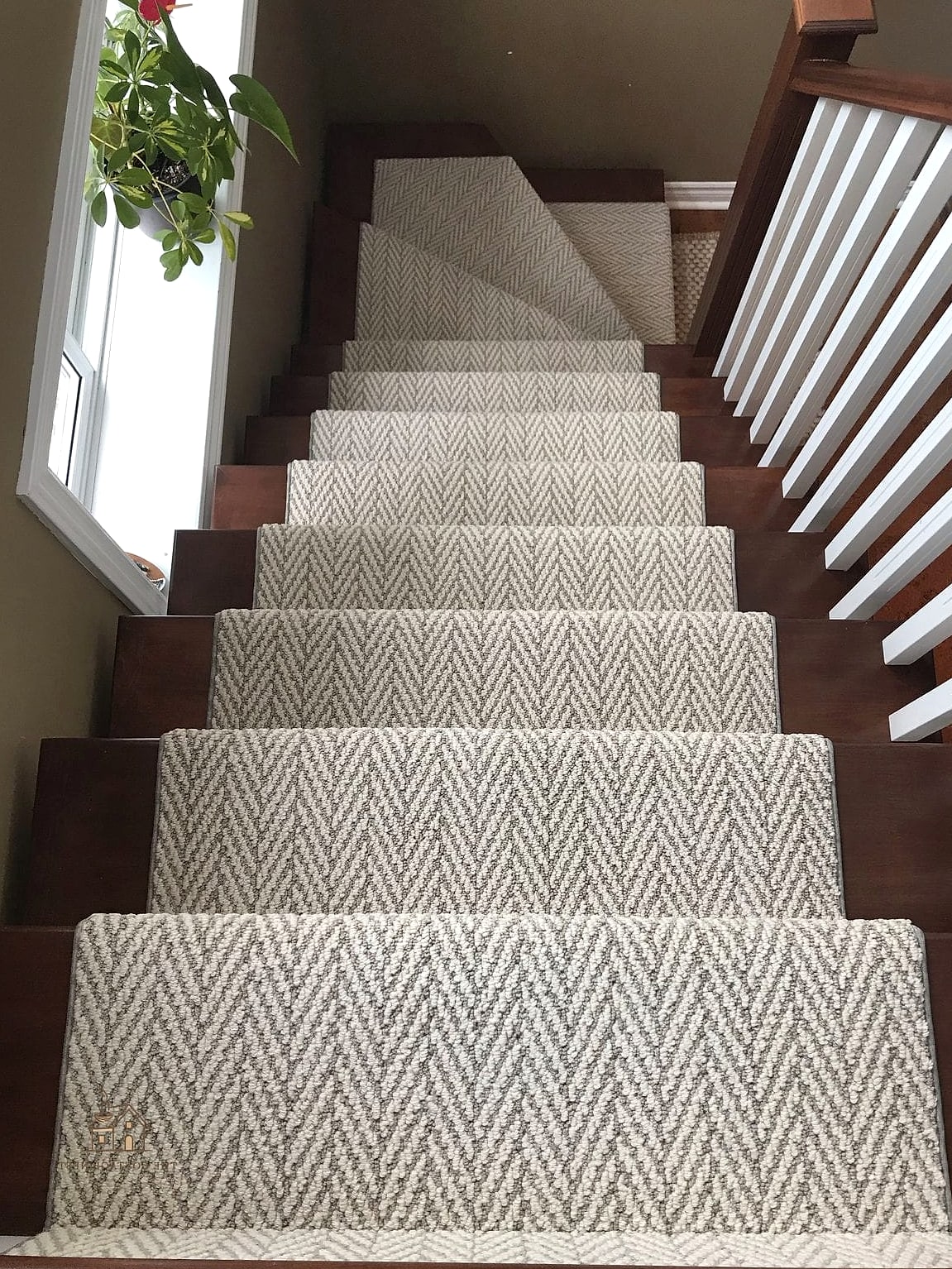
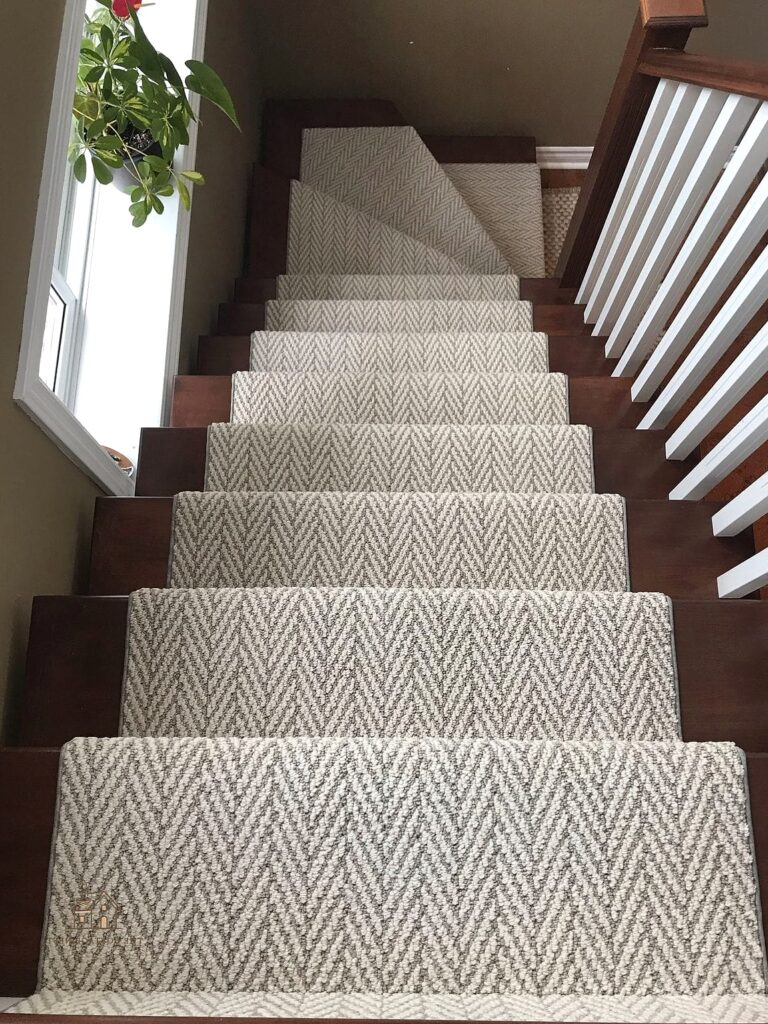
A stair runner instantly softens the look of basement steps and adds a layer of warmth underfoot, which matters a lot in a space that tends to run cooler than the rest of the house. Look for a durable, low-pile option since basement stairs see plenty of foot traffic hauling laundry baskets and storage bins.
Striped runners in neutral tones read as classic, while a moody floral or diamond pattern leans more eclectic. Either way, this is a renter-friendly upgrade since most runners install with grip strips instead of anything permanent.
Open Riser Design with Wood Treads
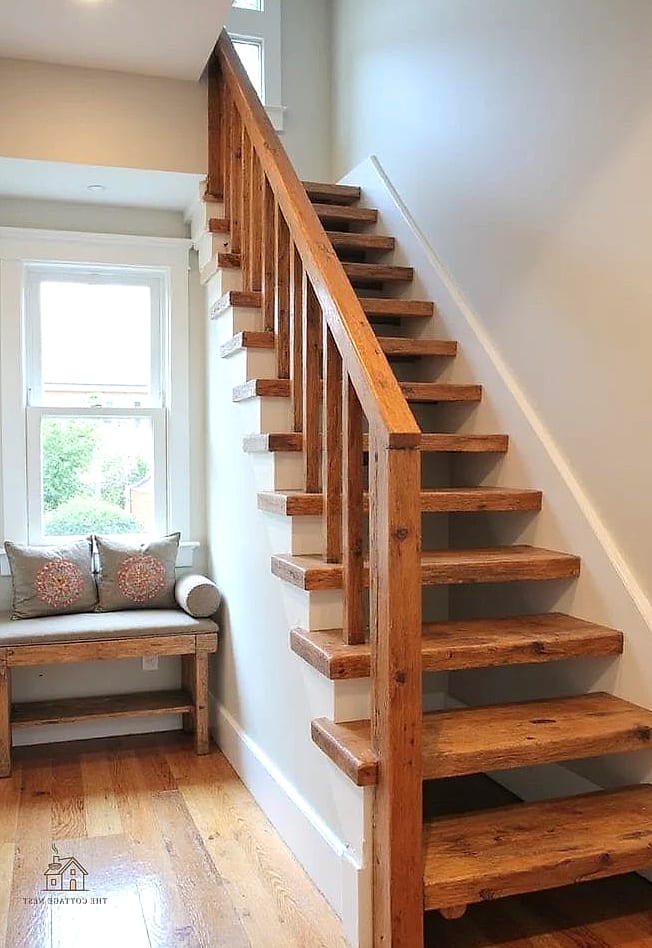
If your basement stairs are enclosed and heavy-looking, opening them up with exposed risers can make the whole area feel less cramped. Natural wood treads paired with black metal railings give a modern, almost loft-like feel.
This option works best when there’s enough headroom and the structure allows for it, so it’s worth checking with a contractor before committing. The payoff is a staircase that feels architectural instead of purely functional.
Wallpapered Stairwell Walls
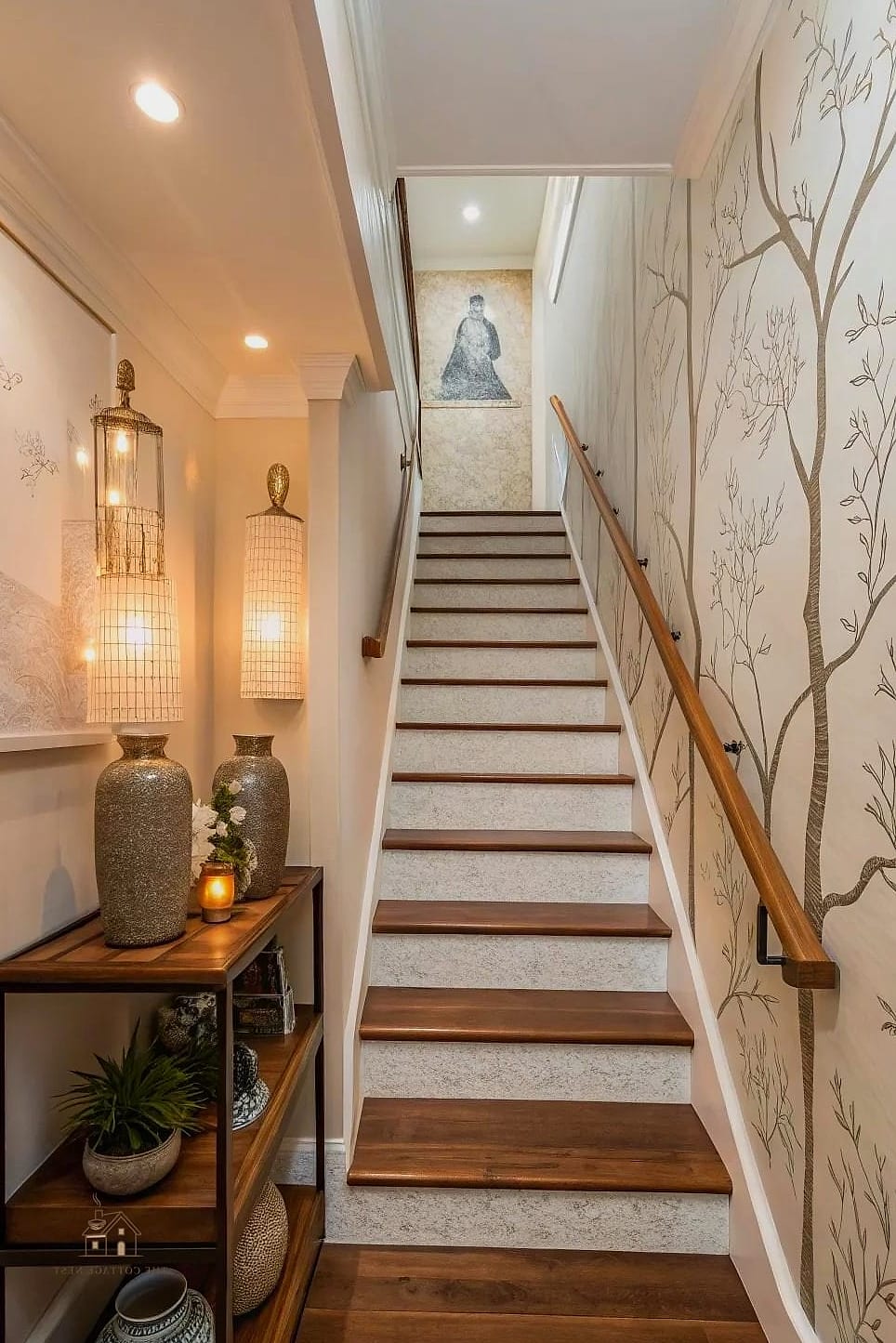
The narrow walls that flank basement stairs are an underused spot for wallpaper, and because the space is small, even a bold or expensive pattern won’t break the budget. Botanical prints, grasscloth textures, or a moody dark floral all add drama without overwhelming the rest of the basement.
Peel-and-stick wallpaper is a smart choice here if you’re not ready for a permanent commitment or you’re working with a rental. It goes up in an afternoon and comes down just as easily.
Gallery Wall Along the Staircase
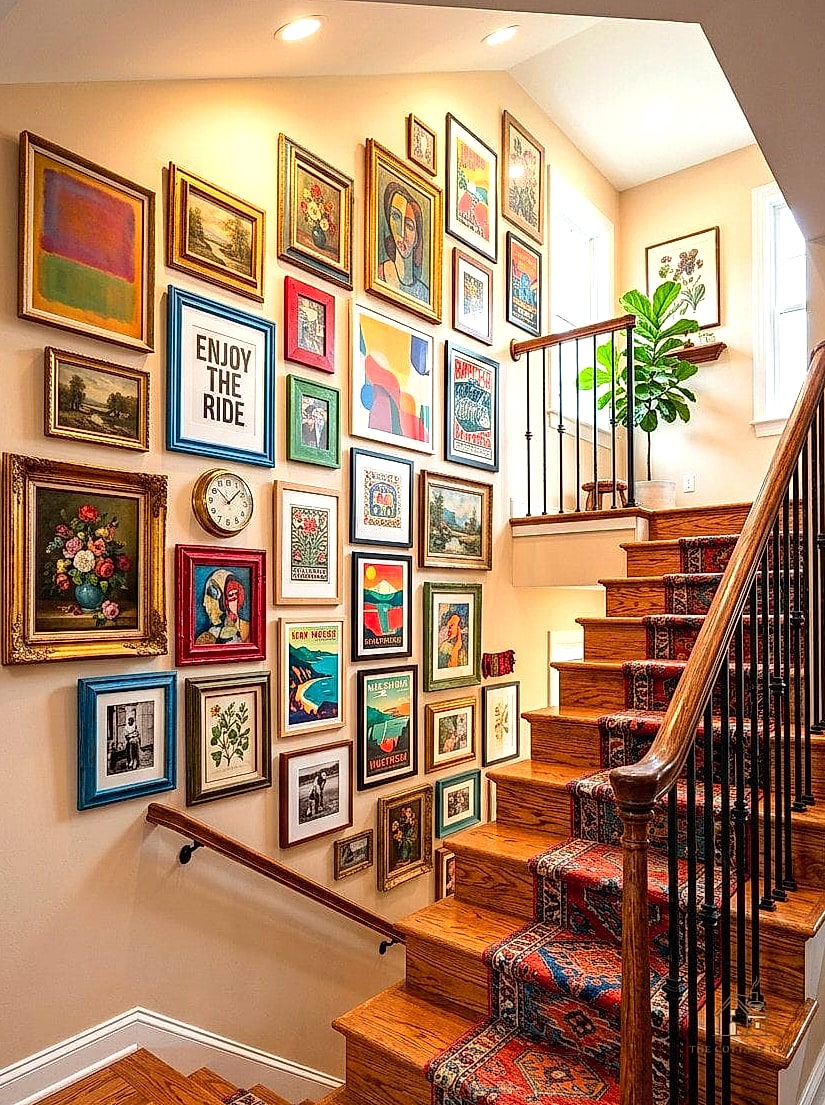
Basement stairwells often have a long, uninterrupted wall that’s perfect for a gallery display. Family photos, vintage prints, or even framed concert posters give you something to look at on the way down instead of blank drywall.
Keep frames a consistent color or finish for a cohesive look, or mix metals and sizes for something more collected-over-time. This is one of those upgrades that instantly makes a basement feel more like an extension of the home rather than a separate zone.
Layered Lighting on the Way Down
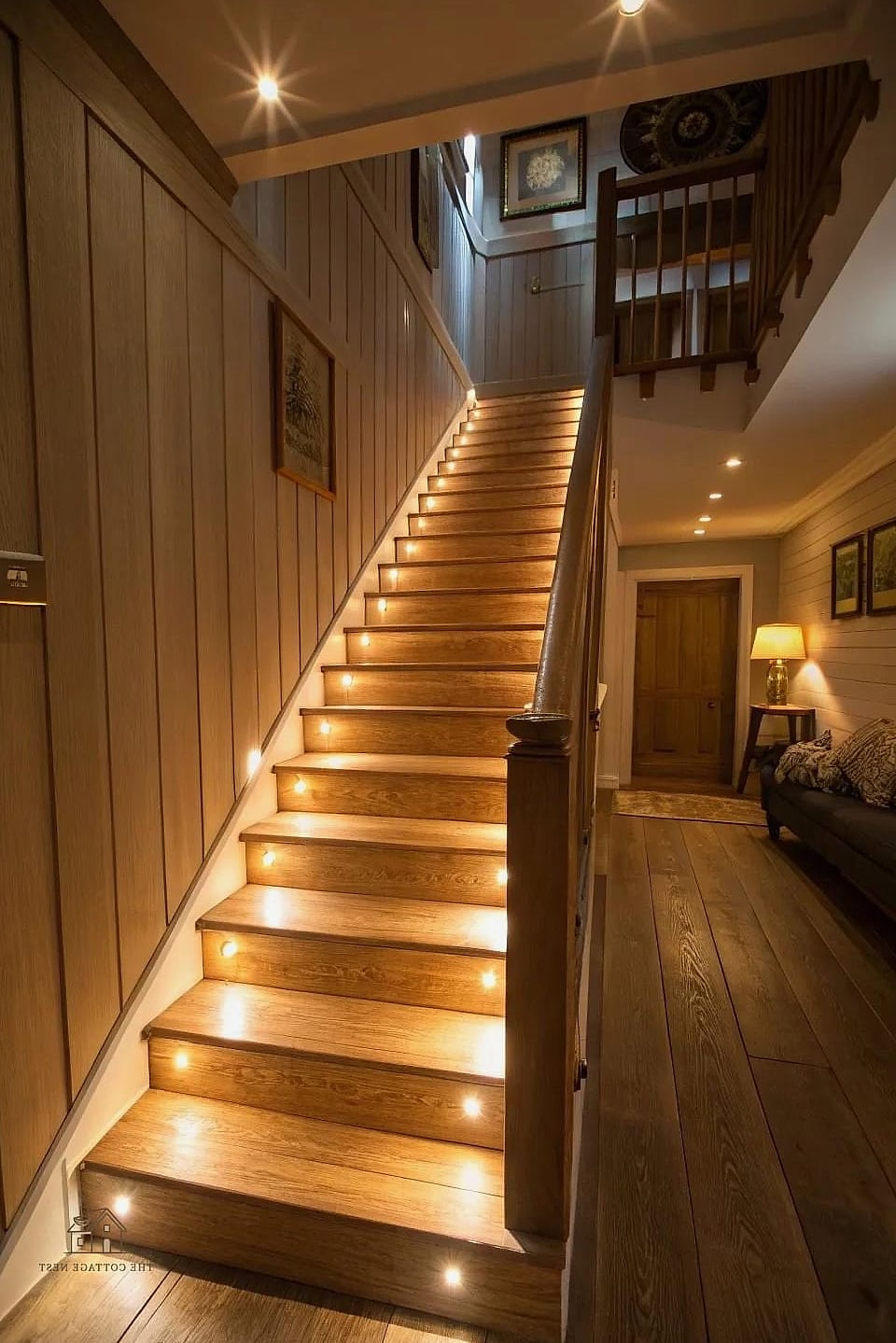
Basement stairs are notoriously dim, and a single overhead bulb rarely cuts it. Adding wall sconces every few steps, or a runner of recessed lighting along the stringer, makes the whole staircase feel safer and more inviting.
Warm-toned LED bulbs help avoid that harsh, unfinished-basement glow. If you’re not ready for an electrician, battery-powered puck lights are a surprisingly effective stand-in.
Built-In Shoe or Boot Storage at the Base
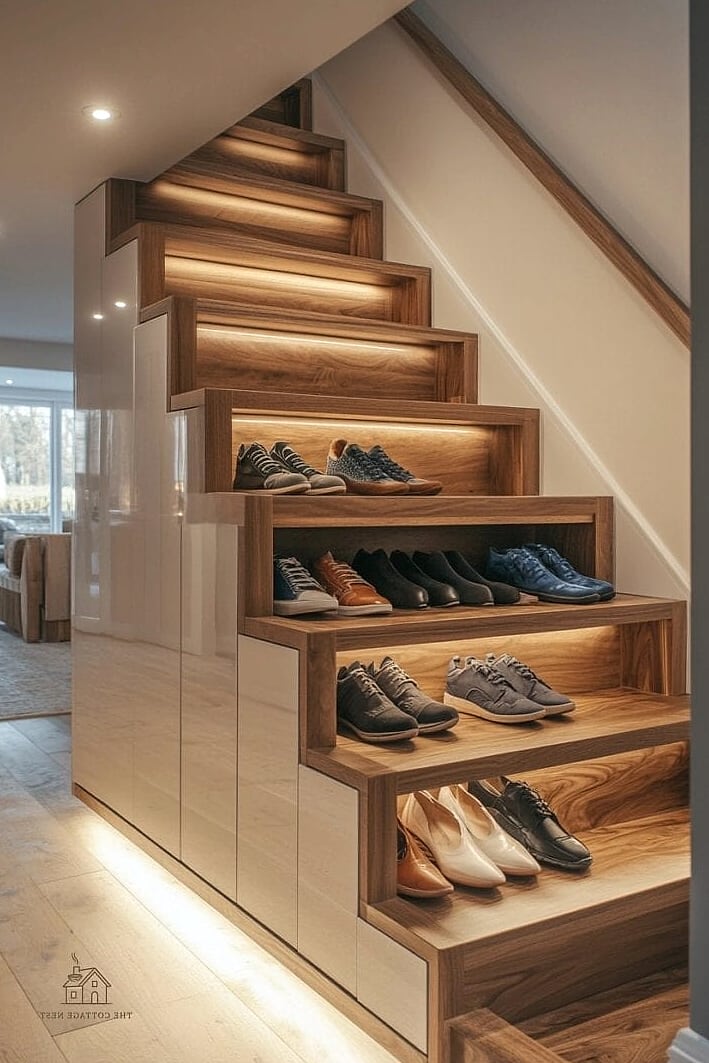
The landing at the bottom of basement stairs is prime real estate for a small mudroom-style setup, especially if the basement doubles as an entry from the garage. A slim bench with cubbies underneath keeps boots and shoes contained instead of scattered across the floor.
This is especially useful for families with kids or pets tracking in mud and snow. Baskets or bins in each cubby make it easy to sort by person or season.
Reclaimed Wood Accent Wall
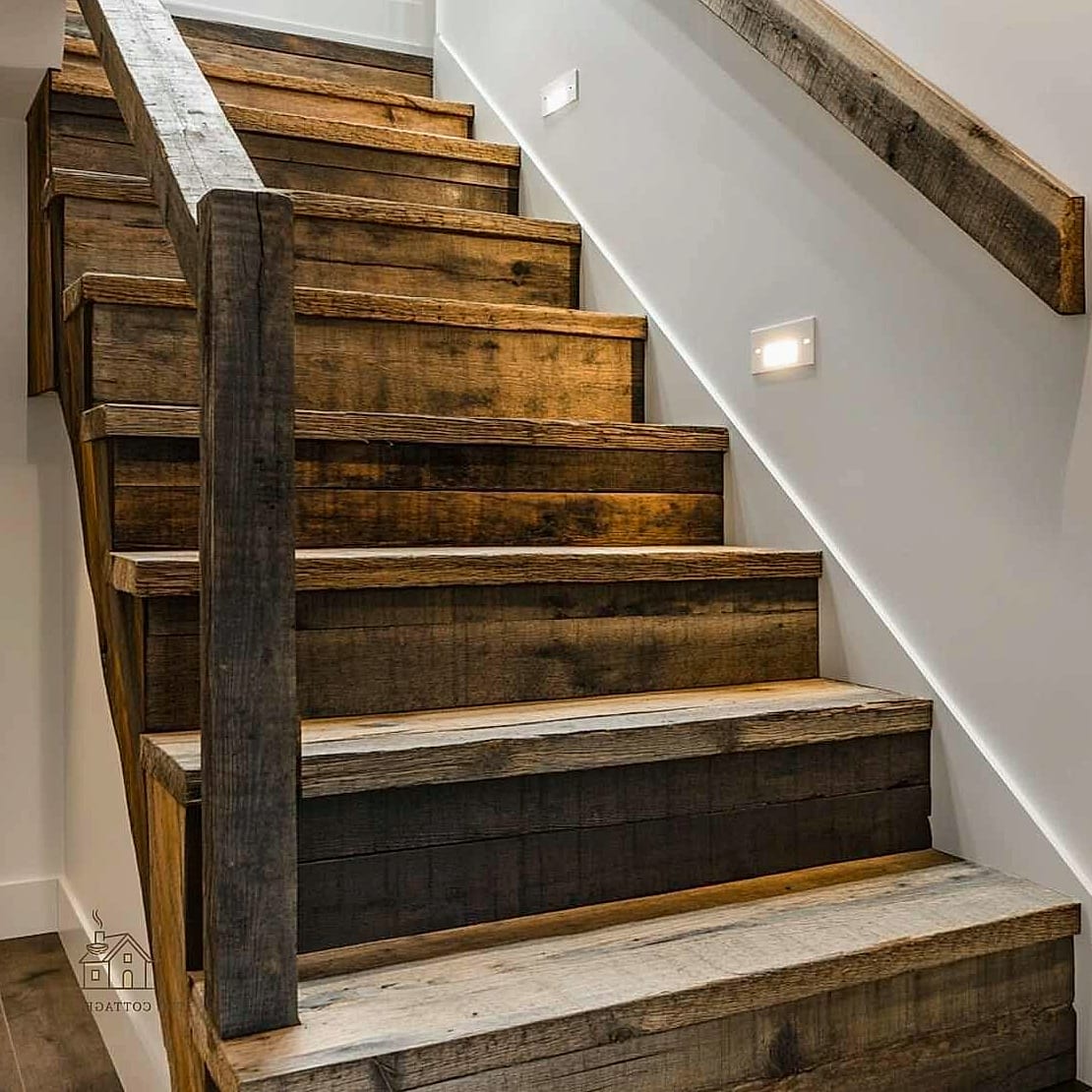
Adding a reclaimed or faux-wood accent wall along the stairway brings texture and warmth to a space that can otherwise feel cold and utilitarian. Shiplap, barn wood planks, or even a herringbone wood pattern all work well in this tight footprint.
Because the wall area is small compared to a full room, this is a great place to splurge on a nicer material without the cost ballooning. It also pairs nicely with black hardware and metal stair railings for a modern-rustic look.
Under-Stair Storage Nook
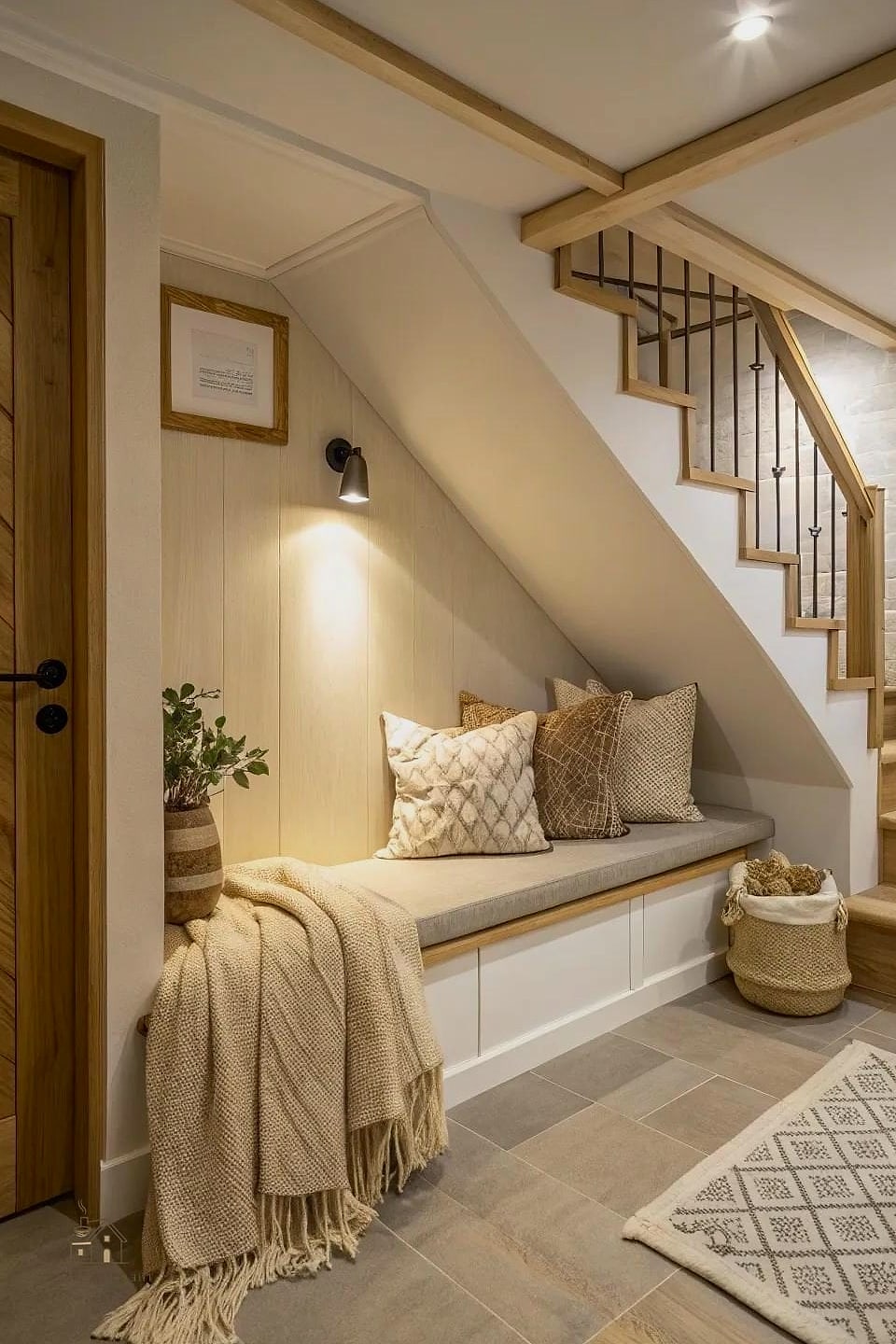
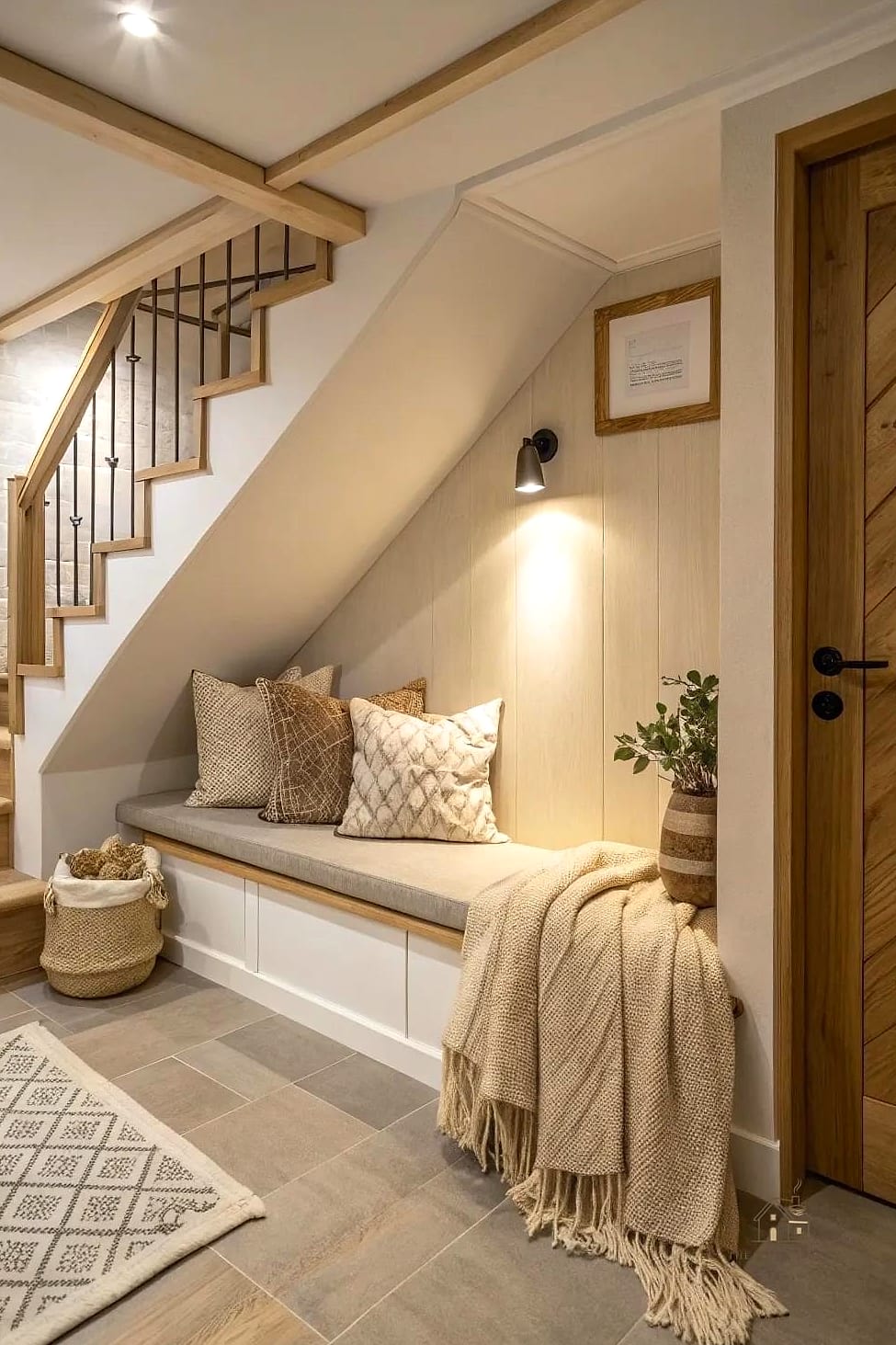
The triangular space beneath basement stairs is almost always wasted, and turning it into built-in shelving or a small closet is one of the most practical upgrades on this list. Wine storage, a mudroom bench, or even a compact home office nook can all fit depending on the dimensions.
Custom builds cost more but maximize every inch, while freestanding shelving units are a budget-friendly alternative that requires zero construction. Either way, it’s a smart way to add function to a staircase that’s usually just dead space.
Black Metal Stair Railing
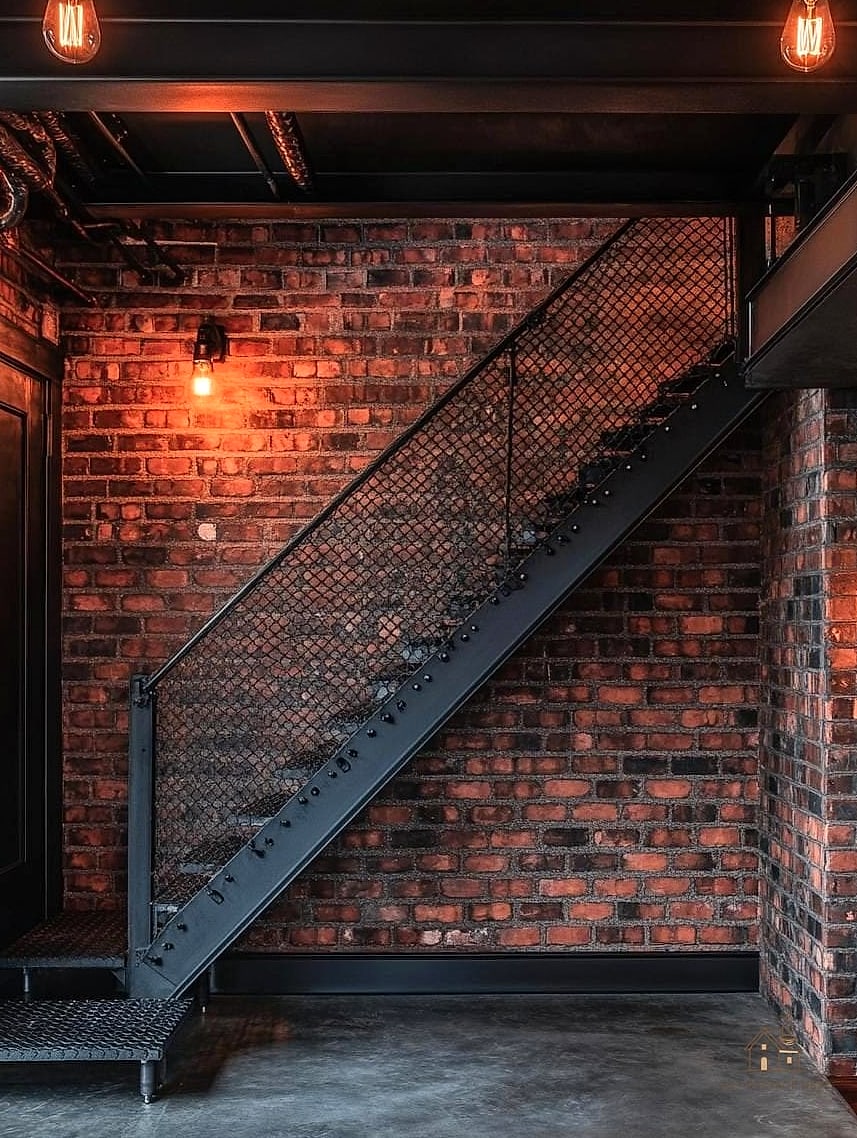
Swapping a dated wood railing for a black metal one is a relatively simple update that makes a huge visual difference. Thin black spindles or a solid black rod design read as current and pair well with almost any basement style, from industrial to farmhouse.
Black railings also tend to hide scuffs and fingerprints better than lighter finishes, which matters in a high-traffic spot. If a full railing swap isn’t in the budget, even painting the existing one black can transform the look.
Stair Nosing in a Contrasting Color
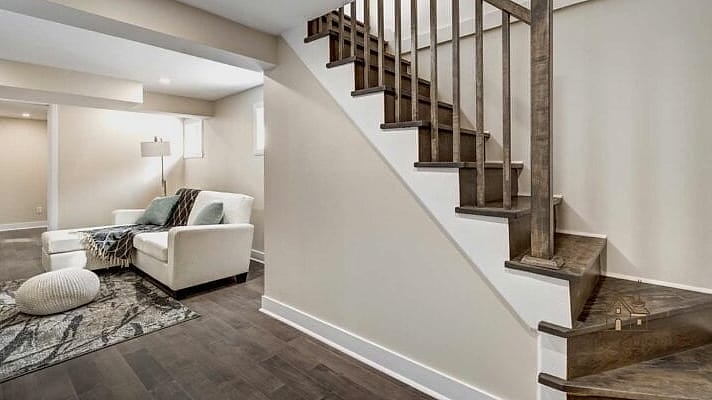
Adding a contrasting stripe of paint or tape along the edge of each step, known as stair nosing, improves both safety and style. It’s especially helpful in dim basement stairwells where depth perception can be tricky.
Bright white against dark treads creates a crisp, high-contrast look, while metallic nosing strips add a subtle industrial touch. This small detail makes a big difference for anyone navigating the stairs with an armful of laundry.
Cozy Basement Landing with a Small Rug and Bench
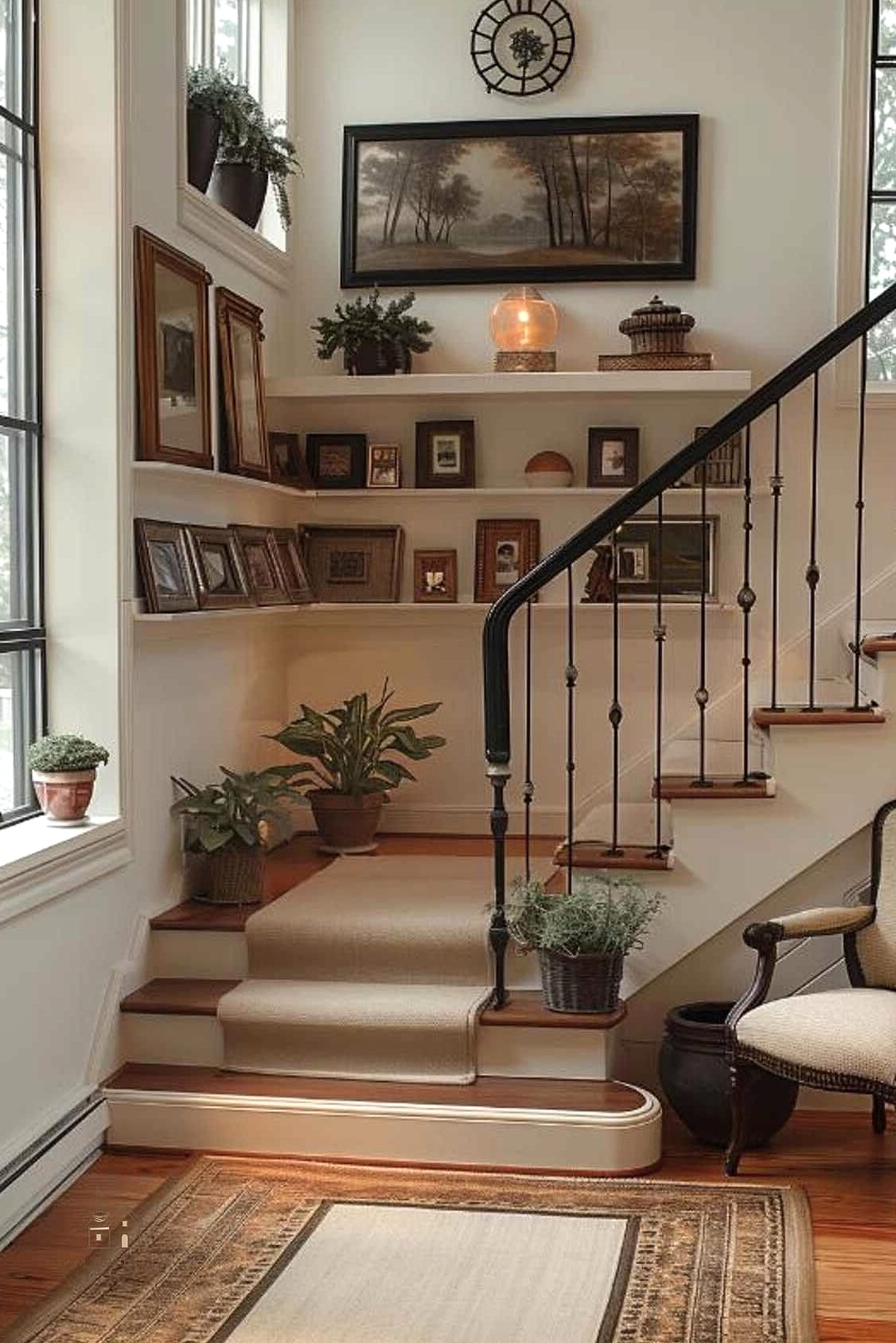
If there’s a landing partway down or at the bottom of the stairs, treating it like a mini entryway makes the whole space feel more finished. A small rug, a bench, and a hook or two for jackets go a long way.
This works particularly well in basements that lead out to a patio or walkout door. It gives people a place to pause and transition rather than just passing through.
Skylight or Window Well Light Addition
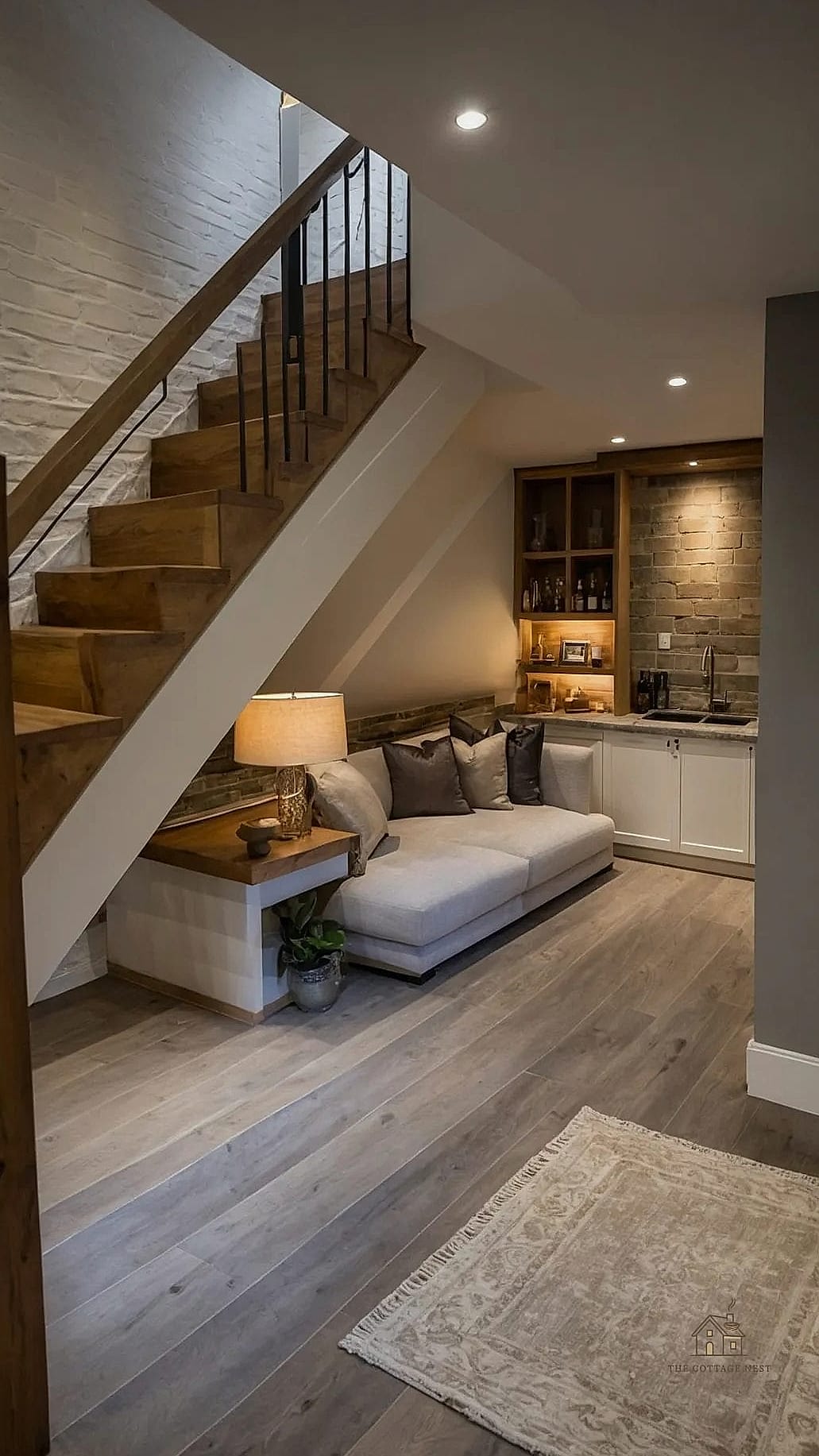
If your basement stairs run along an exterior wall, adding or enlarging a window well can bring in a surprising amount of natural light. Even a small window near the top of the stairs helps the whole stairwell feel less like a cave.
This is a bigger project that usually involves excavation and possibly a contractor, so it leans toward the higher end of the budget. But for basements that get finished into livable space, natural light at the stairs makes a noticeable difference in how welcoming the whole area feels.
Painted Stripes on Riser Faces
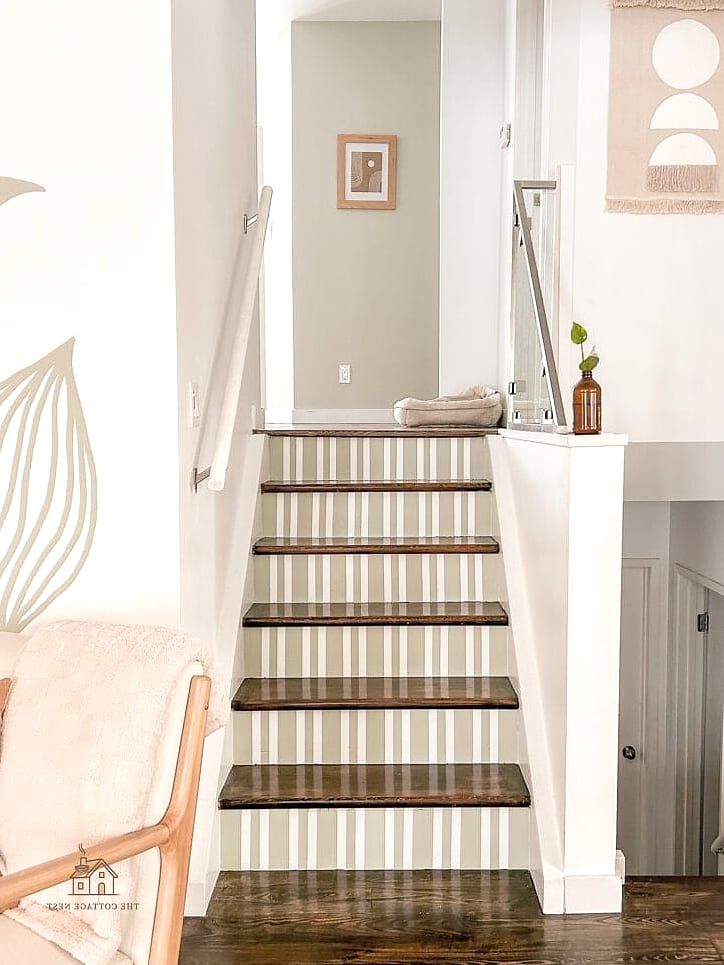
For something a little more playful than a single solid color, painting horizontal or diagonal stripes on each riser adds movement and visual interest. Two-tone stripes in complementary colors work well, or you can do an ombre effect that gradually shifts shade as you descend.
This is a great option for a basement that doubles as a playroom or teen hangout space, since it feels fun without being overly juvenile. Painter’s tape and a steady hand are really all you need.
Vertical Shiplap on Stairwell Walls
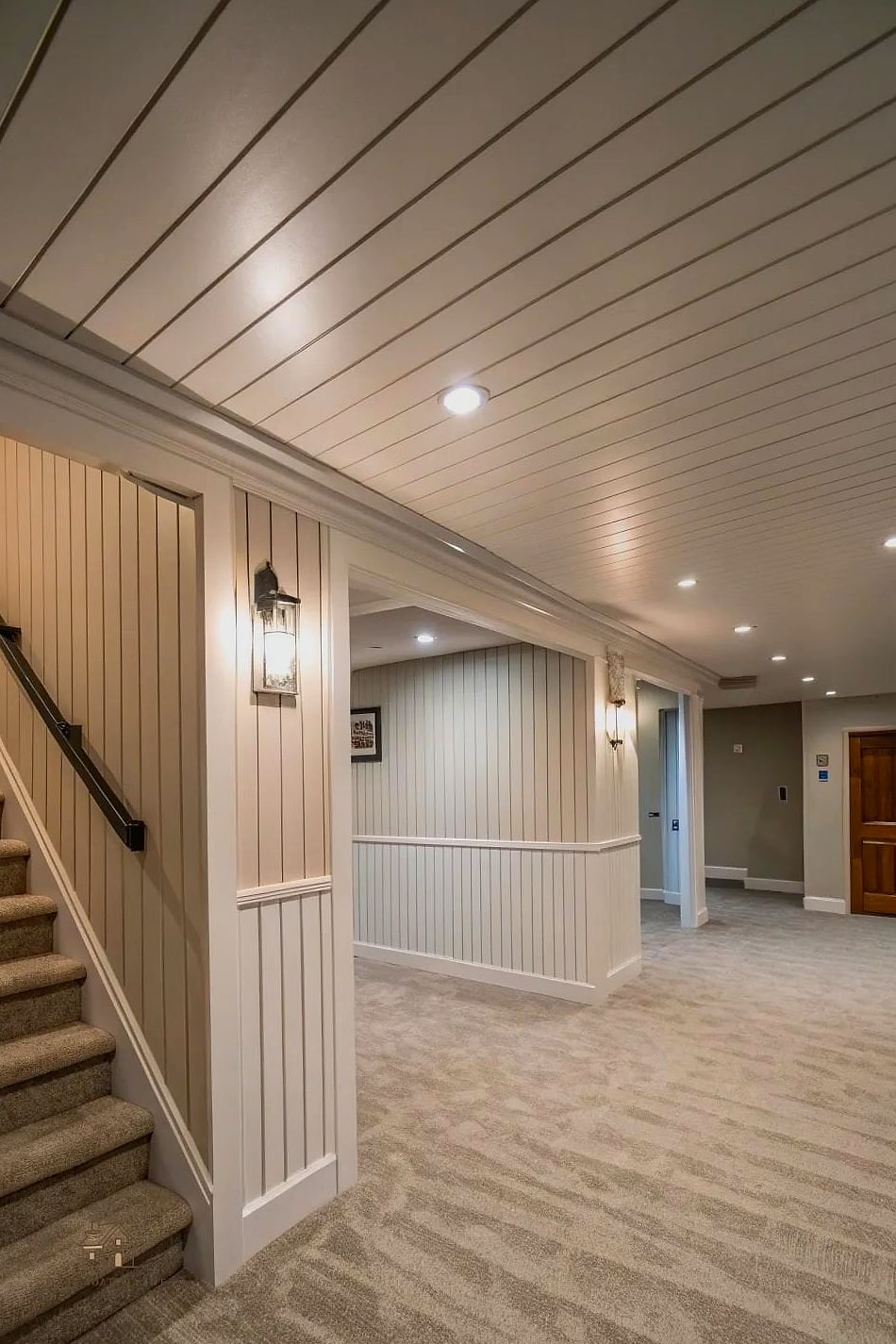
Vertical shiplap adds height and texture to a stairwell in a way that horizontal boards don’t. Because basement ceilings tend to run lower, the vertical lines create an illusion of more height as you walk down.
White or light gray shiplap keeps things bright, while a deep charcoal or black creates a moody, cocoon-like feel that a lot of basement spaces lean into on purpose. It’s a DIY-friendly project using MDF or pine boards from most hardware stores.
Floating Shelves Along the Stairwell Wall
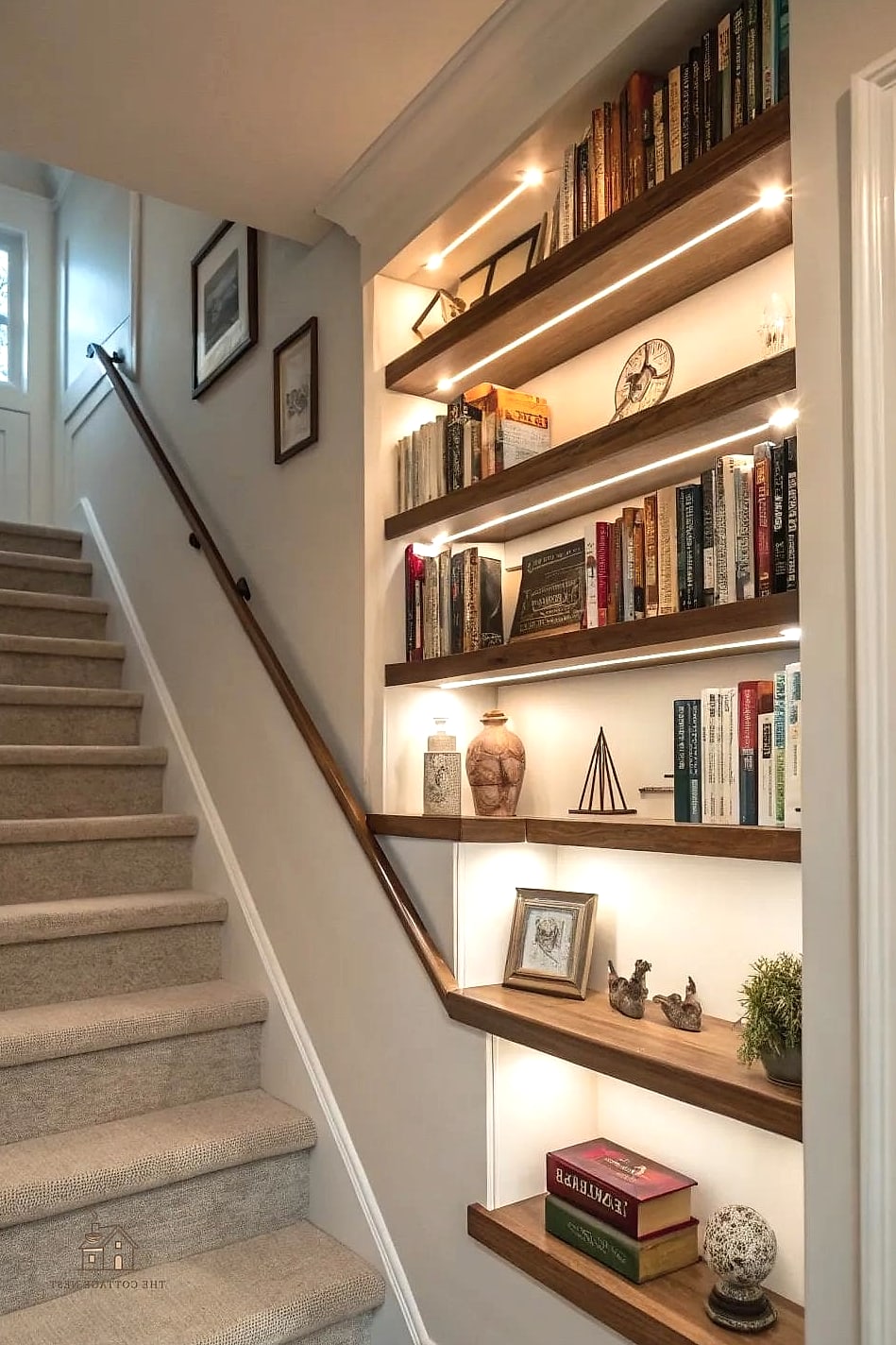
If a full gallery wall or wallpaper feels like too much, a few floating shelves along the stairway wall offer a simpler way to display books, plants, or framed art. Staggering the shelves at different heights following the slope of the stairs adds a nice architectural rhythm.
This is also a practical spot for faux greenery, since basement stairwells often lack the natural light real plants need. Keep items lightweight and secured, since these shelves see a lot of passing traffic.
Carpet Tiles for a Soft, Budget-Friendly Update
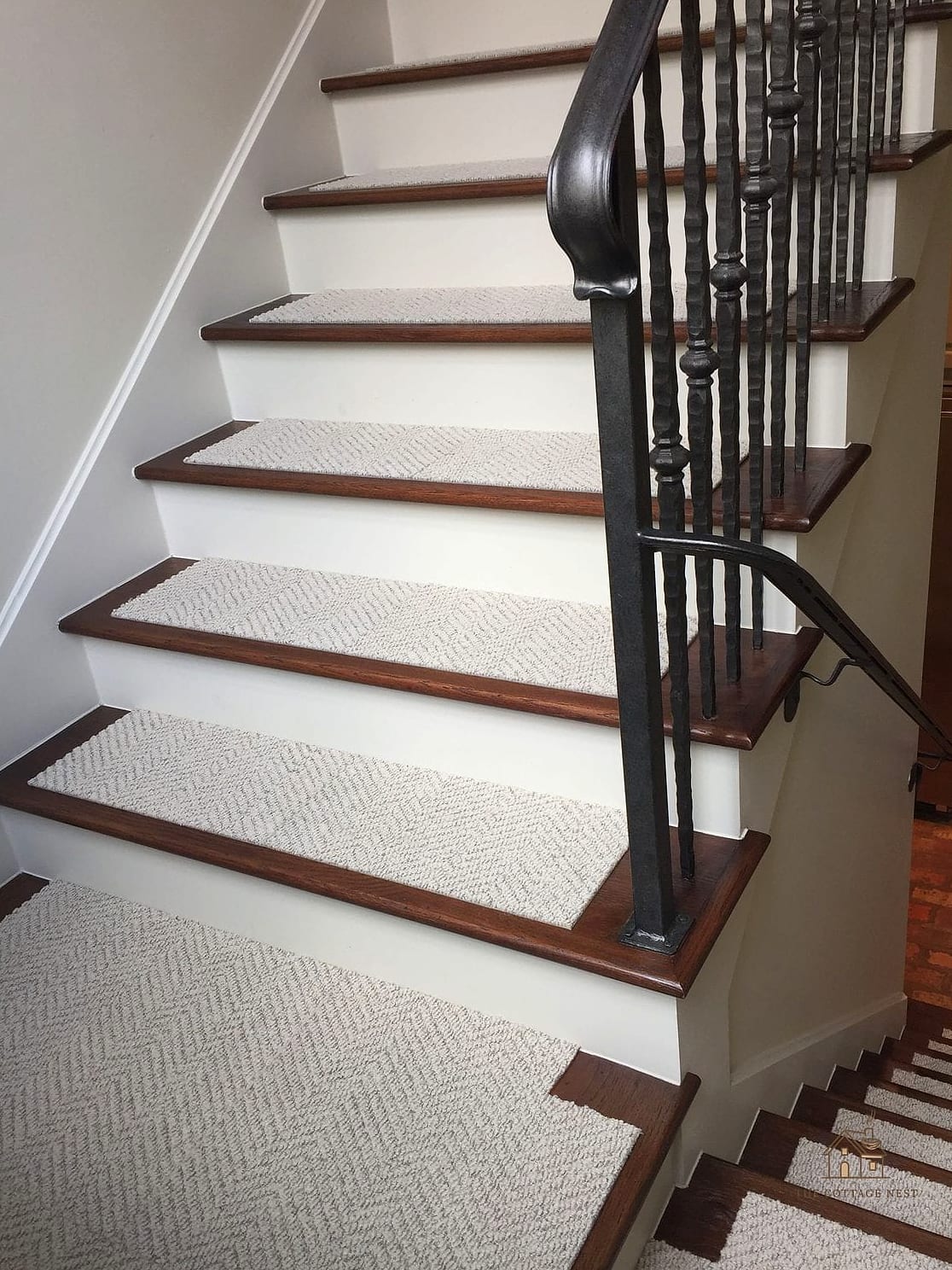
Carpet tiles are an underrated option for basement stairs because they’re affordable, easy to install without professional help, and simple to replace individually if one gets stained or worn. They also add sound dampening, which is a nice bonus if the basement is used as a media room or gym.
Neutral tones hide dirt better for high-traffic households, while a patterned tile adds personality without committing to a full runner. This is a particularly good option for families with kids or pets who put the stairs through daily wear and tear.
Stair Skirt Board Trim Detail
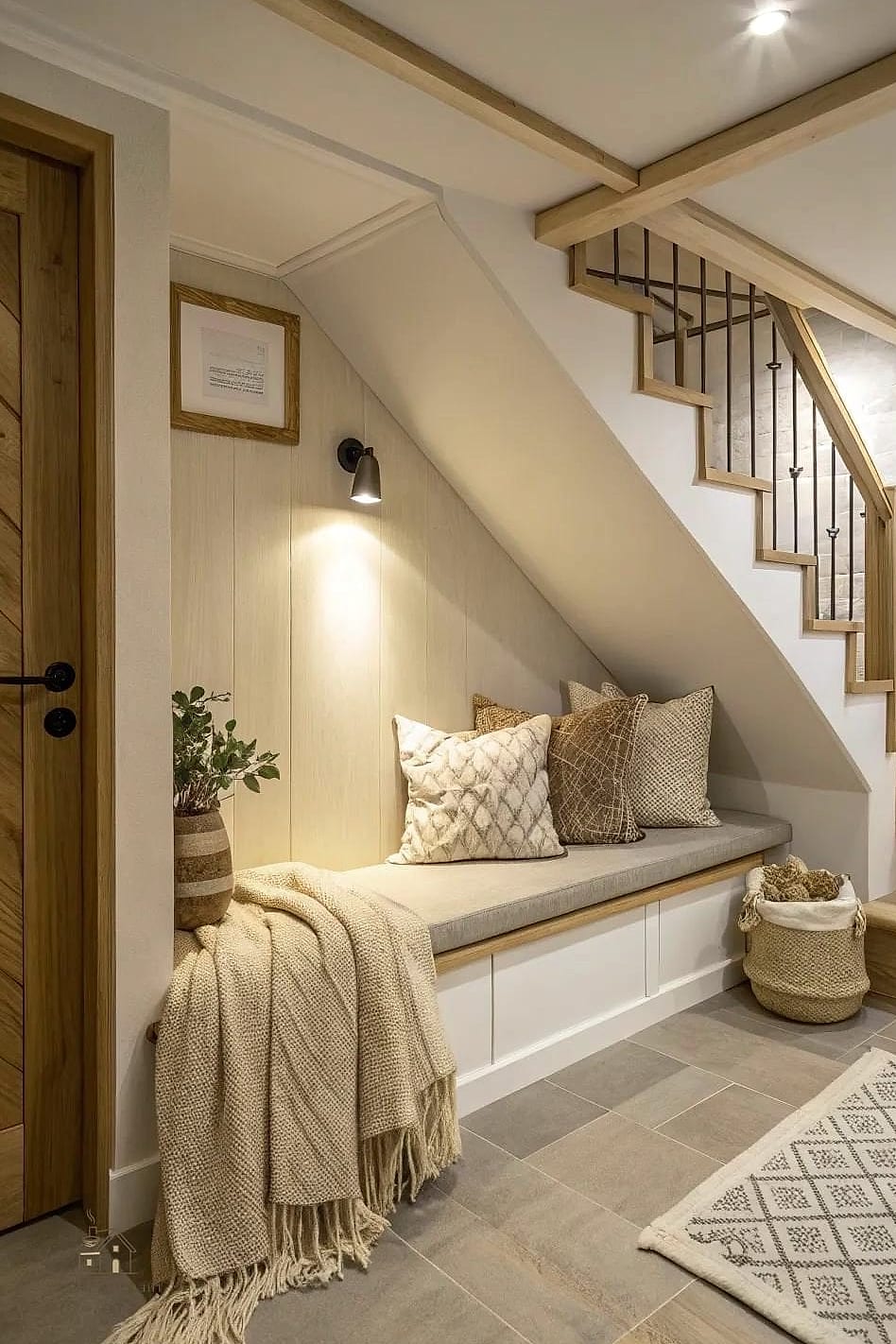
Adding a painted skirt board along the wall side of the staircase gives the stairs a more finished, custom-built look, similar to crown molding for a staircase. It’s a small architectural detail that a lot of basements skip entirely, which is exactly why it stands out when it’s there.
White or black trim against a contrasting wall color creates definition and a slightly more polished feel. This is a moderate DIY project for anyone comfortable with basic trim carpentry, or a quick job for a local contractor.
Themed Basement Stair Decor for a Home Theater or Game Room
If the basement is dedicated to a specific purpose, like a home theater, game room, or bar area, carrying that theme up into the stairwell ties the whole space together. Marquee-style lettering, framed movie posters, or string lights along the railing all signal what’s waiting downstairs before you even get there.
This is a fun, low-pressure place to have some creative fun with decor, since basement stairs don’t need to match the rest of the house’s style. It’s also an easy area to update seasonally or as your interests change, without touching the main living spaces upstairs.
However you decide to update your basement stairs, small changes tend to add up fast in a space this size. A little color, better lighting, or a bit of built-in storage can turn a stairway you rush past into one you’re actually glad to walk down.