45 Gorgeous Japandi Dining Room Ideas That Are Totally Doable
- Low Wooden Dining Table
- Neutral Linen Curtains
- Handmade Ceramic Dinnerware
- Paper Pendant Lighting
- Warm Wood Tones on the Floor
- Low-Slung Bench Seating
- Sculptural Ceramic Vase
- Natural Fiber Area Rug
- Matte Black Accents
- Sliding Shoji-Inspired Screen
- Built-In Wood Shelving
- Organic Shaped Mirror
- Woven Pendant Lampshade
- Minimalist Table Runner
- Floor-to-Ceiling Wood Slat Wall
- Low Lighting with Dimmers
- Stone or Concrete Tabletop
- Muted Sage Green Wall Color
- Handwoven Basket Storage
- Asymmetrical Gallery Wall
- Low Wood Sideboard
- Handblown Glass Pendant
- Textured Linen Chair Cushions
- Exposed Wood Beam Ceiling
- Dried Botanical Arrangements
- Floor Cushions for Extra Seating
- Minimalist Ceramic Candle Holders
- Wood and Rattan Chair Combo
- Soft Gray Wall Palette
- Handmade Pottery Centerpiece Bowl
- Wall-Mounted Wood Cabinet
- Natural Wood Chair Legs with Upholstered Seats
- Soft Layered Textiles
- Black Framed Windows or Doors
- Minimalist Wall Clock
- Indoor Olive or Fig Tree
- Wood Slat Room Divider on Casters
- Ceramic Tile Accent Wall
- Handcrafted Wood Serving Tray
- Soft Amber Glass Drinkware
- Woven Window Shades
- Minimalist Floating Wall Art
- Wood Bead Chandelier
- Hidden Storage Bench
- Curated Open Shelving Display
45 Gorgeous Japandi Dining Room Ideas That Are Totally Doable
Japandi is that quiet, grounded style that mixes Japanese minimalism with Scandinavian coziness, and honestly, it’s perfect for dining rooms. You get clean lines without feeling cold, and warmth without clutter. Here are 45 ways to bring that look into your own space, no matter your budget or square footage.
Low Wooden Dining Table
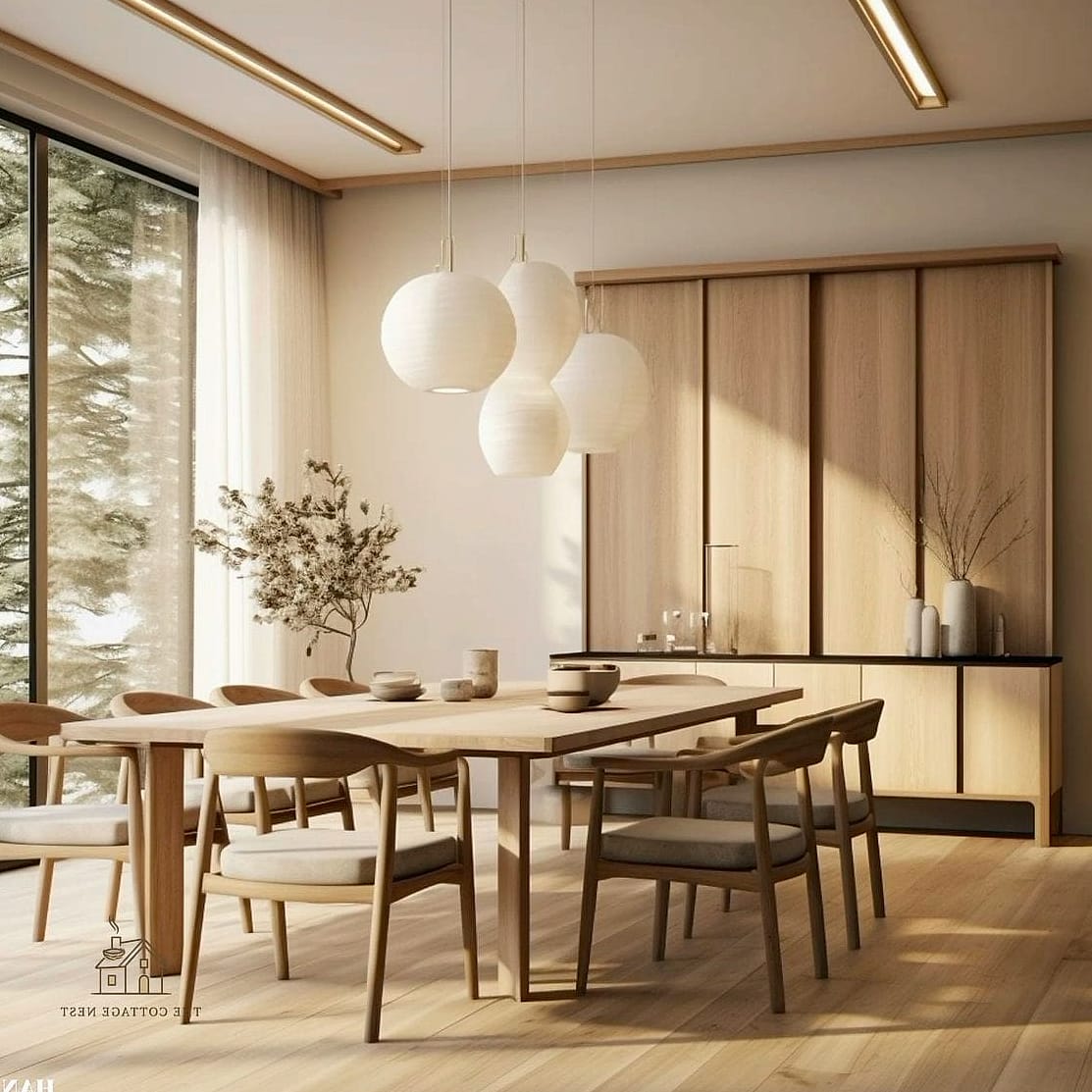
A low-profile wood table with rounded edges instantly reads Japandi. Oak and ash work beautifully here because they keep things light and airy. Pair it with floor cushions or low chairs for an even more authentic feel, or stick with standard-height seating if you want something more practical for everyday family dinners.
Neutral Linen Curtains
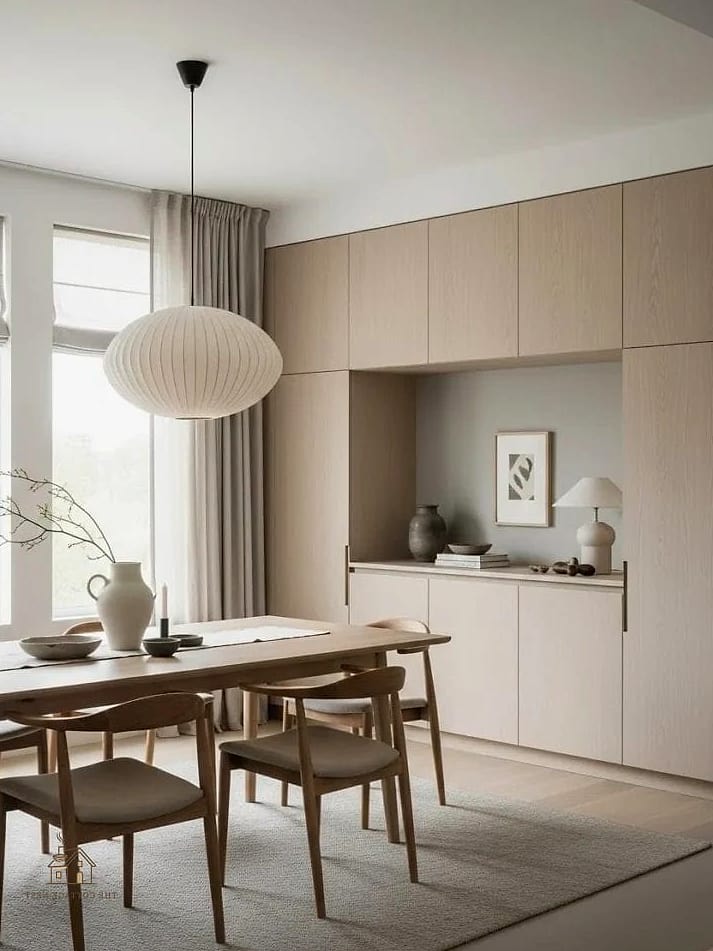
Swap heavy drapes for soft, unlined linen panels in oatmeal or soft gray. They filter light gently and add texture without competing with anything else in the room. This is a renter-friendly swap too, since curtain rods rarely require permanent changes.
Handmade Ceramic Dinnerware
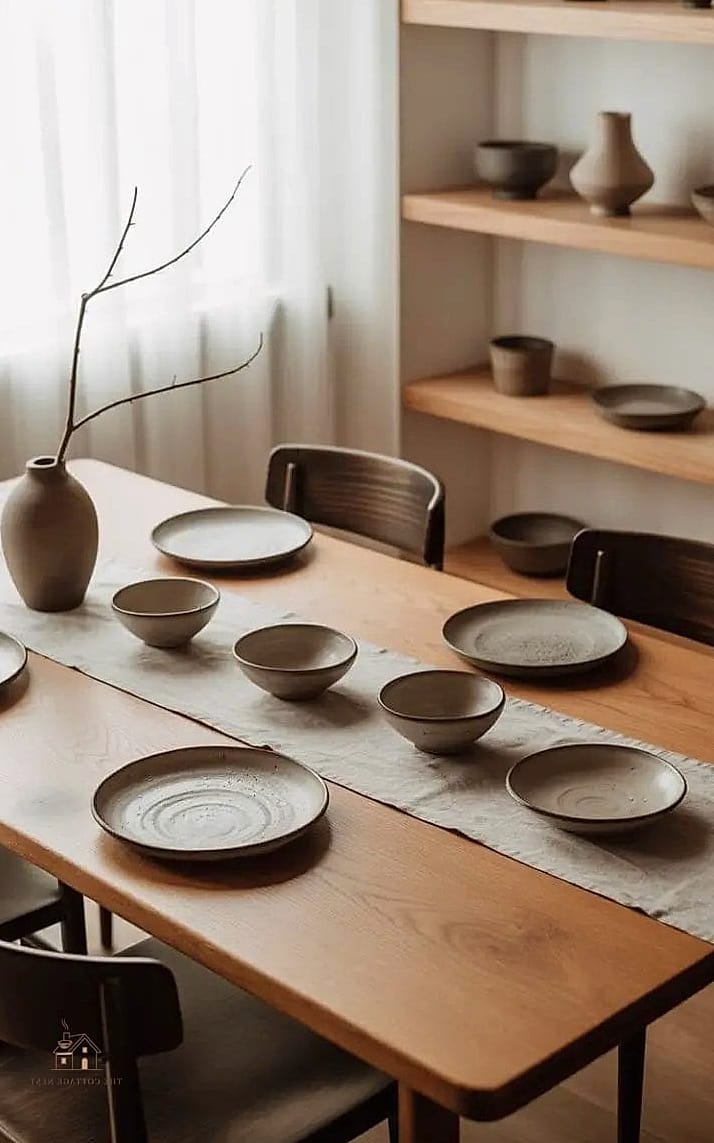
Open shelving or a glass-front cabinet showcasing imperfect, handmade ceramics tells the whole Japandi story in one glance. Look for pieces with visible glaze variations or slightly uneven edges. Thrifted or secondhand finds actually work great here since a little wear adds character.
Paper Pendant Lighting
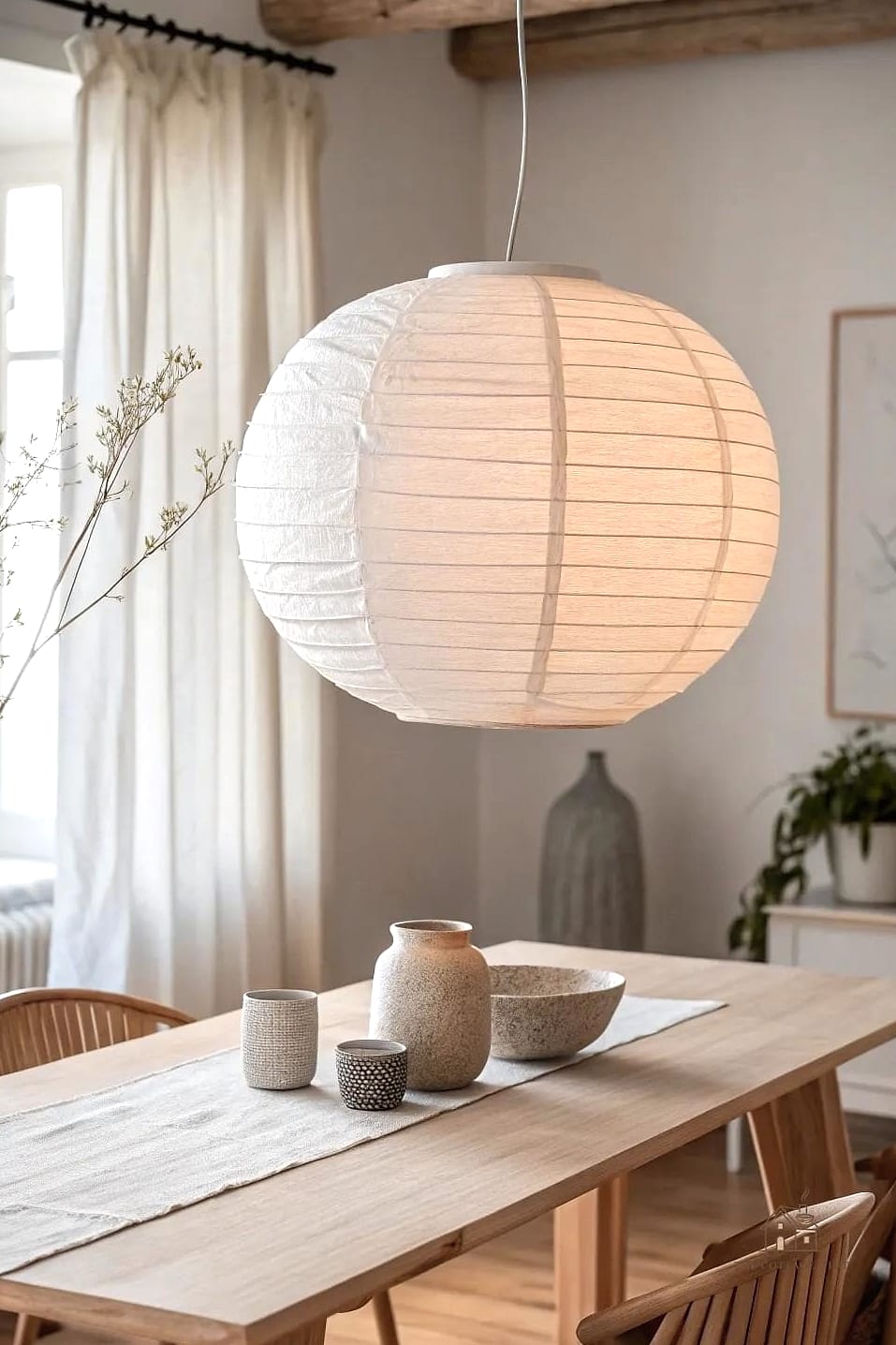
A simple paper or rice-paper pendant light softens the whole room and casts a warm, diffused glow. These fixtures are lightweight and often budget-friendly, and they instantly signal that Japanese influence without trying too hard.
Warm Wood Tones on the Floor
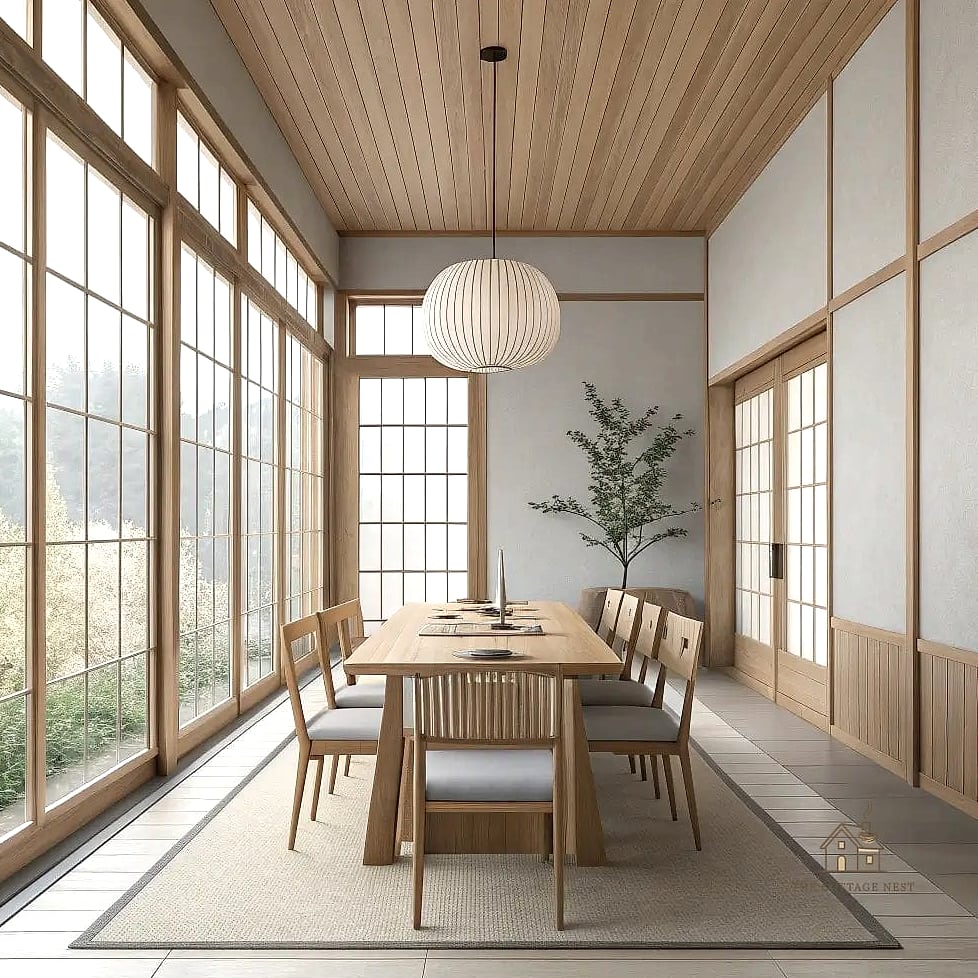
If you’re already refinishing floors or installing new ones, go for warm, natural wood tones rather than gray or whitewashed finishes. Japandi leans into the richness of real wood grain, so let it show.
Low-Slung Bench Seating
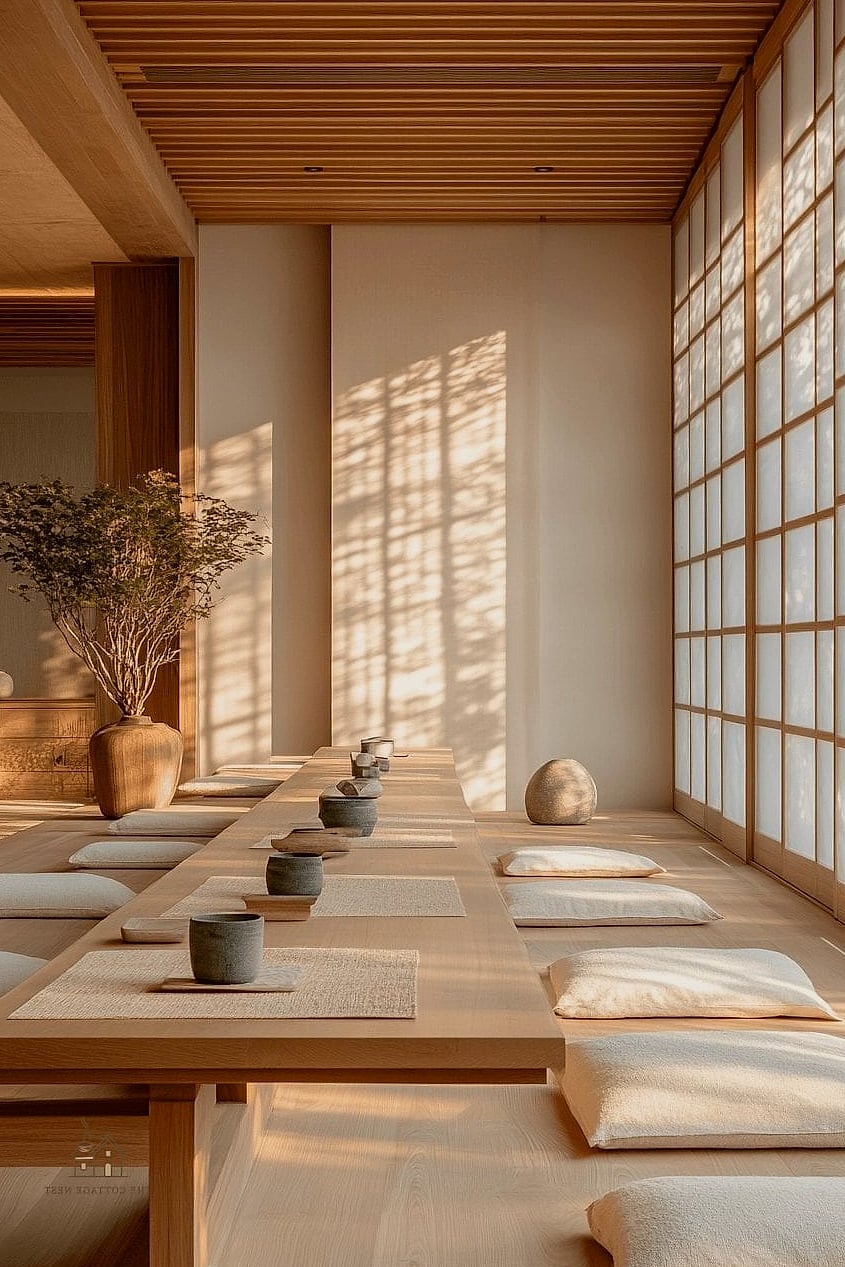
Instead of a full set of matching chairs, add a simple wooden bench on one side of the table. It’s casual, space-saving in tighter rooms, and gives the whole setup a more relaxed, communal feel.
Sculptural Ceramic Vase
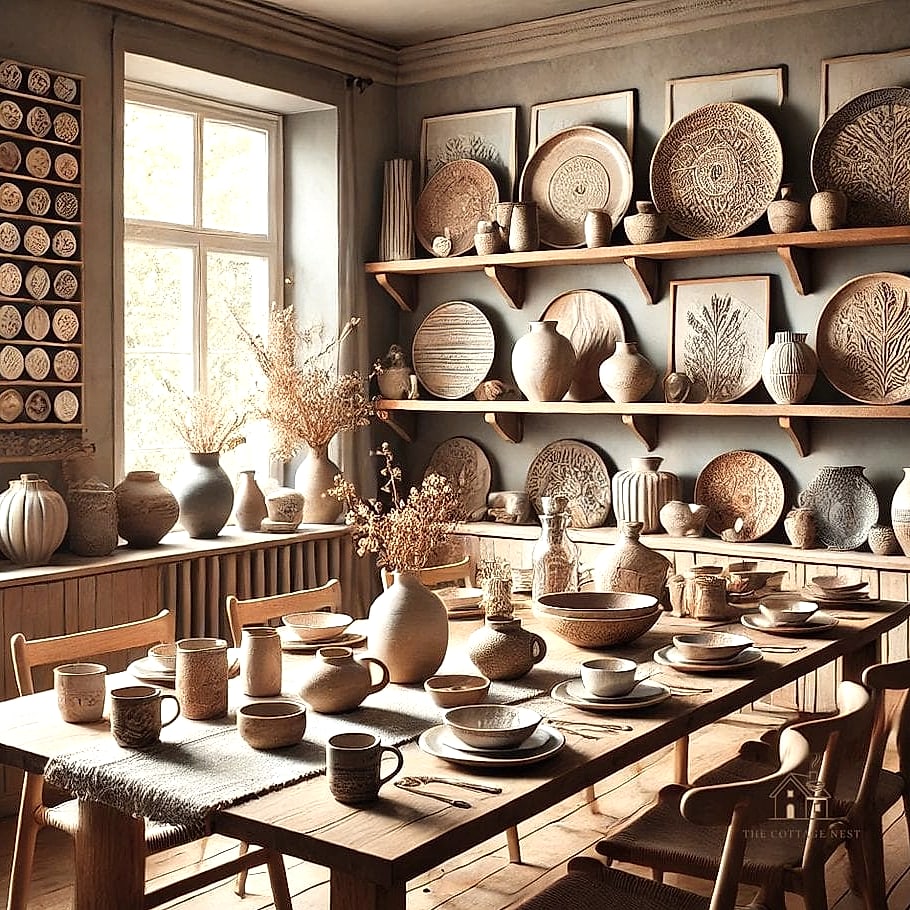
A single stoneware or ceramic vase with an irregular shape makes a bigger impact than a cluster of smaller decor pieces. Keep it empty or add one dried branch for that quiet, editing-conscious Japandi mood.
Natural Fiber Area Rug
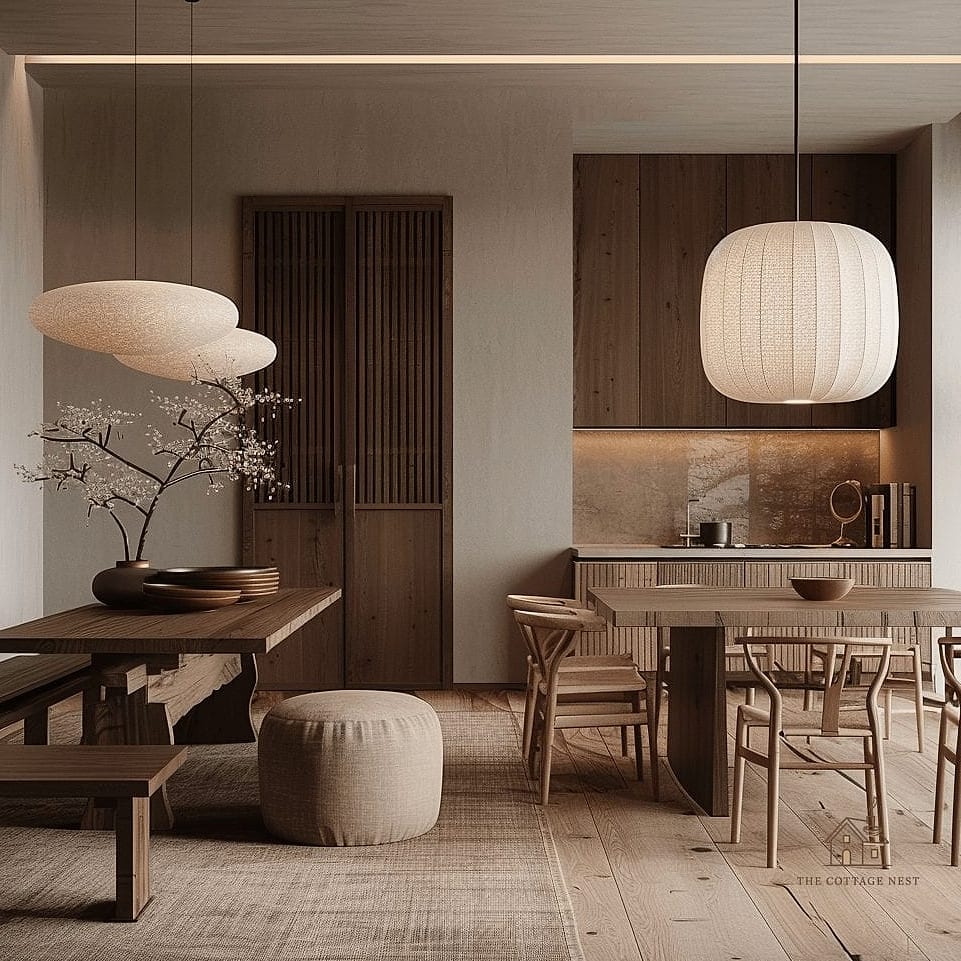
A jute or seagrass rug under the dining table adds warmth and texture underfoot. It’s also more forgiving with crumbs and spills than you’d expect, which makes it a practical choice for families.
Matte Black Accents
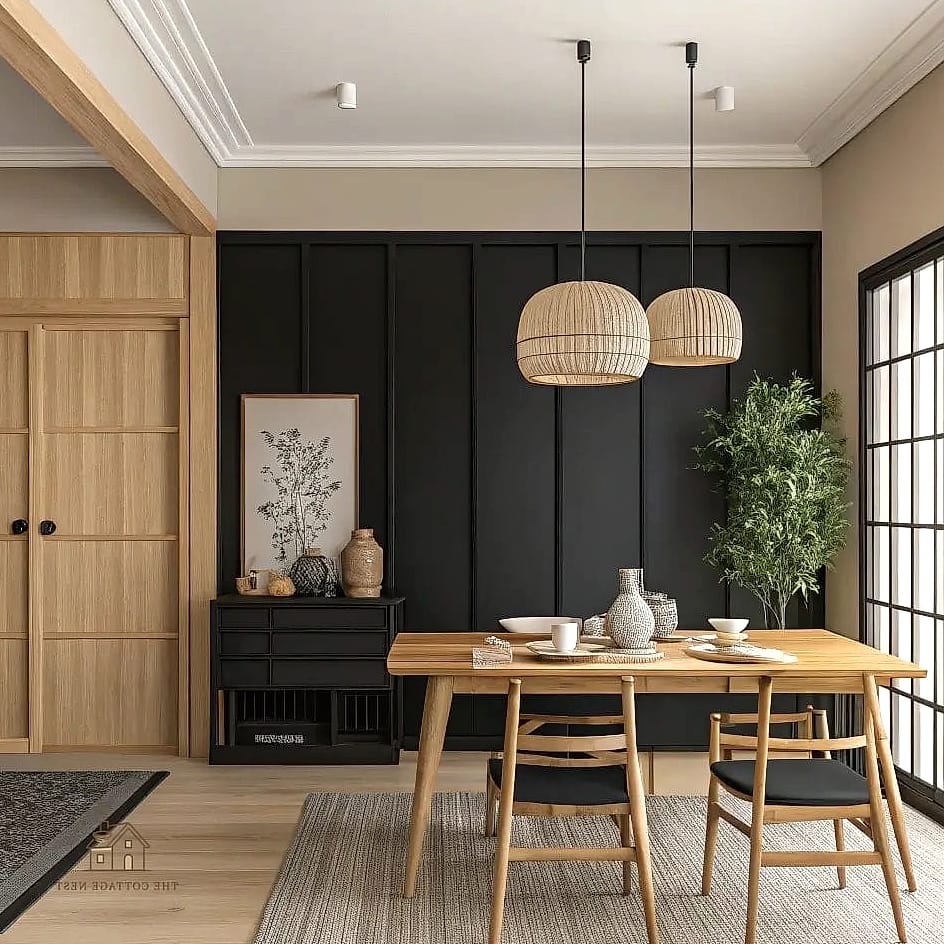
A few matte black elements, think chair legs, light fixtures, or drawer pulls, add just enough contrast to keep the room from feeling flat. The key is restraint. A little goes a long way in this style.
Sliding Shoji-Inspired Screen
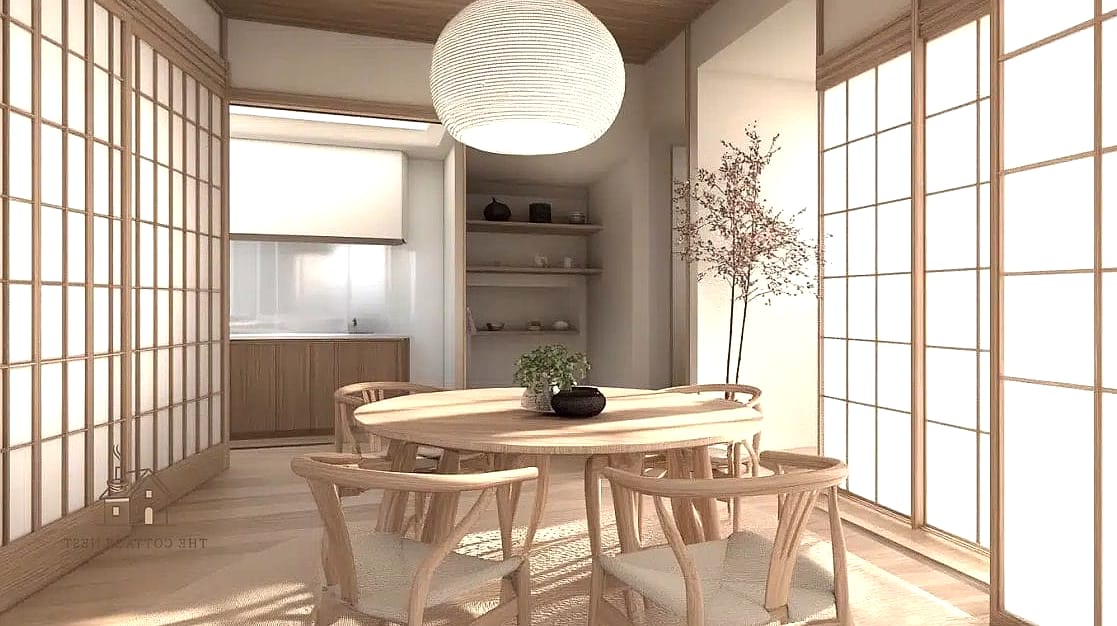
If your dining area is open to another space, a slatted wood screen or shoji-style divider creates gentle separation without closing the room off completely. It’s a great DIY project if you’re handy, or you can find affordable ready-made versions online.
Built-In Wood Shelving
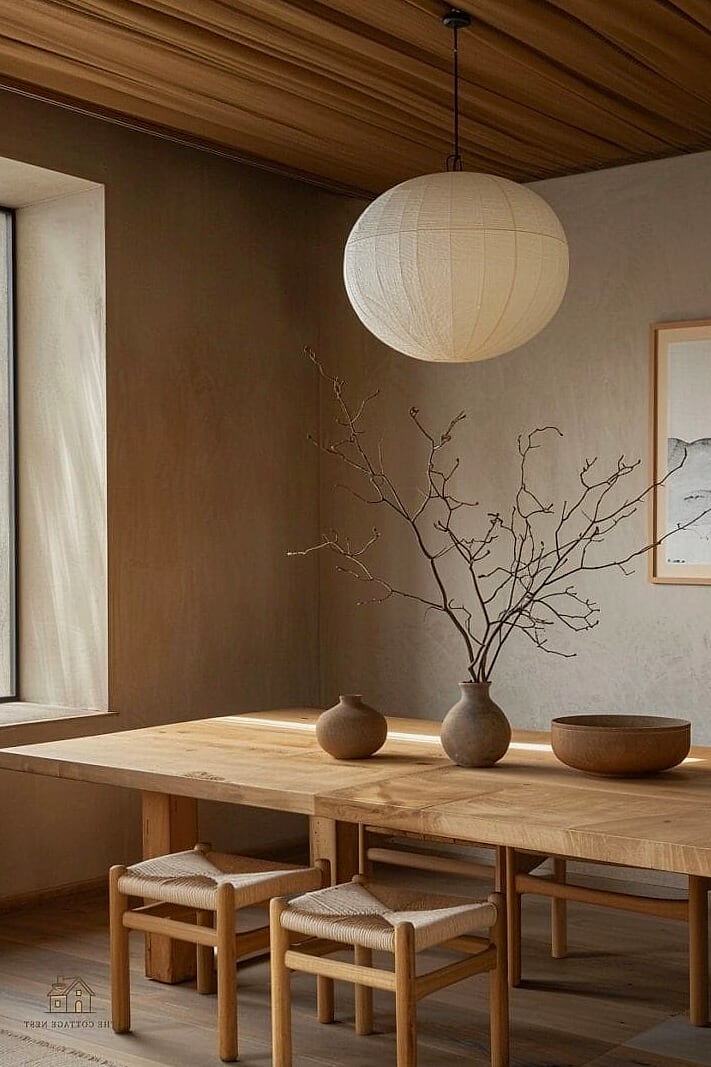
Floating wood shelves along one wall keep dishware and decor visible but tidy. This works especially well in smaller dining rooms where a full hutch would feel too bulky.
Organic Shaped Mirror
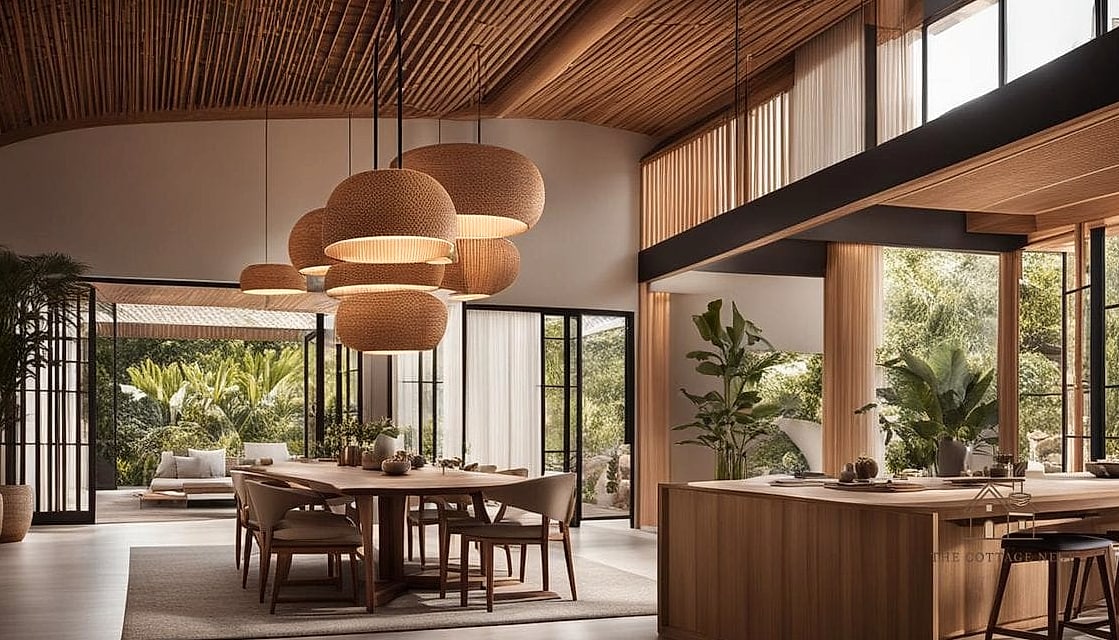
A mirror with a soft, irregular shape reflects light and makes the room feel bigger, all while avoiding the harsh geometry that Japandi tends to avoid. Hang it low enough to reflect the table setting for a nice styling trick.
Woven Pendant Lampshade
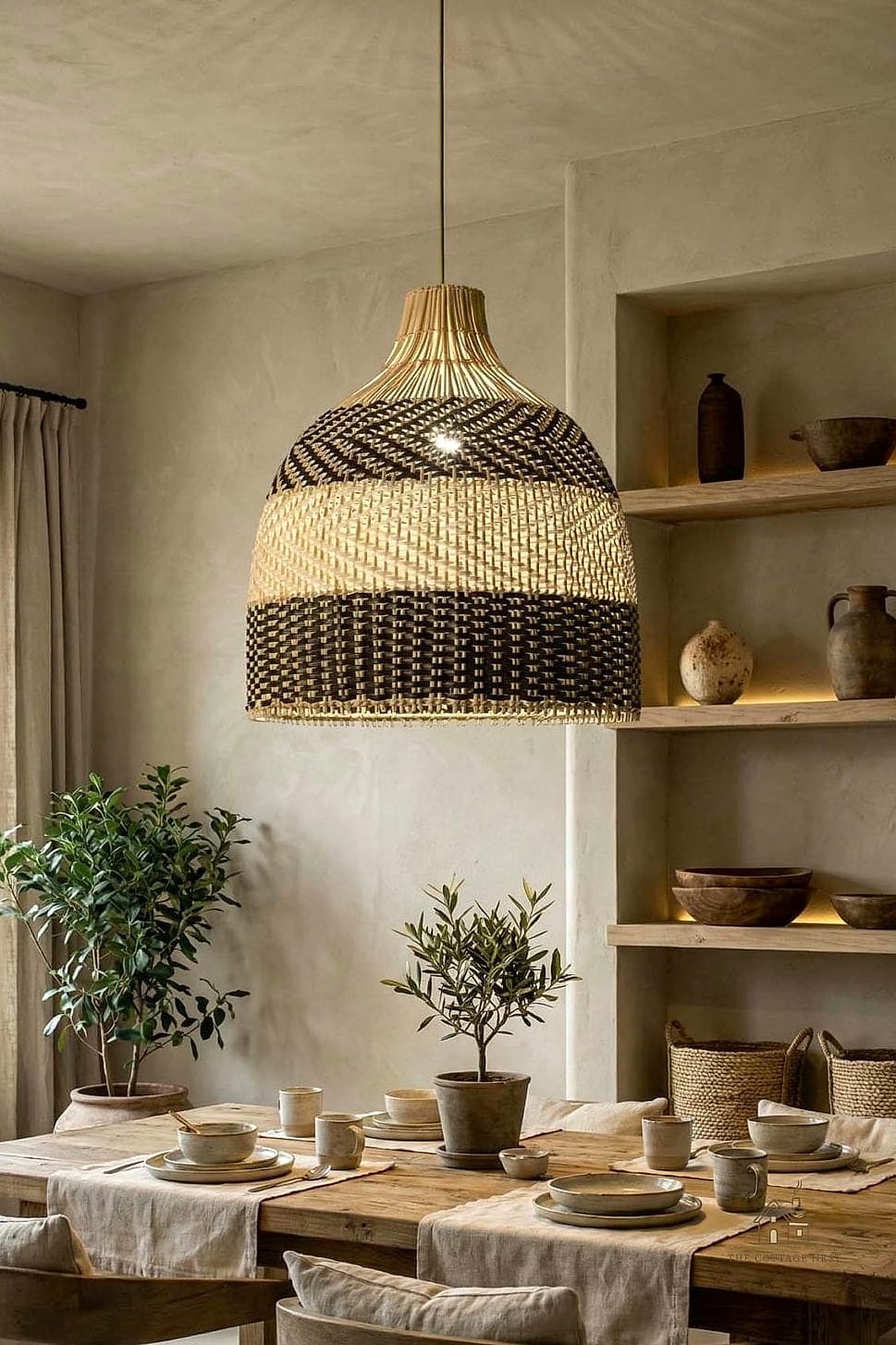
Rattan or bamboo pendant shades bring in texture and a handcrafted feel. They pair beautifully with wood tables and add visual warmth even in rooms with limited natural light.
Minimalist Table Runner
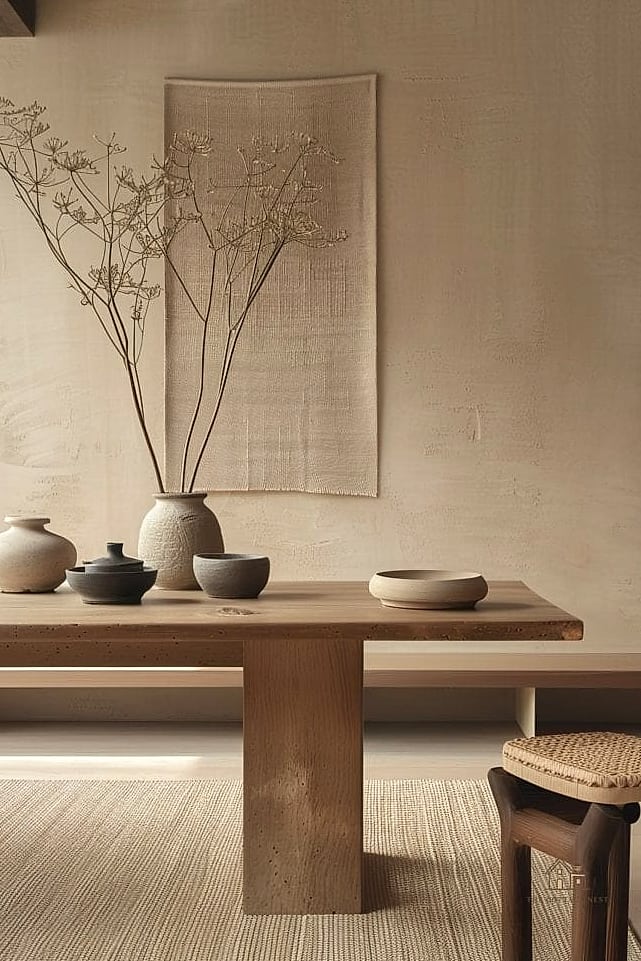
A simple linen runner in a muted tone dresses up the table without shouting for attention. Skip anything with busy patterns, solid neutrals or subtle stripes fit the aesthetic much better.
Floor-to-Ceiling Wood Slat Wall
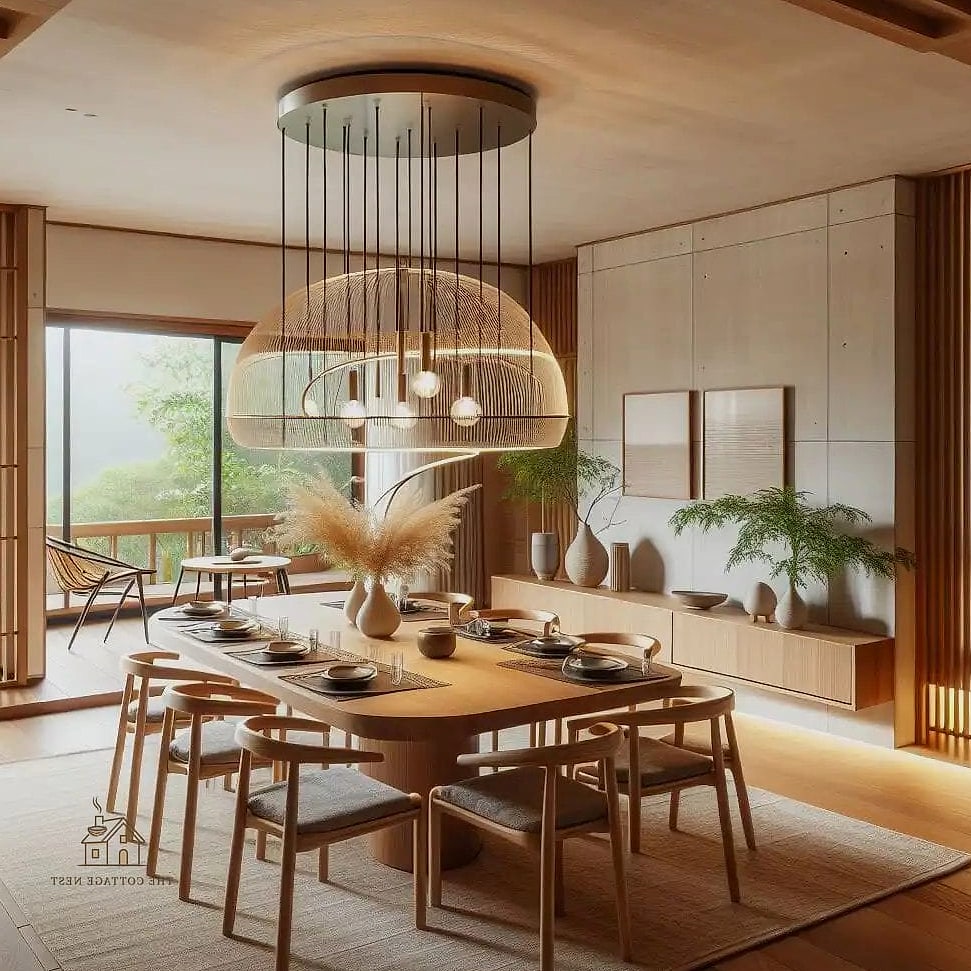
An accent wall made of vertical wood slats adds architectural interest and warmth. It’s a bigger project, but there are peel-and-stick and lightweight panel options now that make it far more approachable for a weekend DIY.
Low Lighting with Dimmers
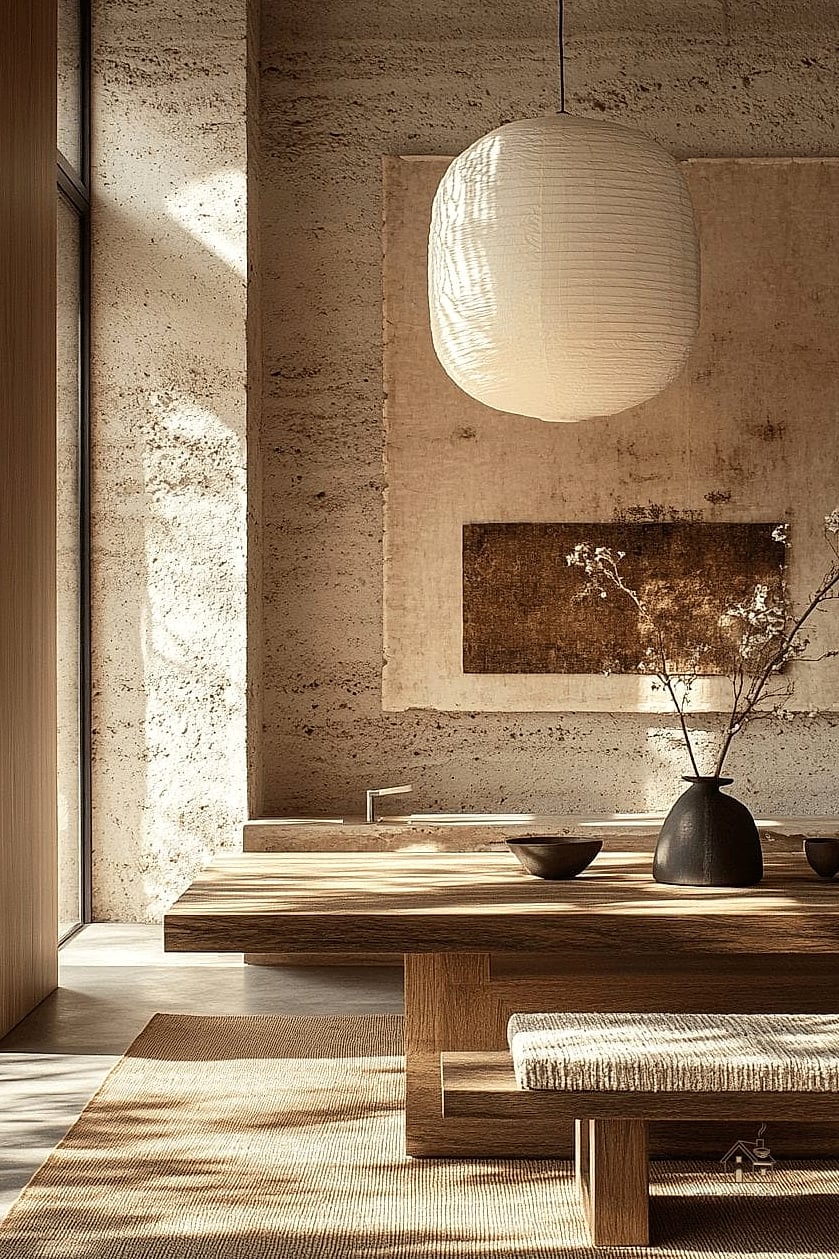
Layered, dimmable lighting lets you shift the mood from bright everyday meals to cozy evening dinners. Consider a mix of a pendant overhead and a small lamp on a sideboard for that softer ambiance.
Stone or Concrete Tabletop
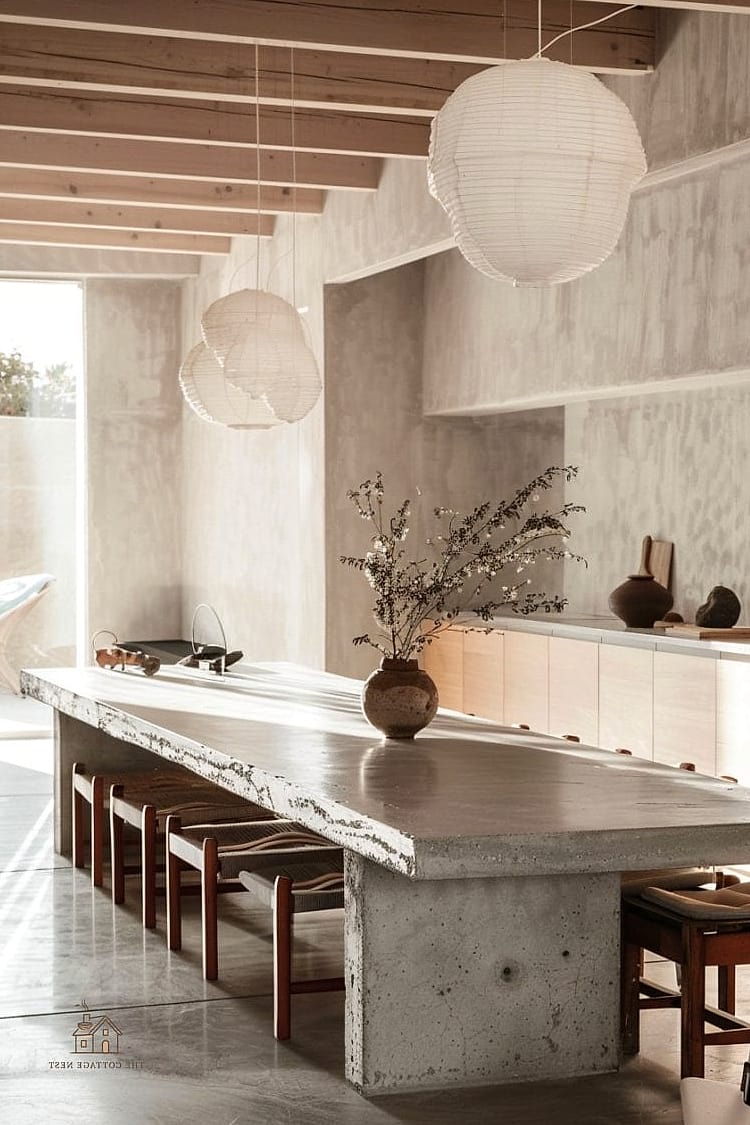
For something a little more modern within the Japandi umbrella, a honed concrete or stone-topped table adds an earthy, tactile element. It’s a durable option for households with kids or frequent entertaining.
Muted Sage Green Wall Color
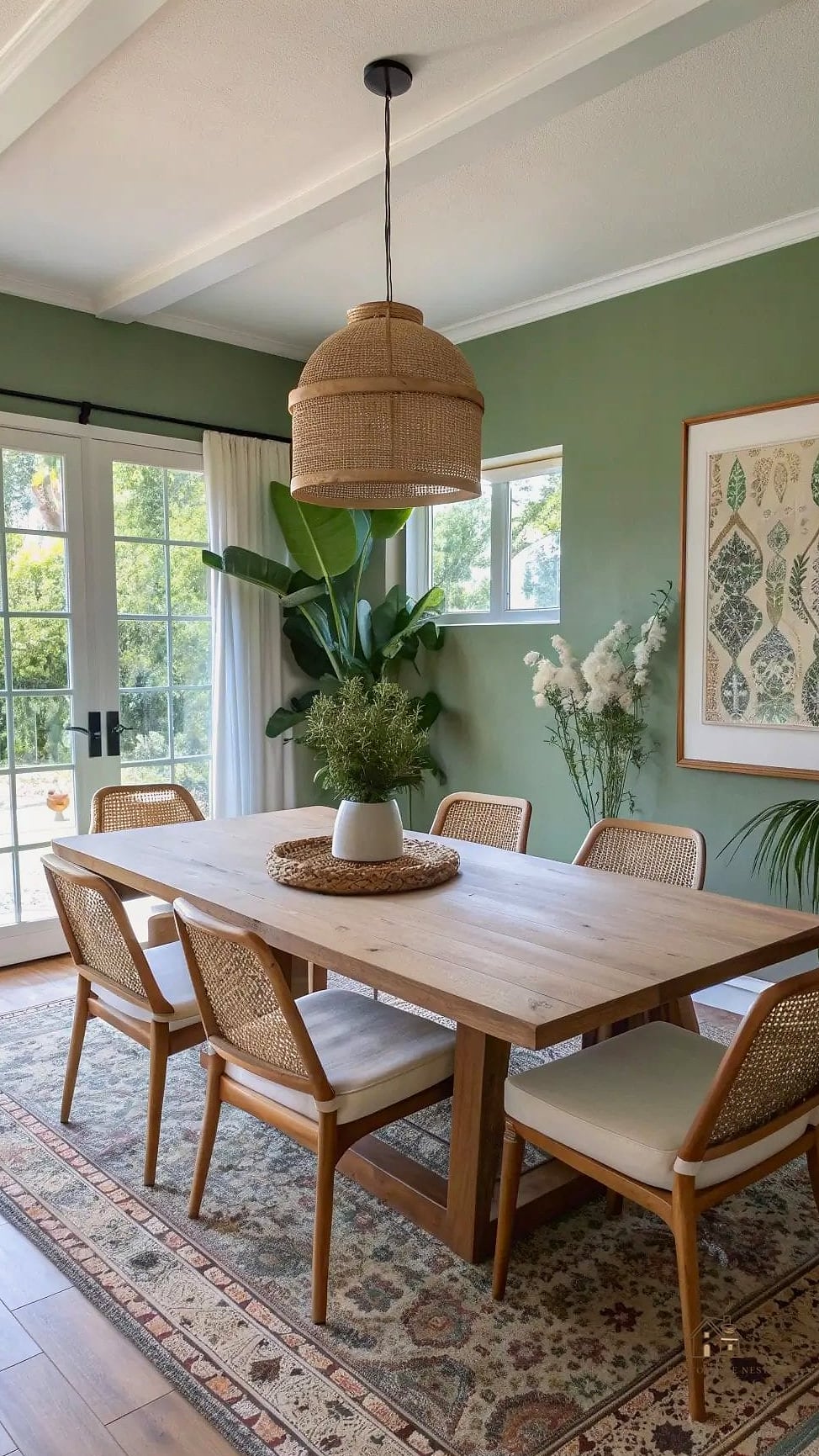
A soft, dusty sage on the walls brings in color without breaking from the neutral Japandi palette. It reads calming and organic, especially paired with wood furniture and natural light.
Handwoven Basket Storage
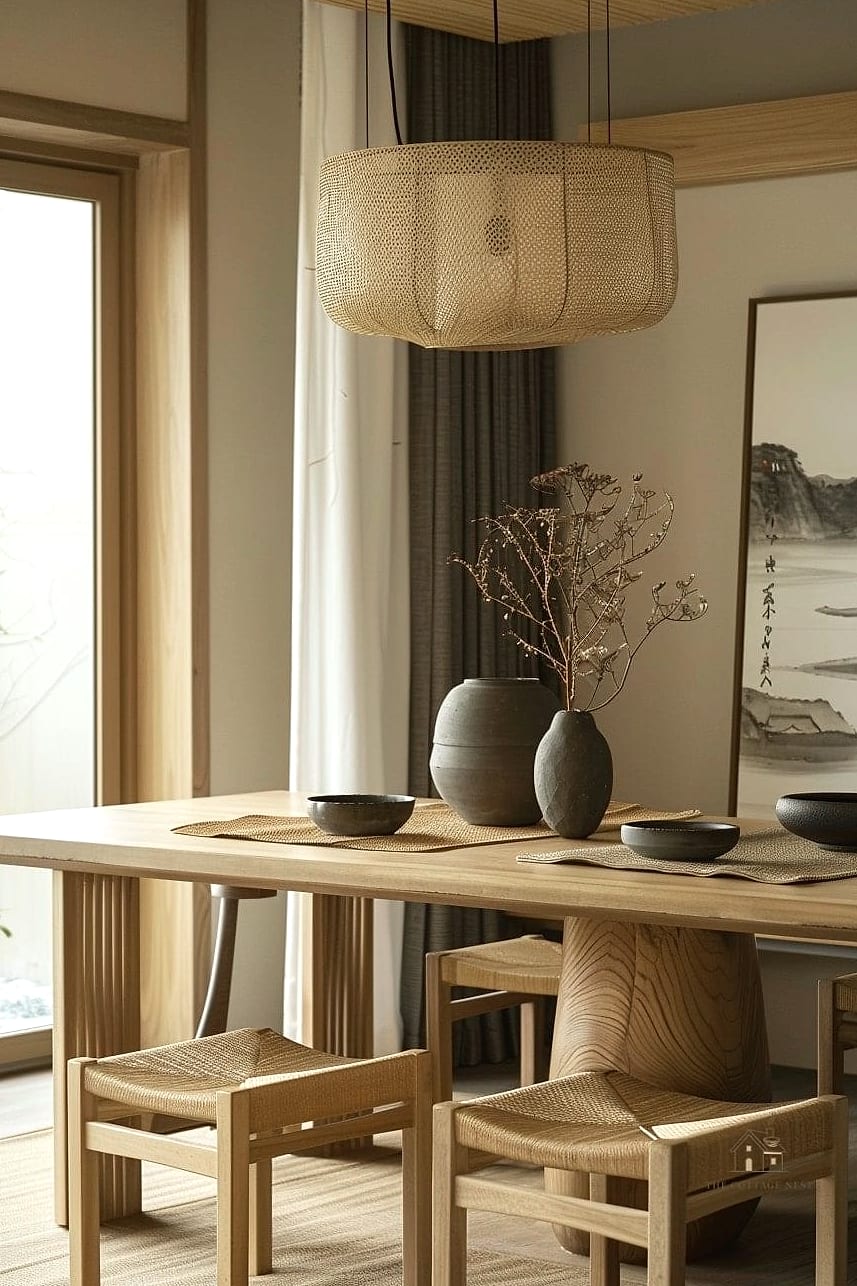
Baskets tucked under a sideboard or bench are both practical and visually soft. Use them to stash table linens, extra candles, or seasonal decor, keeping the room functional without visible clutter.
Asymmetrical Gallery Wall
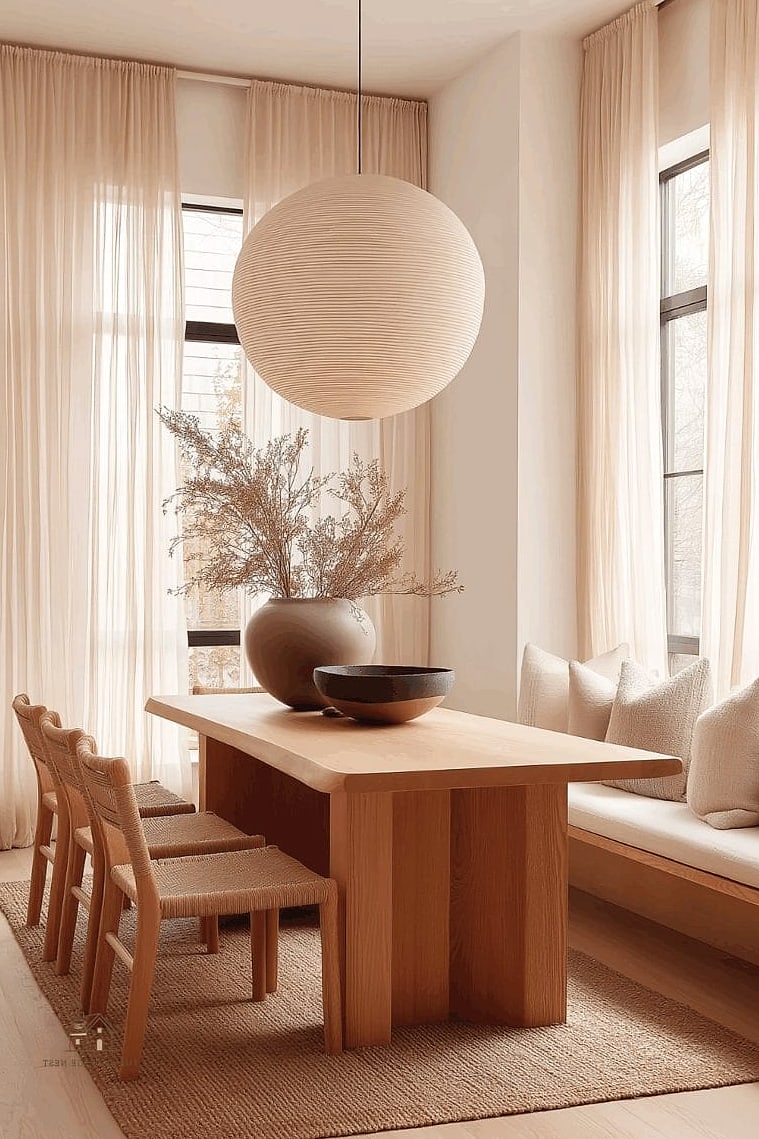
Instead of a symmetrical grid, try a loose, asymmetrical arrangement of a few framed botanical prints or abstract art. Keep frames in matching wood tones so the wall still feels cohesive.
Low Wood Sideboard
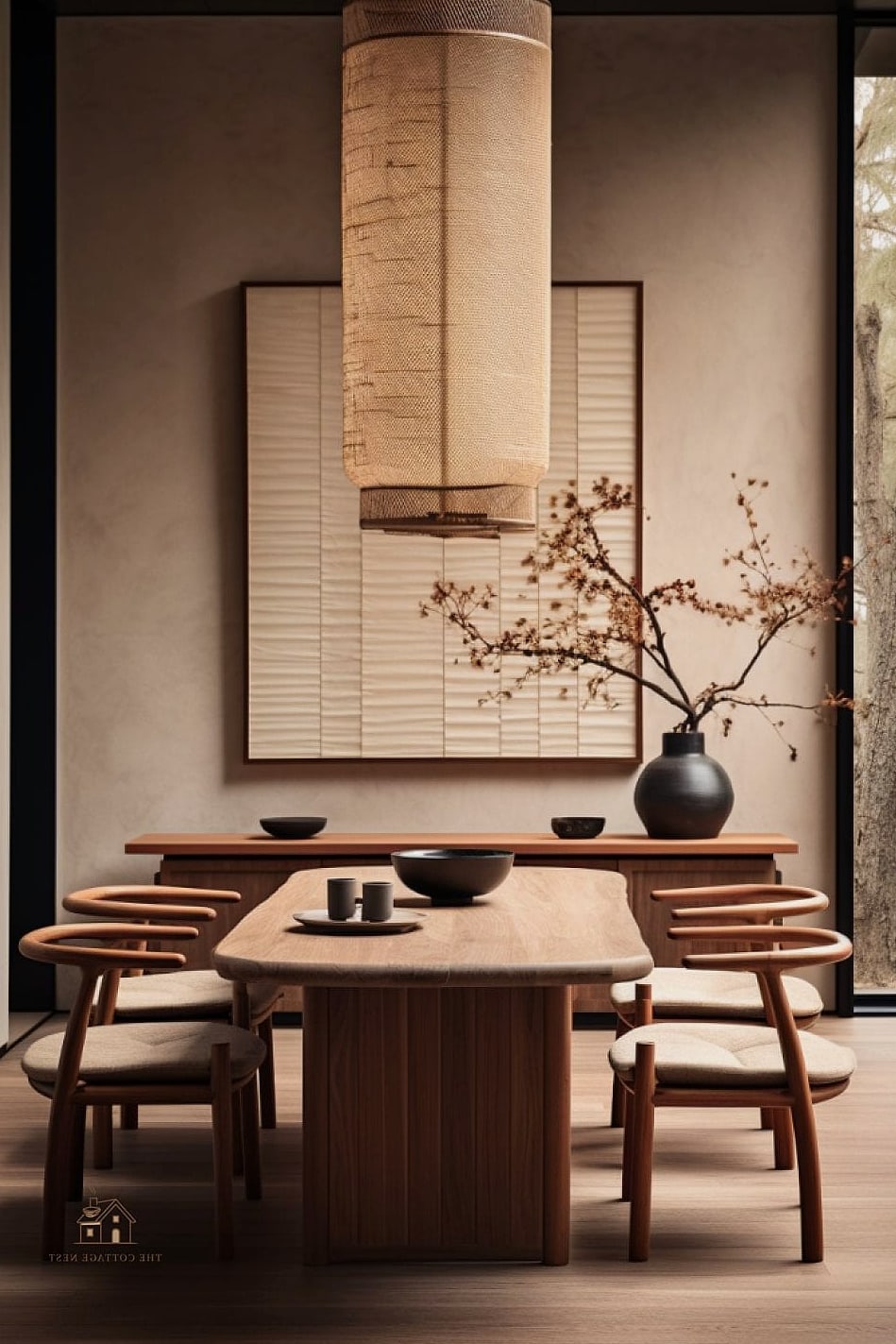
A long, low sideboard with slim hairpin or tapered legs gives you extra storage without visually overwhelming the room. Use the top surface for a vase, a stack of linen napkins, or a small lamp.
Handblown Glass Pendant
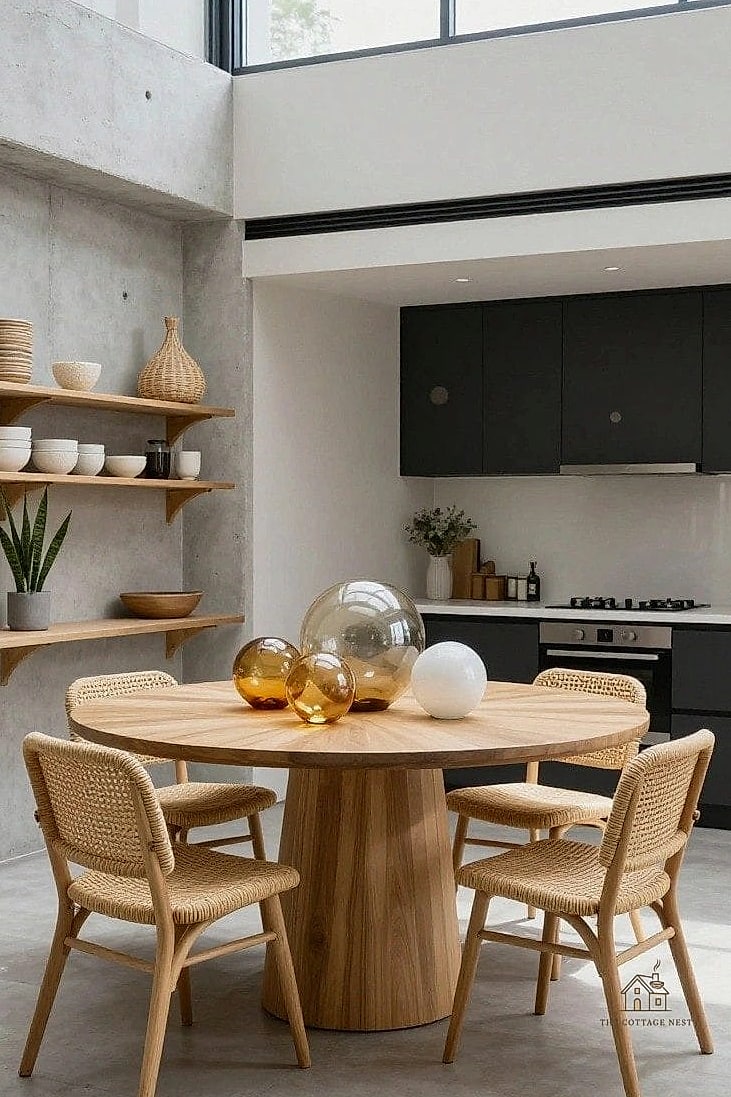
A single handblown glass pendant with a slightly imperfect shape adds a sculptural focal point above the table. Amber or smoky glass tones work particularly well with warm wood finishes.
Textured Linen Chair Cushions
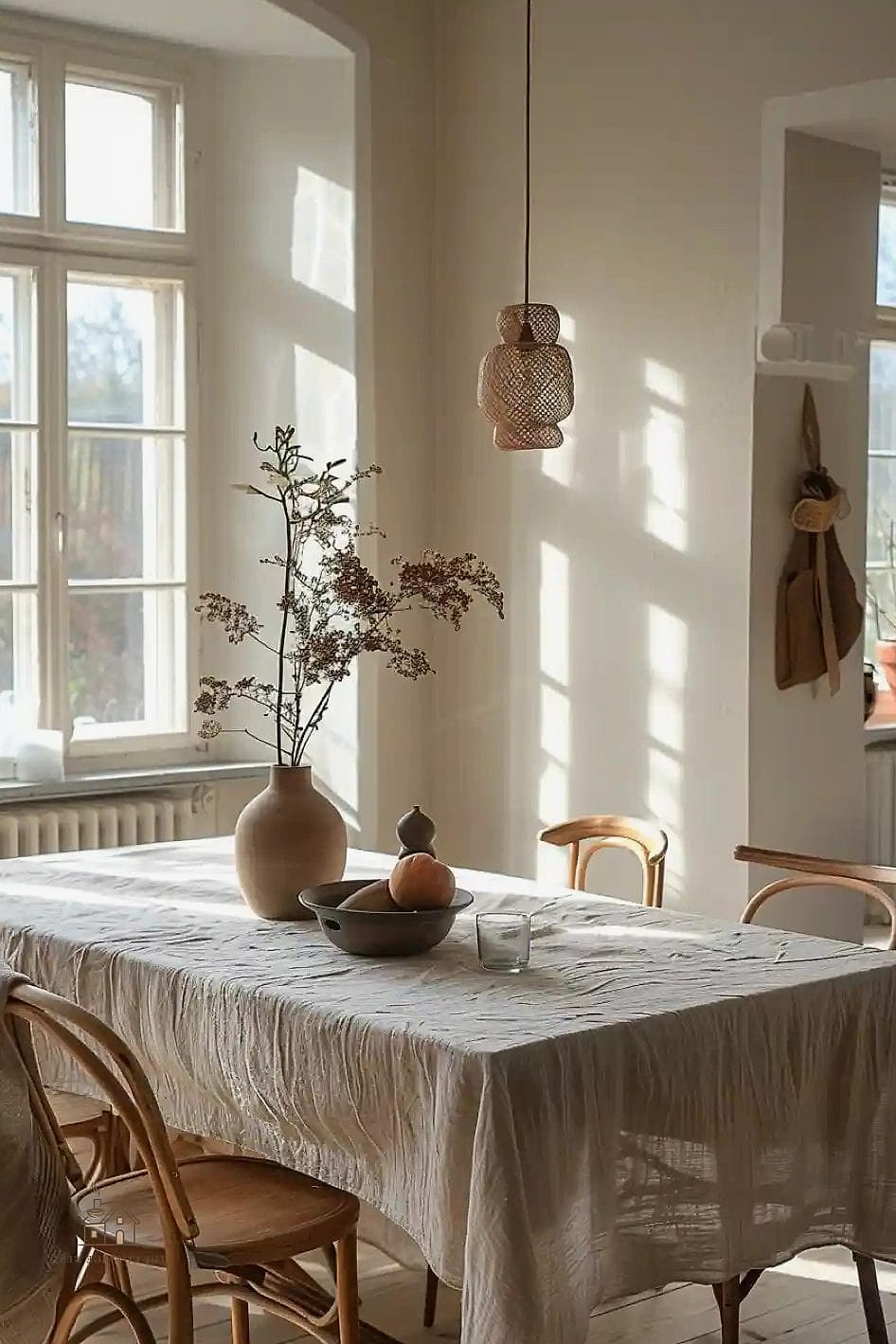
If your dining chairs are on the harder side, simple linen cushions tied on with fabric loops add comfort and softness. Stick to neutral or earthy tones to keep things visually calm.
Exposed Wood Beam Ceiling
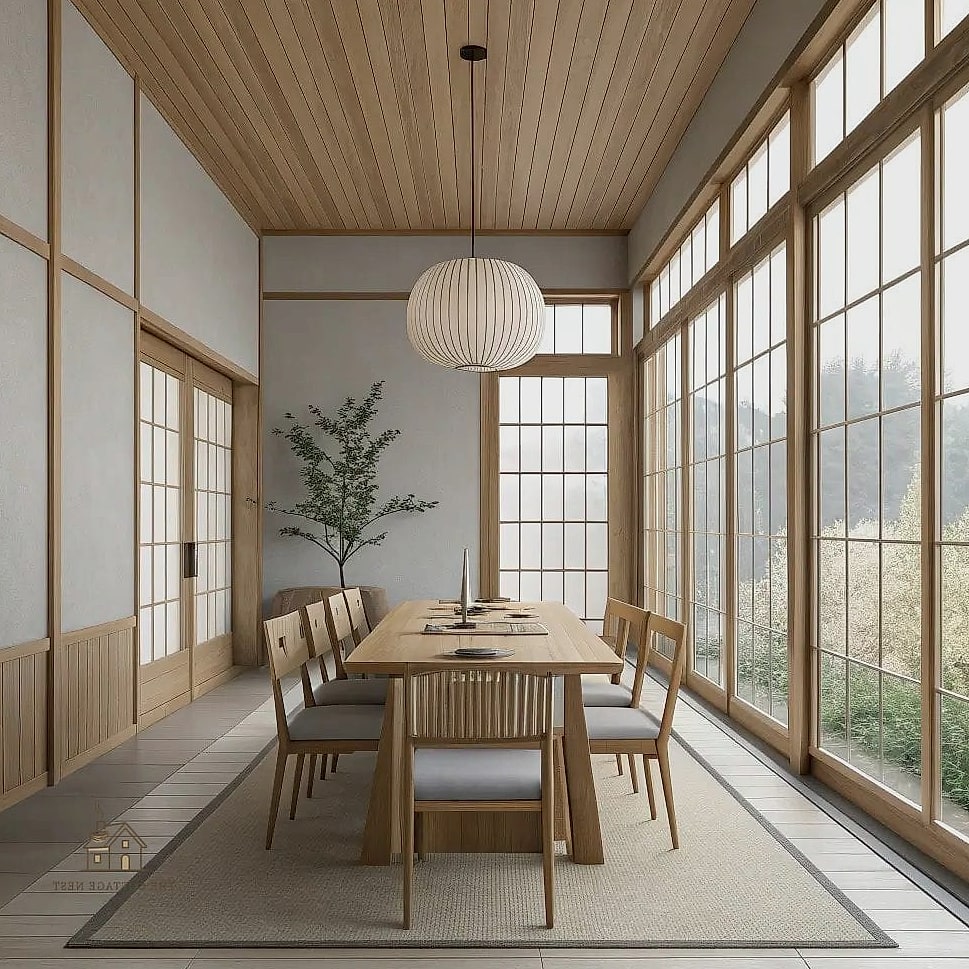
If you’re lucky enough to have exposed beams, or you’re considering adding faux ones, leave the wood tone natural rather than painting it. It adds architectural warmth that plays perfectly into Japandi’s earthy feel.
Dried Botanical Arrangements
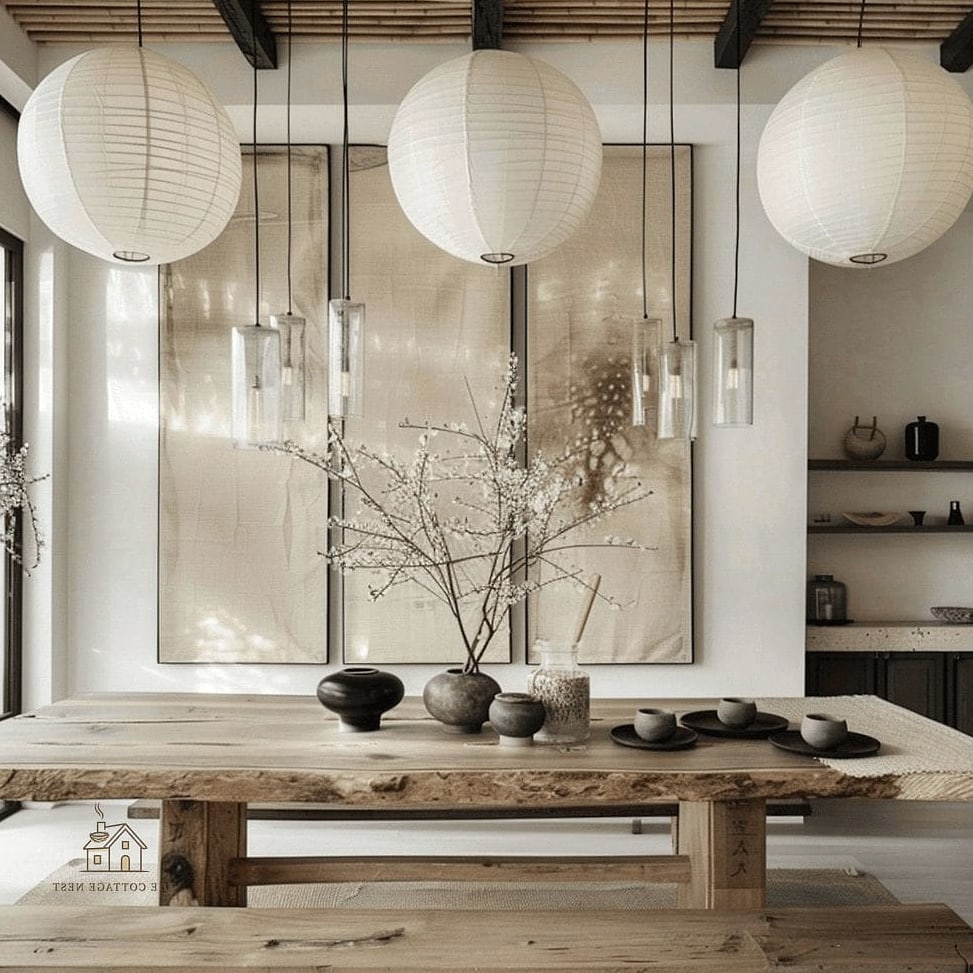
Pampas grass, dried eucalyptus, or wheat stems in a simple vase bring in organic texture without the maintenance of fresh flowers. They also fit the wabi-sabi appreciation for natural imperfection.
Floor Cushions for Extra Seating
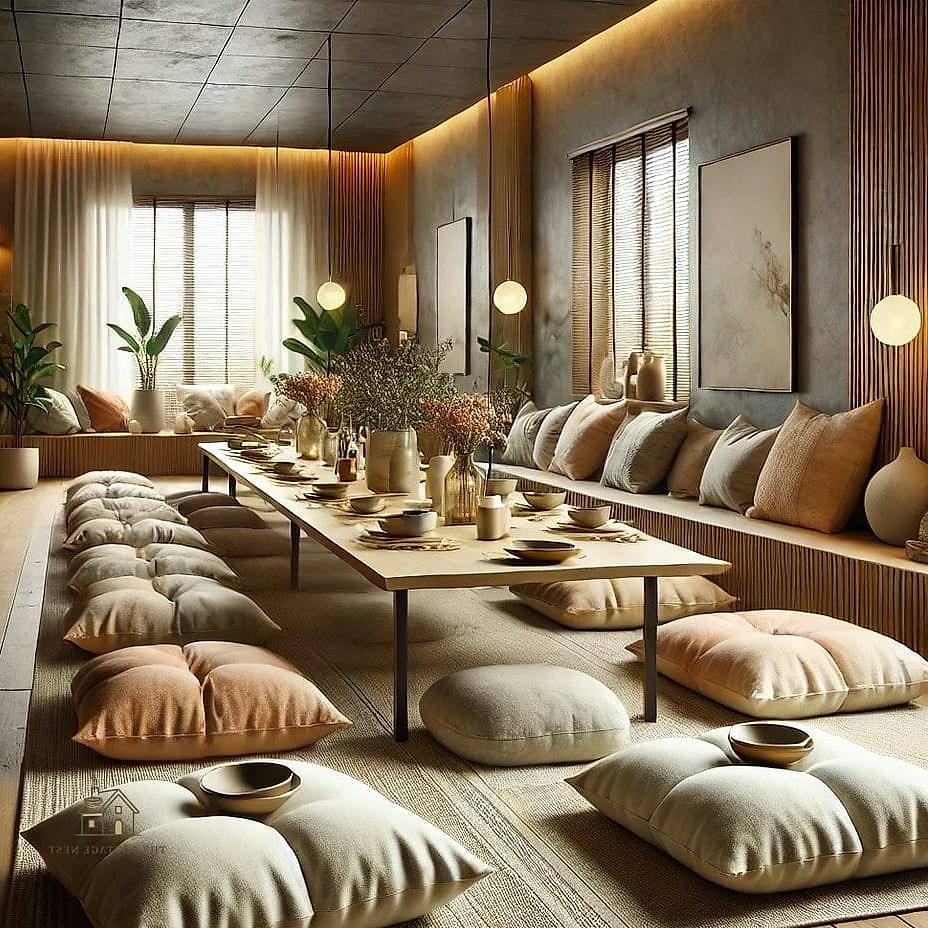
For casual gatherings, floor cushions around a low table (or tucked against a wall for overflow seating) add flexibility. They’re an easy, budget-friendly way to expand seating for guests.
Minimalist Ceramic Candle Holders
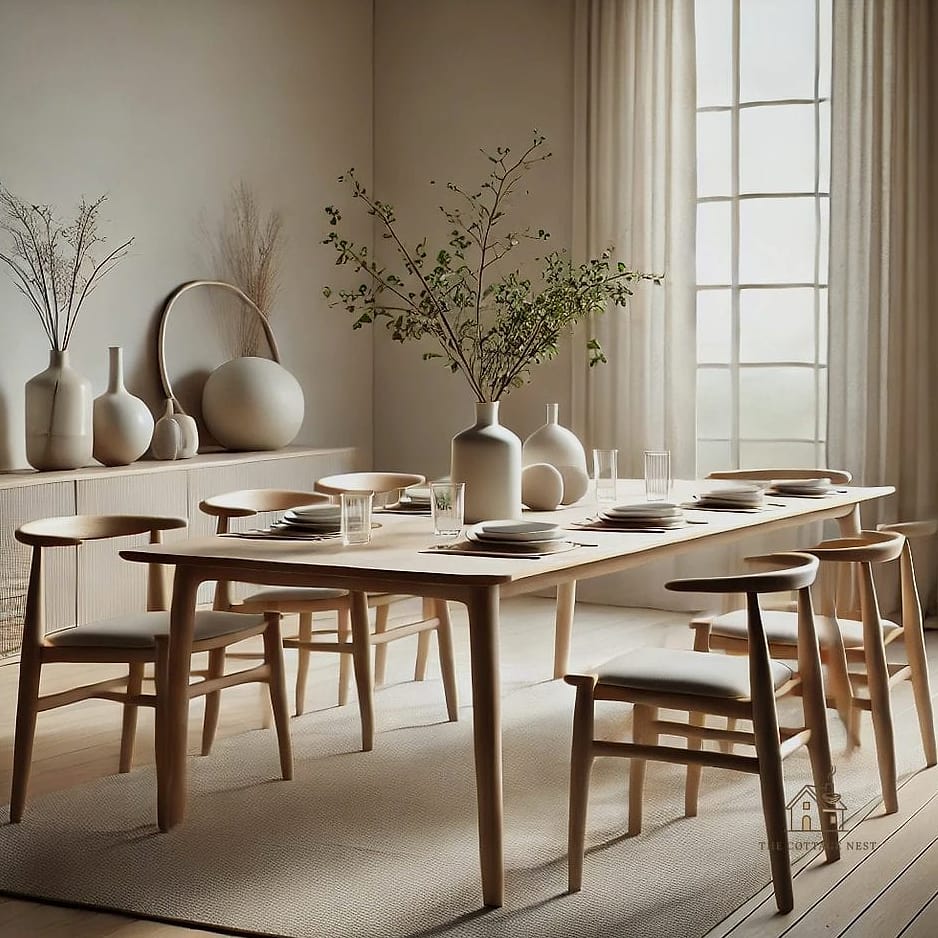
Simple, unglazed ceramic candle holders in varying heights create a soft, layered centerpiece. Group two or three together for a styled look that still feels understated.
Wood and Rattan Chair Combo
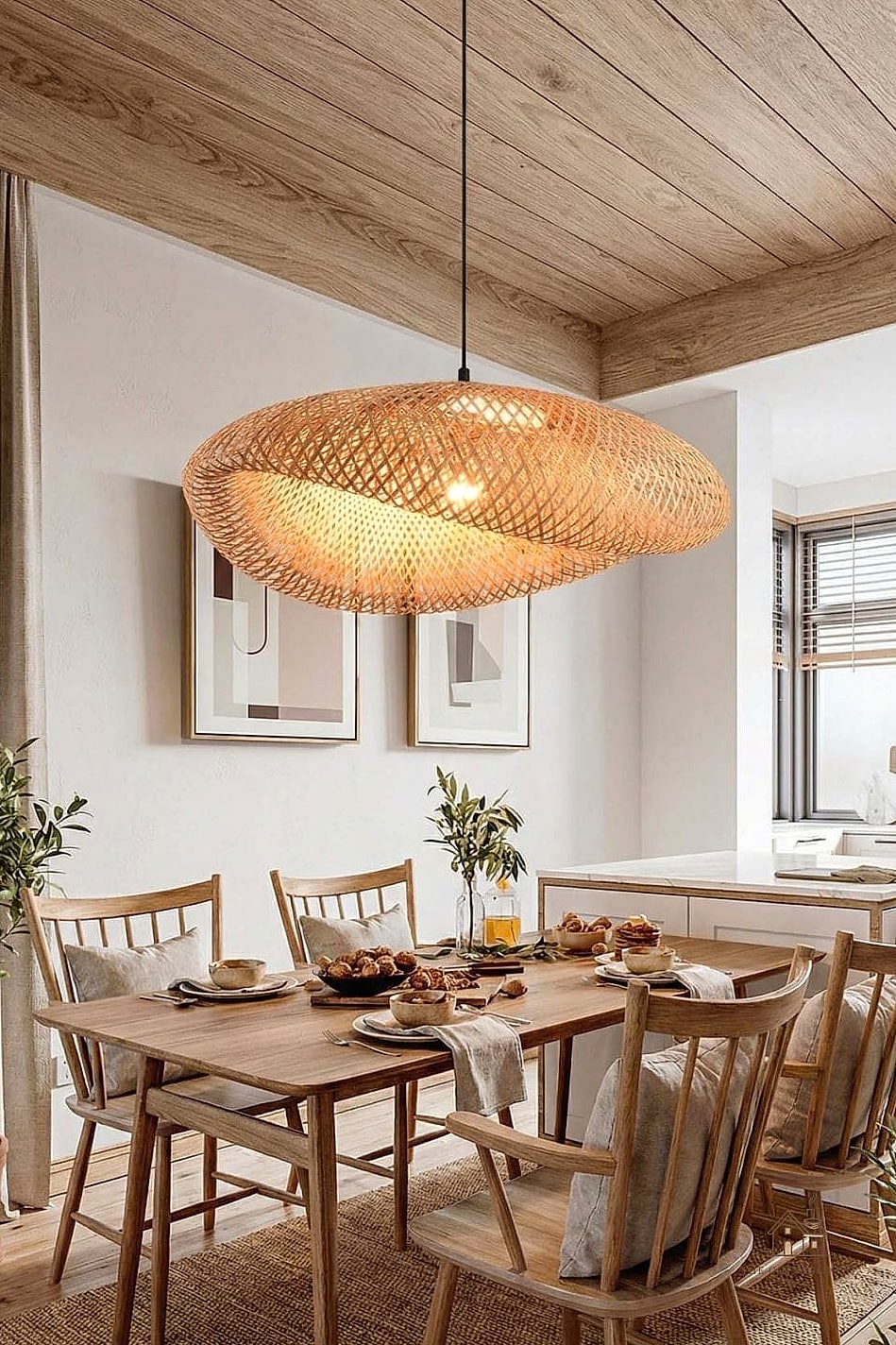
Chairs with wood frames and woven rattan seats or backs bring texture and warmth while staying visually light. They’re also great for smaller rooms since the open weave doesn’t feel bulky.
Soft Gray Wall Palette
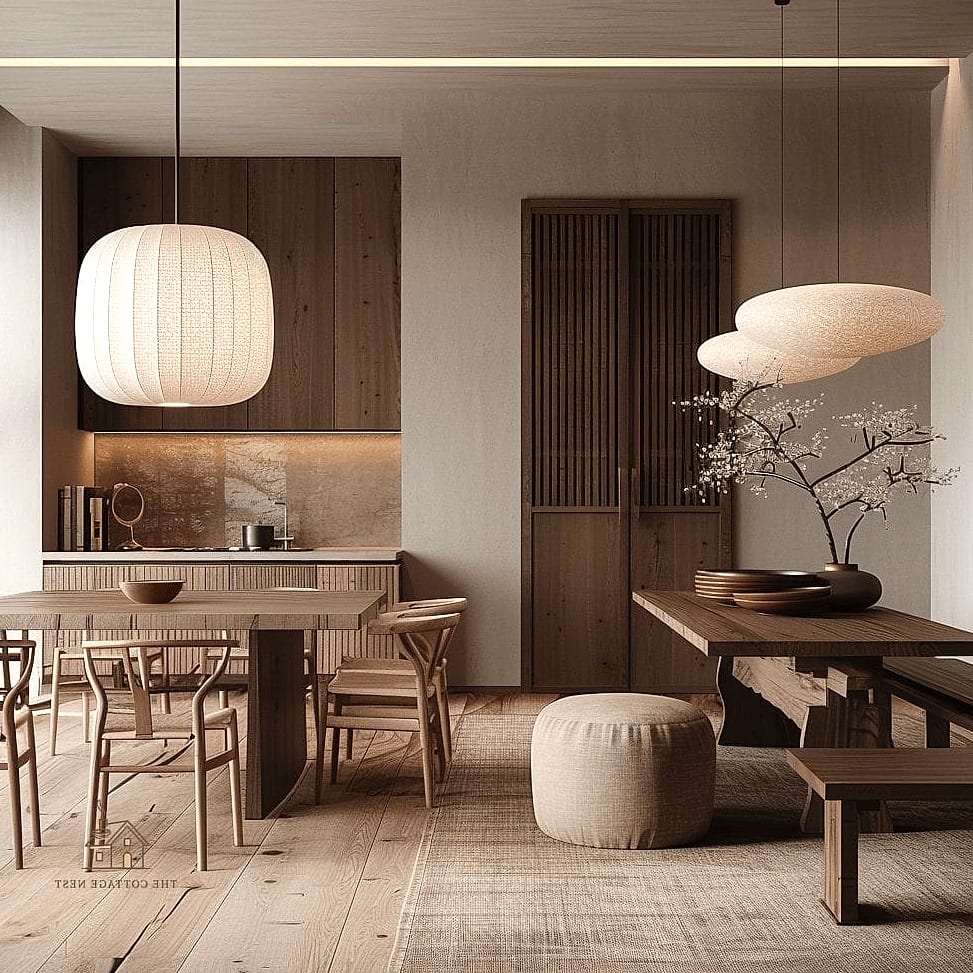
A cool, soft gray wall color leans more into the Scandinavian side of Japandi. It works especially well in rooms with lots of natural light, keeping things airy and calm.
Handmade Pottery Centerpiece Bowl
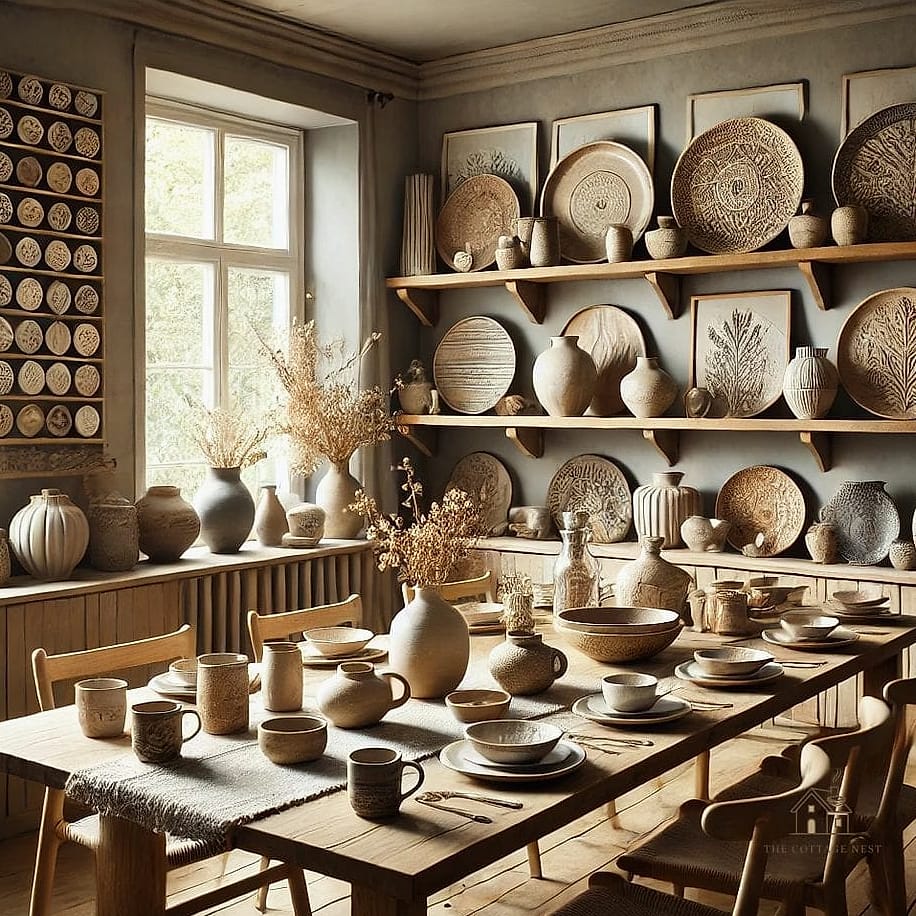
A wide, shallow ceramic bowl in the center of the table can hold fruit, small gourds, or simply sit empty as a sculptural piece. Choose one with a matte, earthy glaze for the most authentic feel.
Wall-Mounted Wood Cabinet
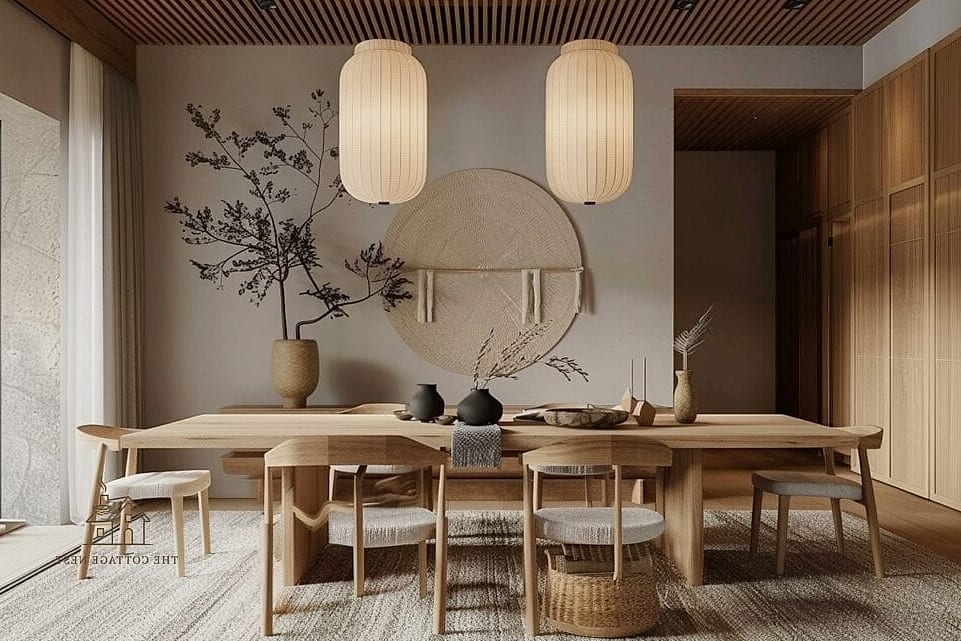
For smaller dining rooms, a wall-mounted cabinet keeps floor space open while still offering storage for dishware. It reads lighter than a full-sized hutch and suits tighter layouts.
Natural Wood Chair Legs with Upholstered Seats
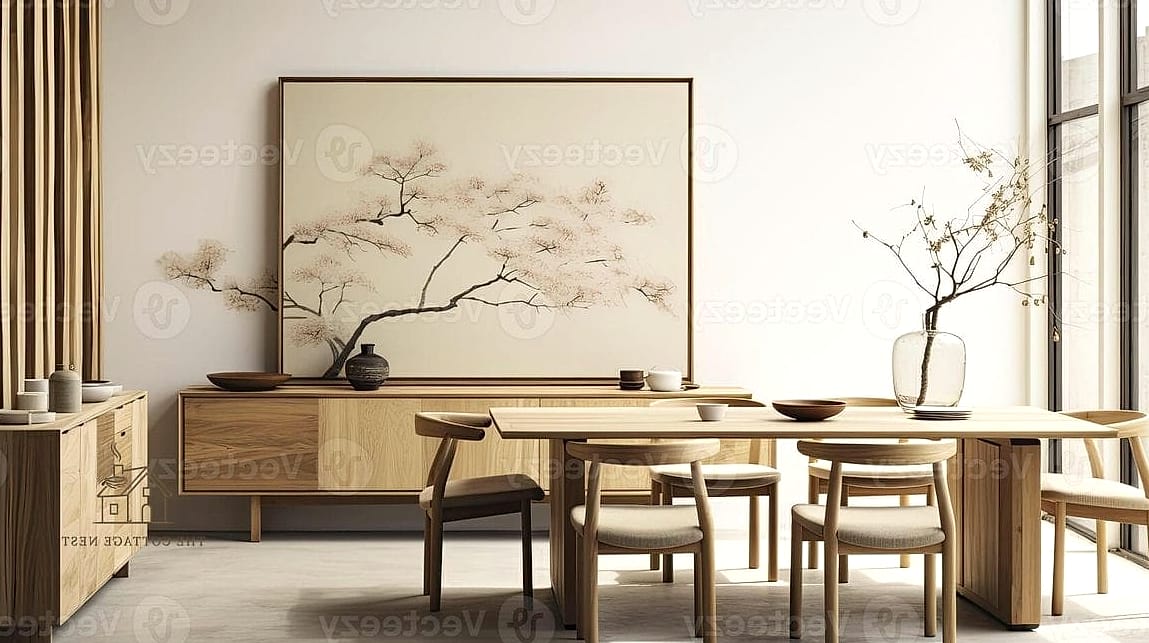
Mixing wood legs with a simple upholstered seat in linen or boucle adds comfort while keeping the wood tones consistent throughout the room. It’s a nice middle ground between fully wood and fully upholstered seating.
Soft Layered Textiles
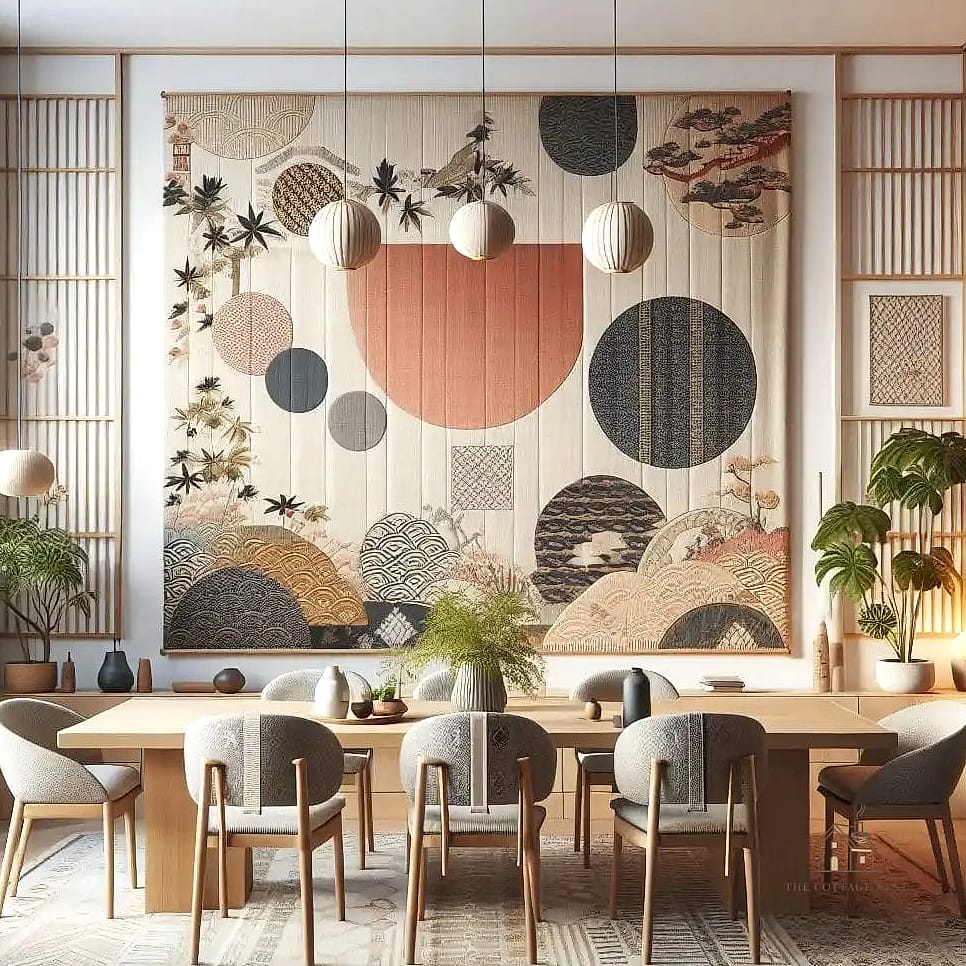
Adding a mix of textures, linen runner, woven placemats, a nubby throw on a nearby bench, brings depth to the room without adding visual noise. Stick to a tight, neutral color family so the layers feel intentional.
Black Framed Windows or Doors
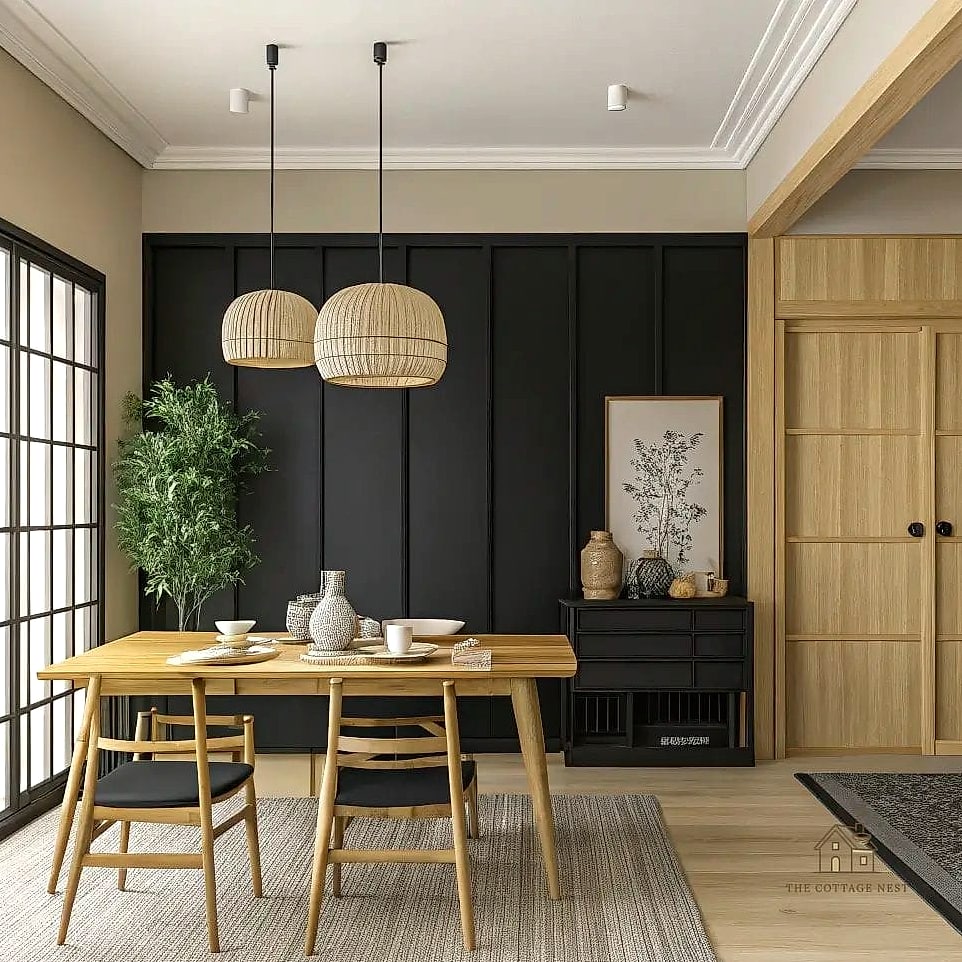
If you’re renovating, black window or door frames add subtle contrast against warm wood tones. It’s a small architectural detail that makes a bigger design statement than you’d expect.
Minimalist Wall Clock
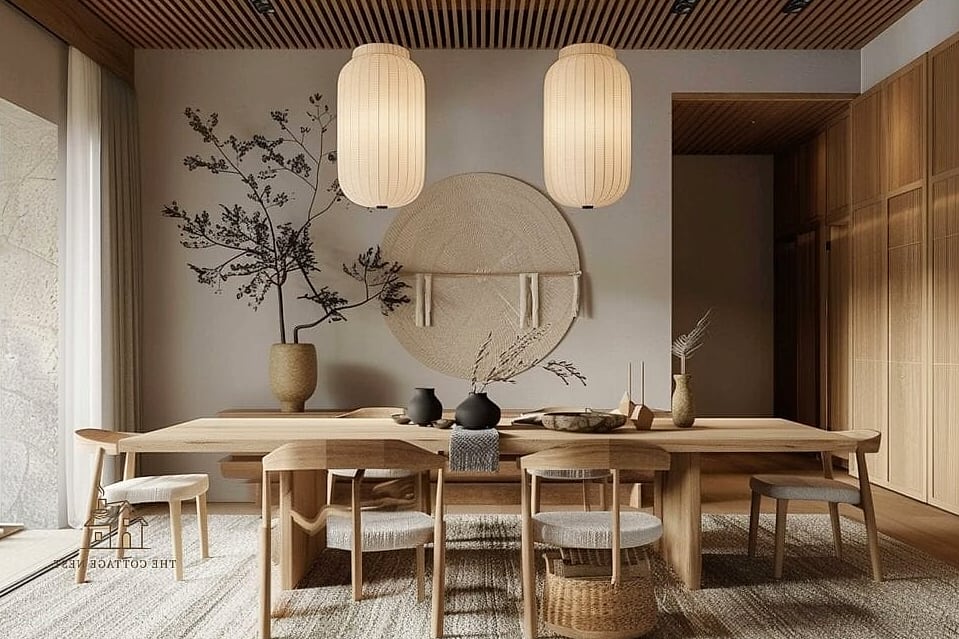
A simple wood or matte black wall clock with a clean face fits the Japandi aesthetic without adding decorative clutter. Function and form working together, which is really the heart of this whole style.
Indoor Olive or Fig Tree
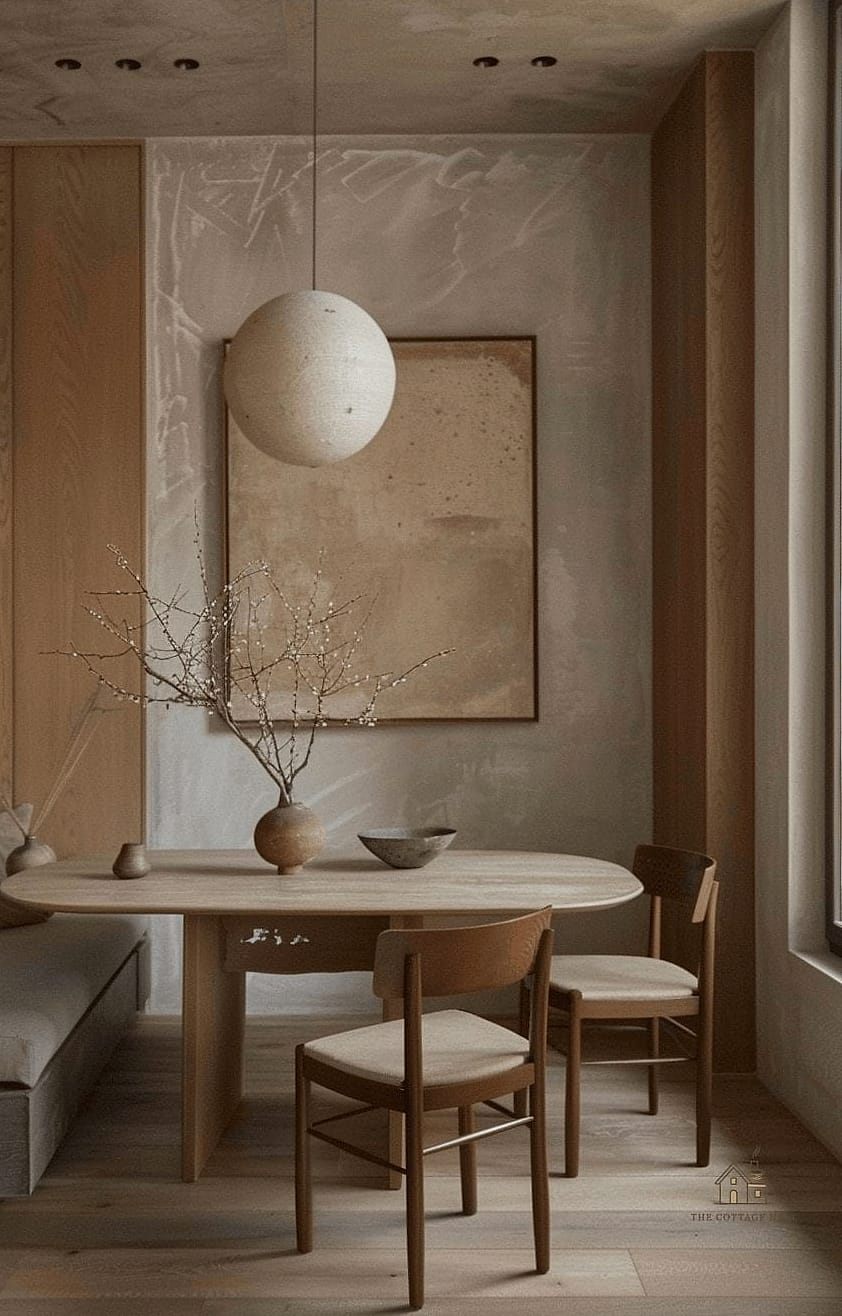
A tall potted tree in the corner of the dining room adds life and a bit of height. Olive trees and fig trees both have that sculptural branch structure that fits the aesthetic, plus they’re relatively low-maintenance.
Wood Slat Room Divider on Casters
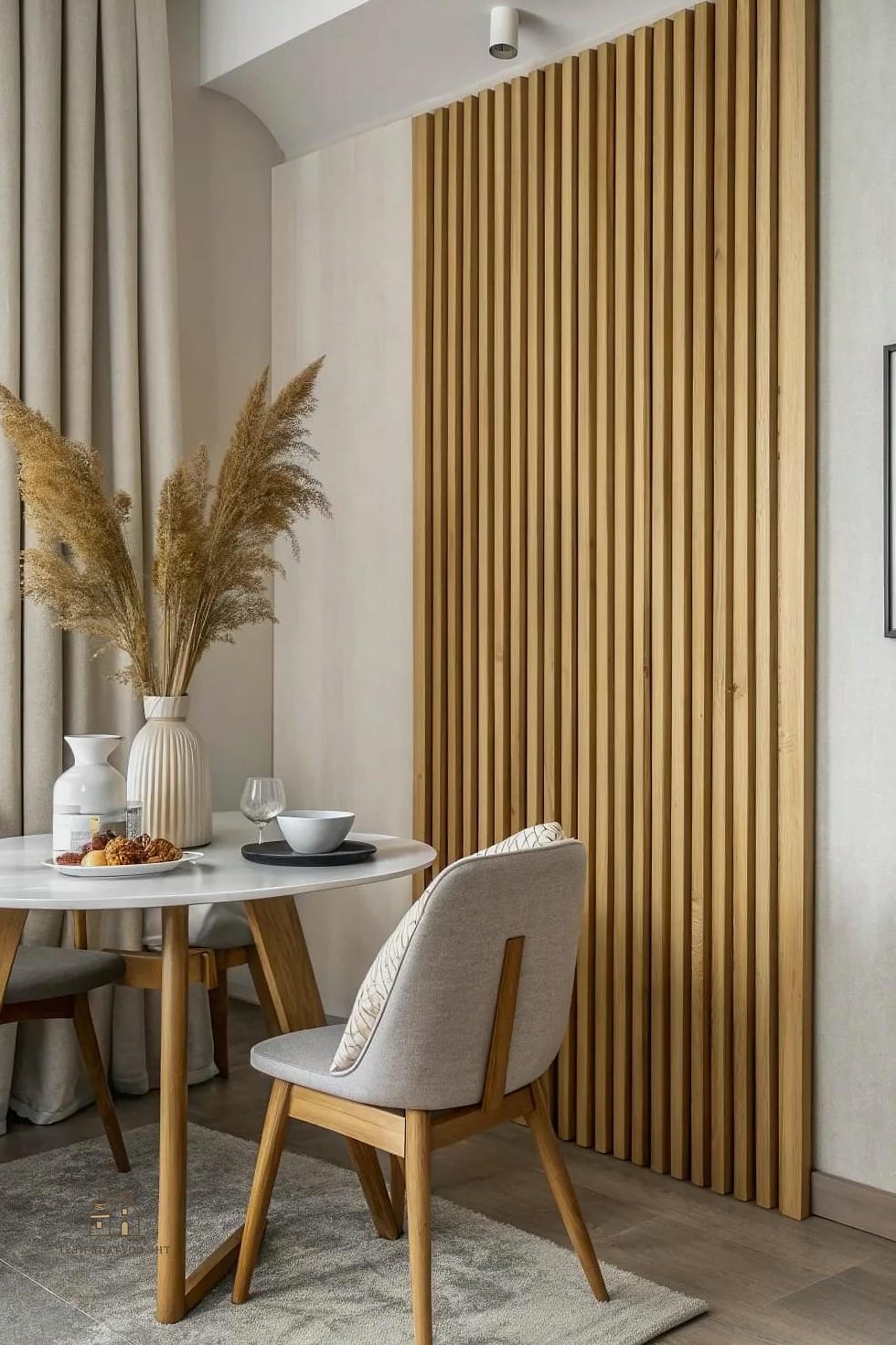
A mobile slatted divider gives you flexibility if your dining area shares space with a living room. Roll it into place for dinner parties, then tuck it away when you need an open layout again.
Ceramic Tile Accent Wall
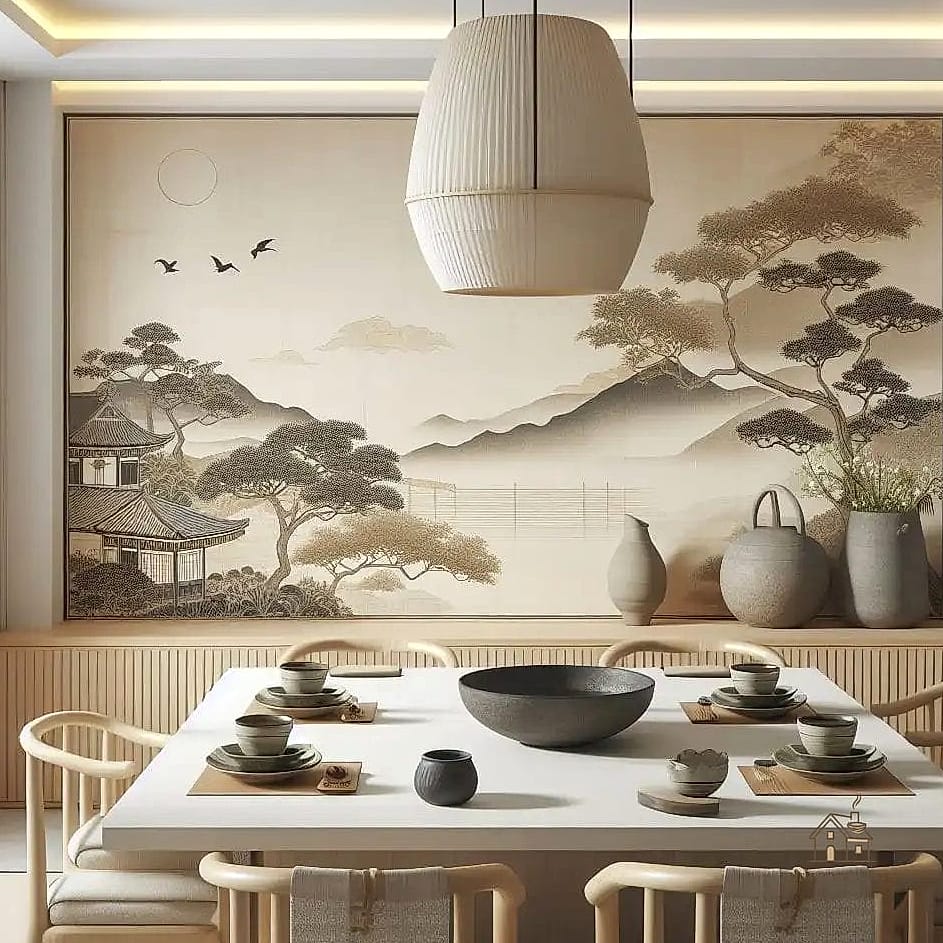
A subtle, textured tile in an earthy tone can work as an accent wall behind a sideboard or built-in bench. Look for matte finishes with slight color variation rather than anything glossy or uniform.
Handcrafted Wood Serving Tray
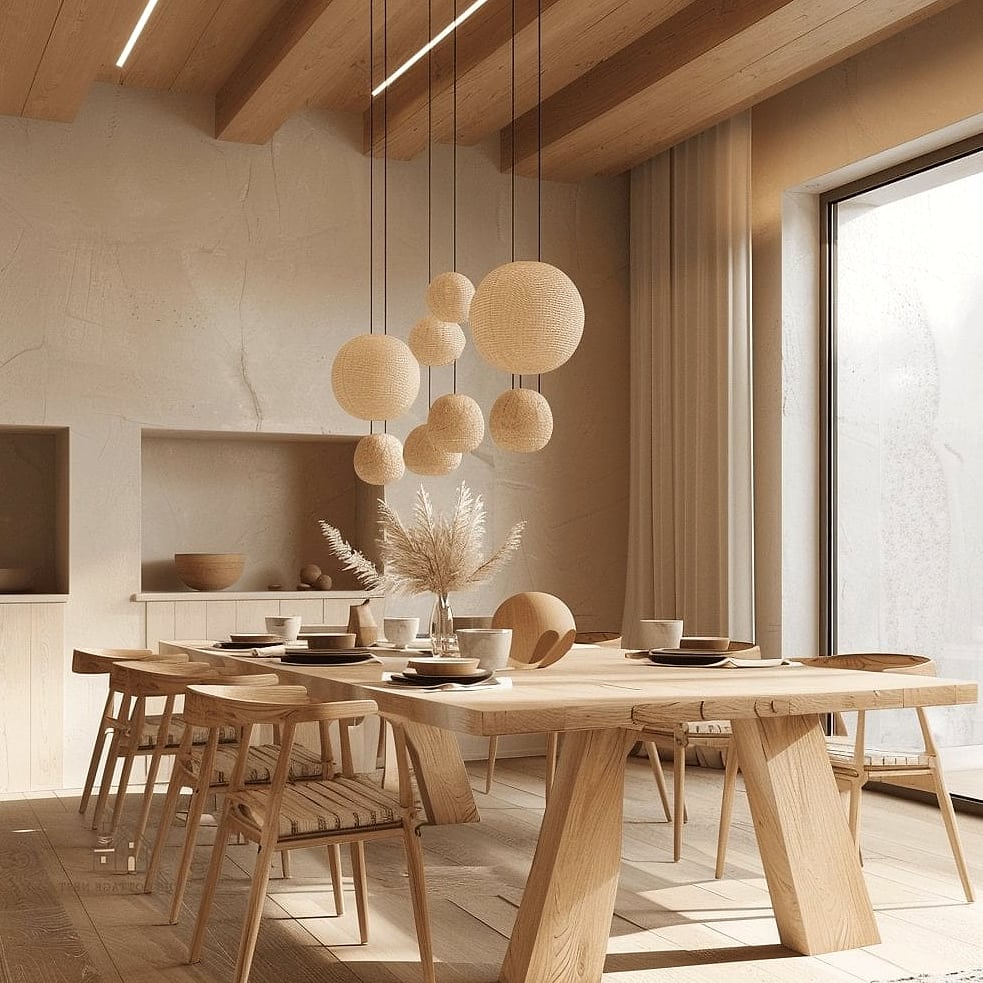
Displayed on a sideboard or used daily, a simple wood tray with rounded edges adds function and style at once. It’s also one of the easiest, most affordable ways to bring in a Japandi touch.
Soft Amber Glass Drinkware
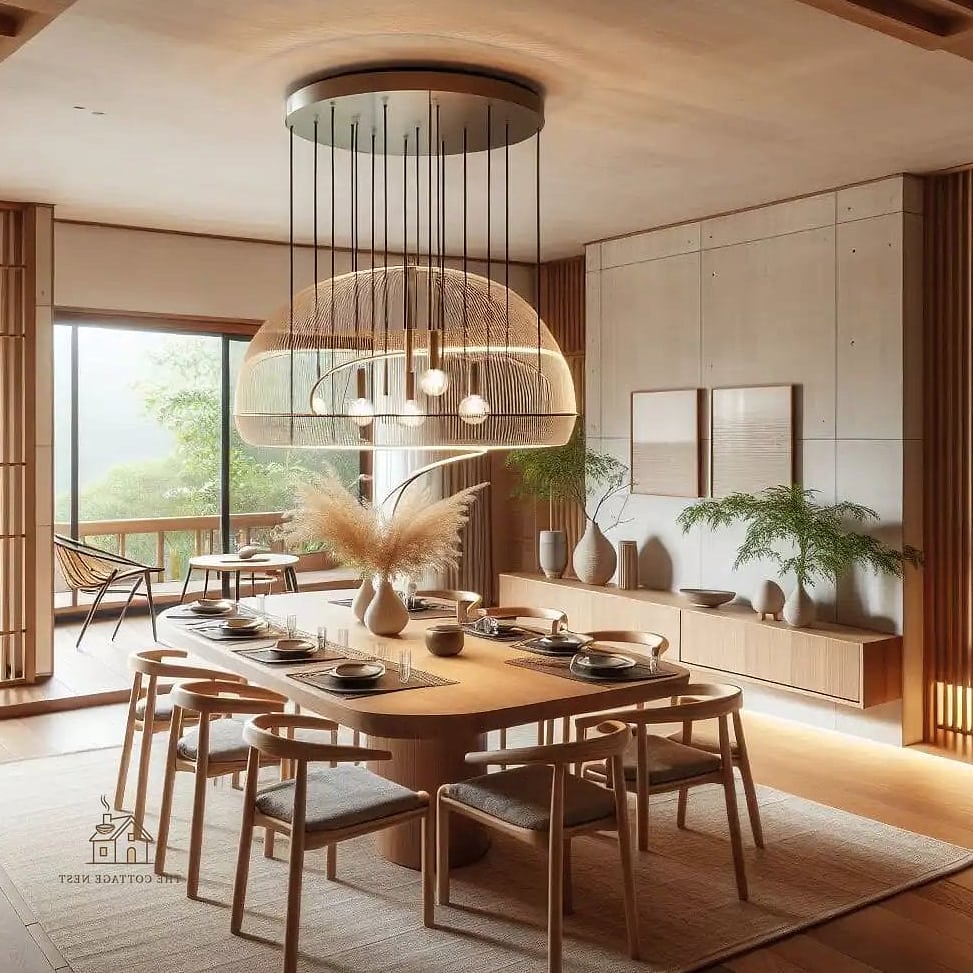
Swapping clear glassware for soft amber or smoky tones adds warmth to your table setting. It’s a small styling change, but it photographs beautifully and feels intentional every time you set the table.
Woven Window Shades
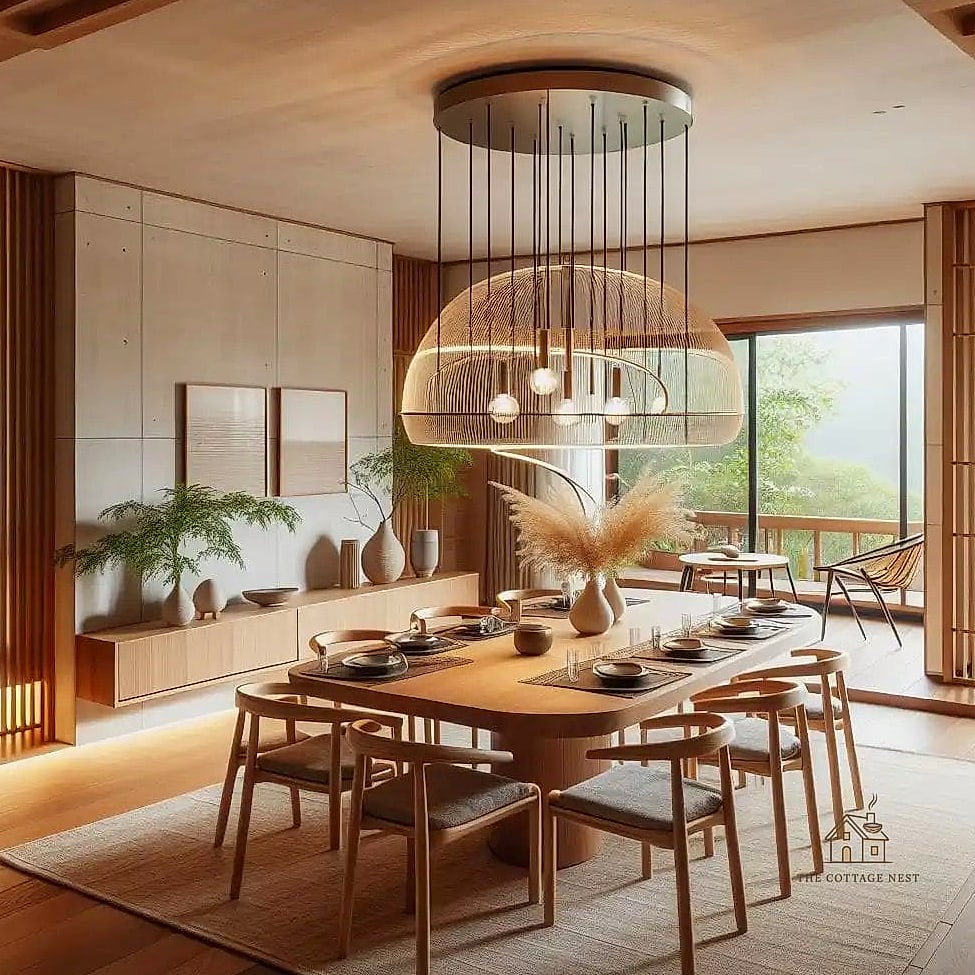
Bamboo or woven wood shades filter light in a soft, textured way that pairs nicely with linen curtains or can be used entirely on their own. They’re also a great renter-friendly option since many mount without drilling.
Minimalist Floating Wall Art
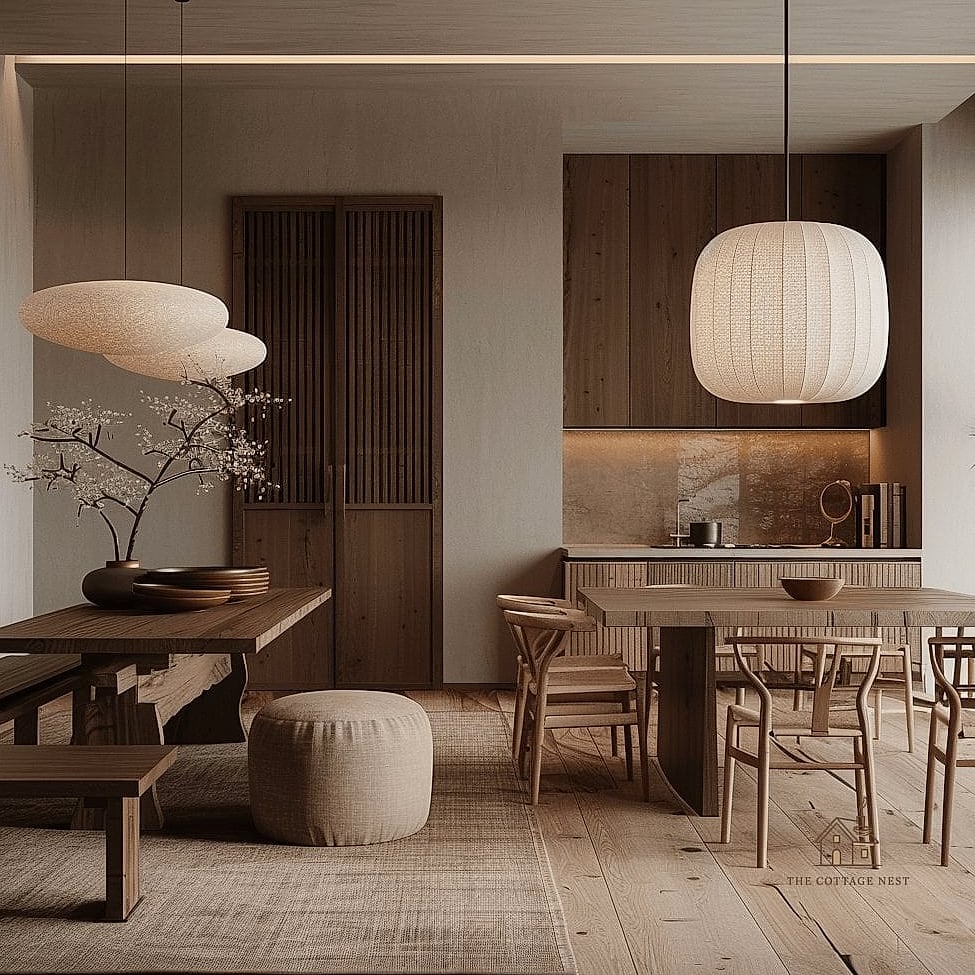
A single abstract piece with muted tones and simple linework fits the Japandi mood far better than busy or colorful art. Let the negative space do some of the work here.
Wood Bead Chandelier
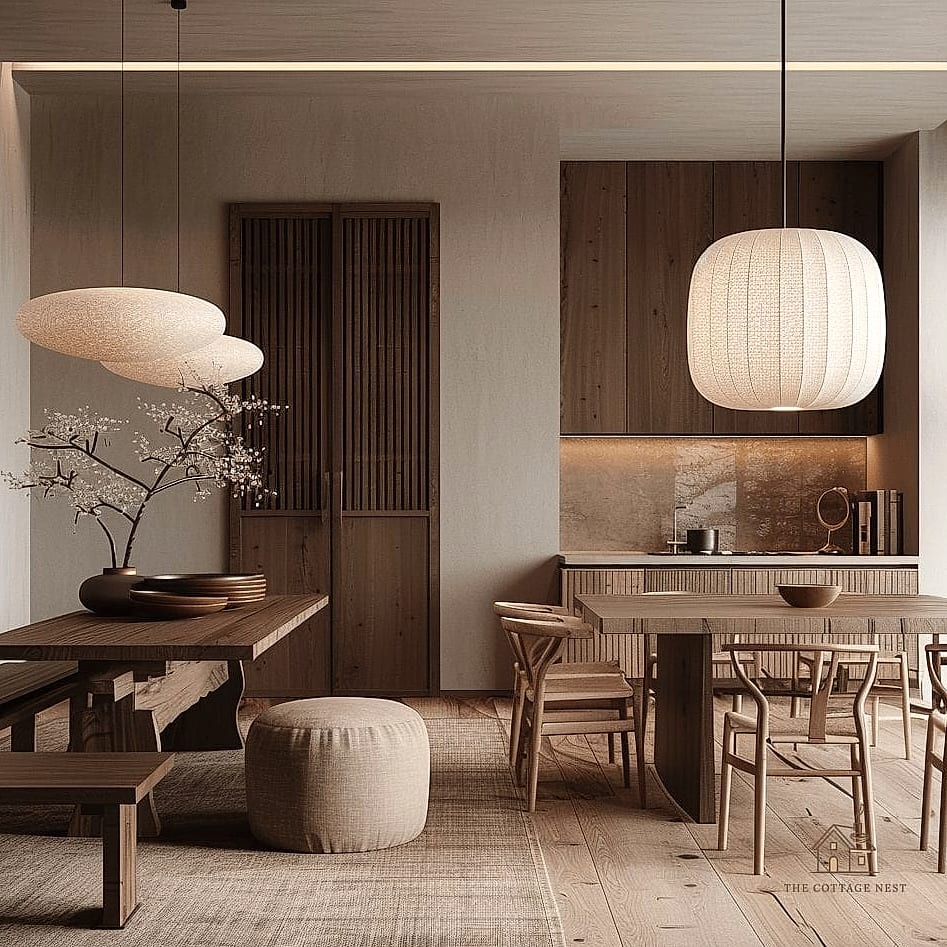
A chandelier made from natural wood beads adds a bit of texture and softness overhead. It works especially well over a longer table where you want something with a bit more visual presence than a single pendant.
Hidden Storage Bench
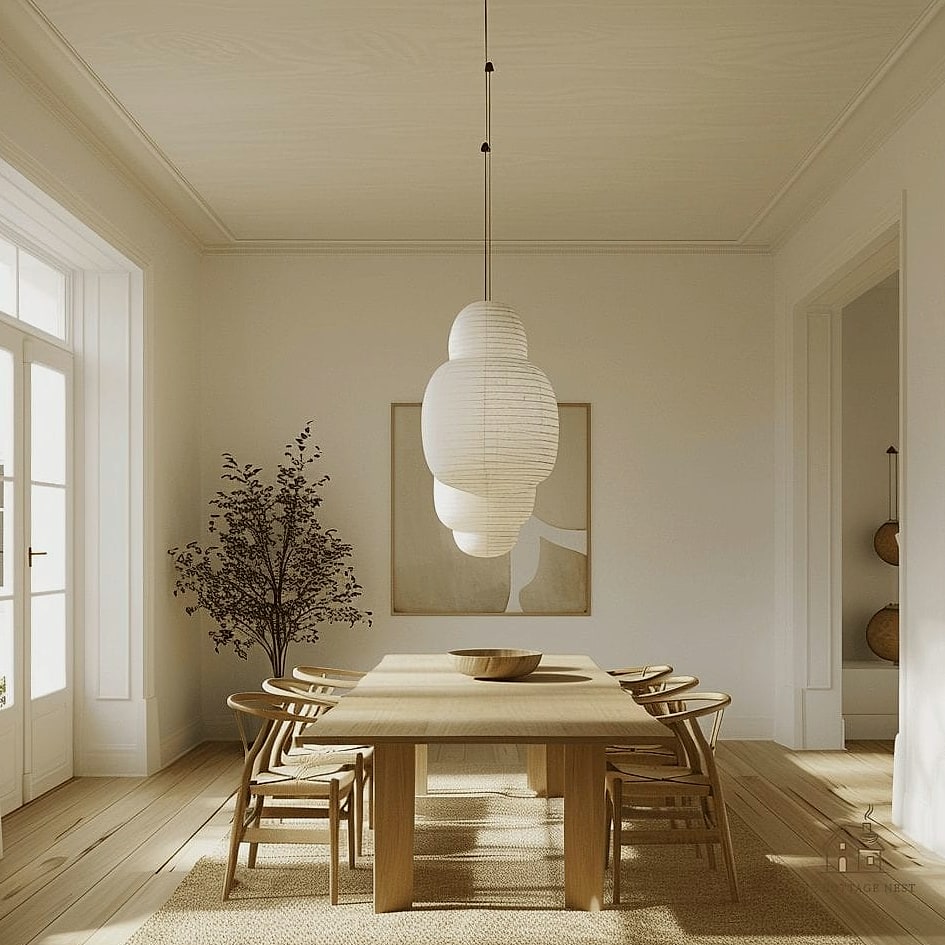
A bench with a lift-up seat or built-in cubbies gives you extra storage for table linens or serving pieces while doubling as seating. It’s a smart, practical addition for smaller dining rooms that need to multitask.
Curated Open Shelving Display
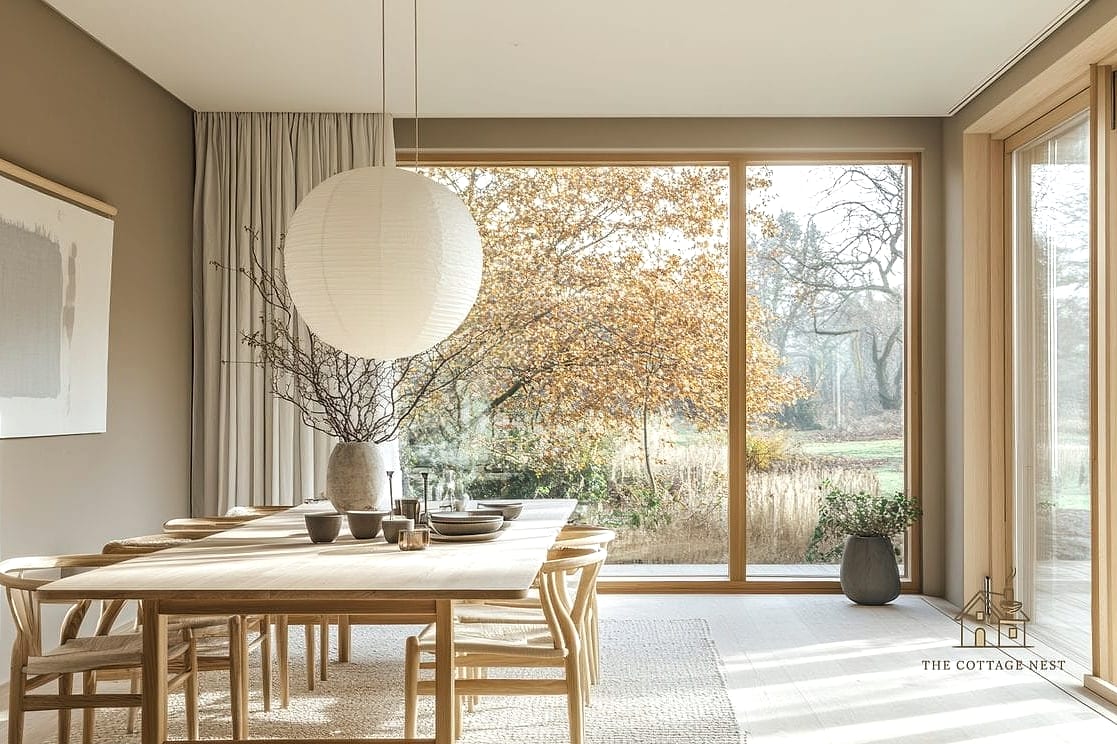
Rather than closed cabinets, a few open shelves styled with ceramics, a small plant, and neatly stacked linens keeps the room feeling open and intentional. The trick is leaving some negative space so it doesn’t feel crowded.
Japandi works so well for dining rooms because it’s not about a strict formula, it’s more of a feeling. Warm woods, soft neutrals, a little imperfection, and just enough negative space to let everything breathe. Pick a handful of these ideas that fit your space and budget, and you’ll have a room that feels calm, collected, and totally lived-in.