30 Dreamy English Garden Ideas to Try This Season
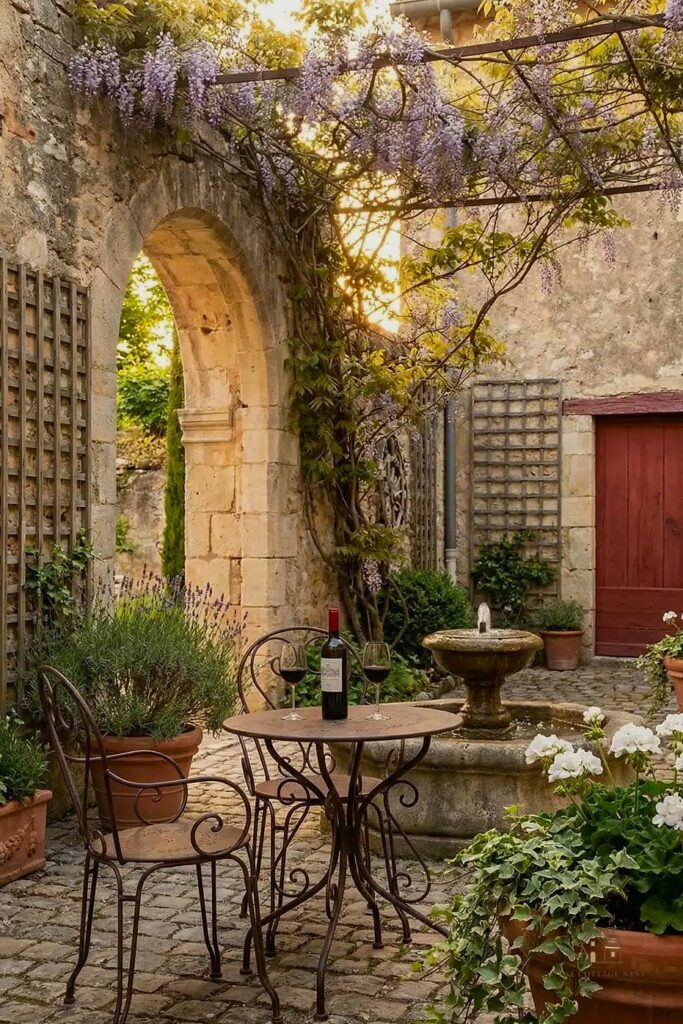
- Layer Your Flower Beds Like a Painting
- Add a Weathered Brick Path
- Plant a Cottage-Style Rose Arch
- Mix in Ornamental Grasses for Movement
- Tuck In a Weathered Garden Bench
- Build a Boxwood Border
- Grow a Wall of Climbing Clematis
- Create a Cutting Garden Section
- Add a Rustic Potting Shed
- Plant Lavender Along Your Walkways
- Use a Mix of Perennials for Year-Round Interest
- Install a Small Reflecting Pond
- Grow Foxgloves for Height and Drama
- Add a Vintage Wheelbarrow Planter
- Plant a Herb Garden Near the Kitchen Door
- Use Hollyhocks Against a Fence or Wall
- Add a Mossy Stone Birdbath
- Grow Sweet Peas for Fragrance
- Create a Gravel Garden Path
- Add a Rustic Wooden Trellis for Sweet Peas or Beans
- Plant Peonies for Big, Blowsy Blooms
- Add a Dovecote or Birdhouse Feature
- Grow Delphiniums for Cottage Garden Color
- Add a Cozy Reading Nook Among the Flowers
- Use Terra Cotta Pots for Container Gardening
- Create a Wildflower Meadow Patch
- Add Ivy or Climbing Hydrangea to Stone Walls
- Plant a Mixed Perennial Border Along the Fence
- Add a Vintage-Style Garden Gate
- Use Soft, Muted Color Palettes Throughout
30 Dreamy English Garden Ideas to Try This Season
There’s something about an English garden that just makes you want to slow down. Maybe it’s the way the flowers spill over the edges of the paths like nobody told them to behave, or the way everything looks like it’s been there for a hundred years even if it went in last spring. That relaxed, romantic, slightly wild look is exactly why so many homeowners are borrowing this style for their own backyards.
If you’ve been dreaming about turning your yard into something out of a countryside cottage, you’re in the right place. Below are 30 English garden ideas you can actually pull off this season, whether you’ve got a sprawling backyard or a tiny side patio that needs some love.
Layer Your Flower Beds Like a Painting
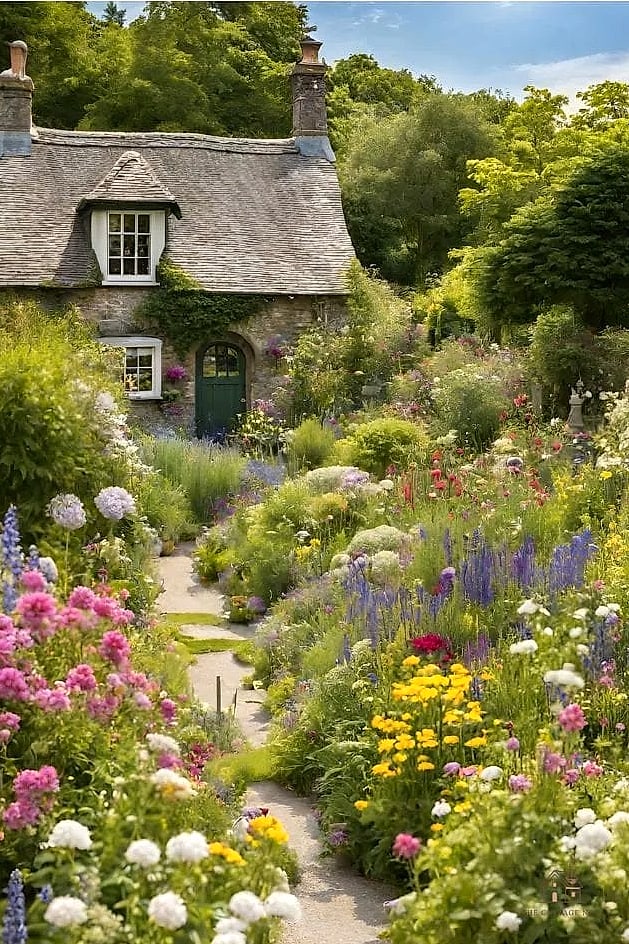
The secret to that classic English garden look is layering. Tall flowers like delphiniums and foxgloves go in the back, medium-height blooms like roses and peonies fill the middle, and low-growing plants like lamb’s ear or creeping thyme spill along the front edge.
This works in beds of almost any size, and it’s especially forgiving if your plants don’t all bloom at the same time. You’ll always have something going on. Just keep an eye on watering since the taller plants at the back can shade out the shorter ones and throw off their moisture needs.
Add a Weathered Brick Path

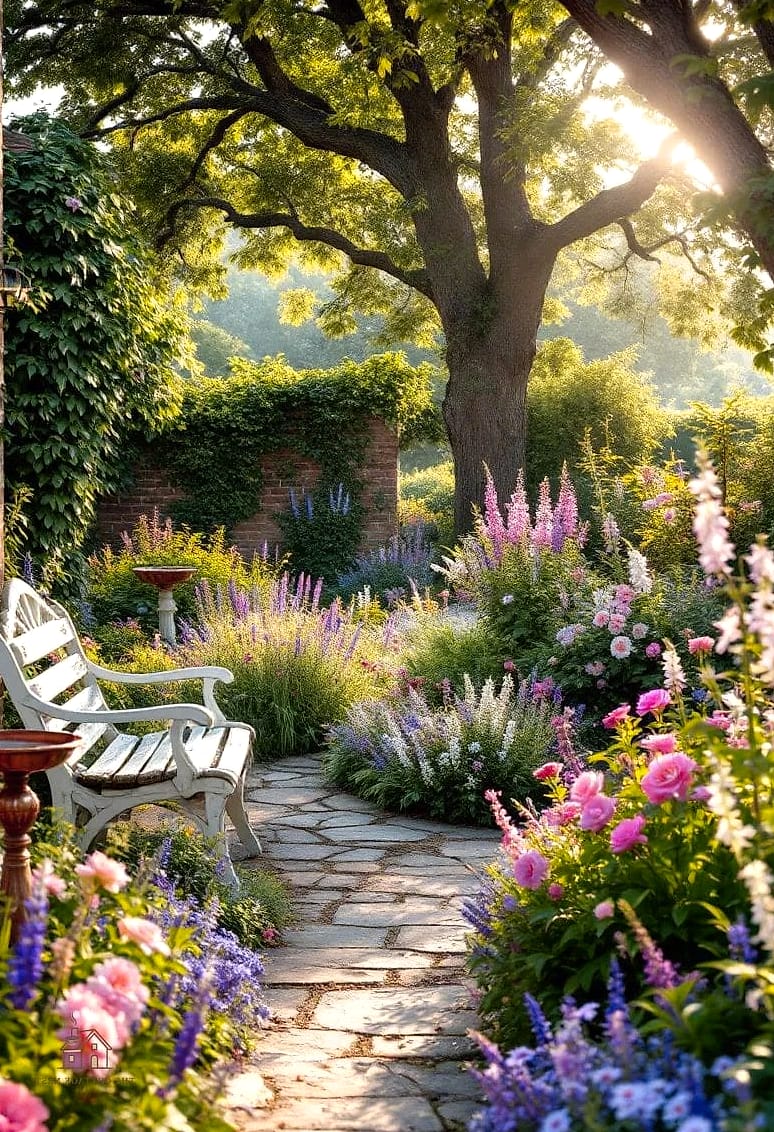
Nothing says English cottage garden quite like a reclaimed brick path winding through the beds. The slightly uneven, aged look is part of the charm here, so don’t stress if your bricks aren’t perfectly matched.
These paths work best in gardens with curves rather than straight lines. If you’re on a budget, look for salvaged brick at architectural salvage yards instead of buying new. It’s cheaper and it already has that lived-in patina you’re after.
Plant a Cottage-Style Rose Arch
An arch covered in climbing roses is one of those features that instantly makes a garden feel like it belongs in a storybook. Place it at the entrance to your garden or over a gate so you walk through blooms every time you head outside.
David Austin roses are a popular choice for this because of their old-fashioned, ruffled look and strong fragrance. Just know that climbing roses need regular pruning to keep them from taking over completely.
Mix in Ornamental Grasses for Movement
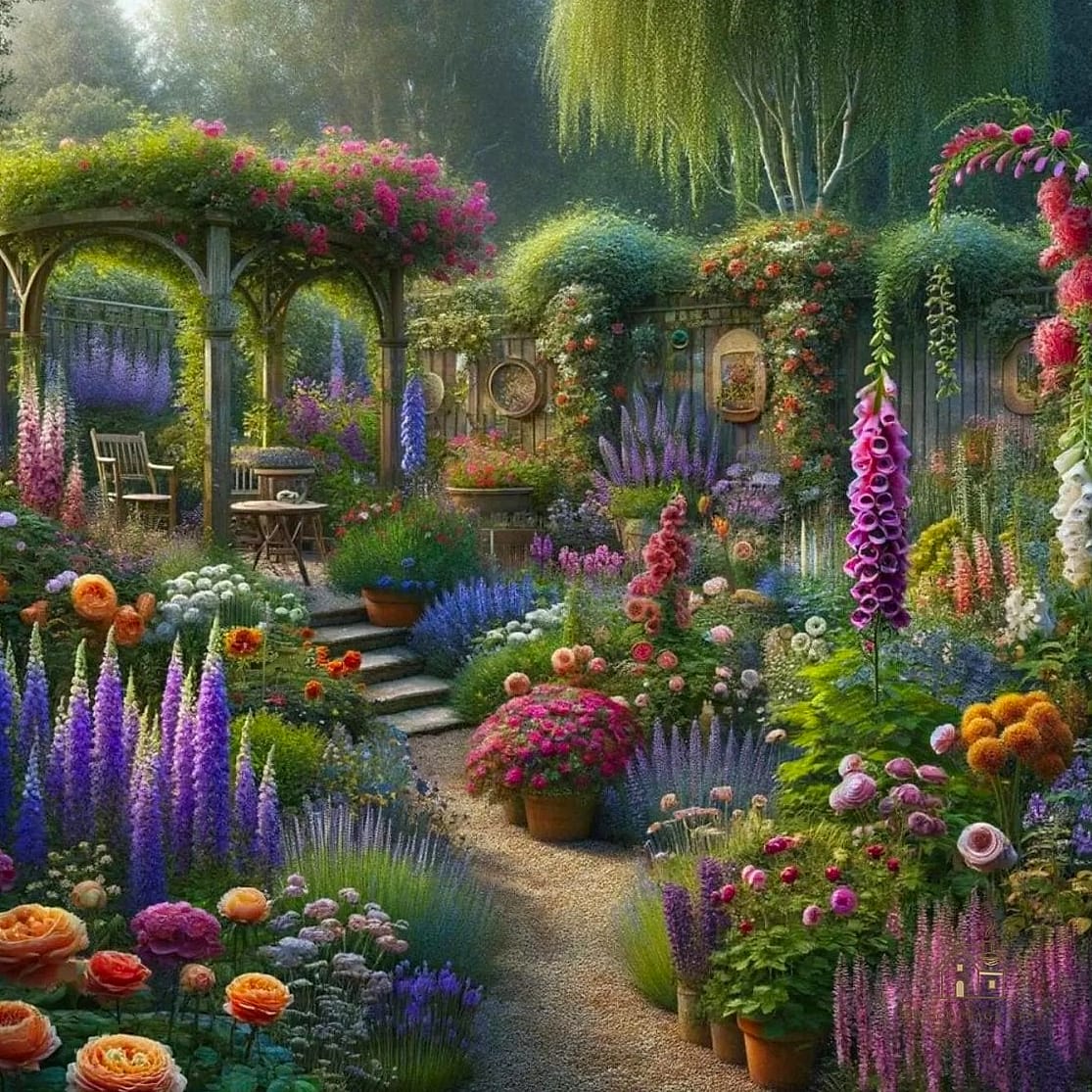
English gardens aren’t just about flowers. Ornamental grasses add texture and a bit of movement when the wind picks up, which keeps the whole space from feeling too static.
Feather reed grass and Mexican feather grass are both low-maintenance options that pair beautifully with roses and perennials. They’re also fairly drought-tolerant once established, which is a nice bonus if you’re trying to keep your water bill in check.
Tuck In a Weathered Garden Bench
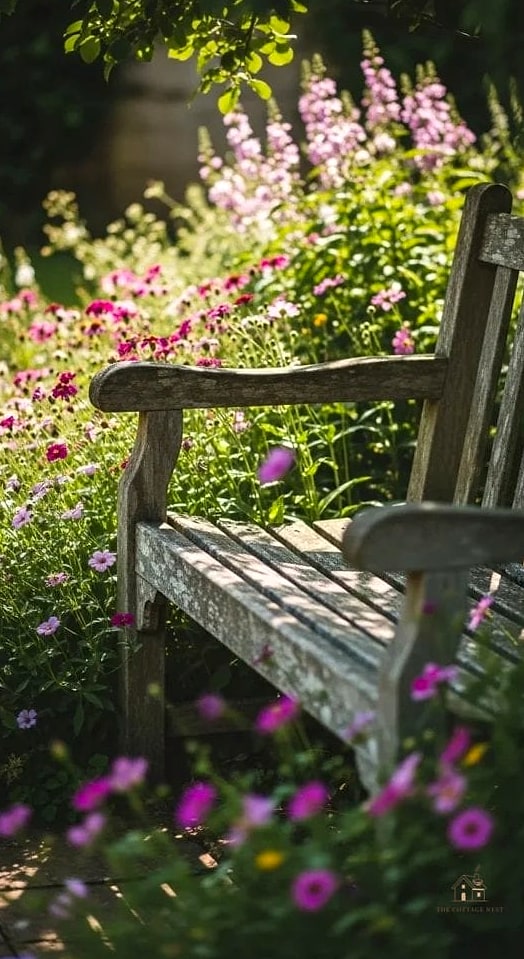
A simple wooden or wrought iron bench tucked into a quiet corner gives your garden somewhere to actually sit and enjoy it. Choose a spot with some shade, maybe under a small tree or beside a climbing vine, so it feels like a little retreat.
Teak benches hold up well outdoors and develop a lovely silvery patina over time. If you want that aged look faster, there are wood stains made specifically to mimic weathering.
Build a Boxwood Border
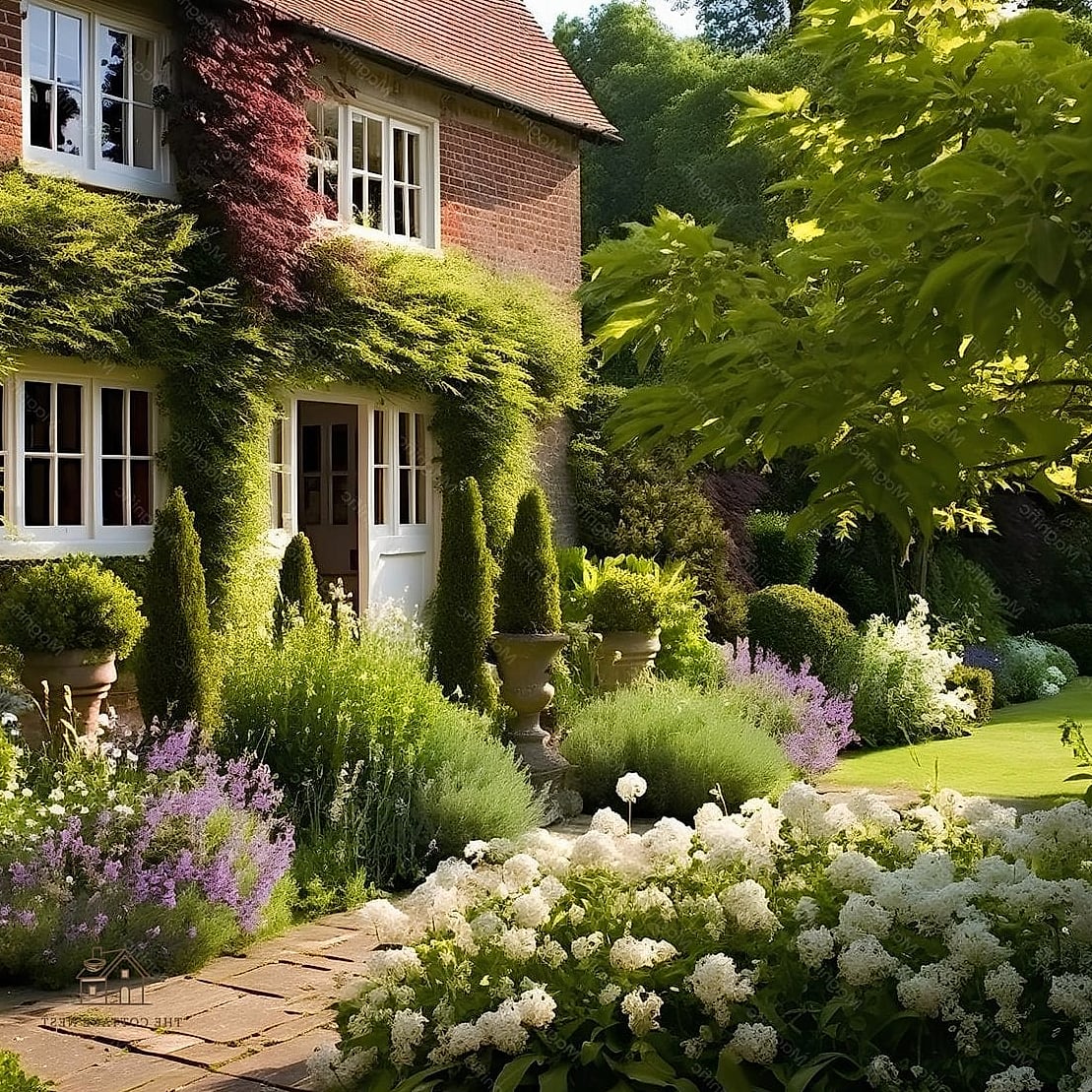
Boxwood hedges give English gardens their structure. Without some kind of clipped border, all that loose, romantic planting can start to look a bit chaotic instead of intentional.
Low boxwood hedges along the edges of beds or pathways create a nice contrast between the wild flowers inside and the tidy lines outside. They do need occasional trimming to keep their shape, so factor that into your maintenance routine.
Grow a Wall of Climbing Clematis
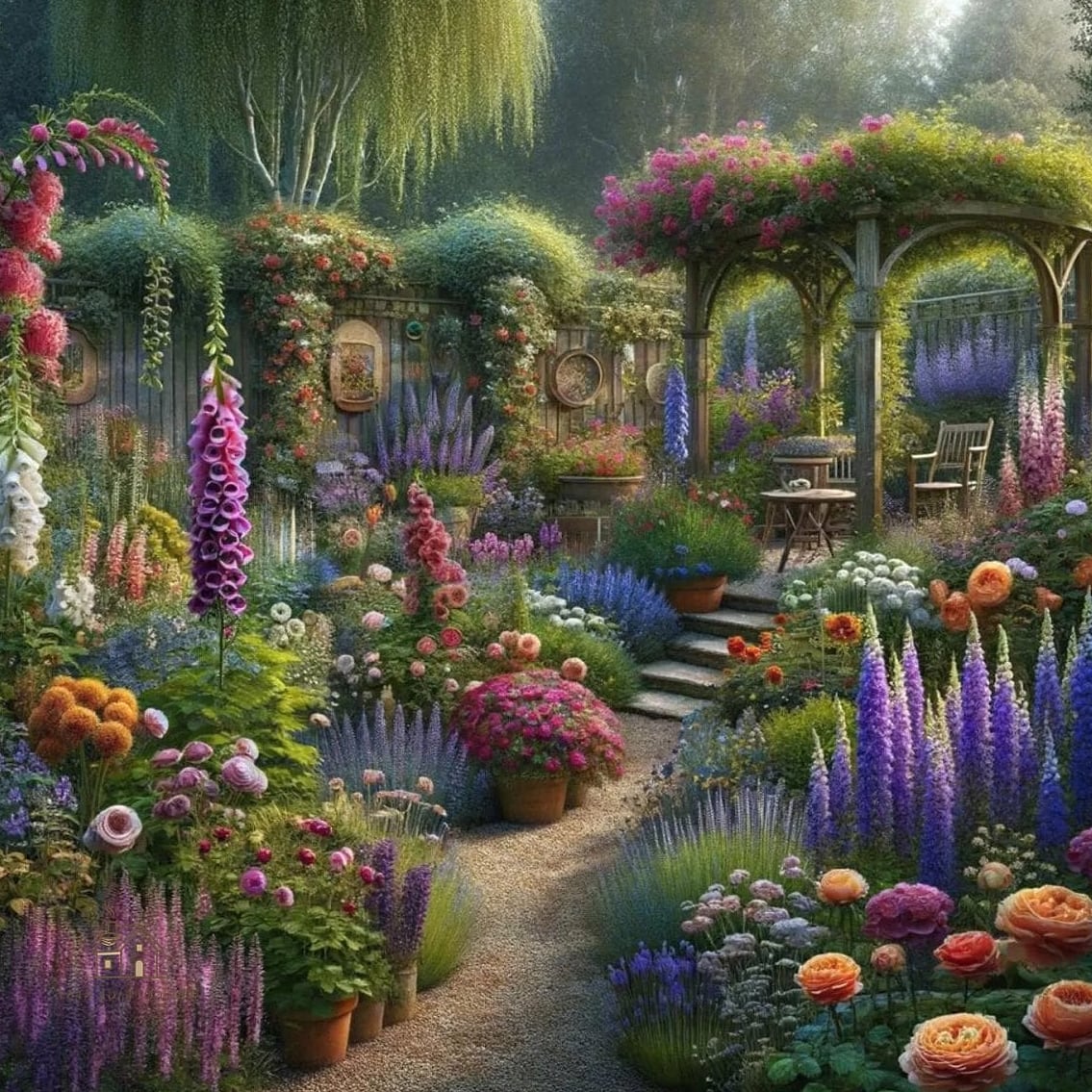
Clematis vines are an English garden staple, especially when trained up a trellis, fence, or wall. The blooms come in shades of purple, pink, and white, and some varieties will rebloom throughout the season if you’re lucky.
Pair clematis with climbing roses for a classic combination gardeners have used for generations. Just remember clematis likes its roots shaded and its top growth in the sun, so a little mulch around the base goes a long way.
Create a Cutting Garden Section
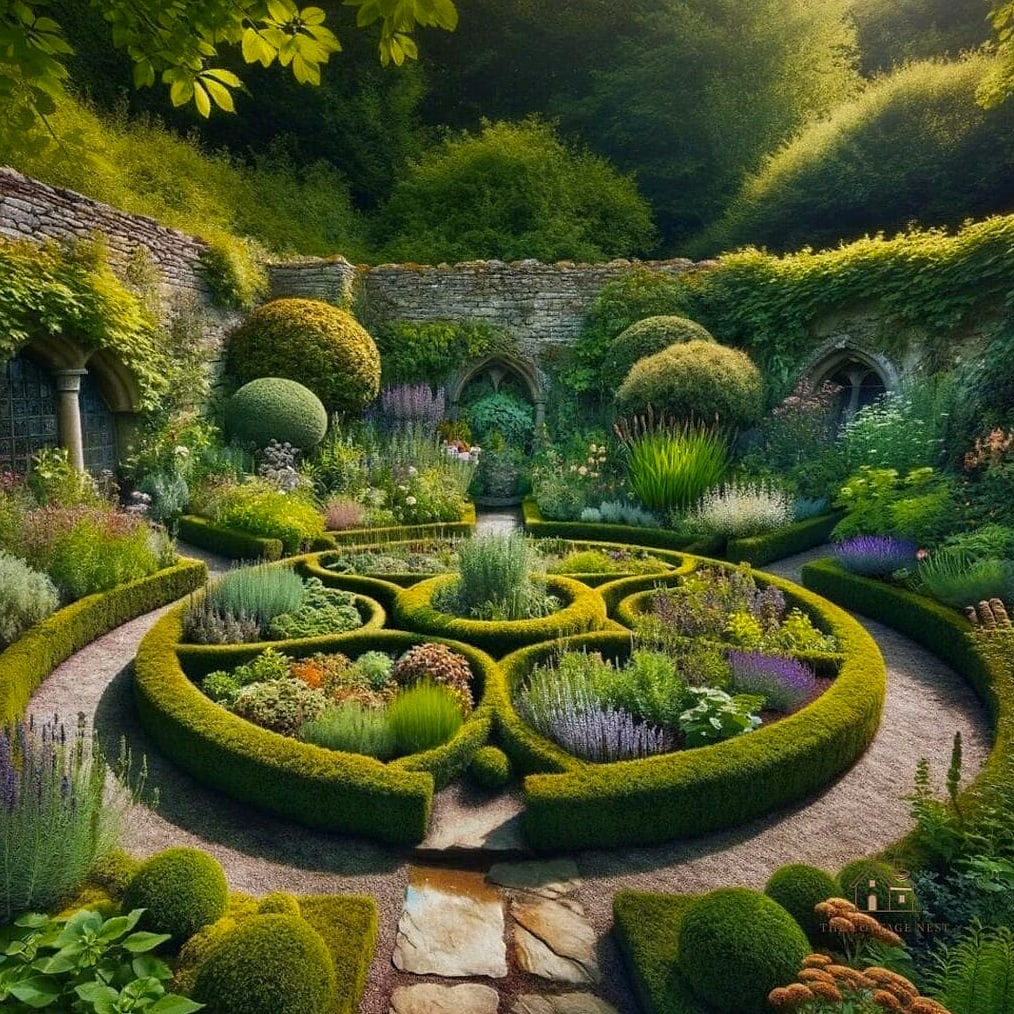
Set aside a small section of your yard specifically for growing flowers you can cut and bring indoors. Zinnias, sweet peas, cosmos, and dahlias all work beautifully and keep producing more blooms the more you cut them.
This is a fun one for families since kids love picking their own bouquets. It also means you’re not robbing your main display beds every time you want fresh flowers on the kitchen table.
Add a Rustic Potting Shed
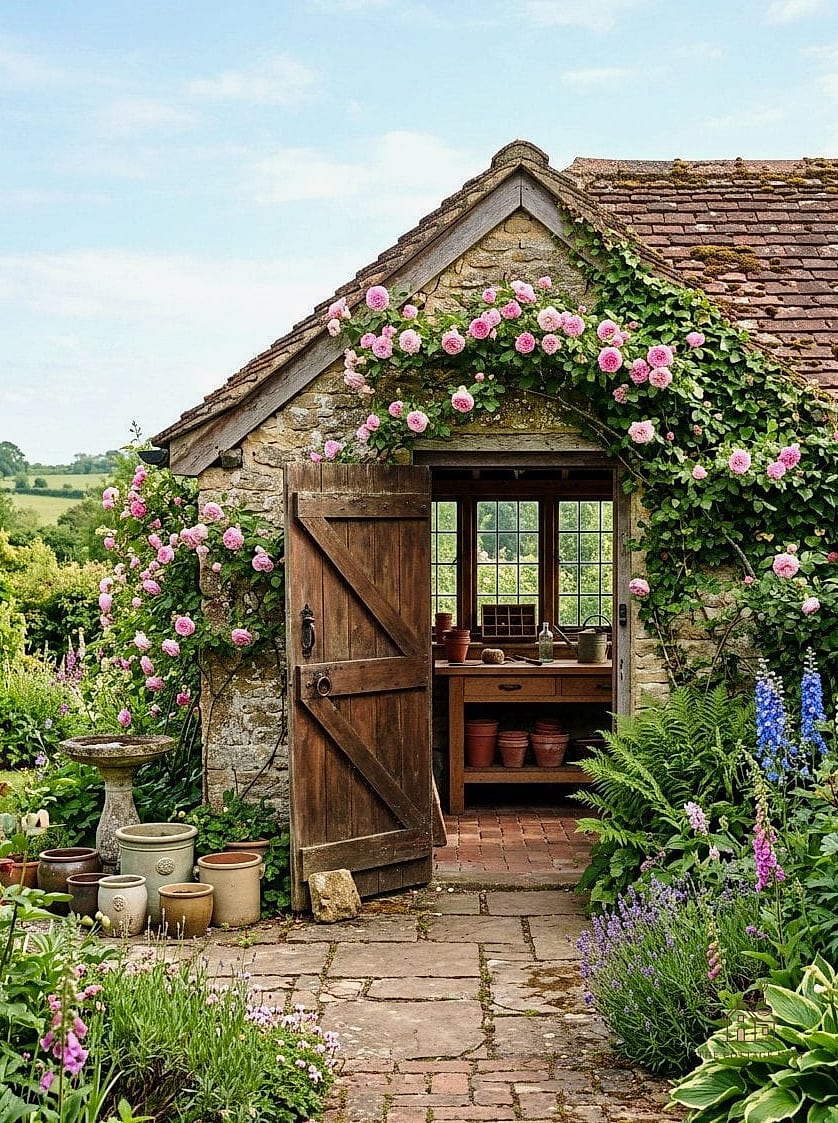
A small potting shed gives your garden a functional focal point and somewhere to store tools, pots, and soil without cluttering up your patio. Weathered wood, a peaked roof, and a few climbing vines growing up the sides give it that storybook cottage feel.
Even a compact shed can work if space is tight. Add a little window box out front with trailing flowers to tie it into the rest of the garden.
Plant Lavender Along Your Walkways
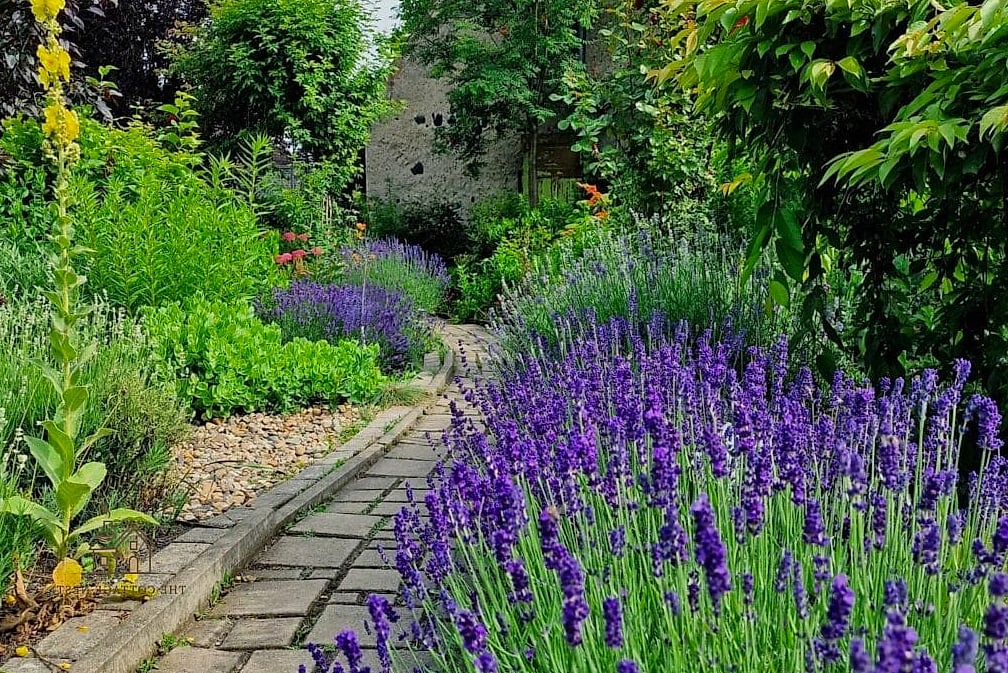
Lining a path with lavender gives you that gorgeous purple haze look plus a fragrance that hits you every time you brush past it. It’s also fairly low-maintenance once established and tends to do well in dry, sunny spots.
Bees love lavender too, so this is a great pick if you’re trying to support pollinators. Just give it good drainage since soggy soil is really the only thing that tends to kill it off.
Use a Mix of Perennials for Year-Round Interest
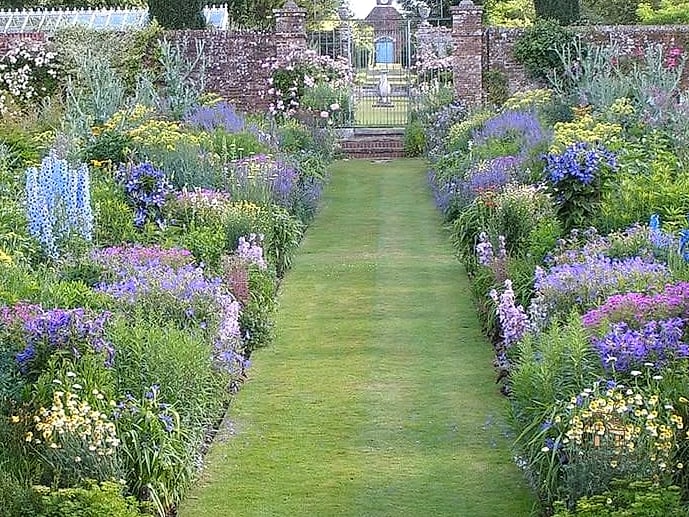
Rather than relying on annuals that need replanting every year, English gardens often lean on perennials that come back season after season. Peonies, delphiniums, foxgloves, and hardy geraniums are all classic choices.
Staggering bloom times means your garden has something happening from spring through fall instead of one big burst that fades fast. It takes a little planning upfront, but it pays off for years.
Install a Small Reflecting Pond
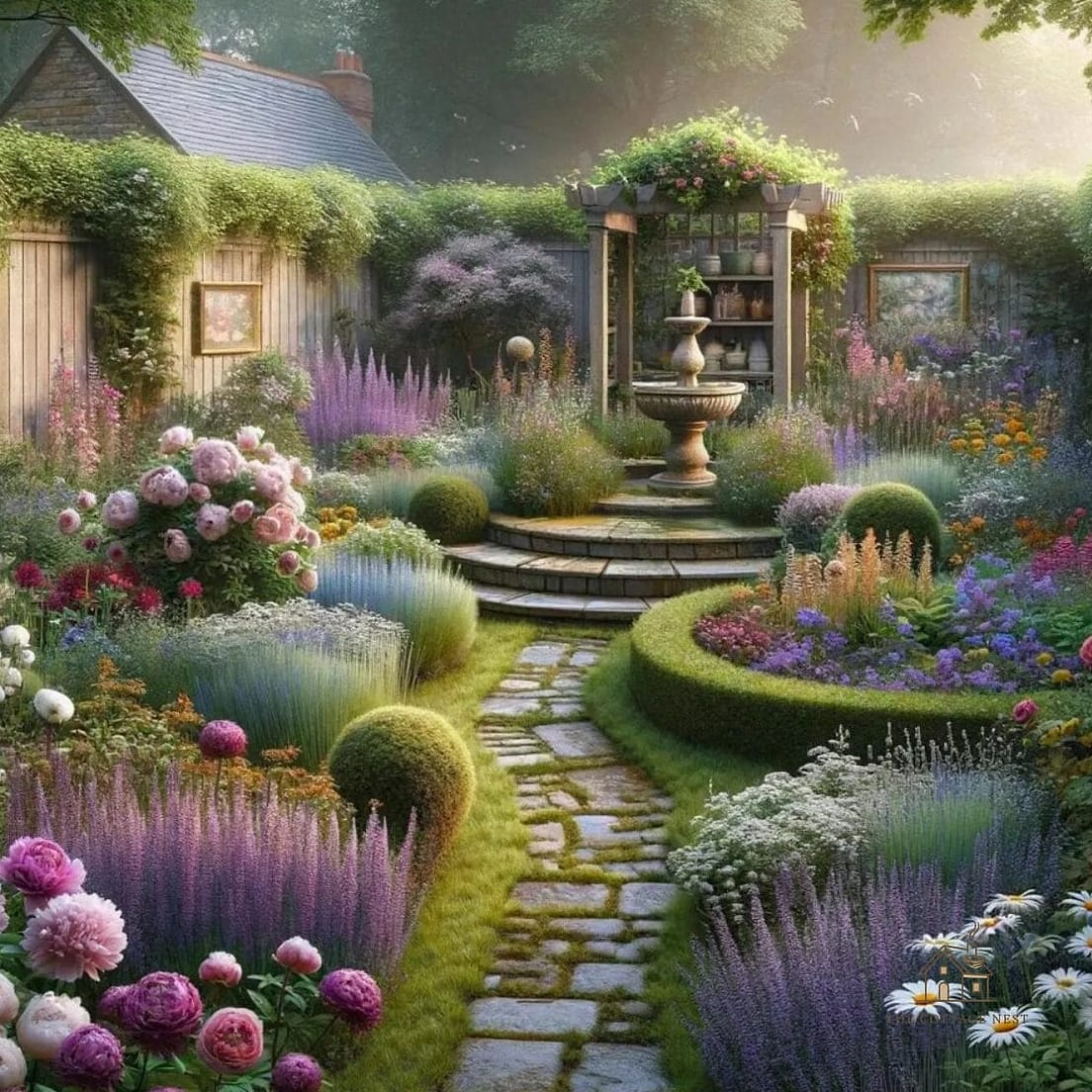
A modest pond or water feature adds a peaceful element and attracts birds, dragonflies, and other wildlife. Even a small preformed liner pond tucked into a corner can make a big difference in how the space feels.
Surround it with moisture-loving plants like ferns or hostas to blend the edges naturally. If you’re worried about mosquitoes, adding a small pump to keep the water moving helps a lot.
Grow Foxgloves for Height and Drama
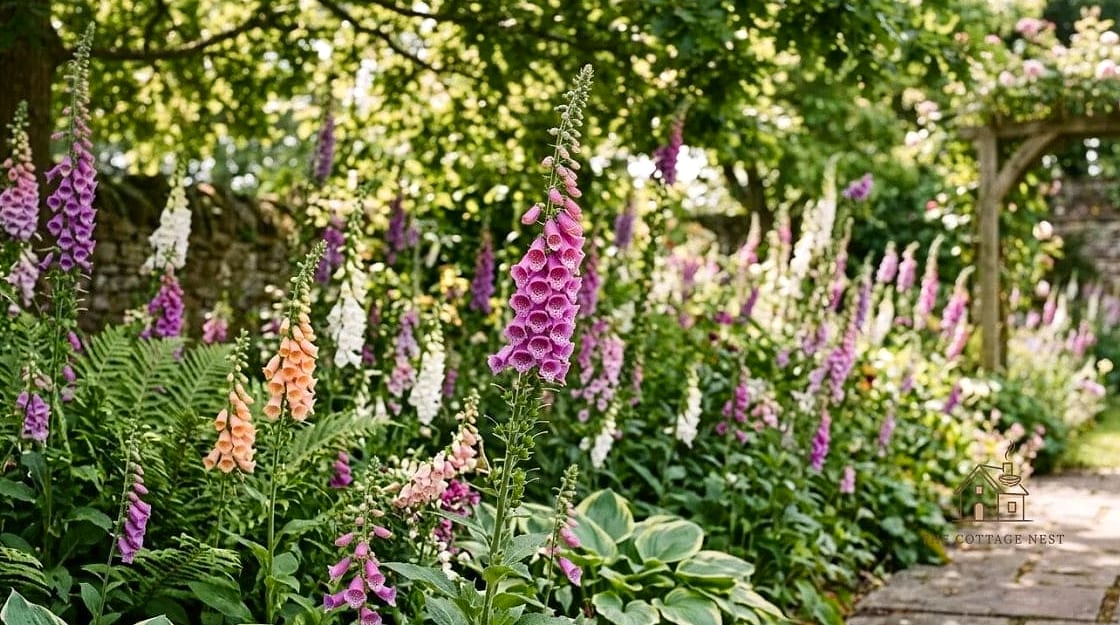
Foxgloves are one of those flowers that instantly reads as English garden. Their tall spires covered in bell-shaped blooms add height and drama toward the back of a border.
They tend to self-seed, so once you plant them you’ll likely see new ones popping up in following years. Just a heads up that foxgloves are toxic if ingested, so keep that in mind around pets and small kids.
Add a Vintage Wheelbarrow Planter
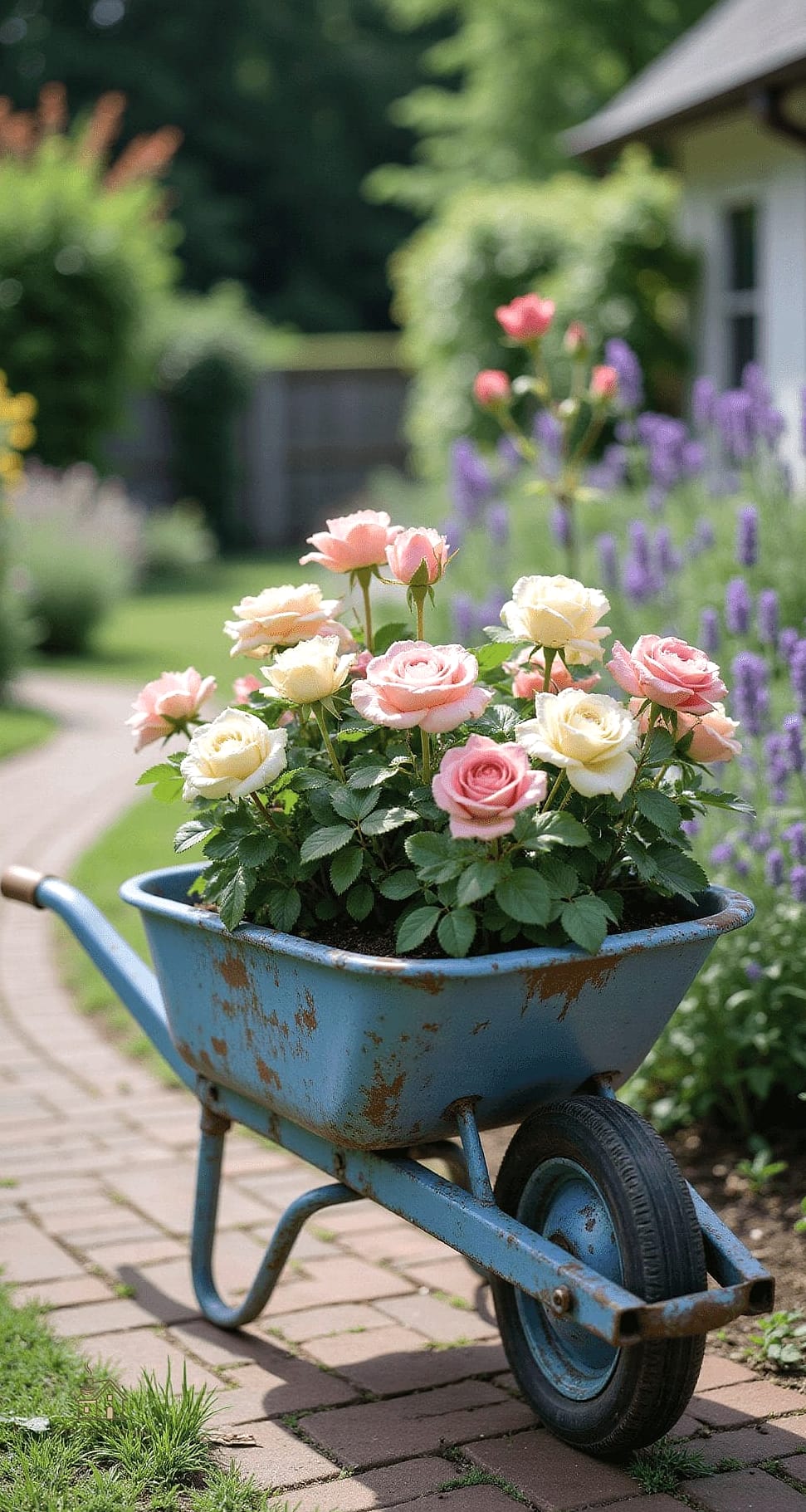
Repurposing an old wheelbarrow as a planter is a charming, budget-friendly way to add character. Fill it with trailing flowers like lobelia or petunias so they spill over the sides.
This works especially well near an entrance or tucked beside a shed. It’s also a fun weekend project if you happen to have an old wheelbarrow sitting in the garage doing nothing.
Plant a Herb Garden Near the Kitchen Door
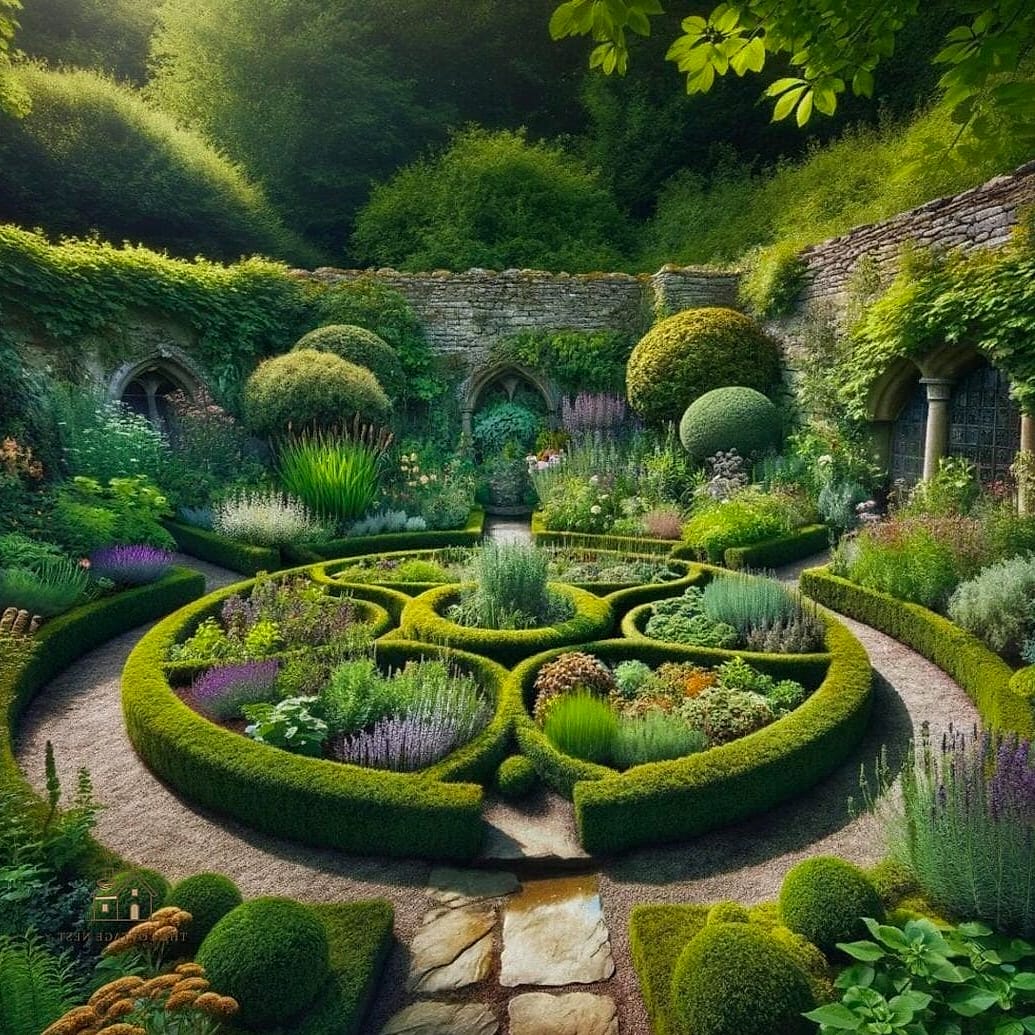
English gardens have always blended beauty with practicality, and a small herb patch near the kitchen door fits right in. Thyme, sage, rosemary, and chives all have a soft, informal look that fits the aesthetic while giving you fresh herbs for cooking.
Raised beds or even large terra cotta pots work well here if your soil isn’t great. It’s also a nice way to ease into gardening if you’re newer to growing things.
Use Hollyhocks Against a Fence or Wall
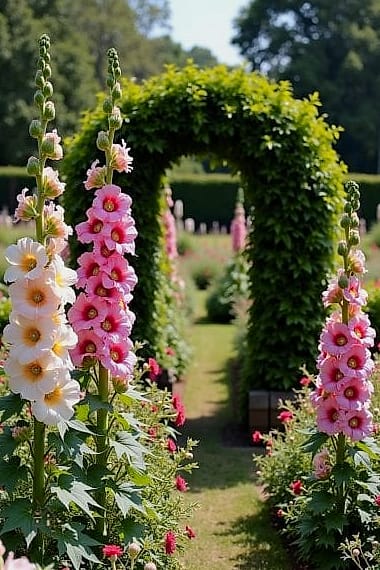
Hollyhocks grow tall and love leaning against something sturdy, which makes them perfect for softening a plain fence or garden wall. Their big, cheerful blooms come in almost every color you can think of.
They’re biennials, meaning they typically bloom in their second year, so patience is part of the deal here. Once established though, they tend to reseed and keep coming back on their own.
Add a Mossy Stone Birdbath
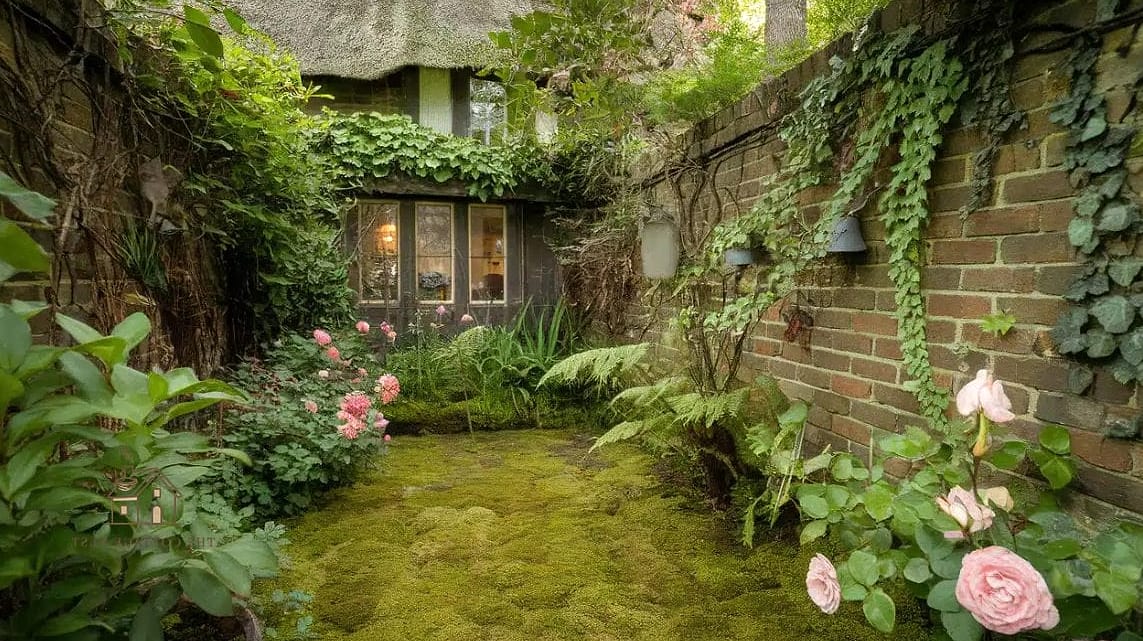
A stone birdbath with a bit of moss growing on it looks like it’s always belonged in your garden, even if you just bought it last week. Birds will use it, and it adds a nice focal point among the greenery.
Place it somewhere you can see from a window so you actually get to enjoy the birds visiting. Cleaning it out every week or so keeps the water fresh and algae-free.
Grow Sweet Peas for Fragrance
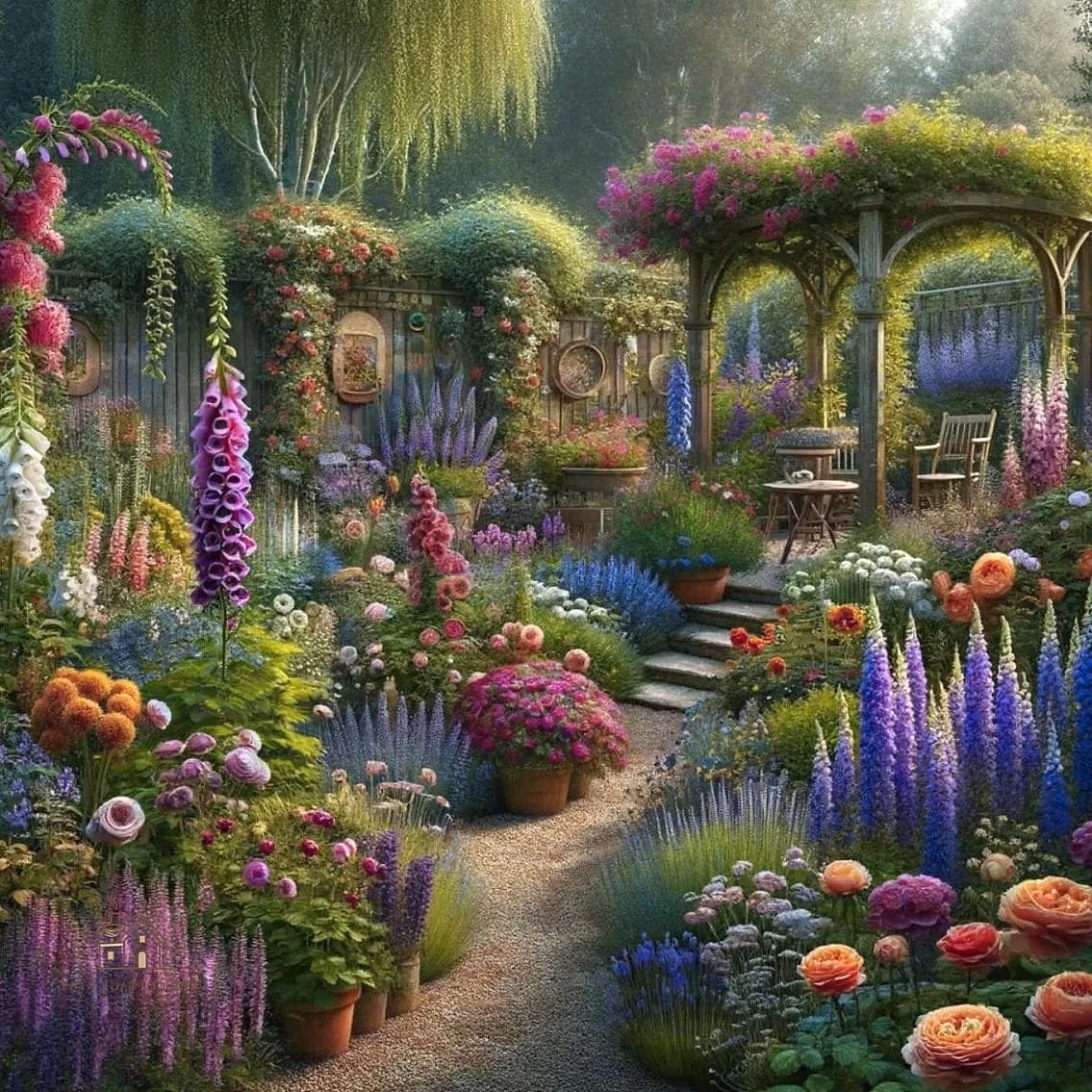
Sweet peas are an old cottage garden favorite thanks to their incredible scent and delicate, ruffled blooms. They climb readily, so give them a trellis, obelisk, or even some twiggy branches to scramble up.
They bloom best in cooler weather, so early spring or fall planting tends to work well depending on your climate. The more you cut them for bouquets, the more they’ll keep blooming.
Create a Gravel Garden Path
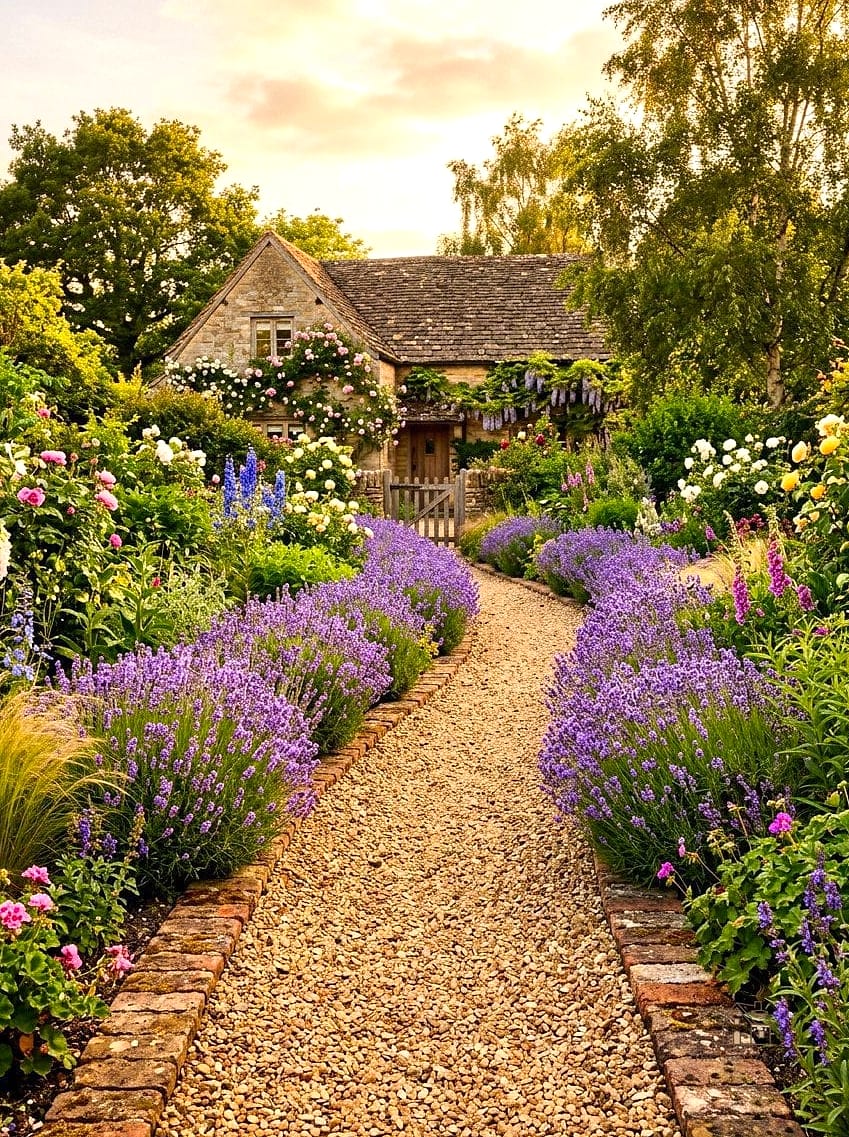
A gravel path offers a softer, more relaxed alternative to brick or stone, and it lets plants spill right over the edges without looking messy. It’s also one of the more budget-friendly path options out there.
Pea gravel works well underfoot and has a nice, informal texture. Just be aware it can shift around a bit over time, so you’ll want to top it off occasionally.
Add a Rustic Wooden Trellis for Sweet Peas or Beans
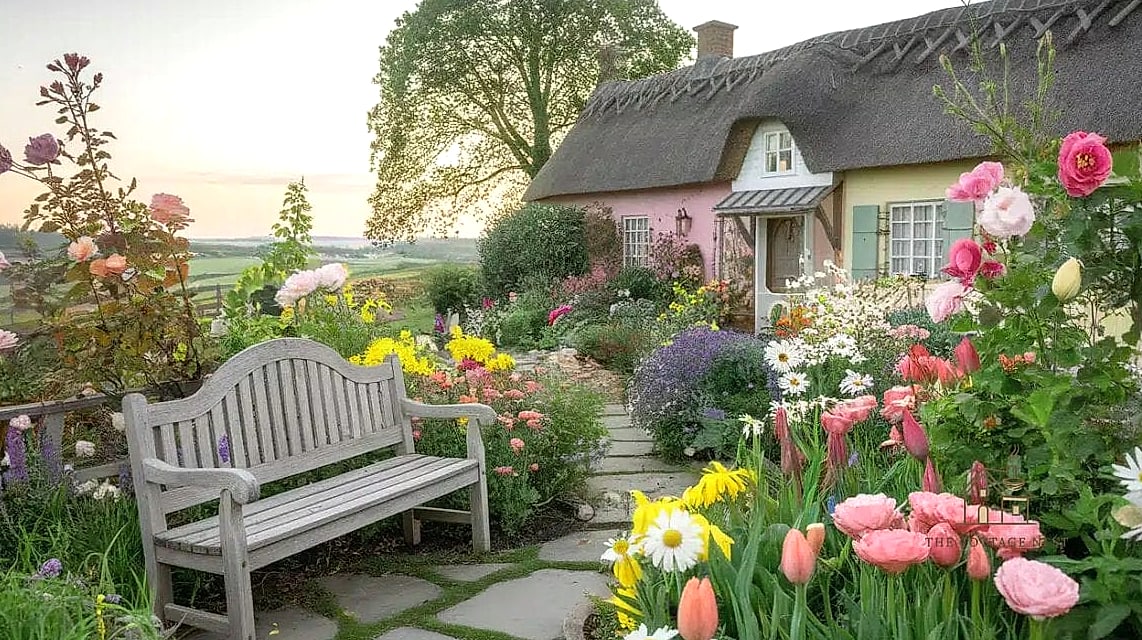
Beyond climbing roses and clematis, a simple wooden trellis gives you a spot to grow edible climbers like beans right alongside your flowers. It’s a nice nod to the kitchen garden roots of the English garden style.
A-frame trellises are easy to build yourself with a few pieces of lumber and some twine. They also fold flat for storage over winter if you want to reuse them.
Plant Peonies for Big, Blowsy Blooms
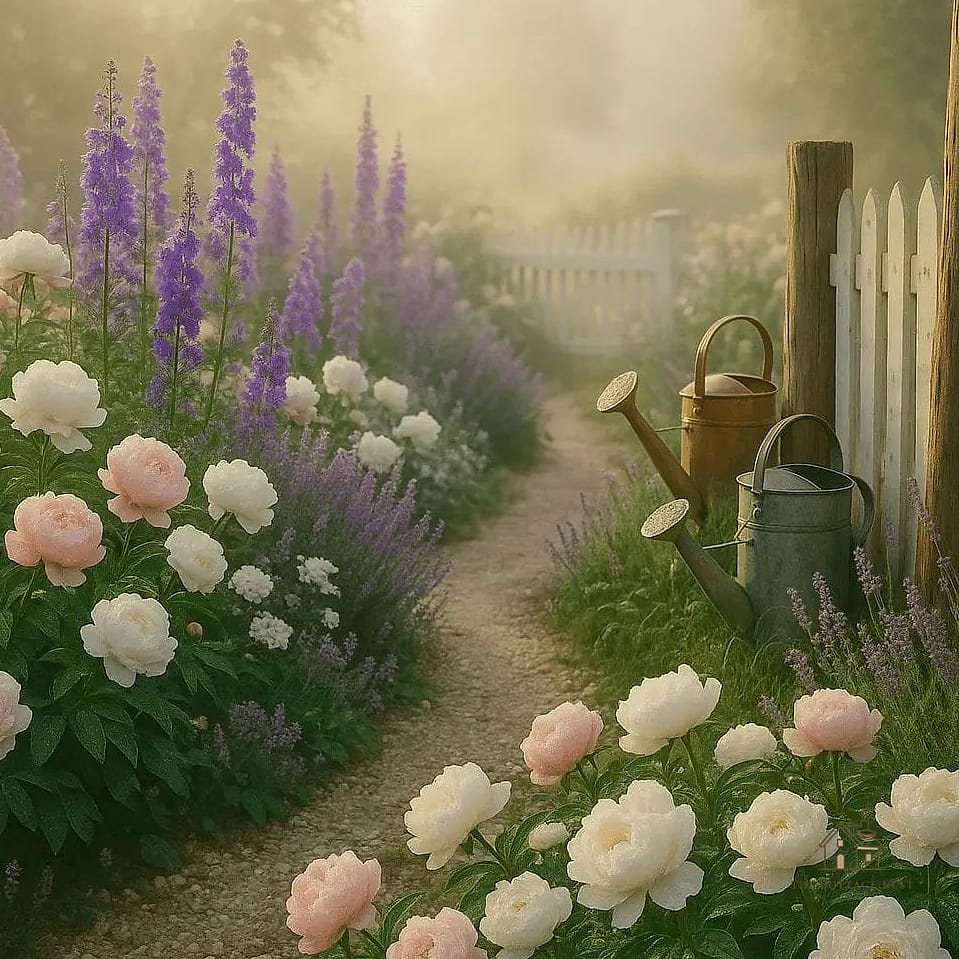
Peonies bring that full, romantic look English gardens are known for, with their huge ruffled petals and heavenly scent. They do take a few years to really establish, but once they do, they’re pretty low maintenance.
Pair them with something more delicate like baby’s breath or catmint to soften their bold presence. Just be ready to stake them since those heavy blooms tend to flop after rain.
Add a Dovecote or Birdhouse Feature
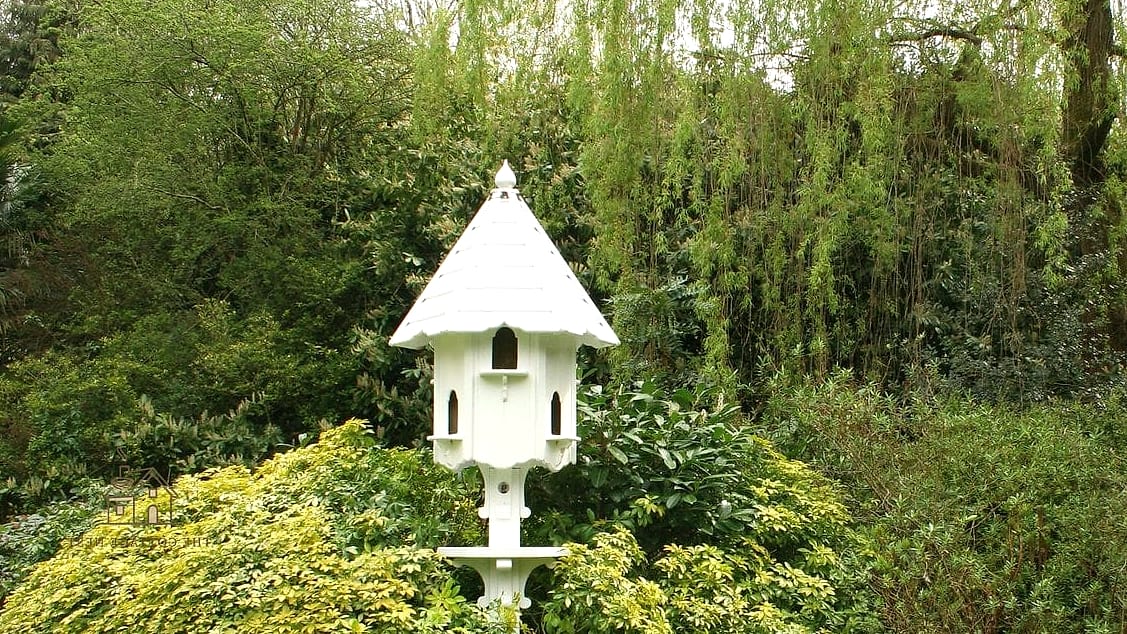
A tall dovecote or a cluster of birdhouses on posts adds height and whimsy to the garden while giving local birds a place to nest. It’s a small detail, but it goes a long way toward that storybook feel.
Weathered wood or aged white paint fits the aesthetic better than anything too polished or modern. Position it where you can see it from your favorite outdoor seating spot.
Grow Delphiniums for Cottage Garden Color
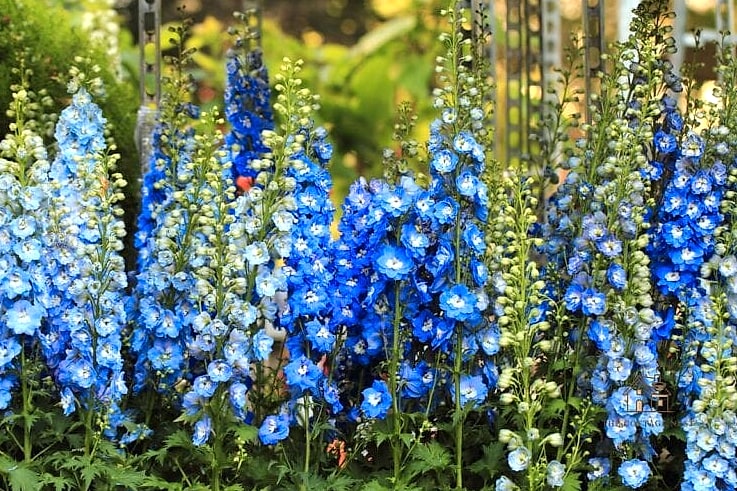
Delphiniums bring some of the boldest blues you’ll find in the plant world, and they’re a staple in any proper English garden border. They pair beautifully with white and soft pink blooms nearby.
They can be a bit finicky about wind, so a somewhat sheltered spot helps keep those tall spikes from snapping. Staking them early in the season also saves a lot of frustration later.
Add a Cozy Reading Nook Among the Flowers
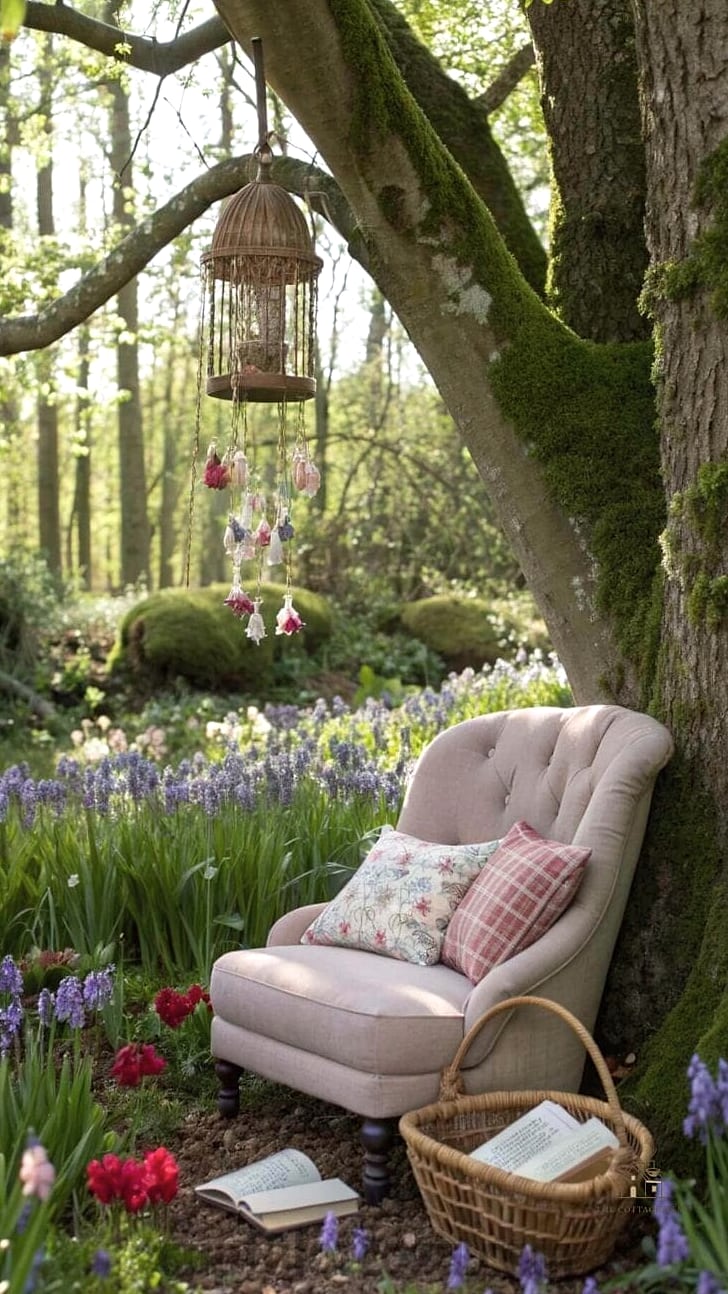
Tuck a small chair or a two-person bench into a quiet spot surrounded by tall plantings, almost like a little room within the garden. It gives you a reason to actually sit outside and enjoy everything you’ve planted.
A small side table for your coffee or a book makes it feel even more intentional. Adding a simple overhead arbor with climbing vines creates natural shade too.
Use Terra Cotta Pots for Container Gardening
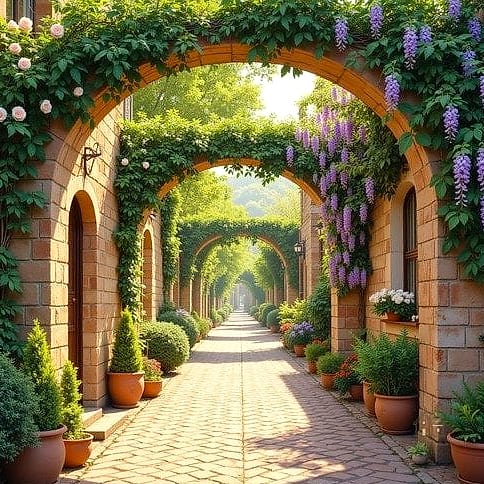
Not every plant needs to go in the ground. Terra cotta pots clustered near a doorway or along a patio edge bring in seasonal color without committing to a permanent bed.
Geraniums, trailing ivy, and pansies all do well in containers and give you the flexibility to switch things up each season. Terra cotta also ages beautifully, picking up that chalky, weathered look over time.
Create a Wildflower Meadow Patch
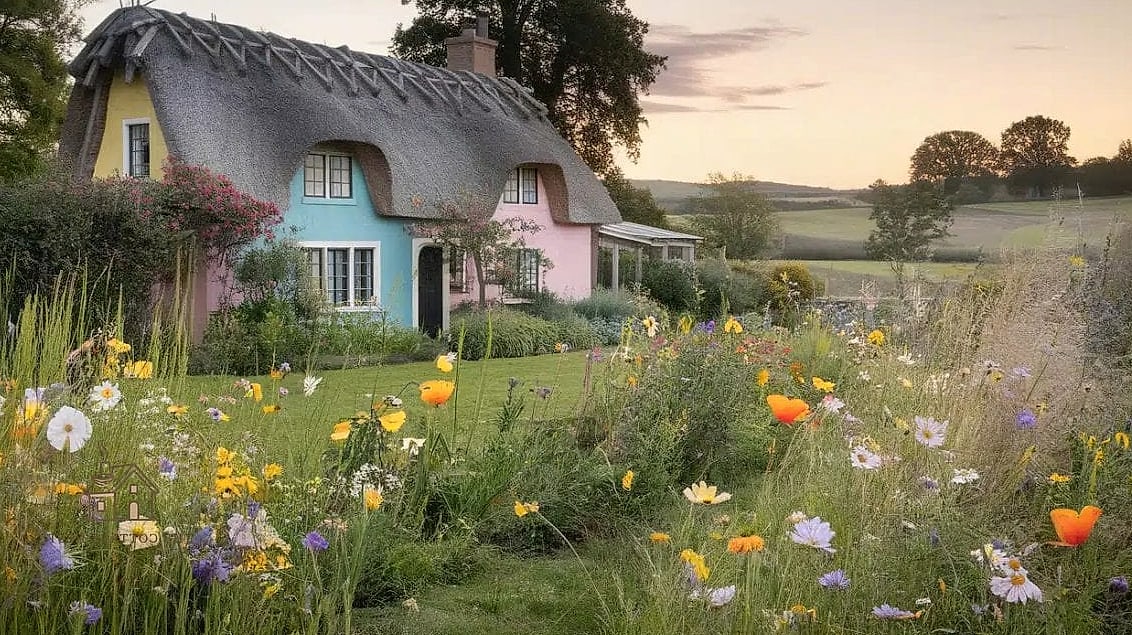
If you’ve got some extra space, setting aside a section for a wildflower meadow gives you that effortlessly wild English countryside look. Poppies, cornflowers, and daisies mixed together create a naturalistic, low-fuss display.
This is a great option if you’re trying to cut down on mowing or want to support local pollinators. Just mow it down once at the end of the season to help it reseed for next year.
Add Ivy or Climbing Hydrangea to Stone Walls

If your garden has any stone or brick walls, letting ivy or climbing hydrangea creep up them adds instant old-world charm. The green against the aged stone is a classic pairing you see in gardens across the English countryside.
Climbing hydrangea takes a little longer to establish than ivy but won’t damage mortar the way ivy sometimes can. Either way, it softens hard surfaces beautifully.
Plant a Mixed Perennial Border Along the Fence
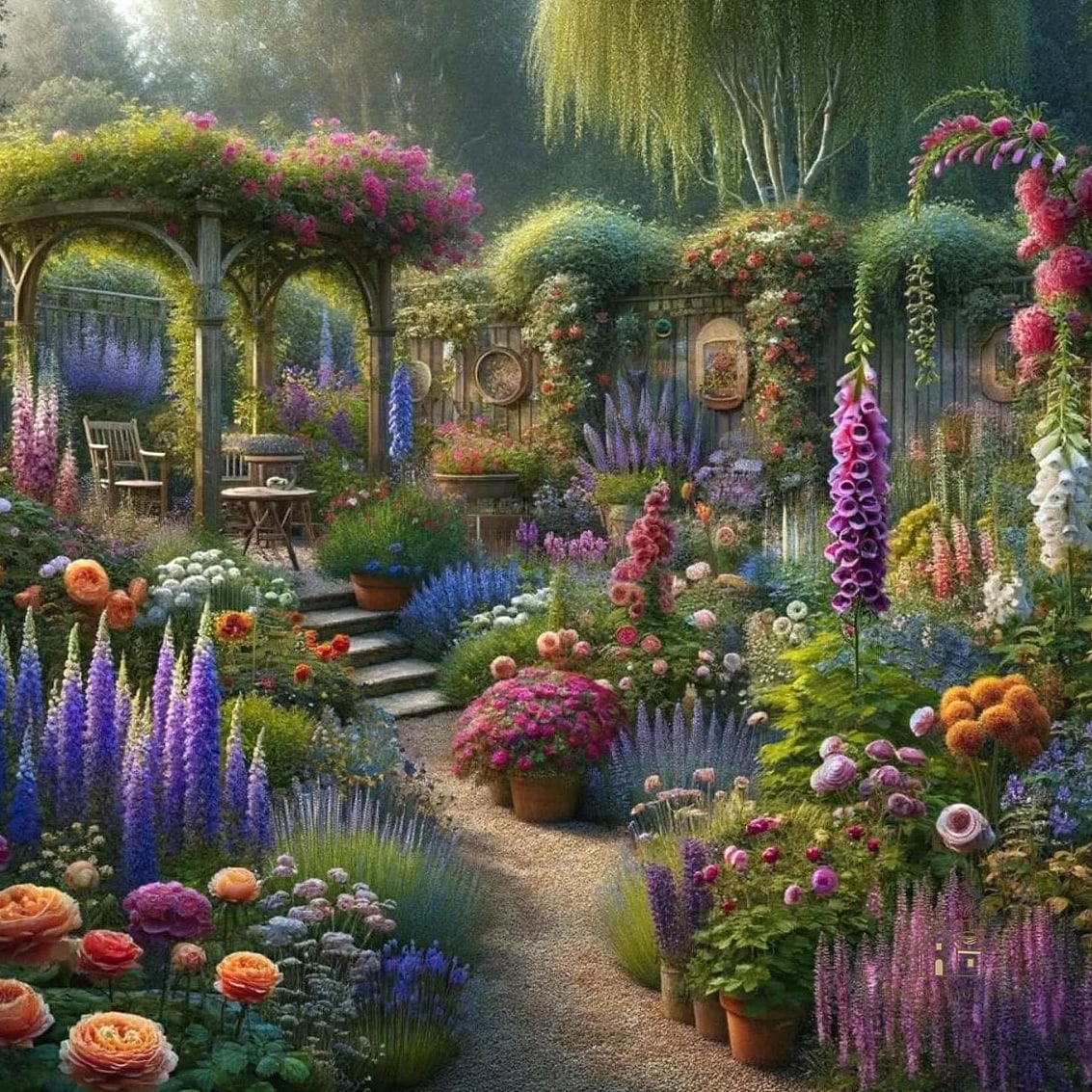
Instead of leaving a fence line bare, fill it with a mixed border of perennials at varying heights. This softens the boundary of your yard and makes the whole space feel more enclosed and intimate, which is very much part of the English garden feel.
Combine roses, catmint, salvia, and ornamental grasses for a border that changes throughout the season. It’s a great way to add impact without redesigning your entire yard.
Add a Vintage-Style Garden Gate
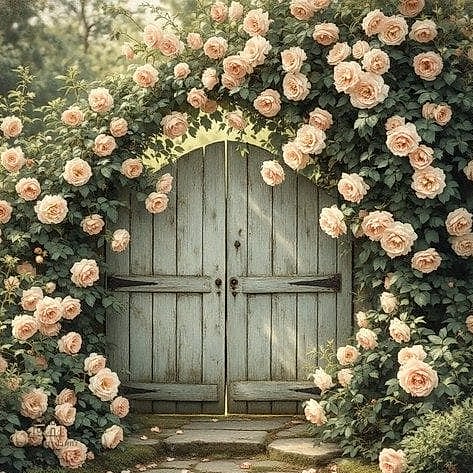
A weathered wooden or wrought iron gate at the entrance to your garden sets the tone before visitors even see the plants. Painted a soft sage green or left to weather naturally, it signals that something charming is waiting on the other side.
Pair it with climbing roses or clematis trained along the top for extra romance. Even a simple gate can make a big difference in how the whole garden reads.
Use Soft, Muted Color Palettes Throughout
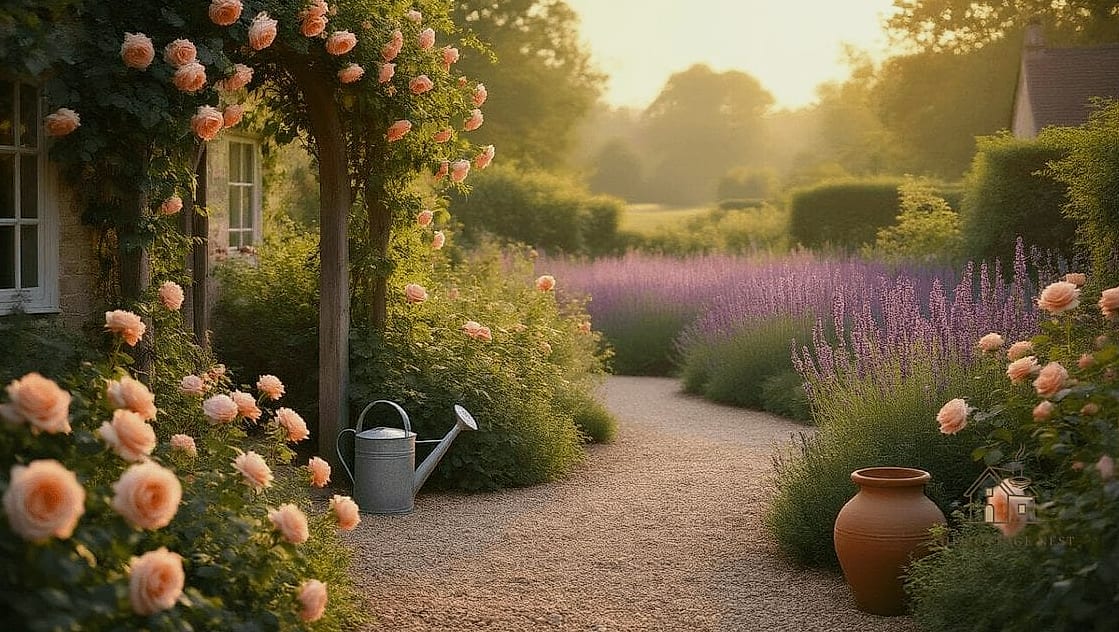
English gardens tend to favor soft pinks, purples, blues, and whites over bright, saturated colors. This muted palette is part of why the whole space feels so calm and romantic rather than bold or modern.
When planning new beds, try grouping flowers in these softer tones rather than mixing in a lot of hot colors like orange or red. It creates a much more cohesive, old-world look overall.
Bringing an English garden to life doesn’t happen overnight, and honestly, that’s part of the charm. These gardens are meant to feel like they’ve grown and changed over years, not been installed in a weekend. Start with a few ideas from this list that fit your space and budget, and let the rest fill in as you go. Before long, you’ll have that soft, romantic, slightly wild garden you’ve been dreaming about.