50 Amazing Garden Trellis Ideas on a Budget

- Simple Wood Ladder Trellis
- PVC Pipe Grid Trellis
- Bamboo Teepee Trellis
- Repurposed Bed Frame Trellis
- Wire Mesh Panel Trellis
- Branch and Twig Trellis
- Fan-Shaped Trellis
- Recycled Pallet Trellis
- String Trellis for Climbing Vines
- Obelisk Trellis from Scrap Wood
- Chicken Wire Fence Trellis
- Cattle Panel Arch Trellis
- Espalier Wire Trellis for Fruit Trees
- Tomato Cage Trellis Upgrade
- Copper Pipe Trellis
- Repurposed Window Frame Trellis
- Willow Branch Woven Trellis
- A-Frame Trellis for Vining Vegetables
- Reclaimed Fence Picket Trellis
- Garden Netting Trellis
- Vertical Pallet Herb and Vine Trellis
- Rebar Trellis Grid
- Trellis Made from Old Garden Tools
- Fishing Line Trellis for Delicate Vines
- Corner Trellis for Small Spaces
- Hula Hoop Trellis
- Salvaged Door Trellis
- Simple Stake and String Grid
- Repurposed Crib Trellis
- Trellis Made from Wine Bottle Crates
- Diamond Lattice Wall Trellis
- Trellis from an Old Bike Wheel
- Vertical Pipe and Twine Trellis
- Trellis Built into a Raised Bed
- Repurposed Crib Rail Arch Trellis
- Twine and Nail Wall Trellis
- Trellis from Leftover Deck Balusters
- Garden Screen Trellis for Privacy
- Wine Barrel Ring Trellis
- Simple Two-Post Wire Trellis
- Trellis Made from an Old Screen Door
- Teepee Trellis from Fallen Branches
- Trellis from Repurposed Shutters
- Concrete Reinforcing Mesh Trellis
- Ladder Trellis for Vertical Herb Gardens
- Trellis from PVC and Netting Combo
- Trellis Built from Old Curtain Rods
- Grid Trellis from Leftover Furring Strips
- Trellis from Repurposed Baby Gate
- Freestanding A-Frame Ladder Trellis
50 Amazing Garden Trellis Ideas on a Budget
If your garden fence is looking a little bare, or your climbing plants are flopping around with nowhere to go, a trellis might be the easiest fix you haven’t tried yet. The good news is you don’t need a fat wallet to get one that looks great. With some scrap wood, leftover branches, or a trip to the hardware store’s clearance bin, you can build something that rivals the pricey garden center versions. Here are 50 garden trellis ideas that won’t wreck your budget.
Simple Wood Ladder Trellis
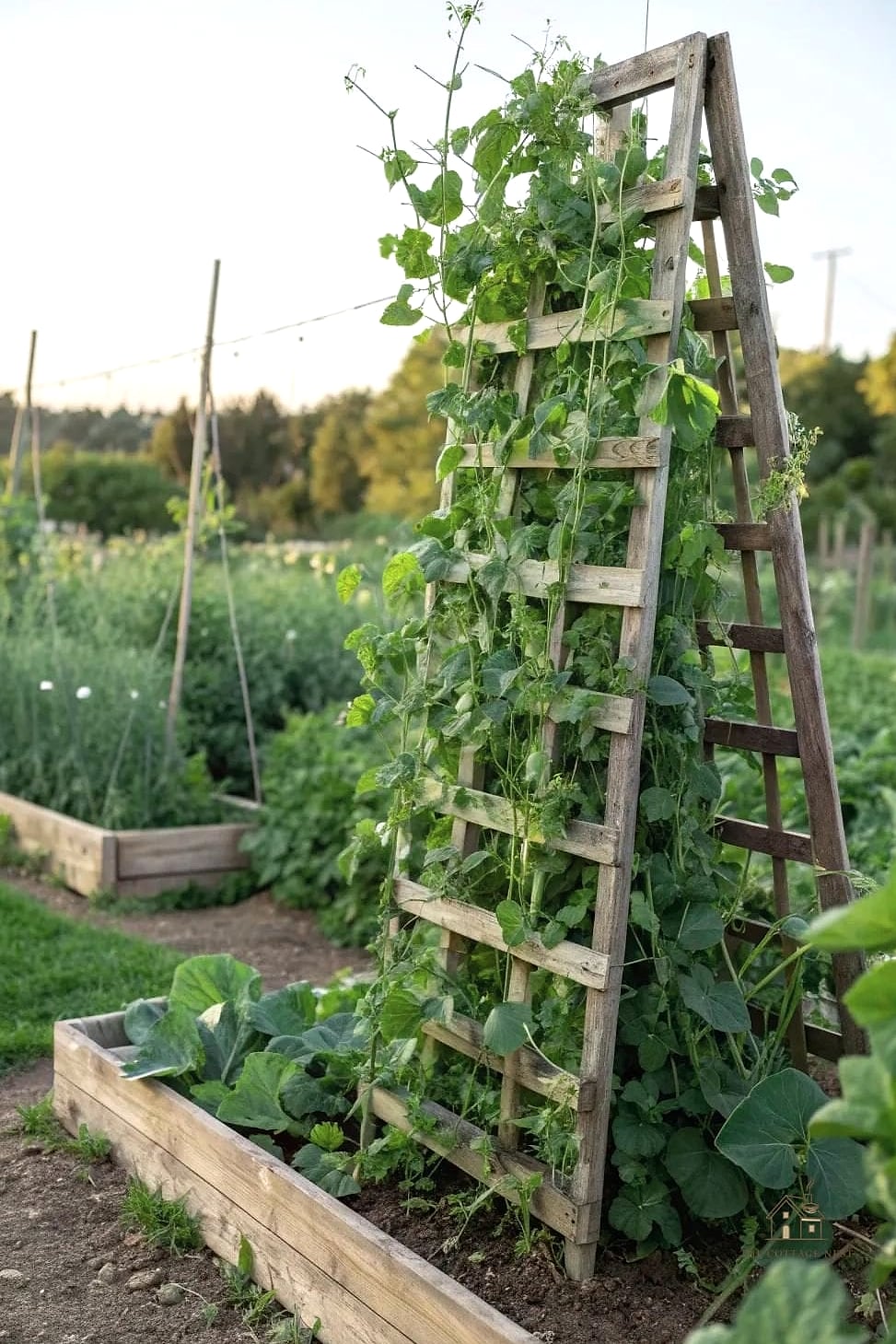
An old wooden ladder leaned against a wall instantly becomes a rustic trellis for climbing vines. It works best in cottage-style or farmhouse gardens where a weathered look is part of the charm. Gardeners love it because it costs nothing if you already have an old ladder sitting in the garage. Just prop it against a fence or wall and let sweet peas or morning glories take over the rungs.
PVC Pipe Grid Trellis
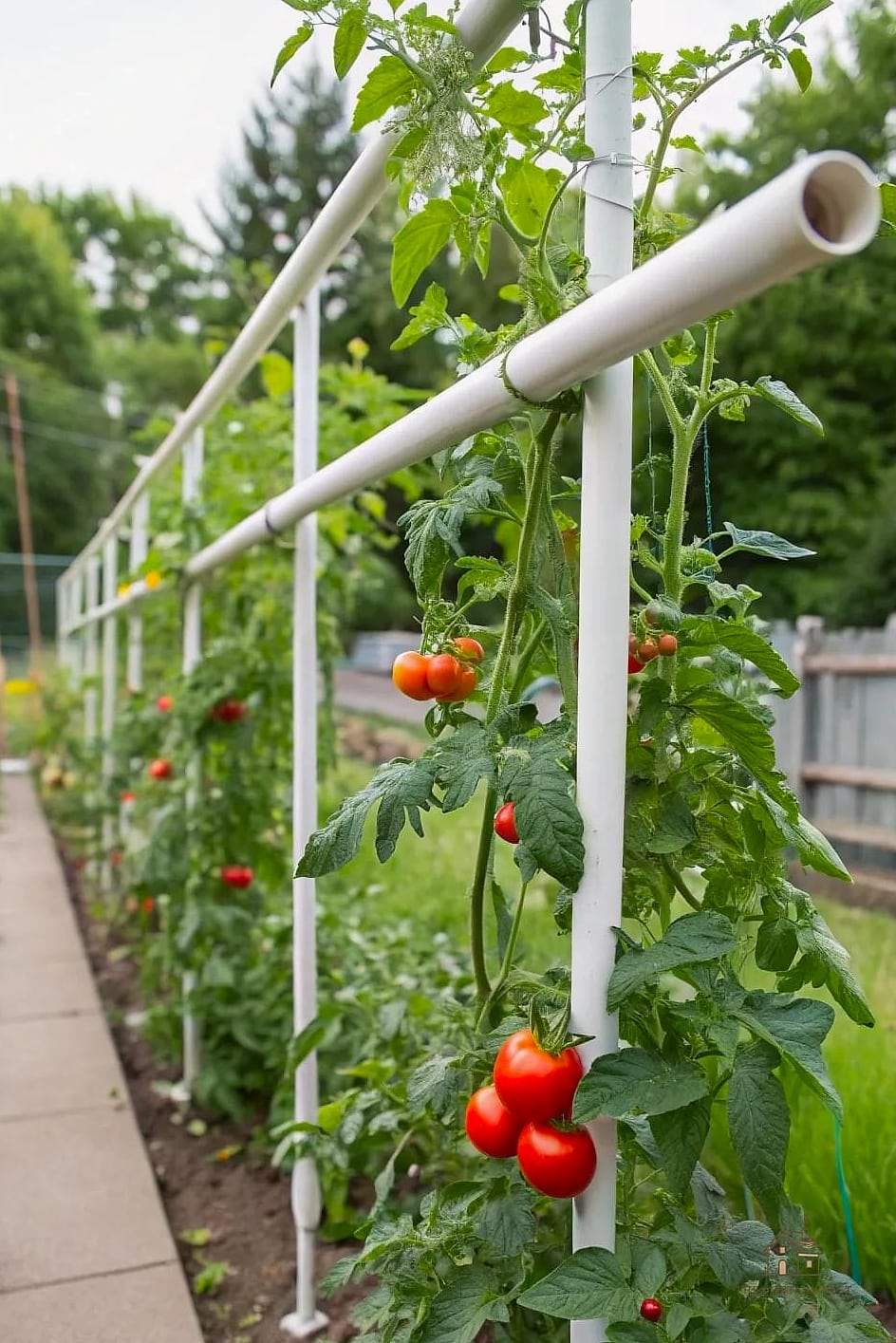
PVC pipe is cheap, lightweight, and easy to cut into any shape you want. Glue a few pieces into a simple grid pattern and you’ve got a sturdy support for cucumbers or beans. This works great in vegetable gardens where function matters more than looks. Paint it a dark green or black to help it blend into the greenery instead of standing out.
Bamboo Teepee Trellis
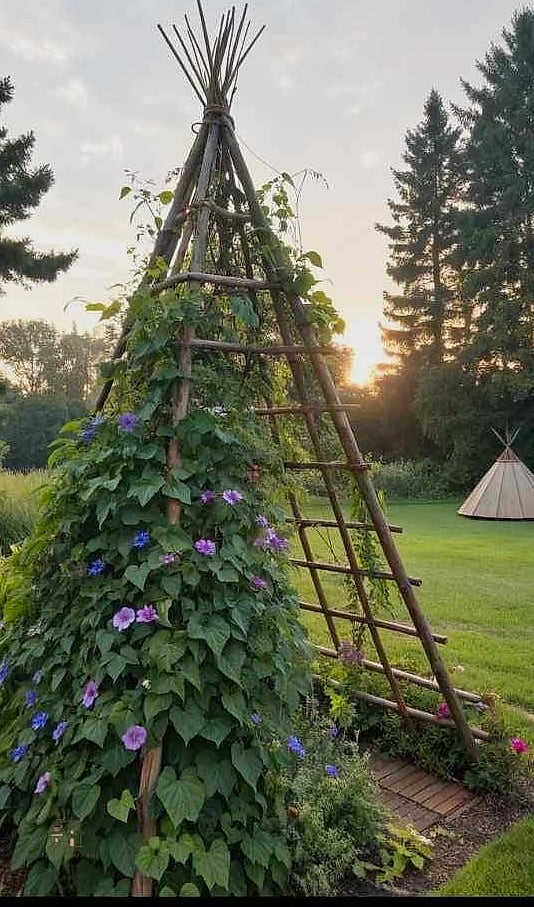
Three or four bamboo stakes tied together at the top form a classic teepee shape that’s perfect for pole beans and peas. It’s one of the cheapest options out there since bamboo stakes cost just a few dollars for a bundle. This style works especially well in raised beds or small backyard plots. Kids love watching the vines climb up and eventually cover the whole structure.
Repurposed Bed Frame Trellis
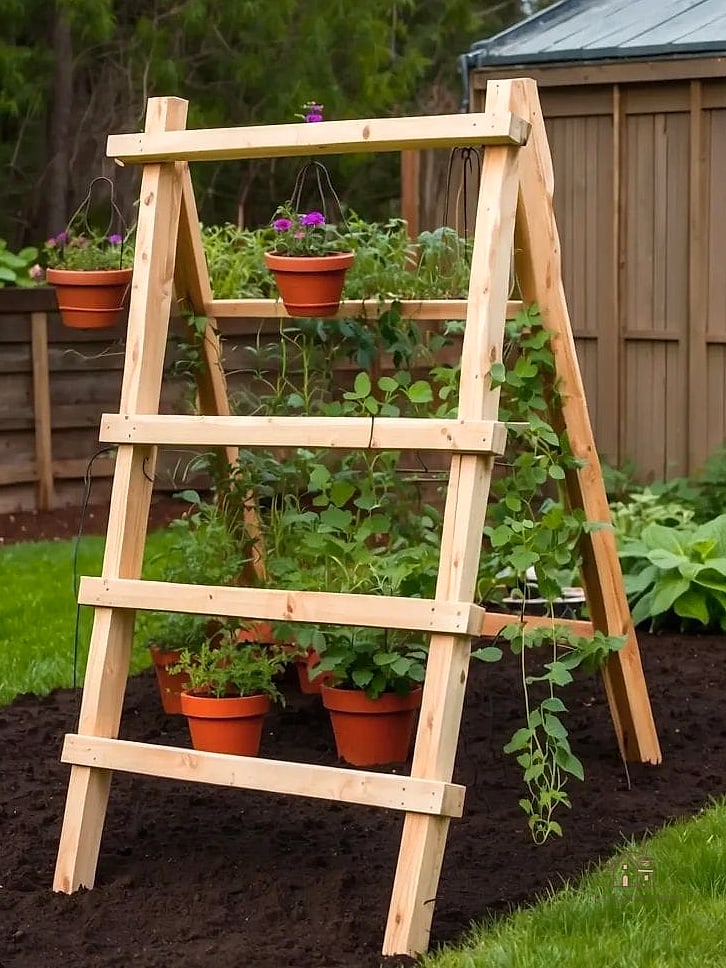
An old metal or wood bed frame headboard makes a surprisingly elegant trellis when propped up in a flower bed. The scrollwork on vintage frames adds a decorative touch you can’t easily replicate with new materials. This is a great option if you’re into thrifting or already have one collecting dust. Climbing roses look especially romantic weaving through the metal spindles.
Wire Mesh Panel Trellis
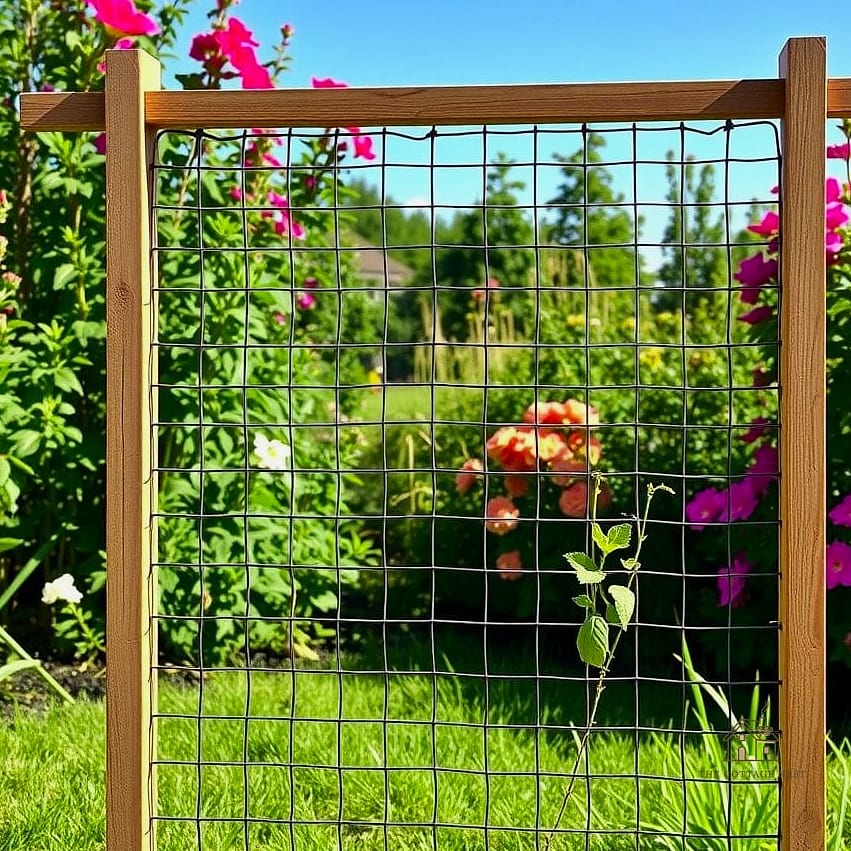
A remnant piece of wire mesh or hardware cloth stretched across a wooden frame creates a nearly invisible support system. It’s ideal for lightweight climbers like clematis or nasturtiums that need something to grip onto. The clean, minimal look works well in modern or minimalist garden designs. You can usually find mesh scraps for cheap at hardware stores or reuse fencing material.
Branch and Twig Trellis
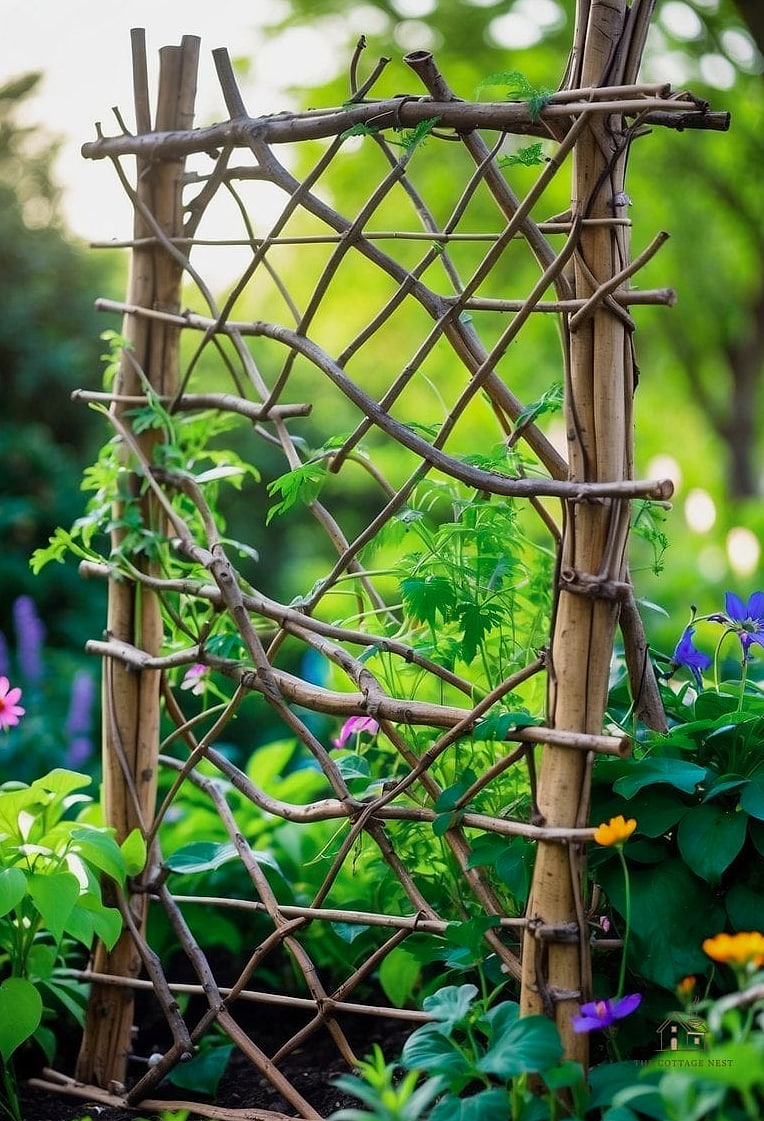
Fallen branches from your yard can be lashed together with twine to form a natural, organic-looking trellis. This is about as budget-friendly as it gets since the materials are literally free. It fits beautifully into woodland or naturalistic garden styles. The irregular shapes give each one a one-of-a-kind look that store-bought trellises just can’t match.
Fan-Shaped Trellis
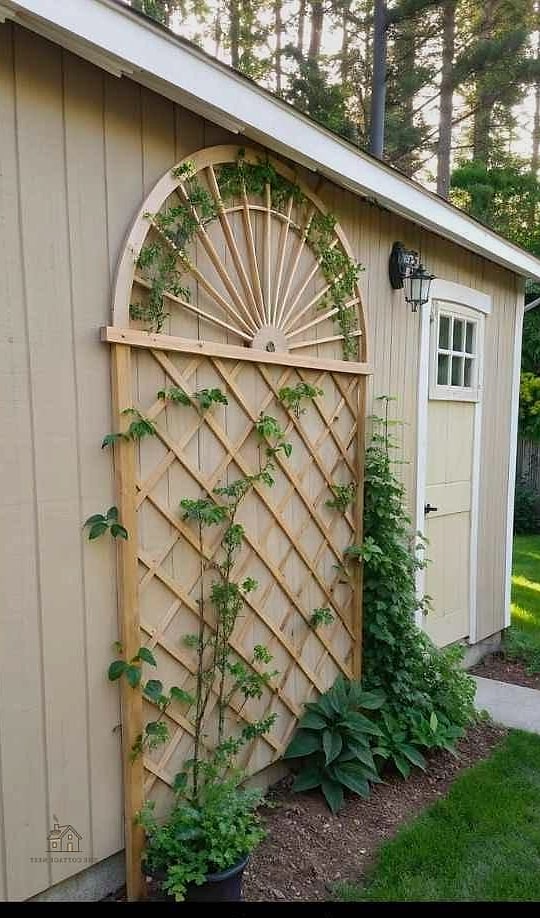
A fan trellis spreads climbing plants out in a wide arc, which looks especially nice against a flat wall or fence. You can build one from thin wood strips or even leftover lattice scraps. This shape works well for espaliered fruit trees or flowering vines that need room to spread. It’s a step up in visual interest from a plain rectangular grid without costing much more.
Recycled Pallet Trellis
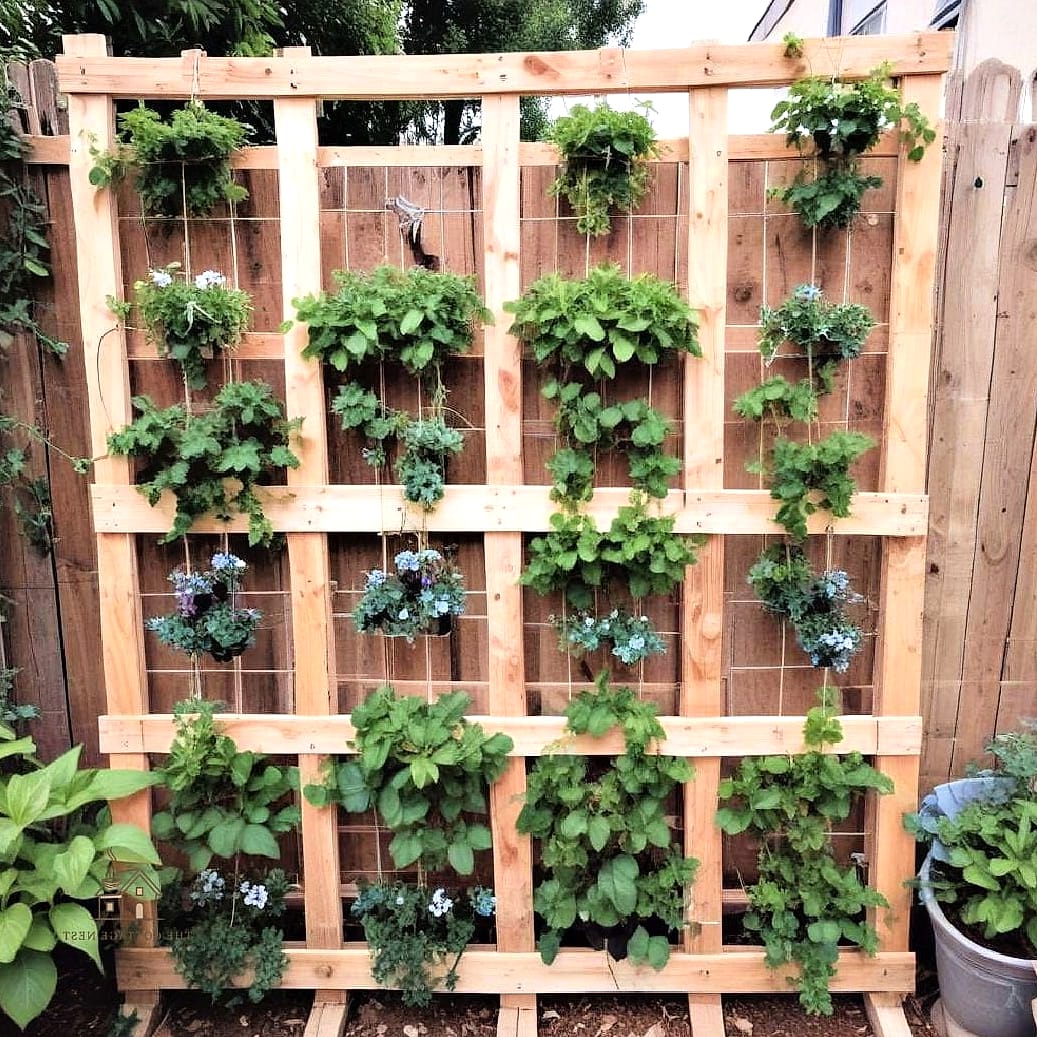
Wood pallets are often free if you know where to look, and they make a sturdy vertical support once you remove a few slats. This is a favorite among DIY gardeners because it doubles as both trellis and planter if you leave some slats intact. It works well leaning against a garage or shed wall. Sand it down and add a coat of stain for a more polished look.
String Trellis for Climbing Vines
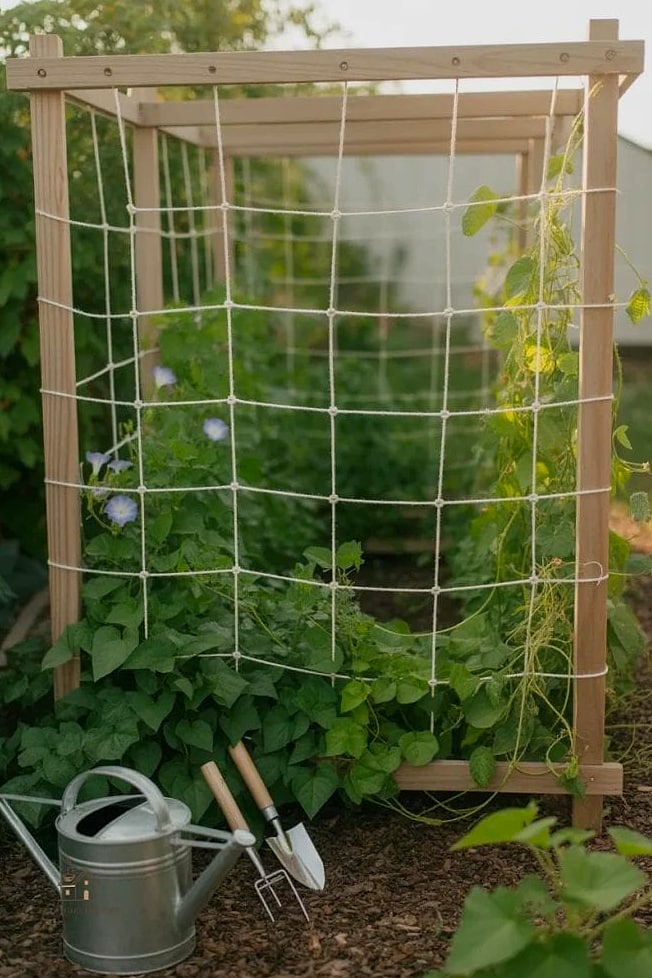
Sometimes all you need is heavy-duty garden twine strung vertically between two horizontal supports. This is the cheapest trellis option on this list, and it works surprisingly well for lightweight climbers like sweet peas. It’s especially useful in small spaces where a bulky structure would feel out of place. Just replace the string each season since it tends to wear out.
Obelisk Trellis from Scrap Wood
An obelisk shape gives your garden a bit of vertical drama and works as a focal point even before plants fill it in. You can build one from thin furring strips nailed into a pyramid shape. This style is popular in cottage gardens and English-inspired landscapes. Clematis and climbing roses look particularly stunning trained up an obelisk.
Chicken Wire Fence Trellis
Chicken wire stapled to wooden posts creates an affordable, functional trellis that’s perfect for vegetable gardens. It’s especially good for peas and beans that have small tendrils needing something thin to grip. This option holds up well season after season with minimal maintenance. Paint the wood posts a fun color to dress it up if you want more personality.
Cattle Panel Arch Trellis
A cattle panel bent into an arch shape creates a dramatic tunnel effect for climbing squash or gourds. While the panel itself costs a bit more than other options, it lasts for years, making it a smart long-term investment. This works best in larger gardens with room for a walkway underneath. It’s a favorite among vegetable gardeners who want both function and a bit of garden drama.
Espalier Wire Trellis for Fruit Trees
Training fruit trees flat against a wall using horizontal wires is called espalier, and it’s a space-saving trick that’s been used for centuries. All you need are eye hooks and galvanized wire strung between them. This works especially well against sunny south-facing walls where trees get plenty of light. Apples and pears are classic choices for this technique.
Tomato Cage Trellis Upgrade
Regular tomato cages get a budget upgrade when you connect several together or add extra wire for taller plants. This modification helps heavier tomato varieties that tend to topple standard cages. It’s a simple fix if you already own cages but need more support. Just twist extra wire between cages to create a stronger, taller structure.
Copper Pipe Trellis
Copper pipe fittings glued together form a trellis with an unexpectedly upscale look, even though the pipe itself is inexpensive per foot. The warm metallic tone develops a natural patina over time that many gardeners find appealing. This works well in modern or contemporary garden designs. It pairs nicely with climbing plants that have delicate flowers, like clematis or jasmine.
Repurposed Window Frame Trellis
An old window frame with the glass removed makes a charming trellis when the wooden grid is left intact. This is a favorite for cottage and vintage-style gardens looking for character pieces. You can often find old frames at salvage yards for next to nothing. Lean it against a wall or mount it flat for climbing vines to weave through.
Willow Branch Woven Trellis
Flexible willow branches can be woven together into an organic, basket-like trellis shape. This technique, sometimes called wattle, has been used in gardens for centuries and costs nothing if you have access to willow or similar flexible branches. It works beautifully in naturalistic or English garden styles. The woven texture adds visual interest even before any plants climb it.
A-Frame Trellis for Vining Vegetables
An A-frame trellis made from two wood panels hinged at the top creates a tent shape that’s perfect for heavy vining vegetables like squash or melons. This design lets fruit hang down through the openings, which keeps them off the ground and reduces rot. It’s a practical choice for raised bed gardens with limited space. Fold it flat for easy storage during the off-season.
Reclaimed Fence Picket Trellis
Extra fence pickets nailed into a diamond lattice pattern make a trellis that costs almost nothing if you’re replacing an old fence anyway. This rustic option fits naturally into farmhouse or country-style gardens. The wood weathers nicely over time, developing a silvery gray patina. It’s sturdy enough for heavier climbers like grapevines with proper support posts.
Garden Netting Trellis
Plastic garden netting is one of the most affordable trellis materials you can buy, often costing just a few dollars per roll. It works great for lightweight annual vines like morning glories or cucumbers. This option is especially popular with renters since it’s easy to remove without leaving marks. Just stretch it between two posts or attach it to an existing fence.
Vertical Pallet Herb and Vine Trellis
Standing a pallet upright and lining it with landscape fabric creates pockets for both trailing herbs and climbing plants. This dual-purpose design maximizes a small footprint, which is great for patio or balcony gardens. It’s budget-friendly since pallets are often free from local businesses. Mint, thyme, and small climbing flowers all do well in this setup.
Rebar Trellis Grid
Bent rebar welded or wired into a grid pattern makes an industrial-looking trellis that holds up to heavy plants like grapes. It costs more upfront than wood but lasts for decades without rotting or warping. This style suits modern gardens with a slightly edgier aesthetic. The rusted patina that develops over time actually adds character rather than looking neglected.
Trellis Made from Old Garden Tools
Rakes, hoes, and other old tools with long handles can be arranged into a fan or fence-style trellis for a quirky garden feature. This is more decorative than functional, but it works surprisingly well for lightweight climbers. It’s a fun way to repurpose tools that no longer work well for their original job. Garden sheds and flea markets are great places to find cheap tools for this project.
Fishing Line Trellis for Delicate Vines
Clear fishing line strung between hooks creates an almost invisible support system for delicate climbers like sweet peas or morning glories. This works well when you want the plant to be the star without any visible structure competing for attention. It’s an inexpensive option since a spool of fishing line lasts a long time. Just check it periodically since the line can be easy to lose track of.
Corner Trellis for Small Spaces
A trellis built specifically to fit into a corner maximizes vertical growing space without taking up valuable garden real estate. This is perfect for small yards, balconies, or tight side-yard areas. You can build one from simple wood strips angled to fit the corner shape. Climbing herbs or compact flowering vines work particularly well in this tucked-away spot.
Hula Hoop Trellis
An old hula hoop suspended above a planter creates a fun circular support for trailing plants to climb up and over. This unconventional option costs nothing if you have one sitting unused. It works especially well for lightweight vines in container gardens. Kids often get a kick out of this quirky, playful design.
Salvaged Door Trellis
An old door with the panels removed, leaving just the frame, makes an eye-catching vertical trellis when propped against a wall. This works well in eclectic or vintage-inspired gardens looking for a statement piece. Salvage yards often sell old doors cheap since they’re hard to reuse elsewhere. Climbing hydrangea or wisteria can eventually cover the whole frame for a dramatic effect.
Simple Stake and String Grid
Wooden stakes pounded into the ground with string crisscrossed between them create the most basic and cheapest trellis option available. This works great for temporary vegetable garden supports that you can take down each season. It’s especially useful for gardeners who like to rotate crops and garden layouts yearly. Just use biodegradable twine if you plan to till it under at season’s end.
Repurposed Crib Trellis
An old crib with the mattress removed has a built-in slat pattern that works perfectly as a trellis when stood on its end. This is a great option if you have one left over from when your kids were babies. The evenly spaced slats give climbing plants plenty of grip points. It fits nicely into a nursery-themed memory garden if that sentimental angle appeals to you.
Trellis Made from Wine Bottle Crates
Wooden wine crates stacked and secured together create a lattice-like structure that doubles as a trellis and small shelving unit. Wineries or liquor stores sometimes give these away for free or sell them cheap. This works well in casual, eclectic gardens with a collected-over-time feel. Small flowering vines look great weaving through the gaps between crates.
Diamond Lattice Wall Trellis
Thin wood strips arranged in a diamond pattern and nailed to a frame create the classic lattice look found in garden centers, but for a fraction of the cost. This style works well mounted flat against a house or garage wall. It’s especially popular for supporting climbing hydrangea or ivy. Paint it white for a traditional look or leave it natural for something more rustic.
Trellis from an Old Bike Wheel
A bicycle wheel with the tire removed makes a whimsical circular trellis when mounted on a post. The spokes give climbing plants plenty to grab onto as they grow. This is a fun upcycling project if you have an old bike frame that’s otherwise heading to the scrap pile. It adds a playful, artistic touch to an otherwise ordinary garden bed.
Vertical Pipe and Twine Trellis
Two vertical pipes with twine strung horizontally between them at intervals create a simple, adjustable trellis system. This works especially well for training climbing roses or clematis in a controlled pattern. It’s affordable since pipe and twine are both low-cost materials. You can easily adjust the spacing as your plants grow taller each season.
Trellis Built into a Raised Bed
Attaching a simple wood or wire frame directly to the back of a raised garden bed keeps everything contained in one tidy structure. This is a smart space-saving option for small backyard vegetable gardens. It eliminates the need for separate posts since the bed itself provides the anchor. Cucumbers, peas, and pole beans all thrive with this built-in support.
Repurposed Crib Rail Arch Trellis
Two crib rails bent and joined at the top form a simple arch trellis perfect for a garden entryway. This project requires a bit more effort but costs nothing beyond what you already have. It works beautifully as a walkway feature covered in climbing roses or jasmine. The arch shape adds a storybook quality that flat trellises just don’t offer.
Twine and Nail Wall Trellis
Nails hammered into a wood fence in a grid pattern, with twine strung between them, creates an incredibly cheap and adjustable trellis system. This works well for gardeners who like to experiment with different plant layouts each year. It’s especially popular for training climbing tomatoes against a sunny fence. Just replace the twine each season since it breaks down over time outdoors.
Trellis from Leftover Deck Balusters
Extra deck balusters from a home renovation project make a clean, uniform trellis when spaced evenly and attached to a frame. This option looks more polished than some rustic DIY versions while still costing little to nothing. It suits modern or transitional garden styles nicely. Climbing hydrangea and clematis both look great against the straight, even lines.
Garden Screen Trellis for Privacy
A taller trellis built from reclaimed wood slats can double as a privacy screen while supporting climbing plants at the same time. This two-in-one function makes it a smart choice for small urban yards or patios. It works especially well planted with fast-growing vines like Virginia creeper. Just make sure the frame is sturdy enough to handle wind resistance once it’s fully covered.
Wine Barrel Ring Trellis
The metal rings from an old wine barrel can be stacked and secured to a post to create a tiered circular trellis. This is a unique option if you can find a barrel that’s otherwise falling apart. It works well as a focal point trellis in the center of a garden bed. Small flowering vines look charming winding through the rings as they climb upward.
Simple Two-Post Wire Trellis
Two sturdy posts with horizontal wires strung between them at various heights make one of the most versatile and inexpensive trellis designs. This setup works for everything from grapevines to climbing roses depending on the spacing you choose. It’s a favorite among vineyard-style home gardens. Galvanized wire holds up well outdoors for years without rusting through.
Trellis Made from an Old Screen Door
A screen door with the mesh removed, leaving just the wood frame, functions similarly to a lattice trellis without any extra work. This is an easy find at salvage shops or sometimes curbside on trash day. It fits naturally into farmhouse or cottage garden styles. Morning glories and sweet peas both do well climbing through the frame’s natural grid.
Teepee Trellis from Fallen Branches
Similar to the bamboo version, this teepee style uses thicker fallen branches for a sturdier, more rustic look. It works well for heavier climbing vegetables like pole beans or small squash varieties. This is essentially a free project if you have trees that regularly drop branches in your yard. The natural bark texture gives it a more woodsy feel than smooth bamboo poles.
Trellis from Repurposed Shutters
Old wooden shutters with the louvers intact make an instant trellis when propped against a wall or fence. Thrift stores and salvage yards often sell these for just a few dollars each. This works especially well in cottage or coastal-style gardens looking for character. Climbing plants weave naturally through the angled slats without any extra modification needed.
Concrete Reinforcing Mesh Trellis
Leftover concrete reinforcing mesh, sometimes called remesh, makes a surprisingly effective and sturdy trellis for heavier climbing plants. It’s sold cheap at most hardware stores and can be cut to any size you need. This industrial material works well in modern gardens that lean into raw, unfinished textures. Grapevines and climbing squash both do well with this level of support.
Ladder Trellis for Vertical Herb Gardens
A shorter step ladder laid on its side against a wall creates horizontal shelves and climbing support in one compact structure. This works great for small patio gardens combining trailing herbs with light climbing plants. It’s an easy weekend project if you already have an old ladder around. Paint it a cheerful color to make it a real focal point.
Trellis from PVC and Netting Combo
Combining a PVC pipe frame with stretched garden netting gives you a lightweight, portable trellis that’s easy to move around as needed. This is ideal for container gardens or raised beds where flexibility matters. It costs very little since both materials are inexpensive at any hardware store. Cucumbers and small melons both do surprisingly well with this simple combination.
Trellis Built from Old Curtain Rods
Curtain rods mounted vertically with horizontal wire or twine strung between them create an unexpected but functional trellis option. This is a clever way to use rods left over from a home decor update. It works well for lightweight flowering vines that don’t need heavy-duty support. The slim profile keeps things looking tidy in smaller garden spaces.
Grid Trellis from Leftover Furring Strips
Furring strips are some of the cheapest wood you can buy, and arranged into a simple grid, they make a functional and attractive trellis. This is a great beginner DIY project since the strips are easy to cut and nail together. It works well for a wide range of climbing plants from beans to flowering vines. Stain or paint it to match your existing garden structures.
Trellis from Repurposed Baby Gate
An old wooden baby gate has a built-in slat pattern that transitions surprisingly well into a small trellis for container gardens. This is a smart way to reuse something that’s otherwise destined for the donation pile. It works especially well for compact spaces like balconies or small patios. Light climbing flowers or trailing herbs both suit this smaller-scale support.
Freestanding A-Frame Ladder Trellis
Two ladders leaned together and connected at the top form a freestanding A-frame that works well in open garden beds. This design doesn’t require any wall or fence support, making it flexible for placement anywhere in the yard. It’s particularly good for heavier vining vegetables that need a stable structure. Just make sure the base is wide enough to prevent tipping once plants fill in.
That’s 50 ways to add height, structure, and a little extra charm to your garden without spending much at all. The best part about budget trellis projects is that they usually look better with time, as weathering and growth soften any rough edges. Pick whichever style matches materials you already have lying around, and you’ll likely be surprised how professional the finished result looks.