30 Cozy Small Shared Kids Bedroom Ideas Worth Pinning
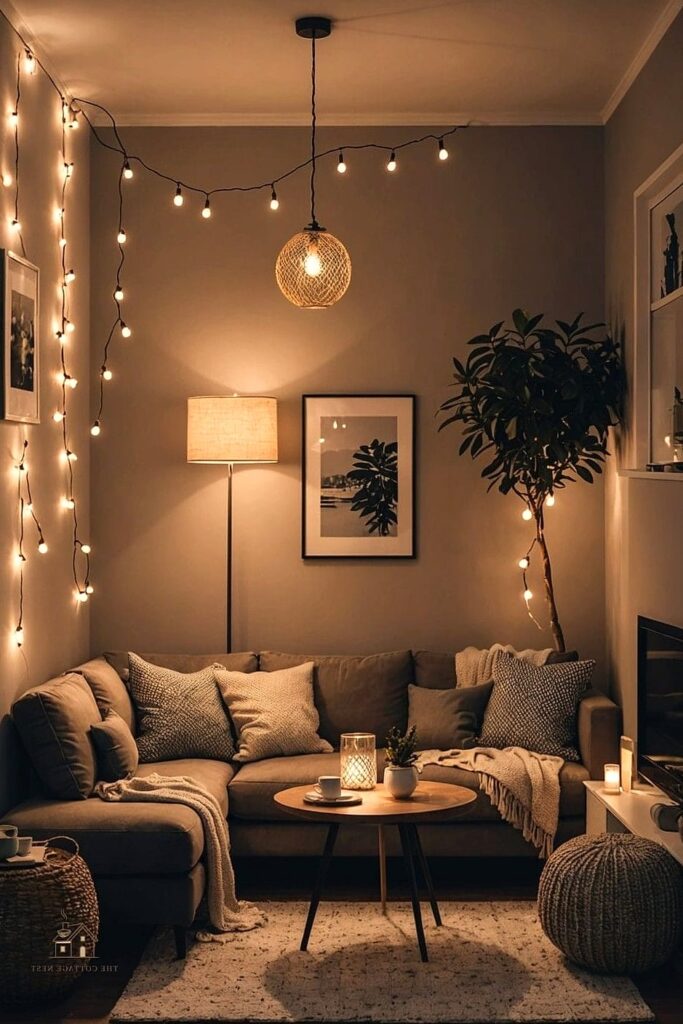
- Bunk Beds Against the Longest Wall
- Twin Beds in an L-Shape
- A Shared Reading Nook Between the Beds
- Color-Coded Bedding for Easy Identity
- Built-In Window Seat with Storage
- Loft Beds to Free Up Floor Space
- A Shared Gallery Wall Above the Beds
- Matching Nightstands with Individual Lamps
- Under-Bed Rolling Storage Bins
- A Curtain Divider for Semi-Privacy
- Wall-Mounted Shelves Instead of Dressers
- A Shared Desk with Two Chairs
- Ceiling-Mounted Canopy for a Cozy Touch
- A Toy Storage Bench at the Foot of the Bed
- Vertical Striped Wallpaper to Make Ceilings Feel Taller
- A Rolling Toy Cart Between the Beds
- Bunk Beds with Built-In Stairs and Drawers
- A Neutral Base Palette with Pops of Personal Color
- A Shared Chalkboard or Whiteboard Wall
- Matching Closet Organizers with Split Zones
- A Cozy Rug to Anchor the Shared Space
- Floating Nightstand Shelves for Tight Spaces
- A Shared Play Table Under the Window
- Personalized Name Signs Above Each Bed
- Layered Lighting for Function and Coziness
- A Fold-Down Wall Desk for Tiny Rooms
- Matching Storage Cubes with Fabric Bins
- A Ceiling Fan with Integrated Light
- Removable Wall Decals for Easy Updates
- A Cozy Corner Tent for Alone Time
30 Cozy Small Shared Kids Bedroom Ideas Worth Pinning
Sharing a bedroom doesn’t have to mean cramped, chaotic, or boring. With the right layout and a few smart storage tricks, a small shared kids bedroom can feel just as personal and cozy as separate rooms. I’ve pulled together thirty ideas that actually work in real homes, not just styled photo shoots, so you can pick and choose what fits your space and your kids’ personalities.
Bunk Beds Against the Longest Wall
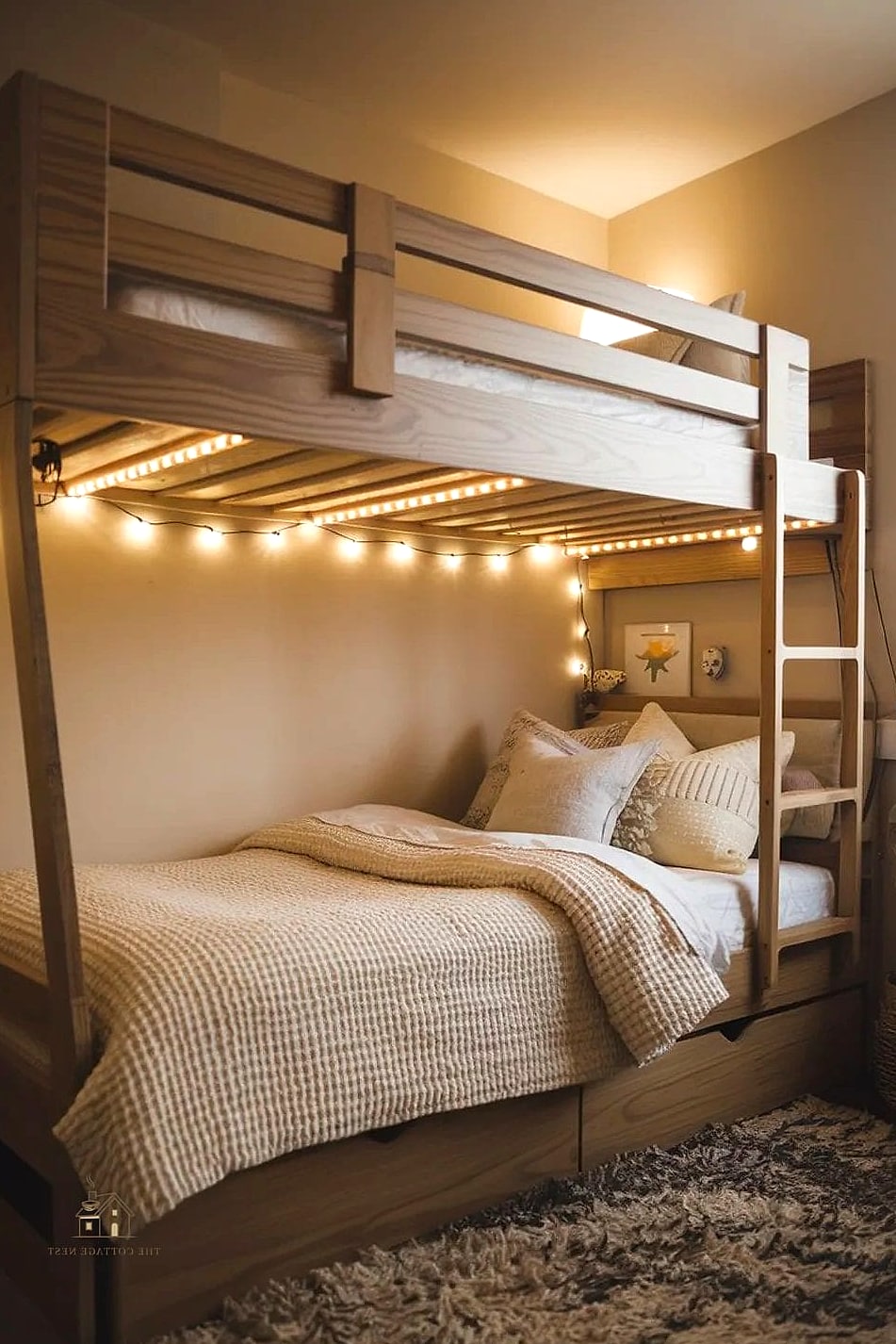
Pushing bunk beds against the longest wall frees up the rest of the floor for play, homework, or just walking around without stubbing a toe. This layout works especially well in rooms under 120 square feet where every inch matters. Go with a solid wood frame in a warm oak or painted white finish for a look that won’t feel dated in a few years.
Twin Beds in an L-Shape
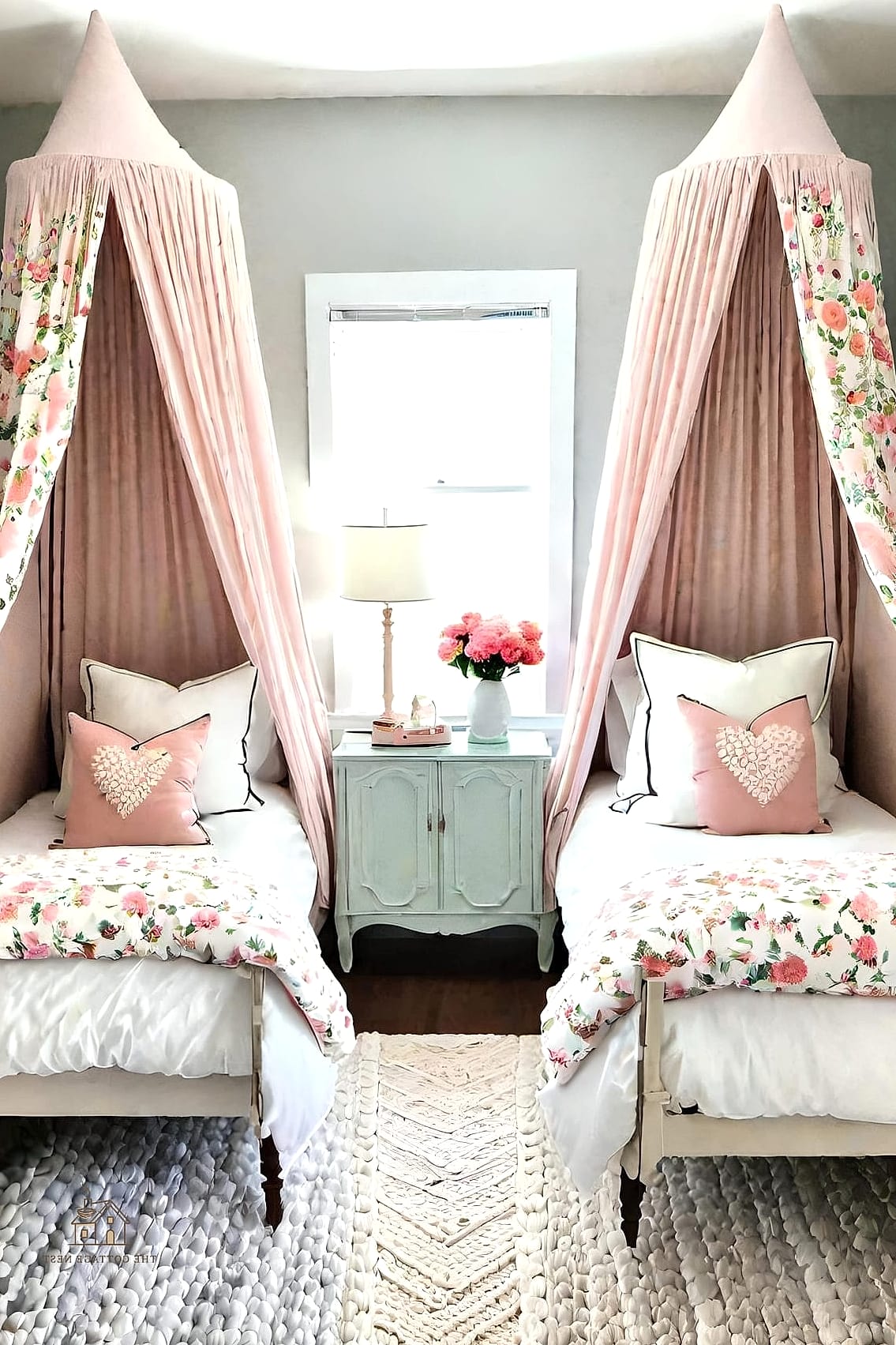
Instead of lining beds up parallel, try tucking them into an L-shape in two corners. It gives each kid a sense of their own little zone without needing a divider. This works great in square rooms and leaves a nice open pocket in the middle for a rug and some floor cushions.
A Shared Reading Nook Between the Beds
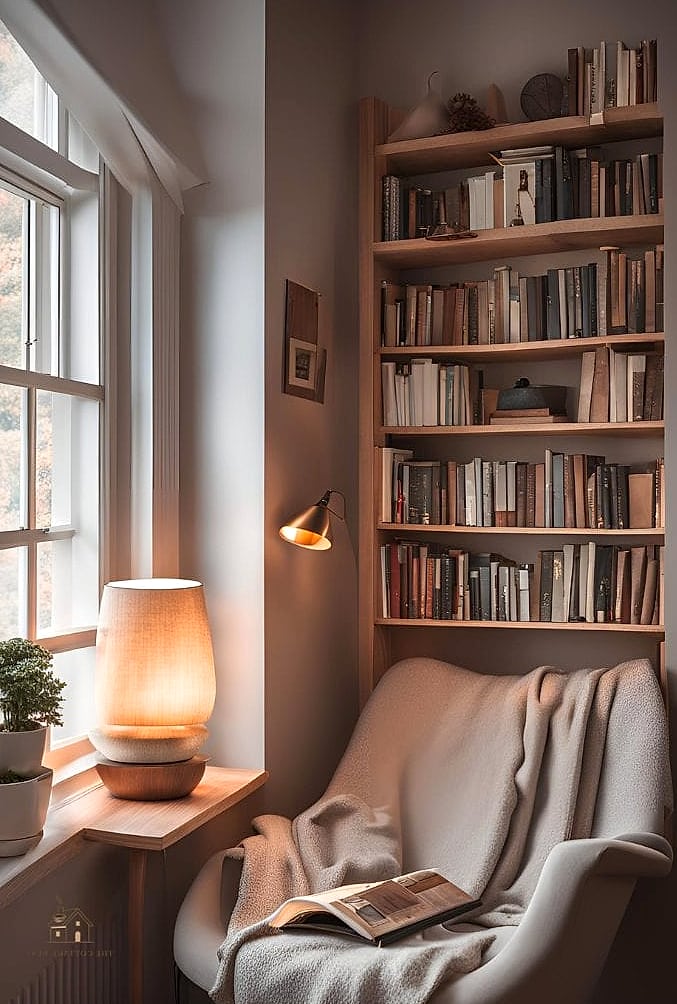
Carve out a small nook between two beds with a floor cushion, a soft throw, and a little bookshelf. It becomes neutral ground where both kids can hang out together. Battery-powered string lights overhead add just enough glow for evening story time without needing a lamp.
Color-Coded Bedding for Easy Identity
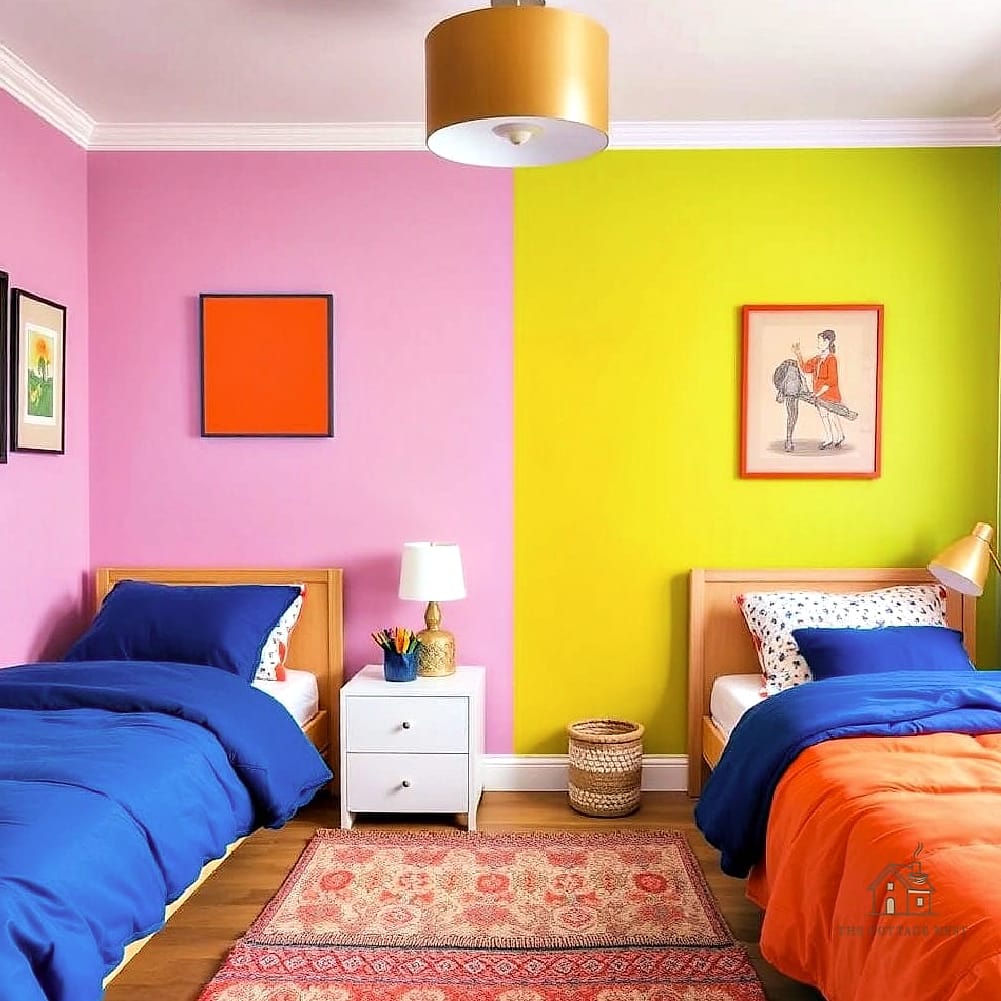
When kids share furniture and floor space, giving each one their own bedding color is a simple way to keep things feeling personal. One kid gets navy, the other gets a soft green, and suddenly there’s no arguing over whose blanket is whose. It’s a small touch, but it goes a long way toward keeping peace.
Built-In Window Seat with Storage
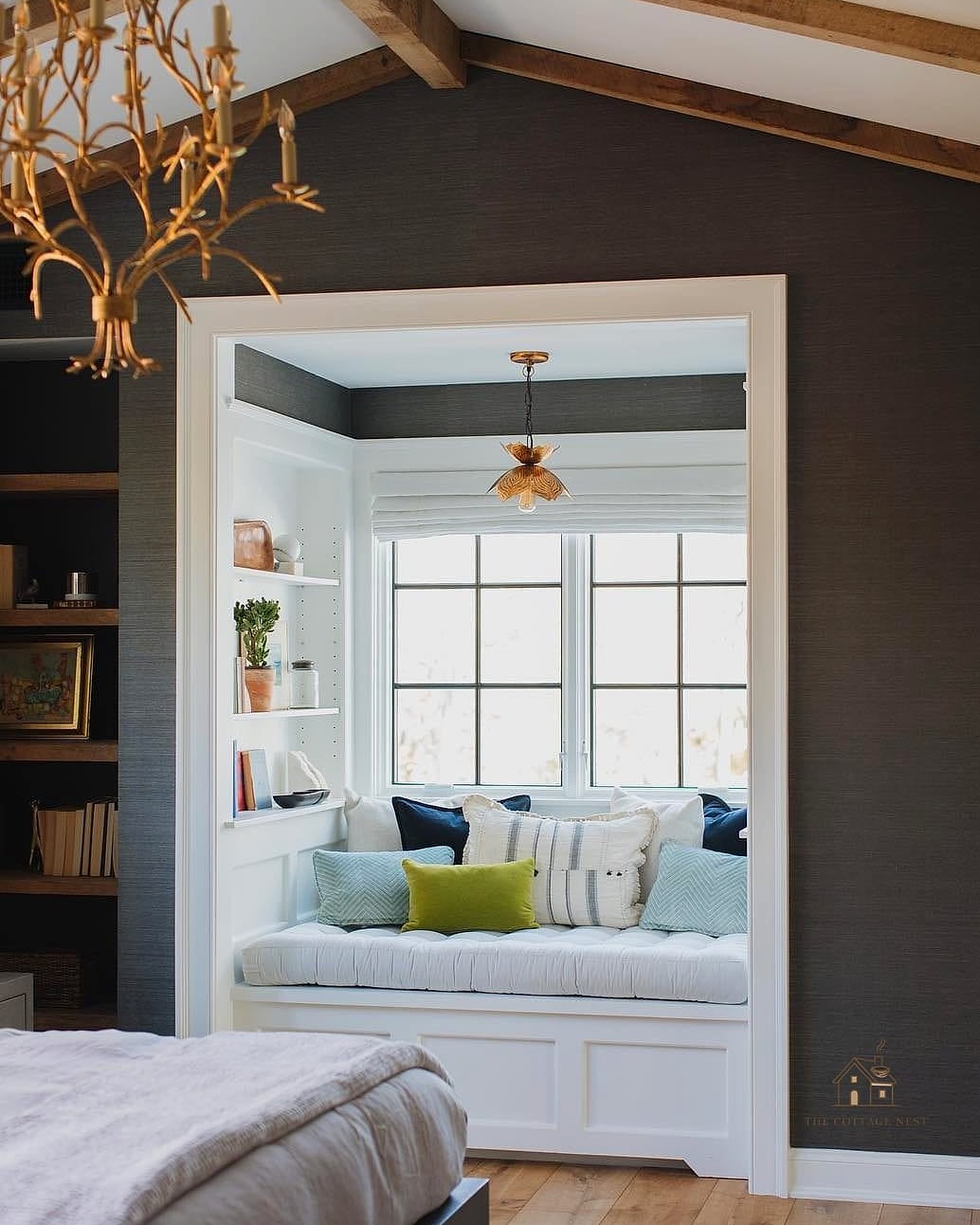
If your shared room has a window, a built-in bench with lift-up storage underneath is worth the investment. It adds a cozy spot to sit and read while hiding away extra blankets, out-of-season clothes, or toys. This is more of a weekend carpentry project, but there are also ready-made storage benches that get you most of the way there.
Loft Beds to Free Up Floor Space
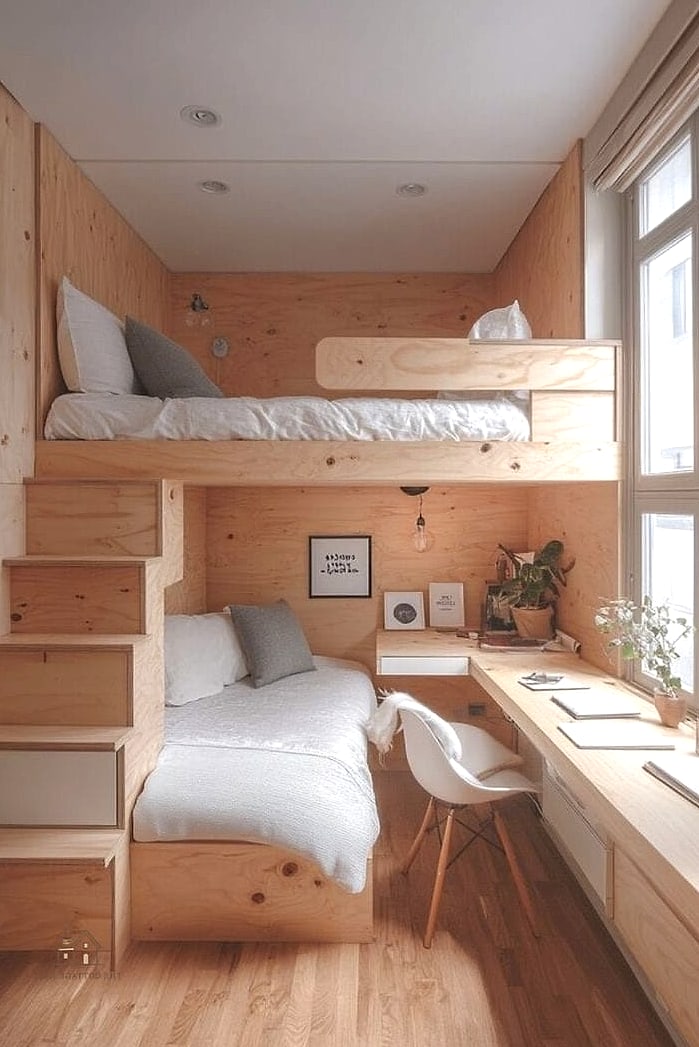
Loft beds lift the sleeping area up and open the whole floor below for a desk, a play area, or extra storage bins. This is one of the best small shared kids bedroom ideas for rooms with taller ceilings. Just make sure there’s a sturdy guardrail and a ladder that feels secure for younger climbers.
A Shared Gallery Wall Above the Beds
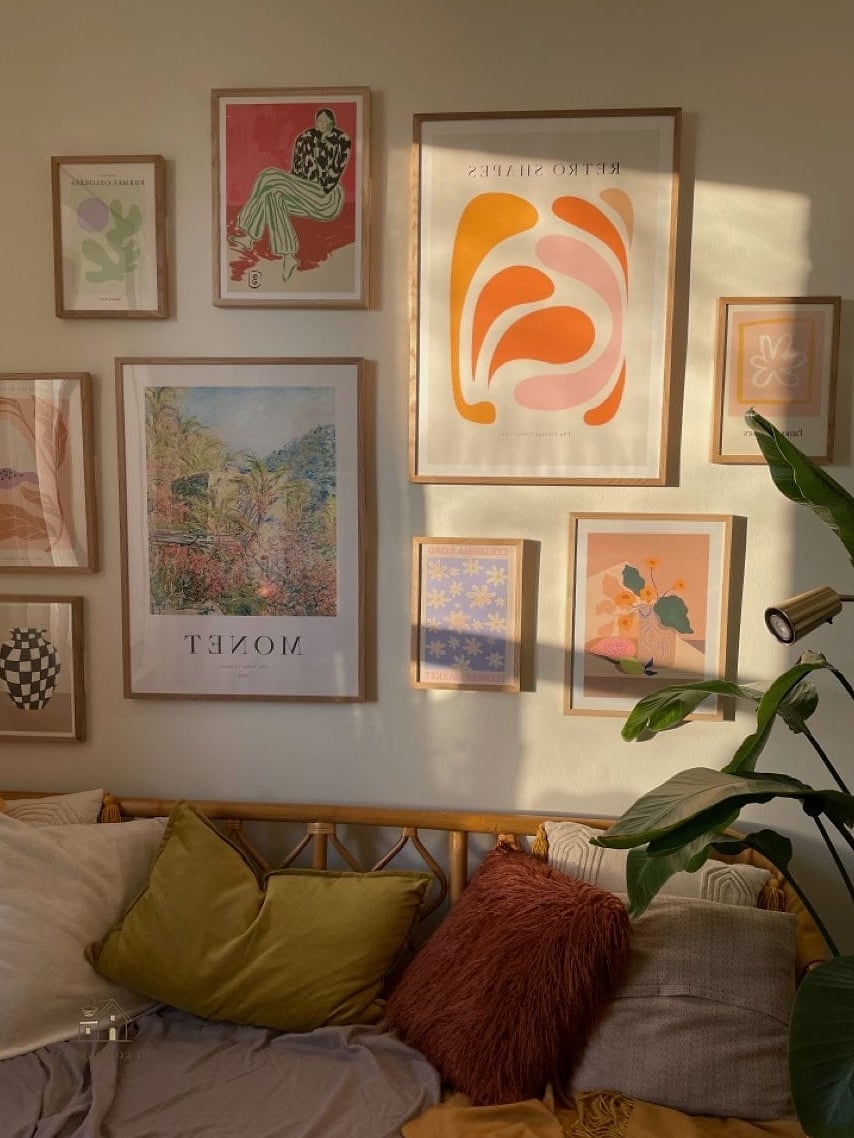
Instead of one kid’s art dominating the room, create a gallery wall that mixes both kids’ drawings, photos, and favorite prints. Use matching frames in different sizes so it looks intentional rather than cluttered. It’s a nice way to make the space feel like it belongs to both of them equally.
Matching Nightstands with Individual Lamps
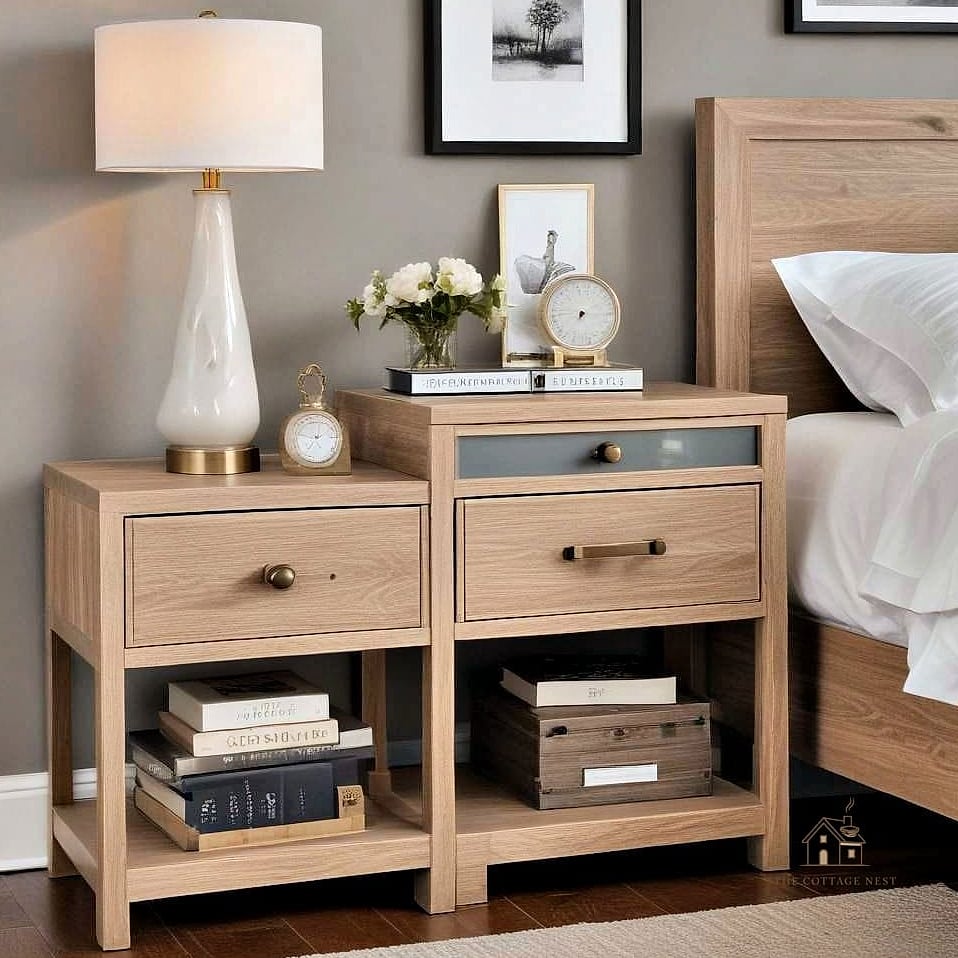
Two small matching nightstands, one on each side of the room, keep things visually balanced. Add a lamp to each so kids can read or wind down without disturbing the other if bedtimes differ slightly. Look for nightstands with a drawer plus open shelving so books and water cups have a home.
Under-Bed Rolling Storage Bins
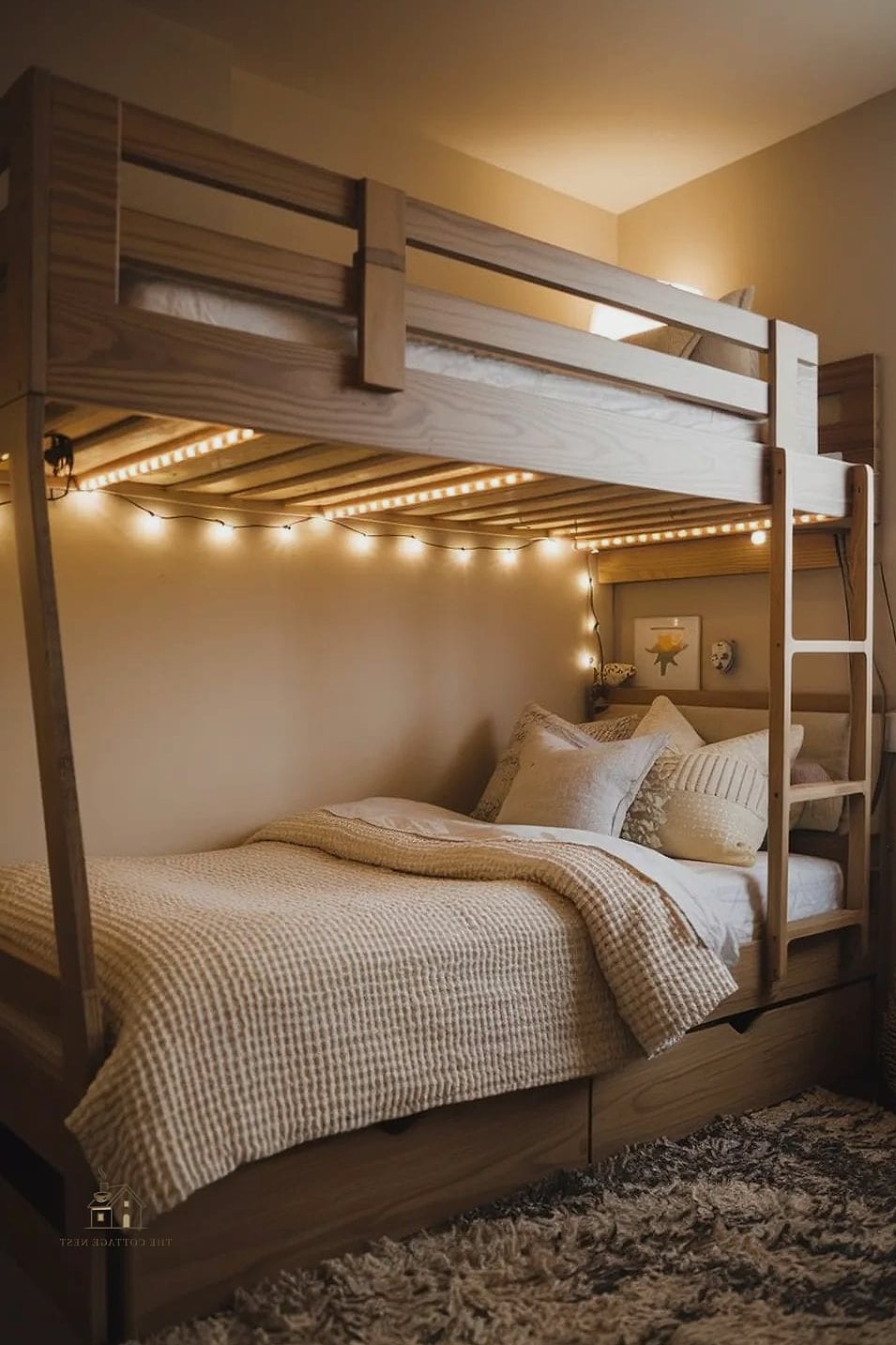
Under-bed storage is basically free square footage you’re already paying for. Rolling bins on wheels make it easy to pull out toys or extra bedding without crawling on the floor. Clear bins with labels help kids actually put things back where they belong, which, let’s be honest, is half the battle.
A Curtain Divider for Semi-Privacy
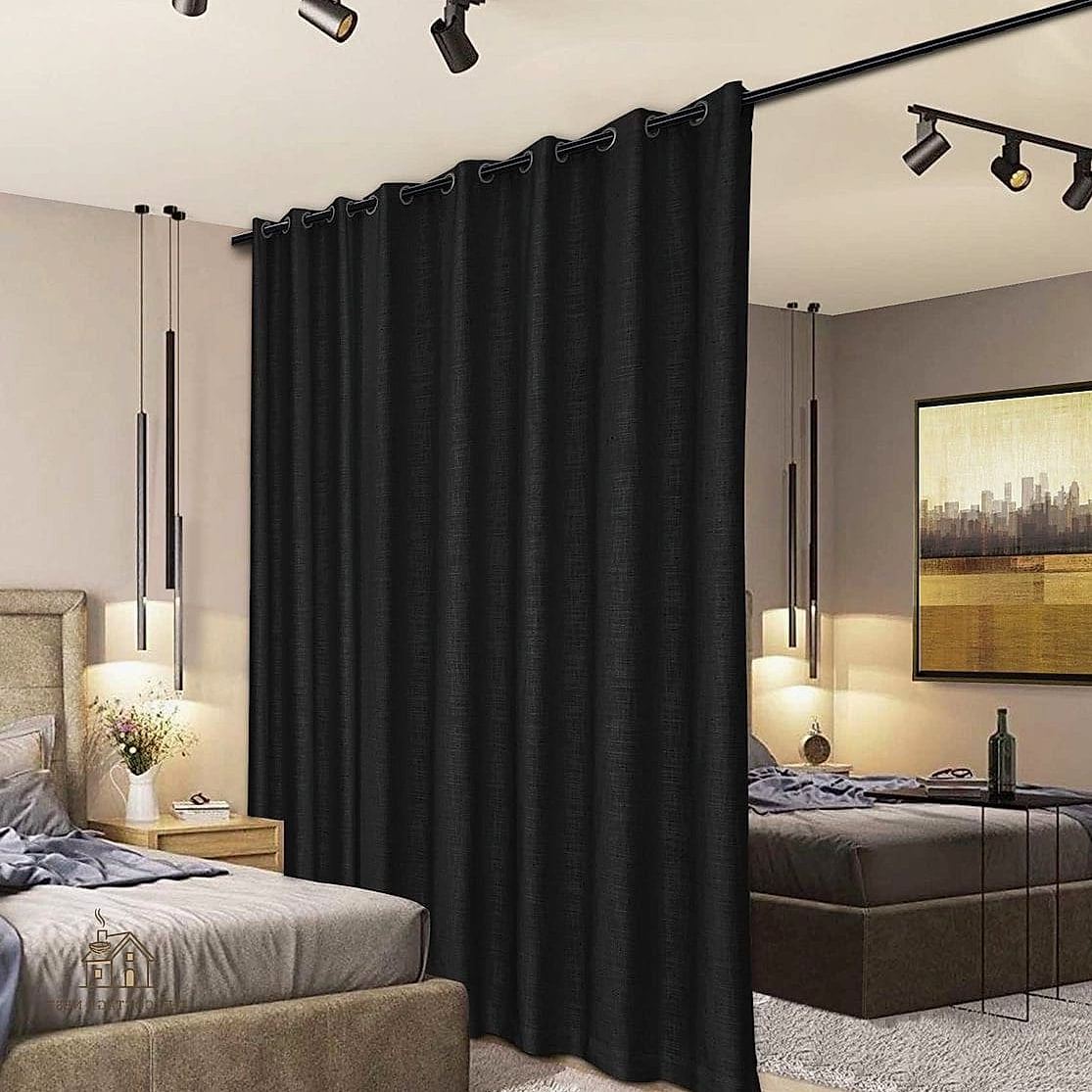
Hanging a simple ceiling-mounted curtain track between two sleeping areas gives each kid a bit of visual privacy without a permanent wall. It’s renter-friendly, easy to install, and can be pulled back during the day to keep the room feeling open. Choose a lightweight linen or cotton fabric so it doesn’t feel heavy in a small space.
Wall-Mounted Shelves Instead of Dressers
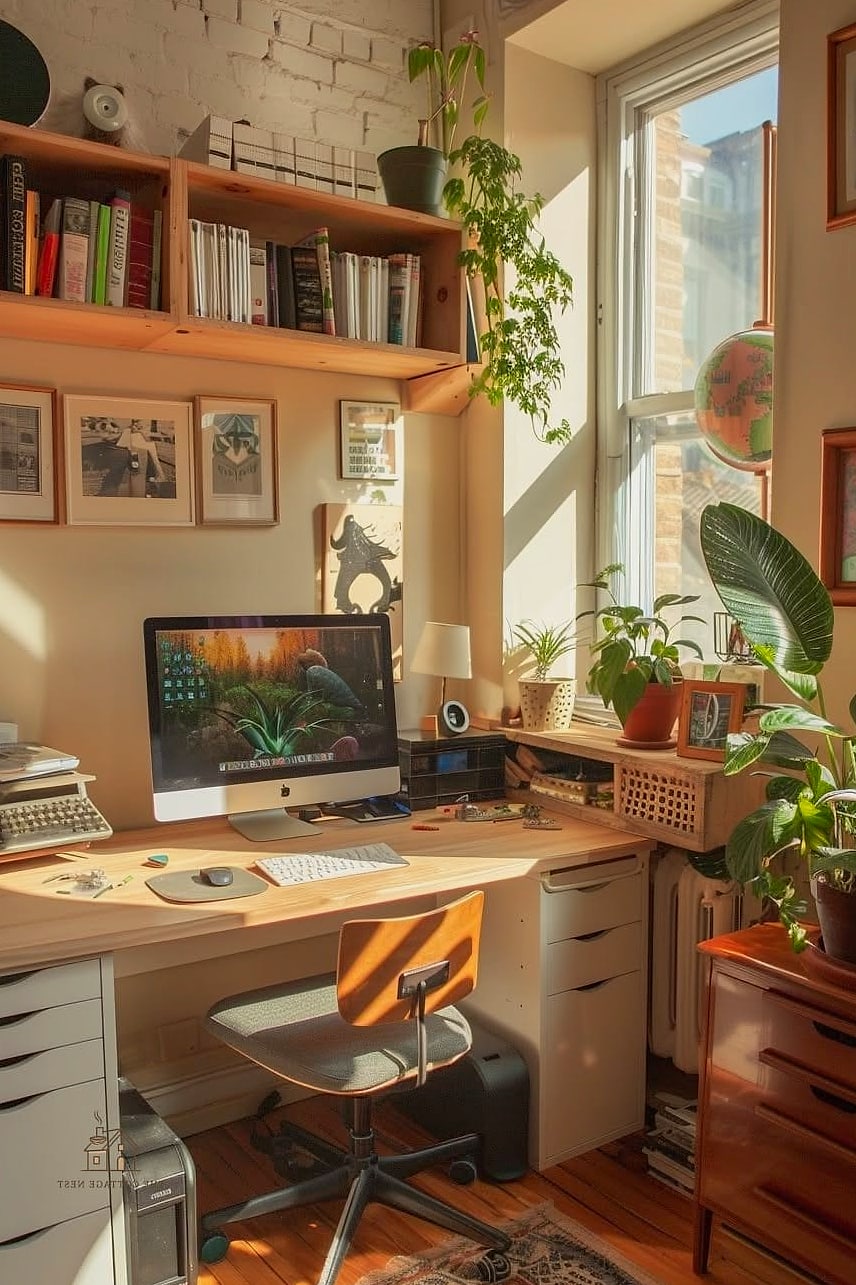
Swapping a bulky dresser for a few wall-mounted shelves can free up a surprising amount of floor space. Use the shelves for folded clothes in baskets, books, and a rotating display of favorite toys. This works particularly well in narrow rooms where floor space is at a premium.
A Shared Desk with Two Chairs
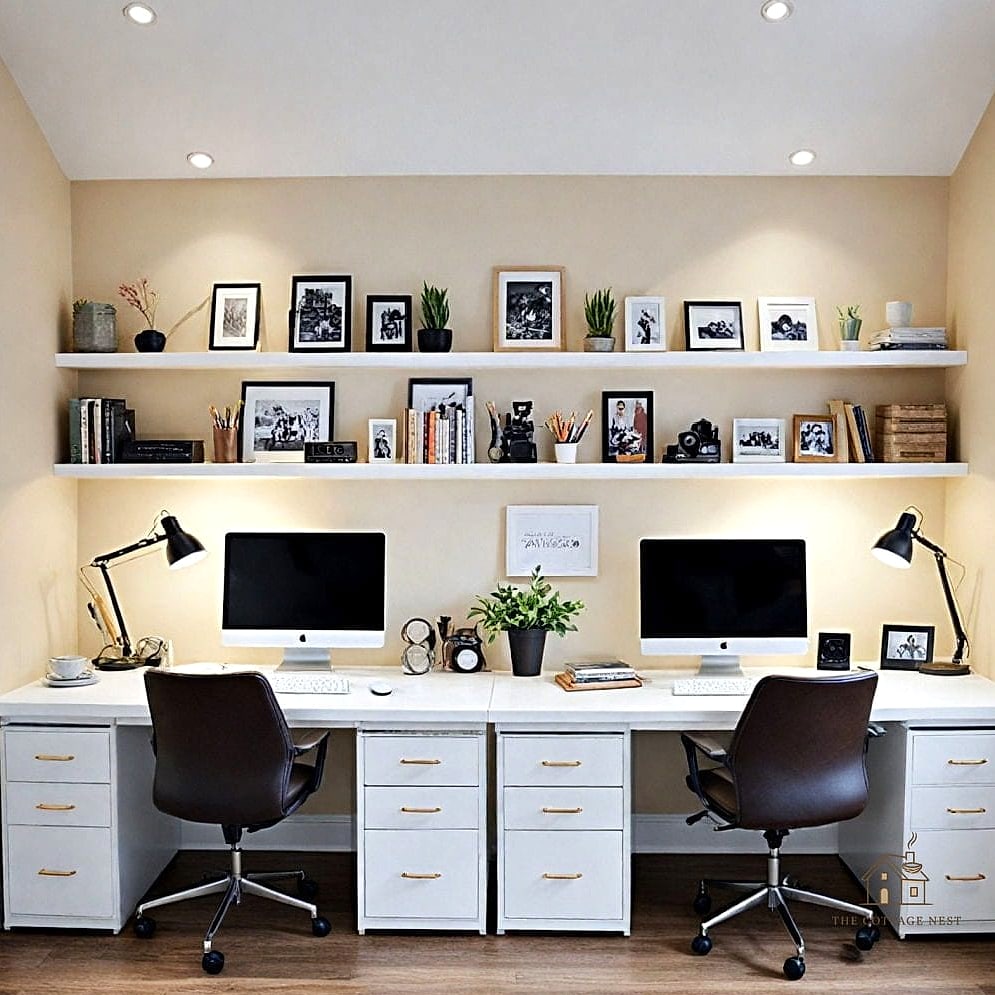
If your kids do homework in their room, a long shared desk against one wall beats two separate desks eating up floor space. Add a divider or a simple piece of framed corkboard down the middle so each kid has their own defined area. Two chairs in the same style but different colors keep it cohesive while still letting personality show.
Ceiling-Mounted Canopy for a Cozy Touch
A simple fabric canopy mounted above one or both beds adds instant coziness without taking up any floor space. It’s an easy DIY with a curtain rod, some fabric, and basic hardware. Kids tend to love the little tent-like feeling it creates over their sleeping spot.
A Toy Storage Bench at the Foot of the Bed
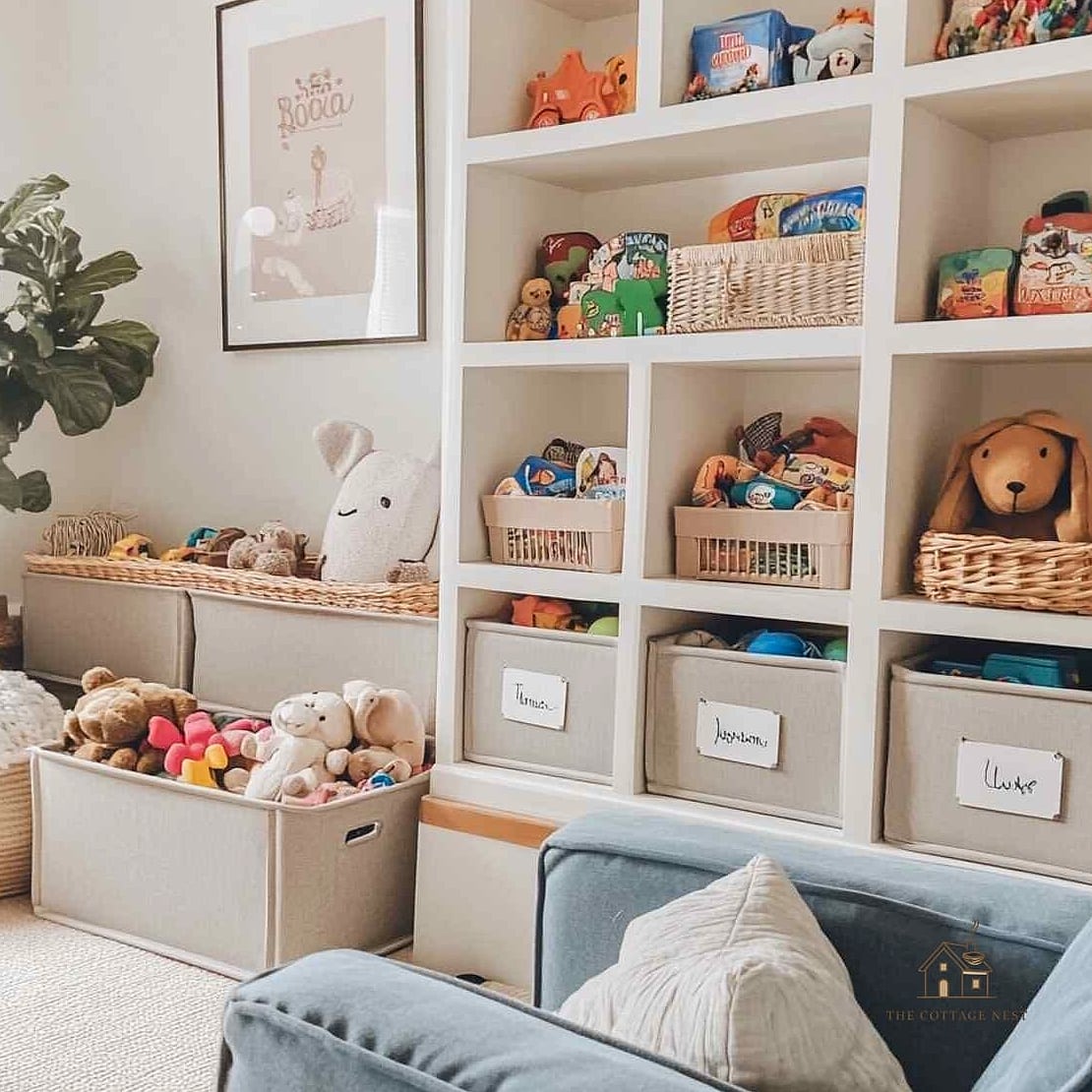
A storage bench at the foot of each bed doubles as extra seating and a spot to stash toys, stuffed animals, or extra pillows. Look for one with a soft cushioned top so it’s comfortable to sit on too. This is a practical pick for rooms where closet space is already maxed out.
Vertical Striped Wallpaper to Make Ceilings Feel Taller
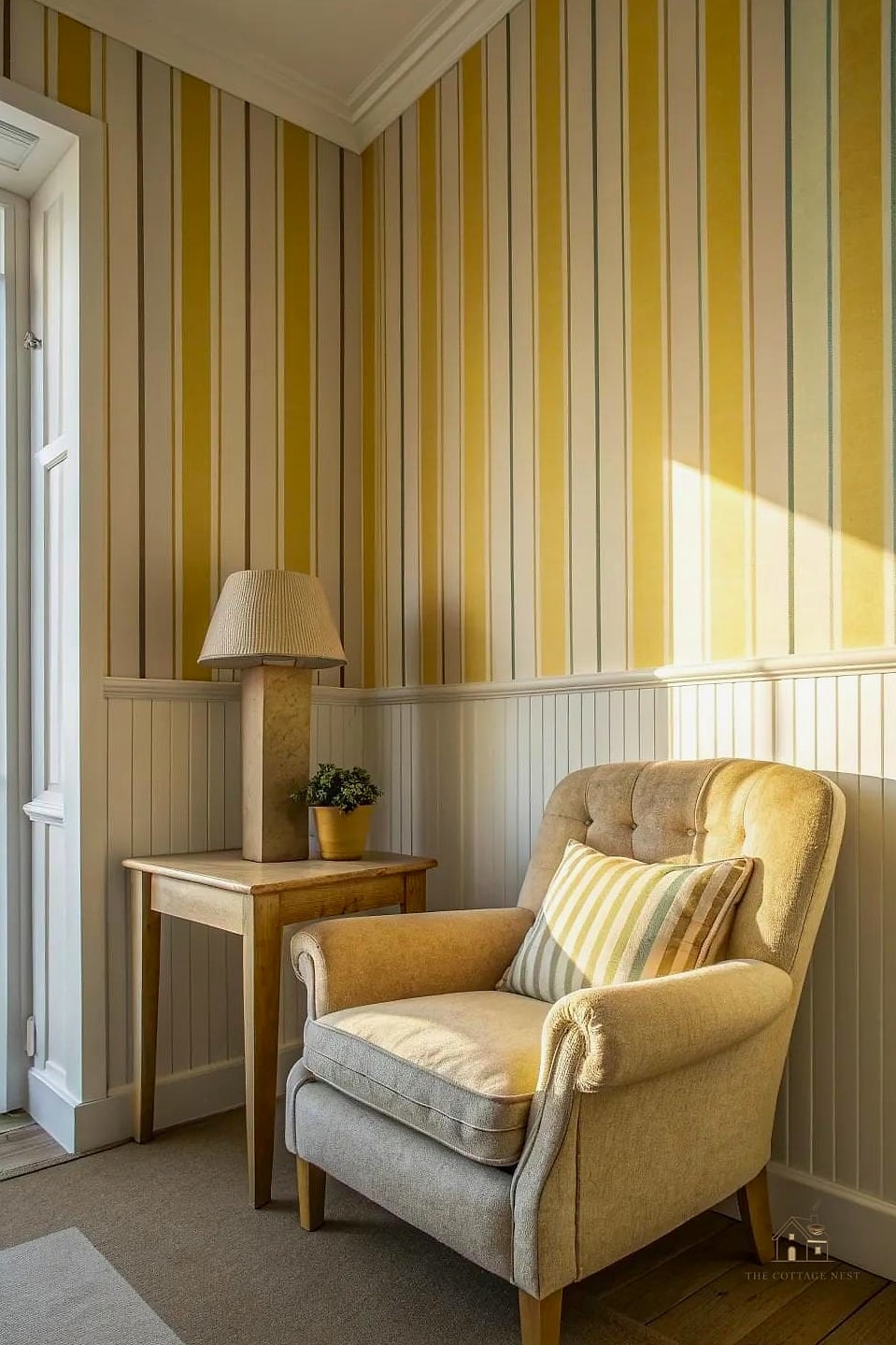
In a small shared room, vertical stripes on one accent wall can trick the eye into seeing more height. Soft pastel stripes keep it playful without feeling overwhelming. Peel-and-stick wallpaper is a great renter-friendly option here since it comes down cleanly when it’s time for a change.
A Rolling Toy Cart Between the Beds
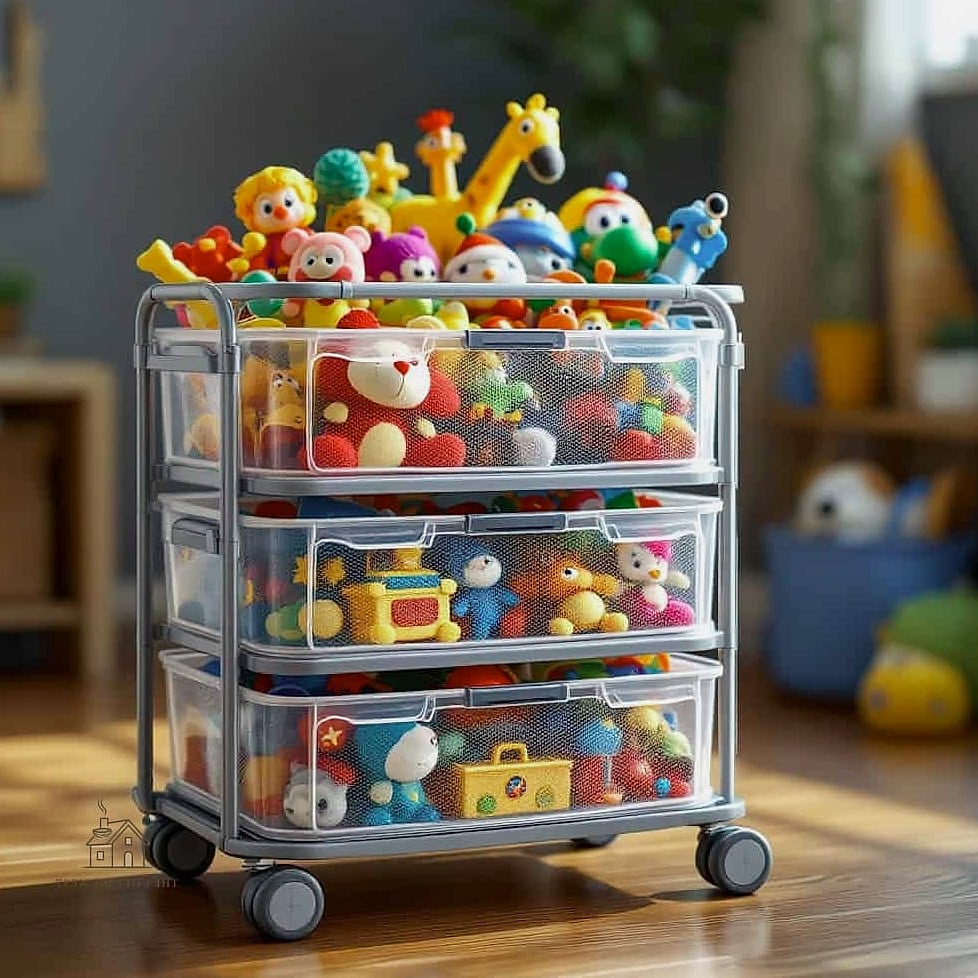
A slim rolling cart with a few tiers gives kids a mobile spot for books, art supplies, or bedtime essentials. It can be tucked between the beds during the day and pulled out when needed. This is a budget-friendly alternative to built-in furniture and works in almost any layout.
Bunk Beds with Built-In Stairs and Drawers
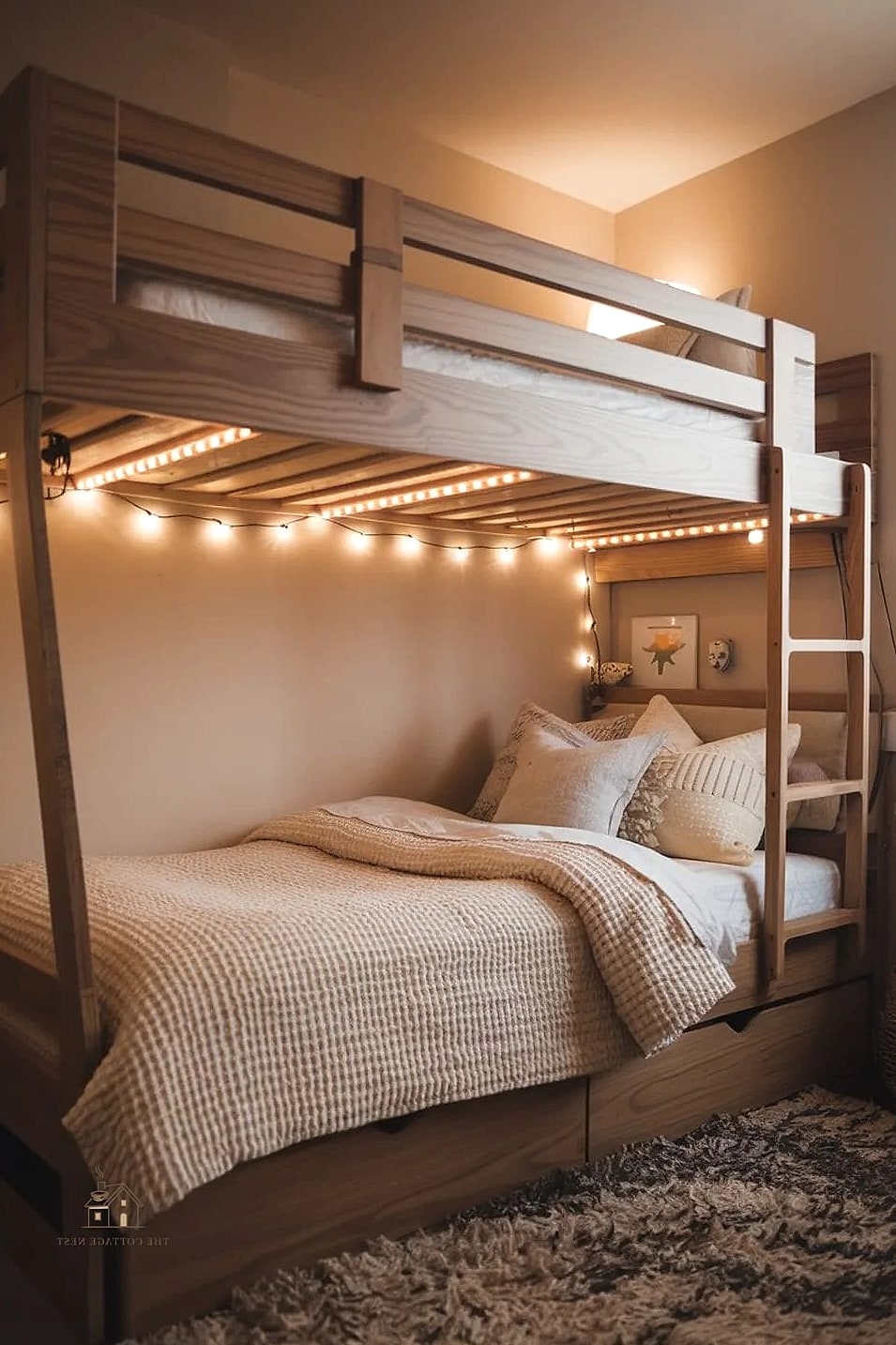
Bunk beds with a staircase instead of a ladder are safer for younger kids and often include drawers built right into each step. This is one of those upgrades that instantly makes a shared room feel more custom without requiring a full renovation. It’s pricier upfront, but the storage payoff is significant in a small footprint.
A Neutral Base Palette with Pops of Personal Color
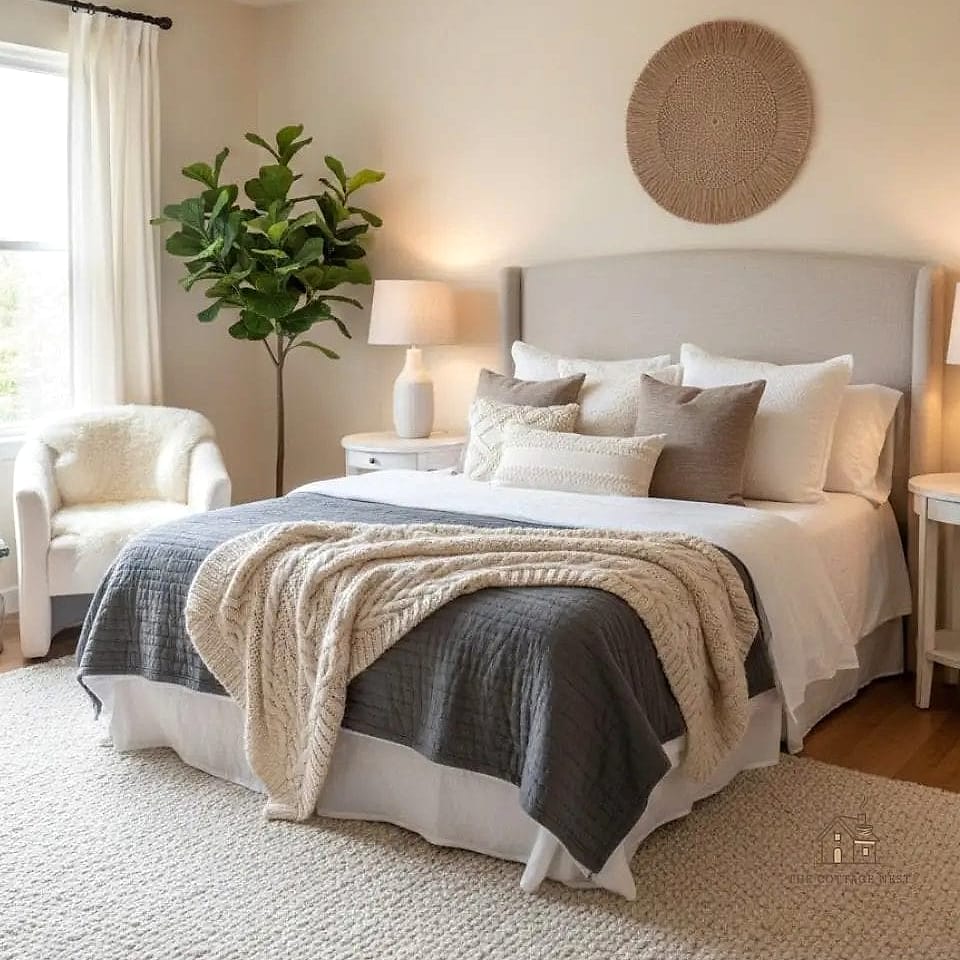
Painting the walls a soft neutral like warm greige or pale blue gives you a flexible backdrop, then let each kid pick their own accent color through bedding, pillows, or a reading chair. This keeps the room from feeling visually chaotic while still letting both personalities shine through. It also means you won’t need to repaint every time interests change.
A Shared Chalkboard or Whiteboard Wall
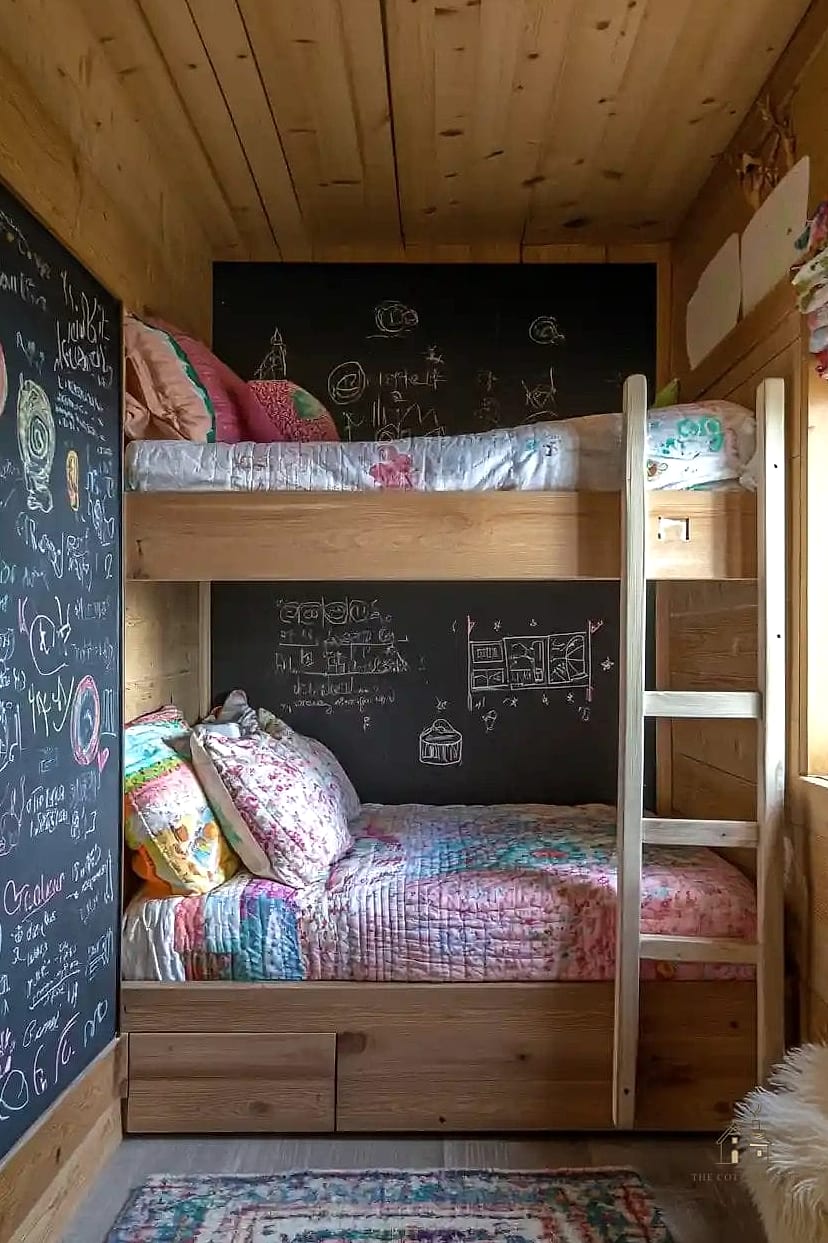
Turning one wall or a large framed panel into a chalkboard or whiteboard gives kids a spot to draw, write notes to each other, or track a simple chore chart. It’s a fun way to keep artistic mess contained to one area instead of spreading across the whole room. Plus it’s endlessly reusable, which cuts down on paper clutter.
Matching Closet Organizers with Split Zones
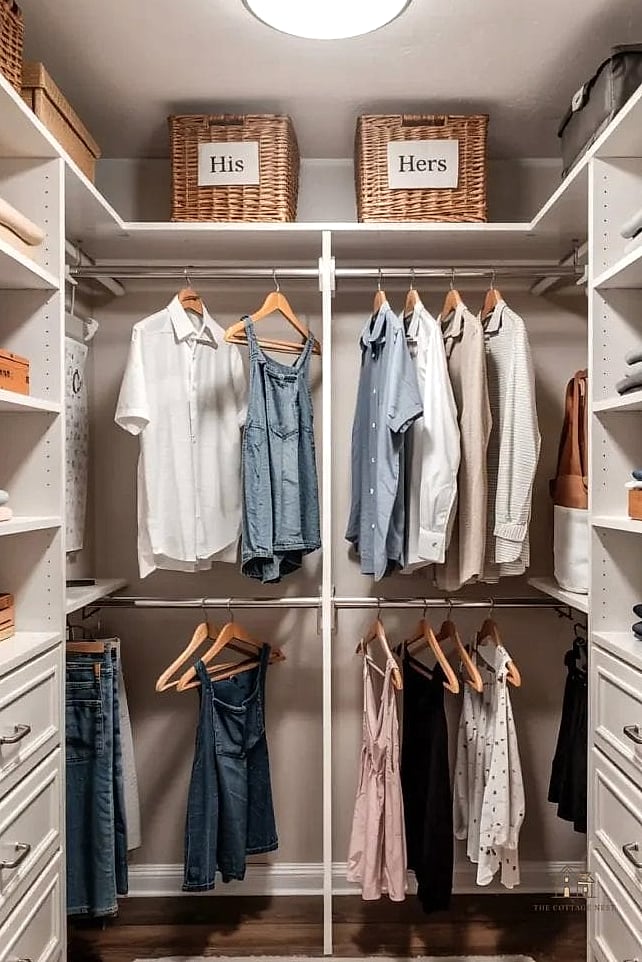
If your shared room only has one closet, dividing it clearly down the middle with matching organizers helps avoid the “that’s my shirt” arguments. Use labeled bins, hanging dividers, or even different colored hangers for each kid. A closet system with adjustable shelving grows with them as their wardrobe needs change.
A Cozy Rug to Anchor the Shared Space
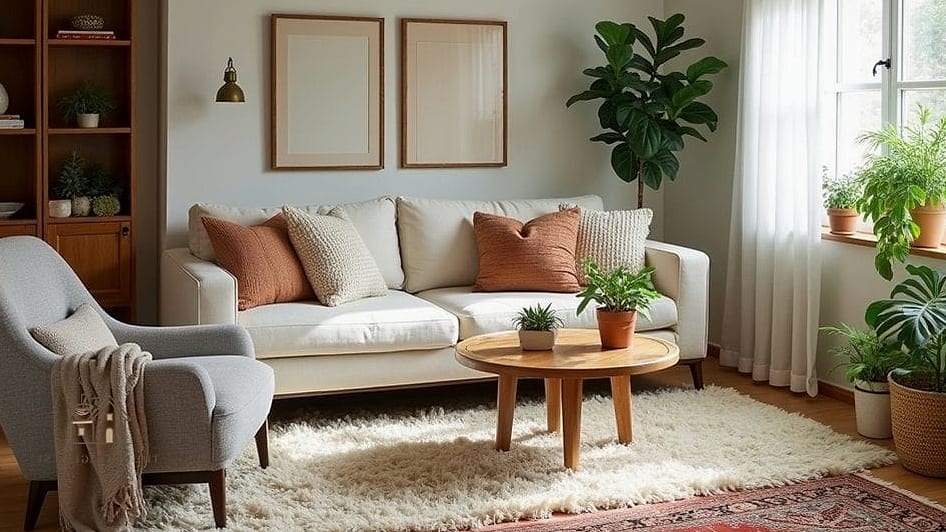
A soft, low-pile rug in the center of the room ties both sleeping areas together and gives kids a comfortable spot to play on the floor. Choose something stain-resistant and easy to spot clean since it’ll see a lot of use. A patterned rug also helps hide the everyday wear and tear that comes with two kids sharing a space.
Floating Nightstand Shelves for Tight Spaces
When there’s no room for traditional nightstands, a small floating shelf beside each bed works just as well. It holds a lamp, a book, and maybe a small alarm clock without eating up floor space. This is a great solution for narrow rooms where every inch of walking space counts.
A Shared Play Table Under the Window
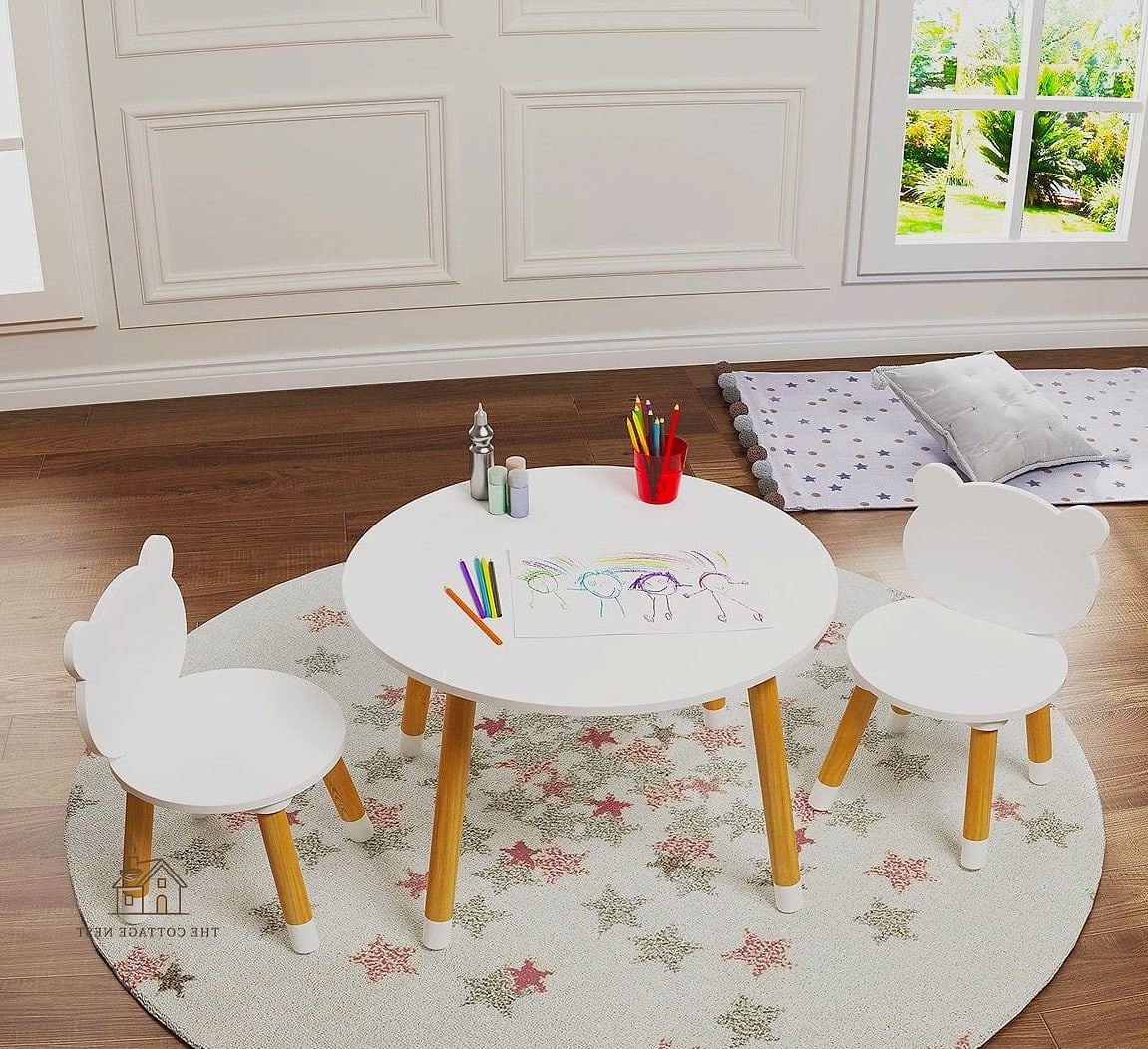
Placing a small table and two chairs under the window makes use of natural light for drawing, puzzles, or games. It also keeps toys contained to one spot instead of scattered across the beds. A round table can be a smart choice here since it has no sharp corners in a tight space.
Personalized Name Signs Above Each Bed
A simple wooden or painted name sign hung above each bed is a small detail that makes a shared room feel like it’s still each kid’s own space. These are easy DIY projects with paint and stencils, or you can order them from a small shop online. It’s a sweet touch that doesn’t take up any physical room.
Layered Lighting for Function and Coziness
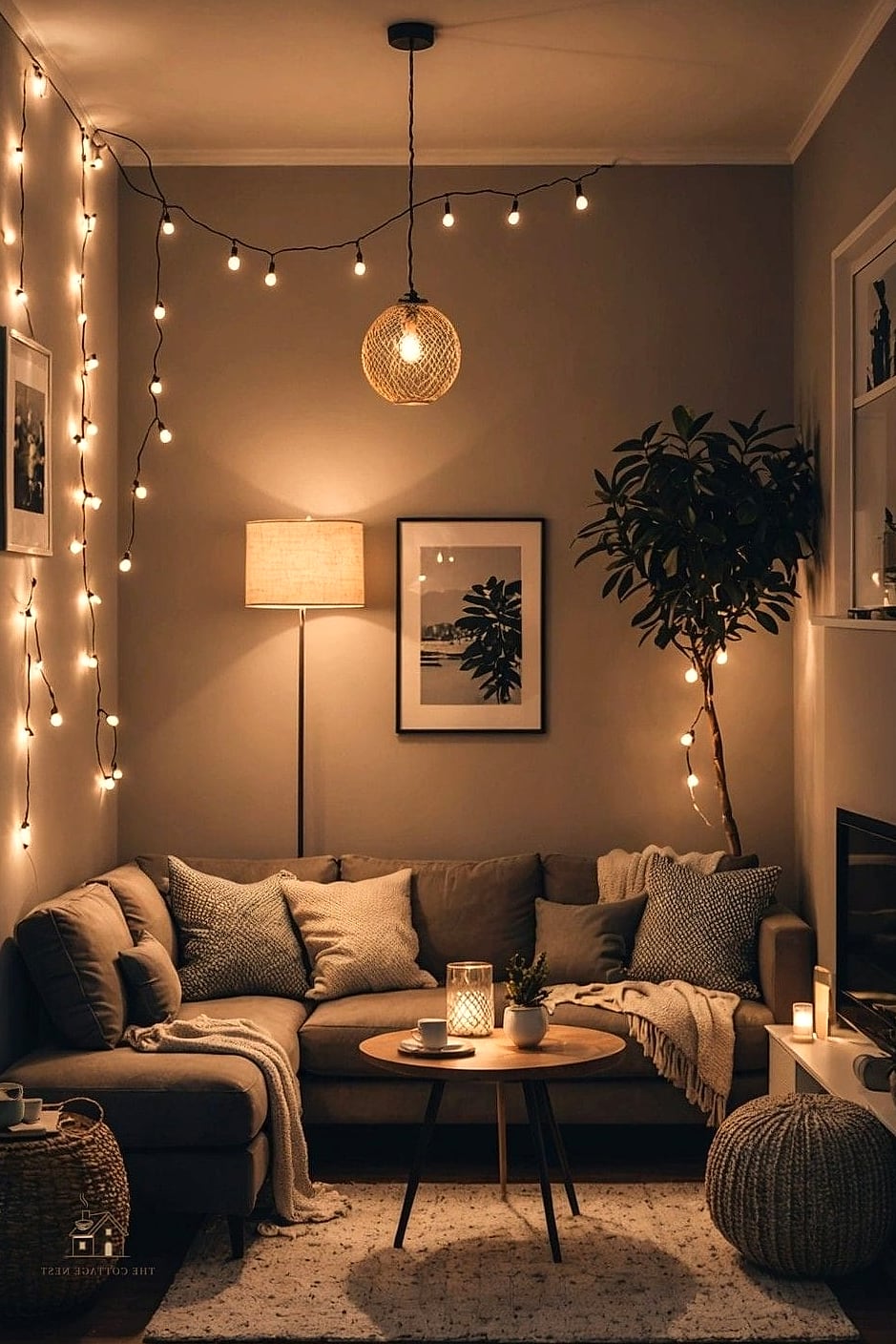
Relying on one overhead light in a shared room rarely works for two kids on different schedules. Adding a floor lamp, individual reading lights, and maybe a plug-in nightlight gives everyone control over their own corner. Dimmable bulbs are especially handy for winding down without a jarring bright light at bedtime.
A Fold-Down Wall Desk for Tiny Rooms
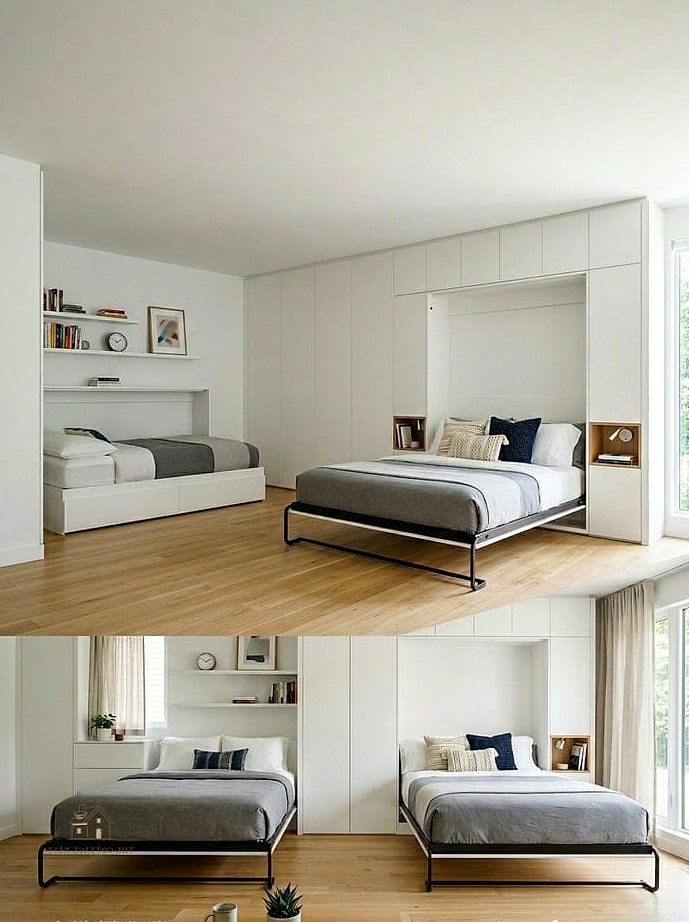
In really tight shared rooms, a fold-down desk mounted to the wall can be tucked away when not in use. It’s a smart renter-friendly option since most versions install with minimal hardware. This works well paired with a small stool that slides underneath when the desk is folded up.
Matching Storage Cubes with Fabric Bins
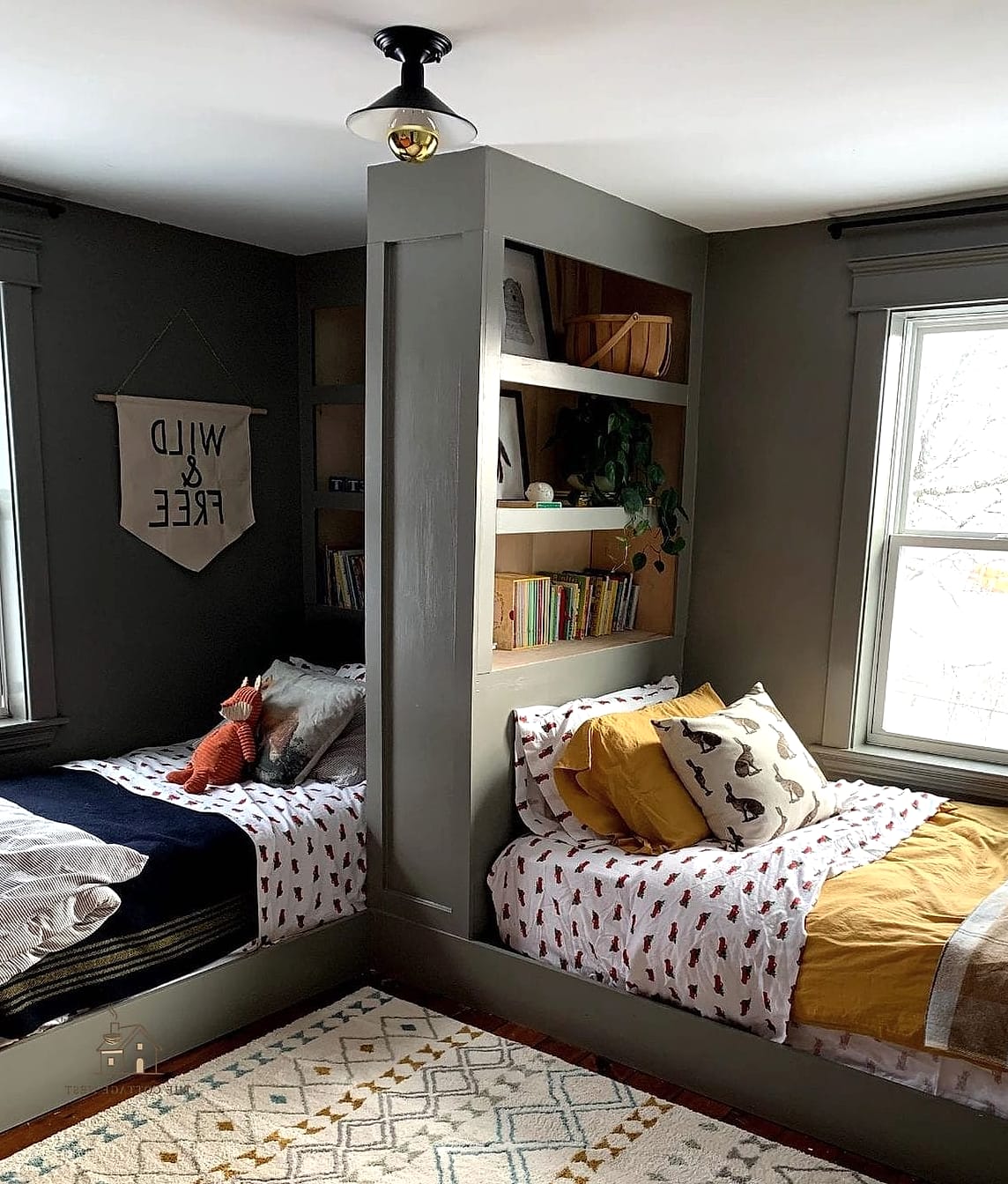
A modular storage cube shelf split evenly between two kids keeps toys organized without a strict labeling system. Fabric bins in two different colors make it obvious at a glance whose stuff goes where. This setup is also flexible enough to rearrange as kids grow and their storage needs shift.
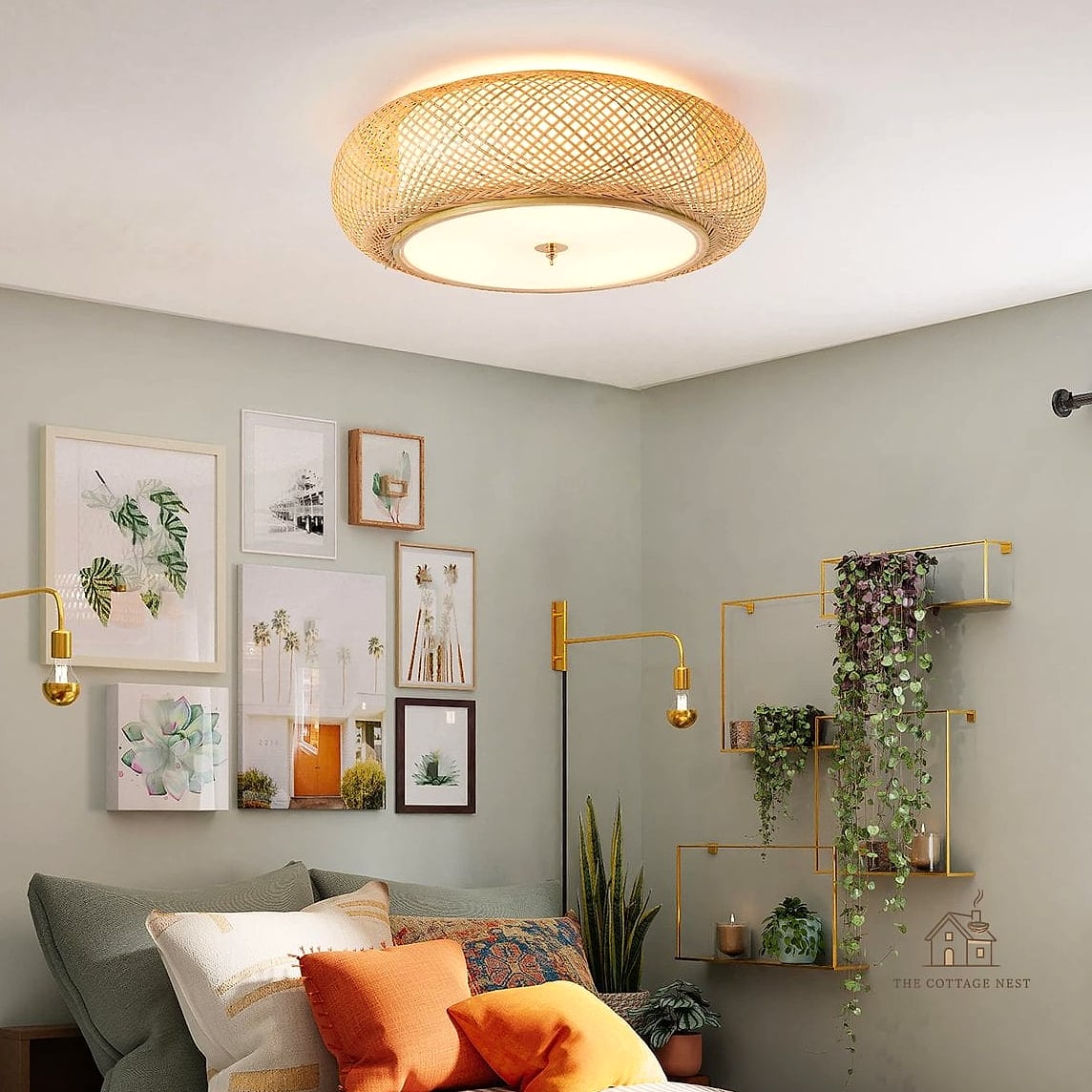
A Ceiling Fan with Integrated Light
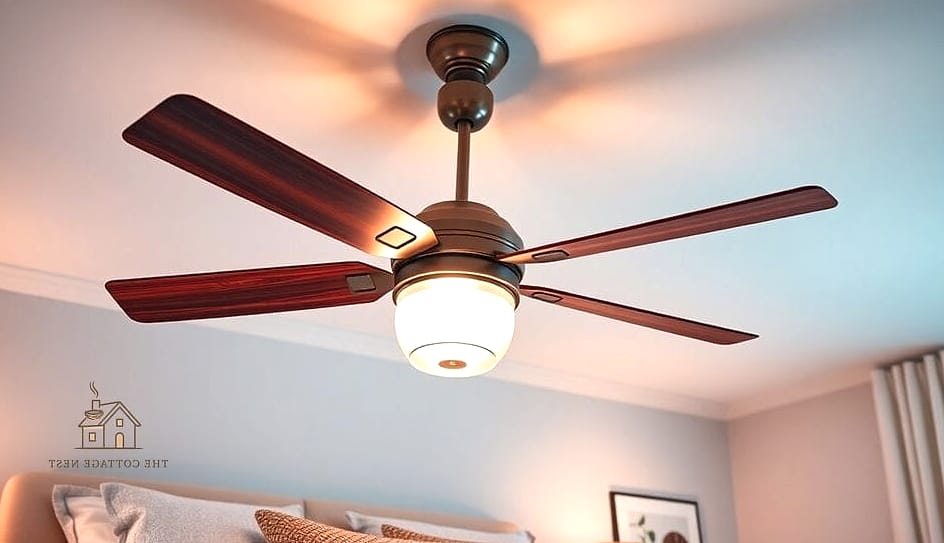
Small shared rooms can get stuffy fast with two kids and all their stuff generating extra warmth. A ceiling fan with a built-in light fixture handles both air circulation and lighting without taking up any additional space. Look for a low-profile model if your ceilings are on the shorter side.
Removable Wall Decals for Easy Updates
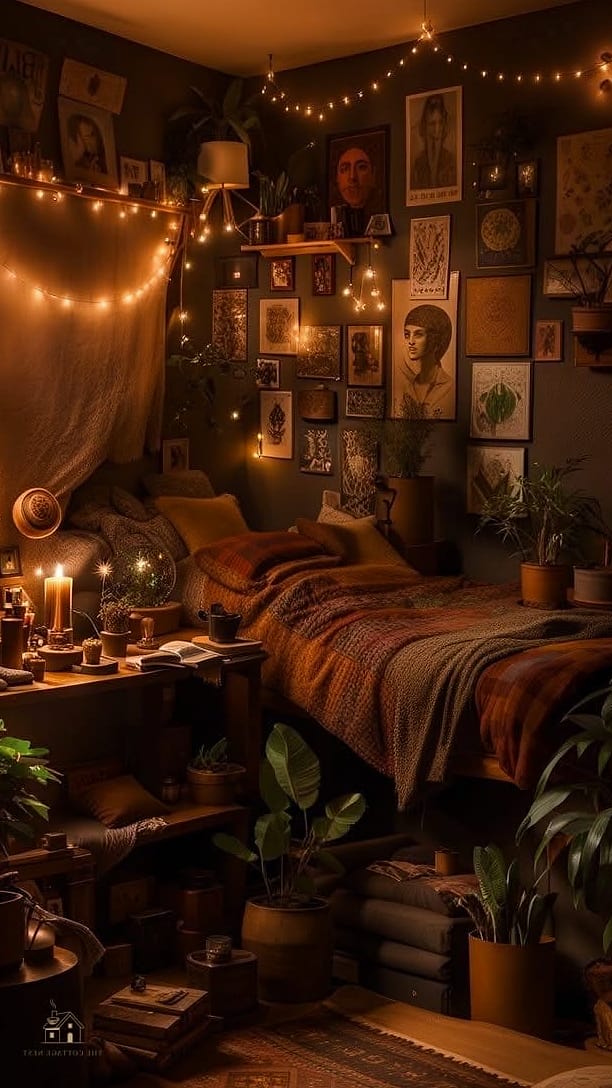
Wall decals are a low-commitment way to add personality to a shared space, and they peel off cleanly when tastes change. Consider giving each kid their own designated wall or half of a wall for their decal choices. This avoids the debate over a single shared theme and lets both kids feel represented.
A Cozy Corner Tent for Alone Time
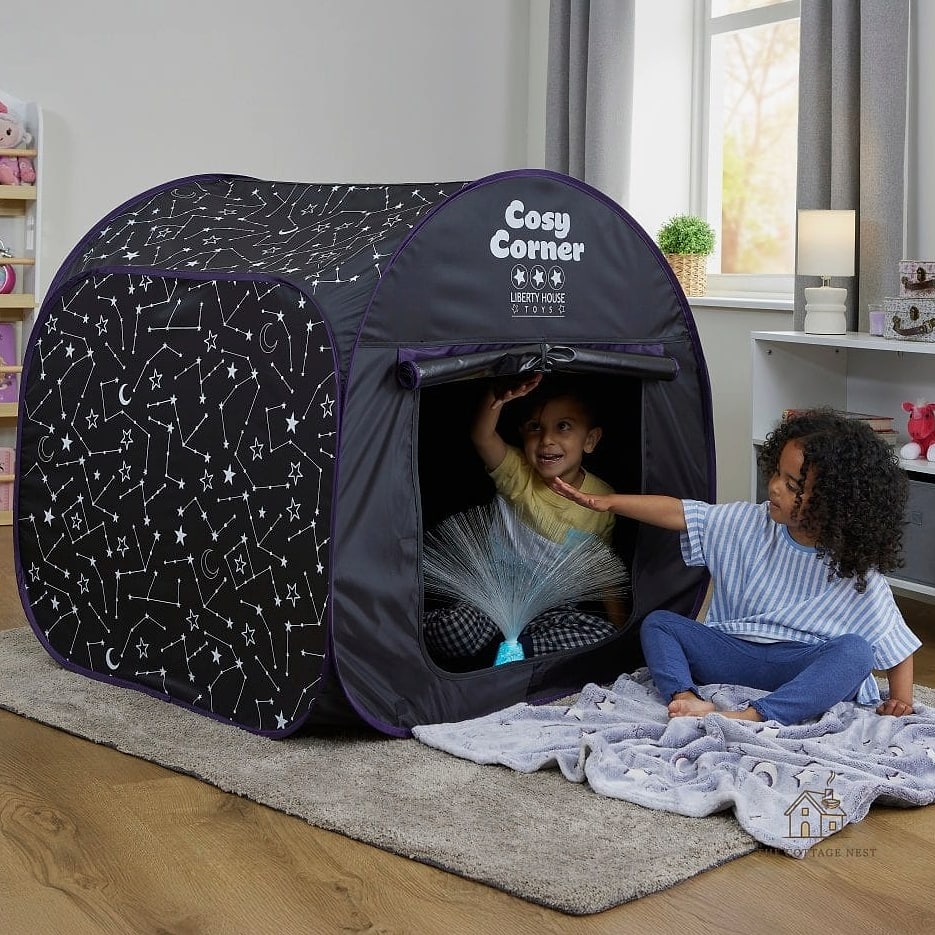
Even in a shared room, kids need a little spot that feels like their own. A small pop-up play tent or teepee in an unused corner gives them somewhere to retreat with a book or a few favorite toys. It’s inexpensive, easy to move, and can be swapped out as interests change over the years.
Sharing a bedroom teaches kids a lot about compromise, but it doesn’t mean their space has to feel like an afterthought. With smart storage, a few personal touches, and layouts that make the most of a small footprint, a shared room can feel just as warm and inviting as any other space in the house. Save whichever of these ideas fit your room best, and don’t be afraid to mix and match until it feels right for your family.